
Several workers for a Canadian-owned Mexican gold mine received no response after making complaints to the company’s workplace ethics hotline saying that local management was working with a prominent organized crime group to force out the existing union, according to two former local union members.
A labour panel, triggered by the U.S. under the Canada-U.S.-Mexico Agreement (CUSMA), recently determined that management at the Vancouver-based, Orla Mining-owned Camino Rojo gold mine violated the rights of its workers by allowing them to face threats and coercion in the lead-up to a November 2024 vote on union representation.
This week, Mexican President Claudia Sheinbaum said her security cabinet was now reviewing allegations that a faction of the Sinaloa cartel— a designated terrorist organization in Canada — strong-armed Camino Rojo workers so they would vote for management’s preferred union.
Over a dozen workers phoned Orla Mining’s workplace ethics hotline between July and December of 2024, according to two former union members from Camino Rojo who were forced to flee their homes due to death threats stemming from the union battle.
While some workers received code numbers linked to their complaints, none saw any substantive follow-up from the company’s human resources department, which oversees the hotline, according to the former local members of the National Union of Workers for Mining, Metalworking and Similar (Mineros Union) at Camino Rojo.
The Mineros Union held collective bargaining rights at the mine from 2021 until the disputed 2024 vote.
CBC News is not revealing the names of the two union members, as they fear for their safety after facing multiple death threats.
“We informed [Orla Mining’s human resources department] of everything that was happening, how [management] had made a deal with the narcotraffickers, and they never did anything,” said the first union member.
“The truth is, there was never any type of response,” said the second union member.
Orla Mining did not respond to a request for comment from CBC News for this story. In a statement earlier this week, Orla Mining said it was “engaging in dialogue with the governments of Mexico and the United States” and it was implementing “additional measures” following the labour panel’s findings.
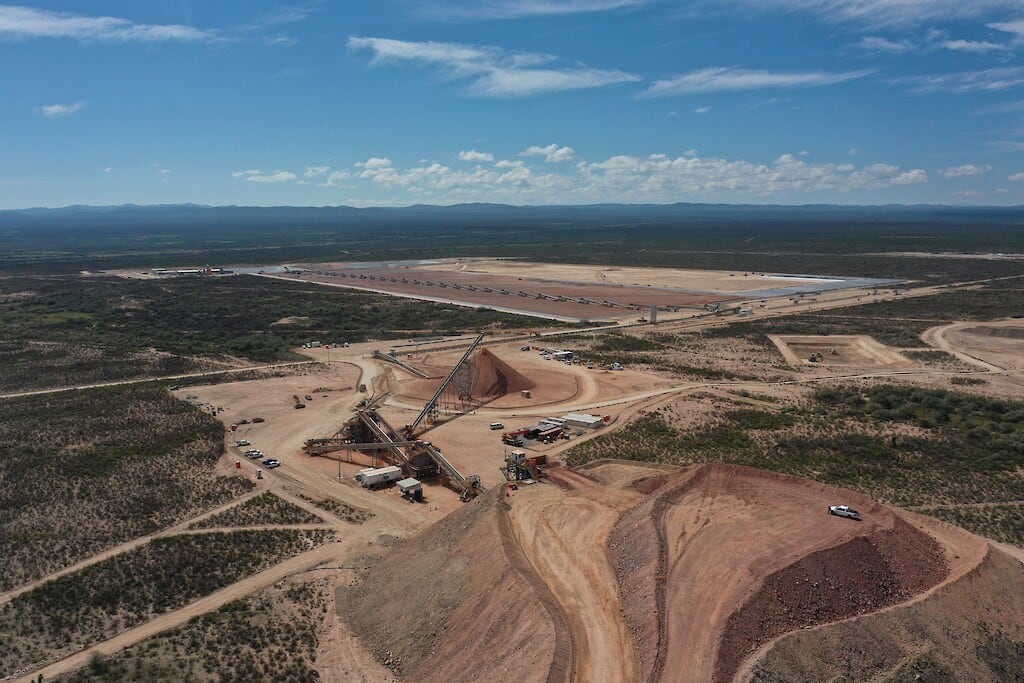 Orla Mining’s Camino Rojo gold mine in Zacatecas, Mexico. (Courtesy of Orla Mining)’Acts of pressure and intimidation’
The Camino Rojo gold mine is located about 600 kilometres north of Mexico City, in a semi-desert area in the municipality of Mazapil, in the state of Zacatecas. It is owned by Orla Mining, which has its headquarters in Vancouver and recently bought the Musselwhite gold mine in northwestern Ontario.
In February, a three-member CUSMA rapid response labour panel concluded that workers at the Camino Rojo mine faced a “severe” denial of labour rights.
The panel said management engaged in “employer interference,” and that it was “acquiescent to the acts of pressure and intimidation” against workers so they would vote for its chosen labour organization, the National Union of Exploration, Exploitation and Processing Mine Workers (Beneficio de Minas).
While Camino Rojo management negotiated a collective bargaining agreement in early 2024 with the Mineros Union, it began planning to displace them with Beneficio de Minas, said the panel.
Management hired a member of the Operativa Flechas faction of the Sinaloa cartel on contract who then threatened workers during a months-long battle between union organizations, according to filings by the Office of the U.S. Trade Representative.
Orla Mining said in an August 2025 second quarter filing with the Security Exchange Commission (SEC) that it was “reviewing potential criminal activity at the [Camino Rojo] mine.” The company said it had alerted the RCMP about the matter, along with Mexican and U.S. authorities, according to the filing.
The RCMP did not respond to a request for comment.
In its Tuesday statement to CBC News, Orla Mining said the review was ongoing and that the company was “enhancing the mine’s security measures in collaboration with authorities.”
A U.S. government labour probe found that the Operativa Flechas member, nicknamed “el Paul” and “el Mocho,” appeared at Mineros Union meetings with armed men and delivered death threats to Mineros Union members.
One U.S. filing included a photo of el Paul in the front of a vehicle with an Orla Mining logo on the door.
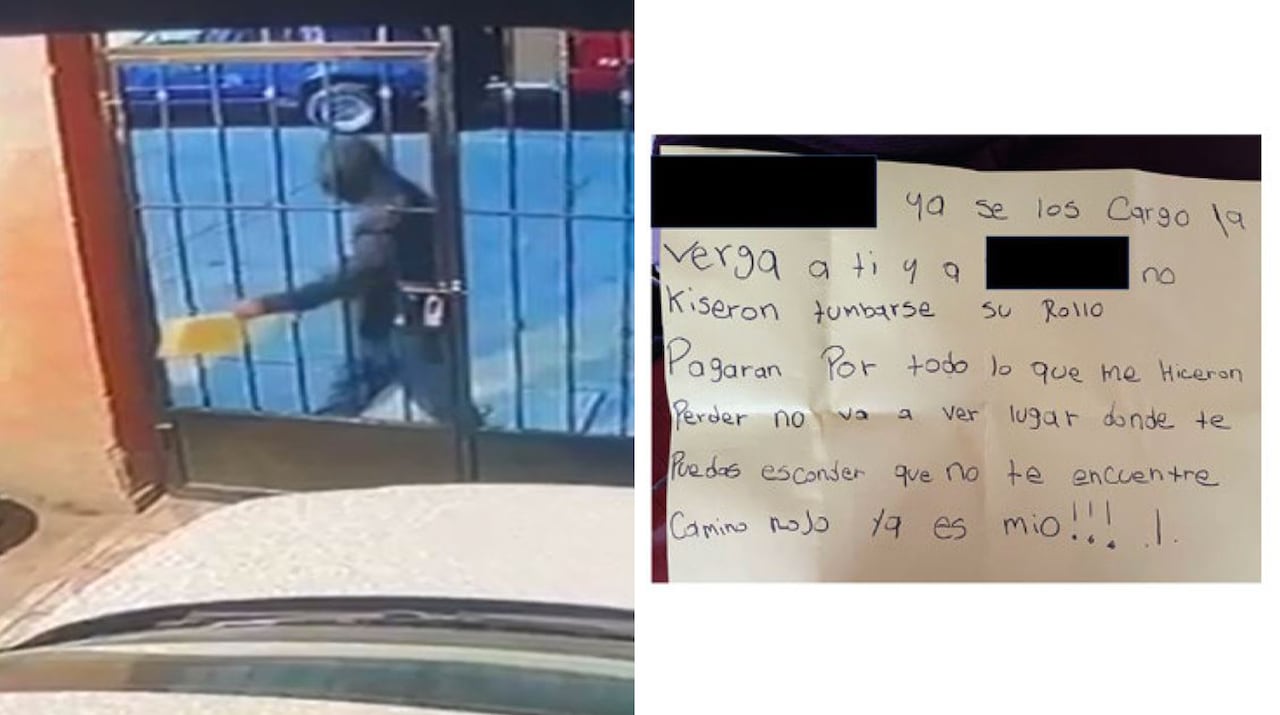 The contents of a letter dropped off at the home of a Mineros Union member on April 21, 2025, after the union lost the vote. The translation by the U.S. Office of the Trade Represenative reads: Now you are in for it. You and … didn’t want to end your bullsh*t. You will pay for all that you have made me lose. There is no place where you can hide where I won’t find you. Camino Rojo is mine! (Office of U.S. Trade Representative)
David Saucedo, a Mexico City-based corporate security consultant, told CBC News that the Operativa Flechas belong to the Mayiza faction of the Sinaloa cartel, which remains loyal to former Sinaloa cartel leader Ismael (El Mayo) Zambada García, who is awaiting sentencing in the U.S.
‘Spend my days hiding’
The two former Camino Rojo union members told CBC News they’ve been forced to flee from their homes with their families.
“It’s really tough. My youngest daughter didn’t want to go to another school and she blamed me for everything. She’d say everything was my fault,” said the first union member, who has two children.
“I spend my days hiding in one place and then another because of fear, because I’m still receiving threats.”
The union members say they want Orla Mining to apologize for what they allowed to unfold at their worksite—something the labour panel also recommended.
“[Orla Mining] needs to acknowledge that there is a problem, because until now they haven’t recognized that,” said the second union member.
“If they acknowledge this, then they’ll cut the ties they have with these people who are part of narcotrafficking.”