
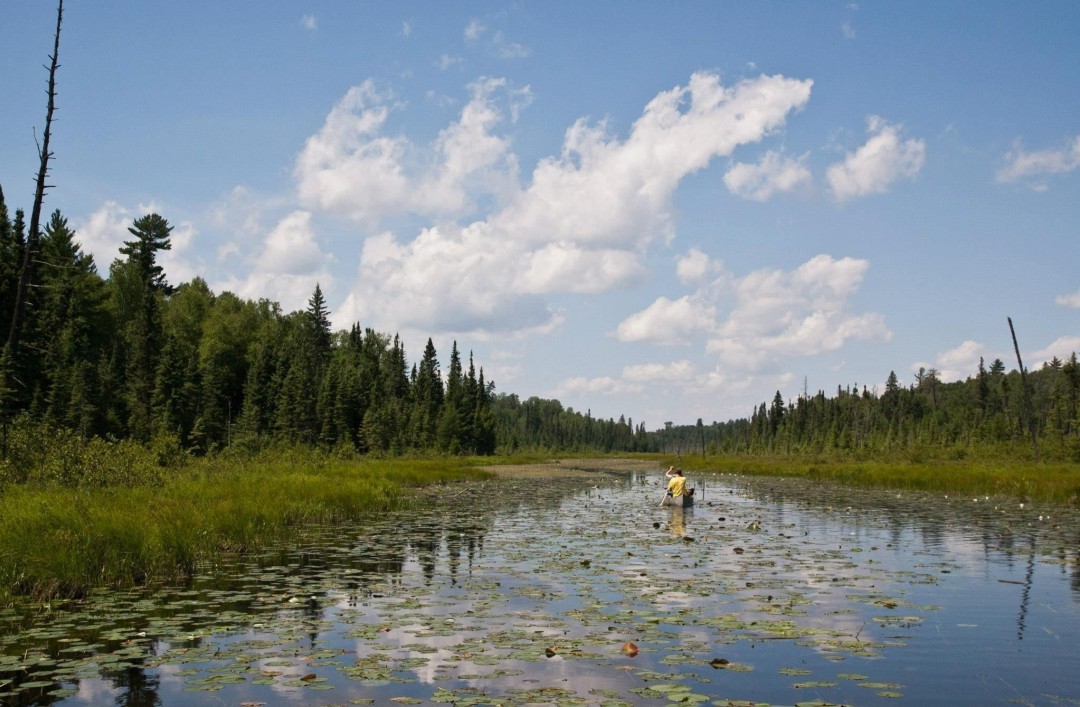
The fight over mining near one of America’s most cherished wilderness areas just tipped in the industry’s favor. The Senate voted 50–49 Thursday to scrap a 20-year ban on new mining across roughly 350 square miles of federal land upstream from Minnesota’s Boundary Waters Canoe Area, reopening the door for the long-stalled Twin Metals copper-nickel project near Ely, MPR News reports. The measure, written by Republican Rep. Pete Stauber, passed the House in a 214-208 vote in January, largely along party lines. In the Senate vote, GOP Sens. Susan Collins and Thom Tillis joined all Democrats in opposition. Republican Sen. Josh Hawley did not vote.
President Trump is expected to sign it, fulfilling a campaign promise to undo the moratorium brought in by Joe Biden in 2023. Stauber called the move a “major victory” for his northern Minnesota district, arguing that copper and nickel deposits could revive the Iron Range economy and bolster domestic supplies of minerals used in electric vehicles and other technologies. Twin Metals, a subsidiary of a Chilean mining company, proposed the project more than a decade ago.
Mining advocates say existing state and federal rules are enough to safeguard the Boundary Waters while allowing projects to be vetted through lengthy environmental reviews. “This vote does not open a mine. It opens the door for a transparent, science-based review,” said Julie Lucas of industry group Mining Minnesota. The Boundary Waters are in Superior National Forest, created by Theodore Roosevelt in one of his last acts as president. Four of his descendants urged senators to keep the mining ban in place. The measure was introduced under the Congressional Review Act, which allows recent regulations to be lifted with a majority vote, the New York Times reports. Some senators, including Tillis, objected to the first use of the act to overturn a public land order. “I think we are setting a precedent here,” he said. “Some of my colleagues are going to live to regret it.”
Conservation groups and Minnesota’s two Democratic senators called it the wrong project in the wrong place. Sen. Tina Smith, who spoke at length against the resolution, warned that copper-sulfide mining in the Boundary Waters watershed poses “an unacceptable risk” to a “special place” whose lakes and rivers could carry any pollution directly into the protected wilderness, MPR News reports. “We can support the need for mining, but that doesn’t mean that we mine on the edge of Chaco Canyon or on the rim of the Grand Canyon,” she said. The AP describes the wilderness, which stretches for 150 miles along the Canadian border, as a “land of crystalline lakes, vast forests of pine, spruce and birch, striking sunsets and clear, star-dusted nights.”
The US Forest Service has found that all 20 similar copper-nickel mines it studied caused some environmental harm and that impacts were often underestimated. Environmental groups labeled the vote a “dark day” for the wilderness area and public lands across the country. “This is a serious blow to the Boundary Waters and to the future of America’s public lands,” said Chris Knopf, executive director of Friends of the Boundary Waters. “A few politicians in Washington chose the interests of a foreign mining conglomerate over the will of the American people, over sound science, and over one of the most irreplaceable wild places on the planet.” If Trump approves the resolution as expected, it would still take years for a mine to open, the AP reports. The company says construction will take two or three years, but it could be tied up for much longer by legal challenges. Obtaining more than a dozen necessary state permits could also be tricky, especially if Sen. Amy Klobuchar is elected governor in November.