

In German-speaking countries garden ponds are perhaps more convivial places than in other corners of Europe. After all, in local parlance ducks and frogs both say quaken thus can converse freely without a language barrier.
In one Austrian village, however, the party may have got out of hand. The owner of a pond containing 50 frogs lost a two-year court battle with his neighbour over sleepless nights caused by their incessant croaking, especially during mating season.
During the court case, a sound expert commissioned to measure the decibels emitted by the frogs found them to be louder than passing freight trains.
Complaints about animal noises in rural areas are usually rejected because they are regarded as sounds of the natural environment that must be tolerated, but this case was an exception.
The court found in favour of the plaintiff and ordered the owner, Wolfgang Knoll from the village of Pasching in Upper Austria, southwest of Linz, must build a sound barrier or fence off the pond to keep the frogs out and pay legal costs of to up to €30,000.
This has put Knoll in a quandary. “Of course a sound protection wall would help. As our neighbour lives on the first floor we would be talking about a fence four to five metres high. There’s a question whether one could even get planning approval for that,” he told the Austrian broadcaster Life Radio.
He is also unable to remove the frogs. “All amphibians such as frogs are protected since 2003, so you can’t remove them or the spawn,” Knoll said. He plans to appeal against the ruling.
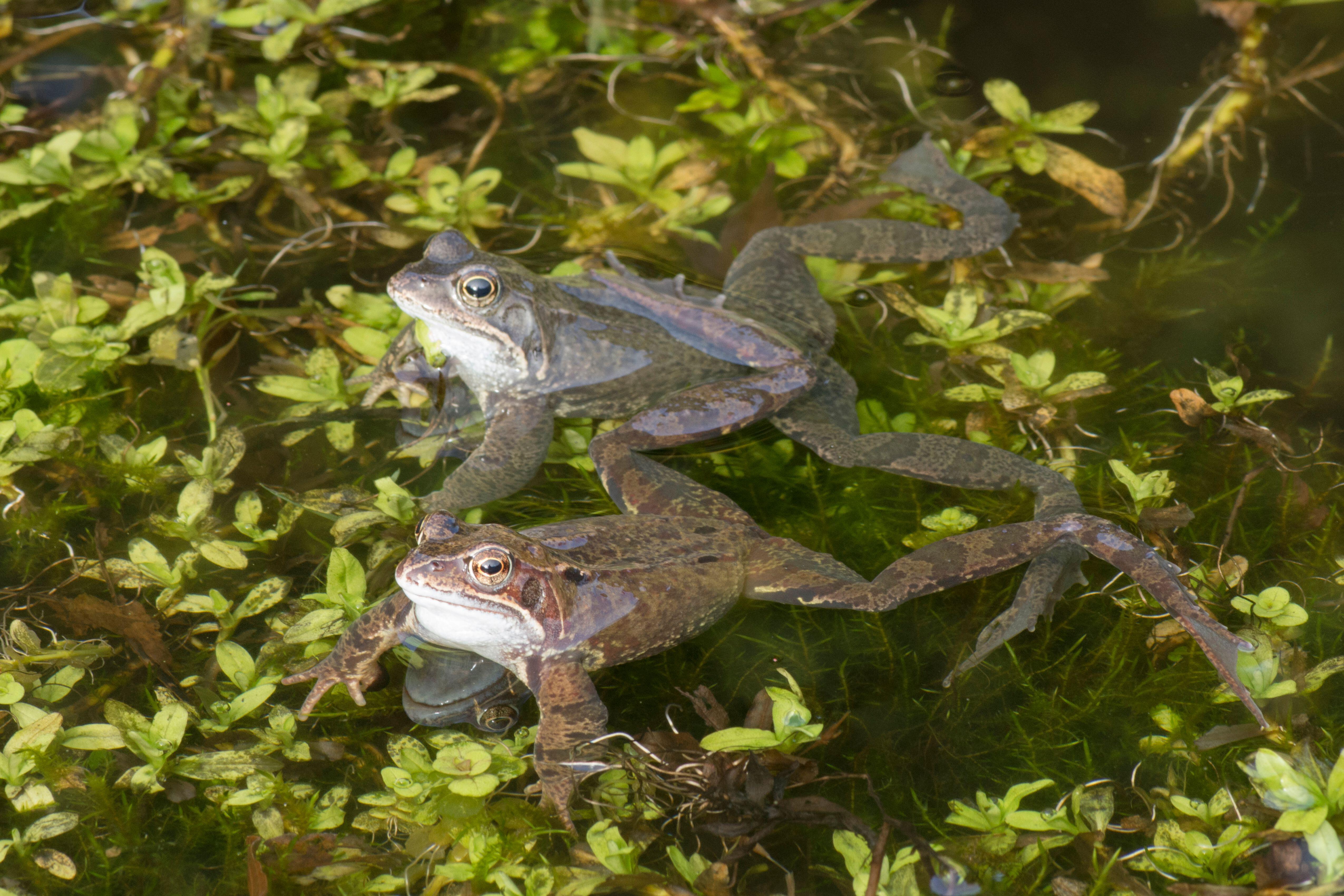
Ponds can provide valuable habitats for wildlife, including frogs
ALAMY
Franz Haunschmidt, the lawyer for the plaintiff, said the sound expert believed the noise would be tolerable if the frog population was halved.
Conservationists are concerned that the ruling could set a precedent that is detrimental to wildlife.
Julia Kropfberger from the Upper Austrian Nature Conservation Association said garden ponds had become important substitute habitats for amphibians displaced by urbanisation. She said the association would provide financial support to people affected by such rulings.
In neighbouring Germany, disputes regularly arise over noisy frogs. The Nature and Biodiversity Conservation Union (NABU) has been documenting such cases since 1910.
It said frog noises in a neighbour’s garden must generally be tolerated. The guideline for a tolerable volume is 35 decibels. If croaking exceeded this value by 20 decibels, authorities could issue an exemption and permit the relocation of the animals. About 55 decibels is comparable to the volume of normal conversation.
People who have created a natural garden with a pond make a valuable contribution to protecting native wildlife and biodiversity, according to NABU.
“If frogs even settle in the pond, this is a particular success, but it can also lead to disputes with neighbours. Many people are so disconnected from nature that they perceive a chorus of frogs or birdsong as ‘noise,’ while they accept construction noise, traffic noise, aircraft noise, or loud music without complaint,” it said on its website.
The Federal Court of Justice, Germany’s highest civil and criminal court, ruled that frog sounds do not cause a liability for compensation in disputes, thereby strengthening the rights of frogs.
France passed a law to protect the sensory heritage of rural life after Maurice, a French cockerel won a court case over his supposedly loud crowing in 2019 and became a symbol of campaigns to protect the sounds and smells of the French countryside from the complaints of incoming urbanites.