
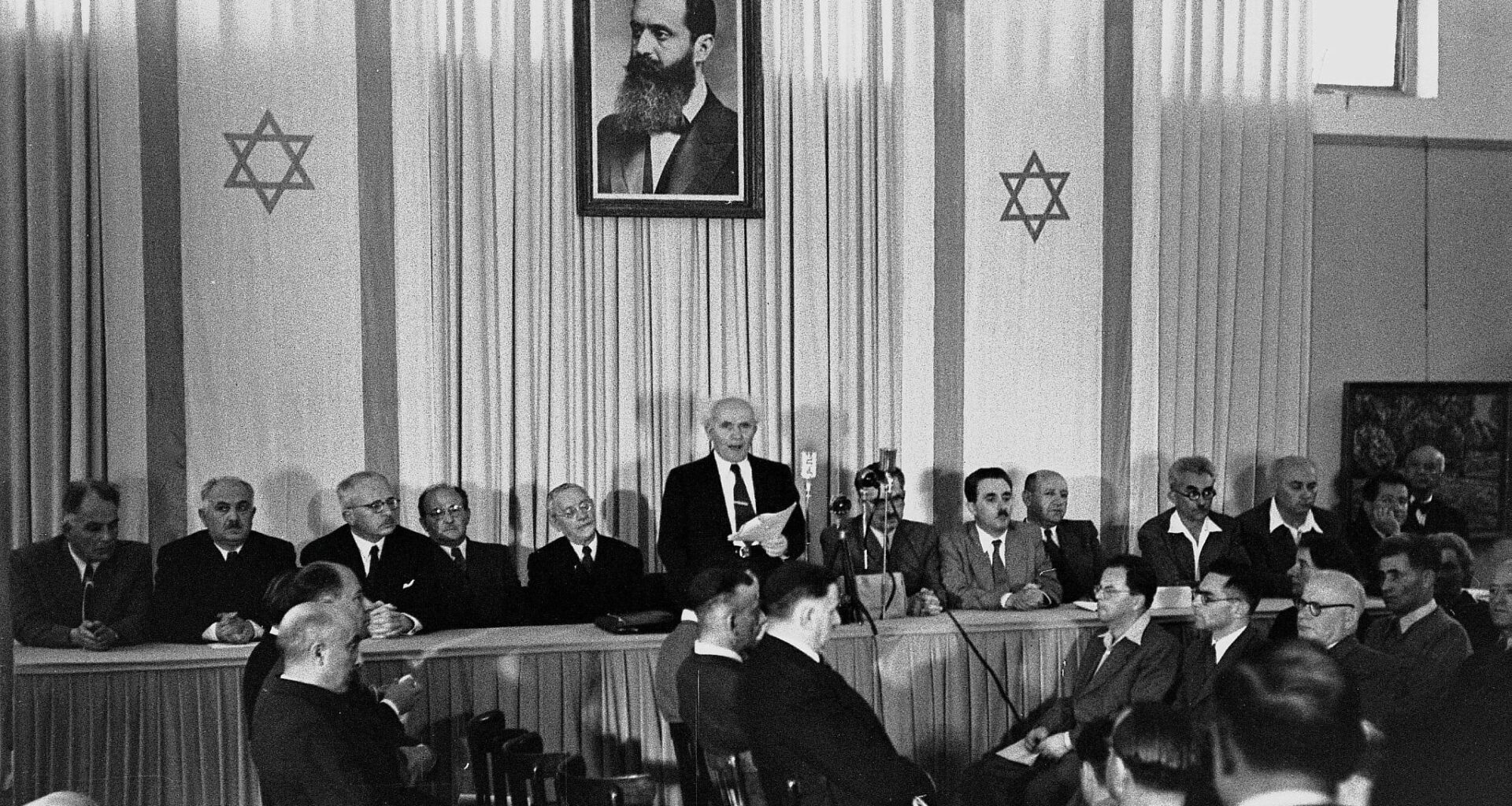
Many Israelis note Independence Day with activities that start with bereavement and culminate in a barbeque; that’s only natural in our reality. For me, the day is also an opportunity to consider whether the rights guaranteed by our Declaration of Independence are truly being implemented.
When perusing that formative document, my gaze concentrates on the promise that Israel “will ensure complete equality of social and political rights to all its inhabitants irrespective of religion, race or sex.” I also focus on the guarantee that “it will guarantee freedom of religion, conscience, language, education and culture.”
Before entering the holiday spirit, I attend annually a “Havdala” prayer marking the shift from Memorial Day. As a personal expression of my desire for Jewish unity in this country, my attendance varies between Orthodox and liberal services. We are all Jews.
Alongside that prayer of thanks for the miracle of Israel’s establishment, we need to take stock of whether in 2026 we’re implementing what the Declaration’s signatories – who belonged to the entire political spectrum – intended for us. While doing that, we should also find a way to duplicate throughout the country the model of the Declaration-reading event held annually by the World Zionist Organization at the Egalitarian Kotel.
Apropos: that section of the Western Wall was targeted at the end of February – only days before the launch of “Roaring Lion” – by a preliminary bill that would make egalitarian prayer punishable by up to seven years in prison. In other words, in the future I could be imprisoned for repeating a practice I’ve carried out legally in the past.
I’ll leave it to the reader to contemplate the status today of the promise of religious freedom and move on to no less complex an issue among the Declaration’s various fundamental rights guarantees: freedom of education.
The document’s objective was to ensure citizens’ freedom to choose a preferred educational system and prohibit coercion. There also seems to be a deeper intention here: guaranteeing the right to a quality education. That’s what I’d like to believe, anyway.
This issue dawned on me after hearing the Kiryat Shmona mayor’s alarming claim, made at the height of the Iran war, that 28 percent of his city’s 1st-8th grade students cannot read and write at an acceptable level. Shocking.
Where do we stand nationally?
Data published by the OECD in late 2024 ranked us at 27 in reading proficiency (among 31 countries). In September 2025, the organization reported that 28 percent of Israelis with post-secondary education were below the acceptable reading level (as compared with organization’s 13 percent average). Before blaming the COVID period, take note: the figures also showed that 38 percent of adults here were at the reading level of a 10-year-old (!).
Food for thought.
This post wouldn’t be complete without mentioning Israel’s minority community. Accentuating the tragedy of surging violence in Arab society during his late-January visit to the town of Sakhnin, President Herzog did well to call the situation “a stain” on Israeli society that needed to be erased as a matter of “moral obligation.”
Of course, the numerous success stories also shouldn’t be ignored. For example, two women from Israel’s Arab community currently serve in senior positions at leading universities here. In addition, the percentage of Arab college graduates in technological fields has risen significantly in the past decade. These are just the tip of the iceberg.
Beyond them, there is also the issue of identification versus integration – not necessarily one and the same. I’m just a layperson in this area, but it seems to me that the societal glue – as fragile as it may be – that holds Arabs and Jews together has been preserved despite wars going back to October 2023. No small feat.
While difficult to quantify, perhaps some insights can be gleaned from the grassroots. The popular Arabic-language version of the reality show “Come Eat with Me,” which I ran into thanks to my wife – who likes the genre and speaks the language (it comes with Hebrew subtitles for viewers like me) – might be helpful in this context.
My impression from the current season’s episodes on the Galilee: most of the participants, such as an actress starring in a recent hit Israeli TV series, seem at least reasonably satisfied with their complex identities and level of integration in society. Quite a few of them speak a linguistic synthesis; at least one, whose partner is Jewish, prefers Hebrew.
Apropos minorities: I’d like to wish all the best to our Druze citizens – who continue bearing the pain of the Nation-State Law alongside their ongoing contribution to Israel – as they celebrate the holiday of Nabi Shu’ayb (the Prophet Jethro) between April 25-28: زيارة مقبولة / Ziyarat Maqbula (“May your pilgrimage be accepted”).
Bottom line: the signatories to the Declaration of Independence set the table for Israel’s promise of rights in vital areas. They did their part – it’s our responsibility to make certain these are realized. If we don’t, we have only ourselves to blame.
Yehuda Yaakov is a retired Israeli civil servant (1986-2025), Ambassador, creator of three units in the Foreign Ministry – one driving social impact policy – and recipient of its excellence award for involvement in efforts against Iran’s nuclear program. Now focused on guaranteeing the principles of our Declaration of Independence, particularly freedom of conscience. Past board member of two Israeli NGOs promoting social equality. Started professional life as journalist covering social justice issues; grew up in a NYC housing project and attended public school.