
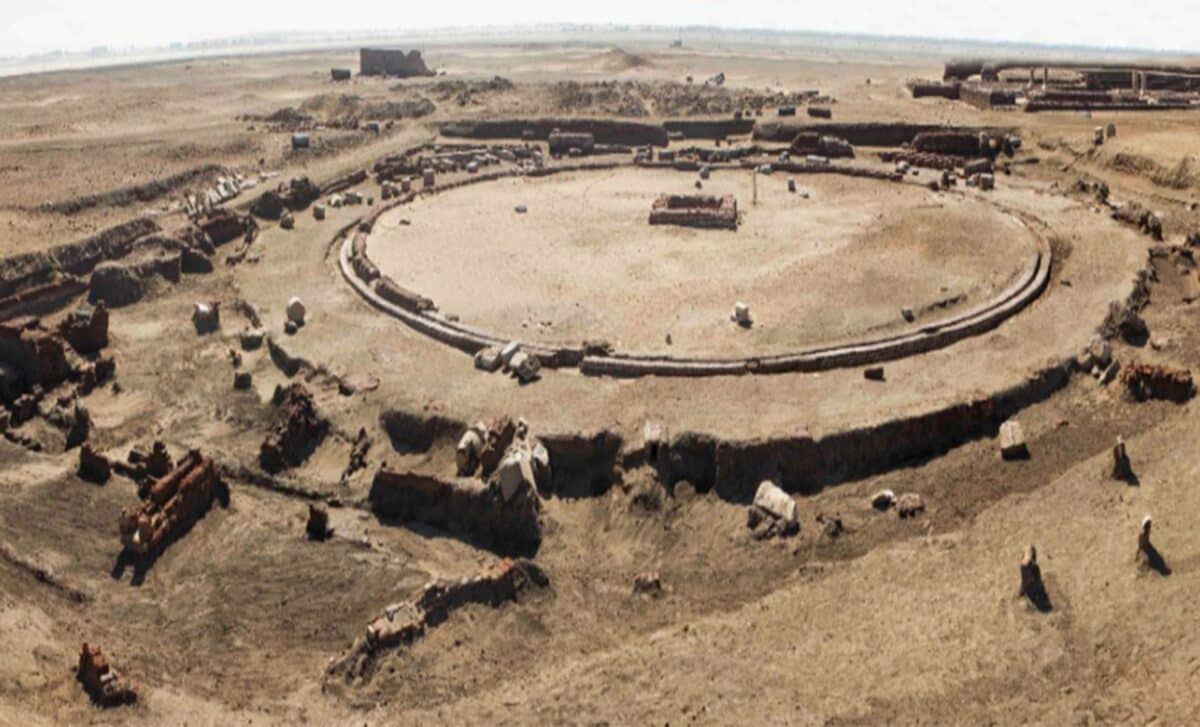
A 2,200-year-old circular temple discovered in Egypt’s Nile Delta is shedding new light on how ancient societies integrated water into religious practices. The site, tied directly to the Nile, suggests rituals centered on the river played a more structured role than previously understood.
The discovery was made at Tell el-Farama, the ruins of ancient Pelusium, a city long known for its strategic and commercial importance. According to the Egyptian Ministry of Tourism and Antiquities, the site sits near the eastern edge of the Nile Delta, where the river once met key trade and military routes.
Pelusium itself has a layered history, serving as a fortress in pharaonic times and later as a customs station under the Roman Empire. Earlier excavations in the area had already revealed a temple dedicated to Zeus, pointing to a mix of cultural influences shaping the city over centuries.
A Circular Structure That Changed Interpretation
When archaeologists first uncovered the structure in 2019, only part of it was visible. At the time, the red-brick remains were interpreted as a possible civic building, even a senate-like structure. That assessment shifted after a full excavation exposed the entire layout.
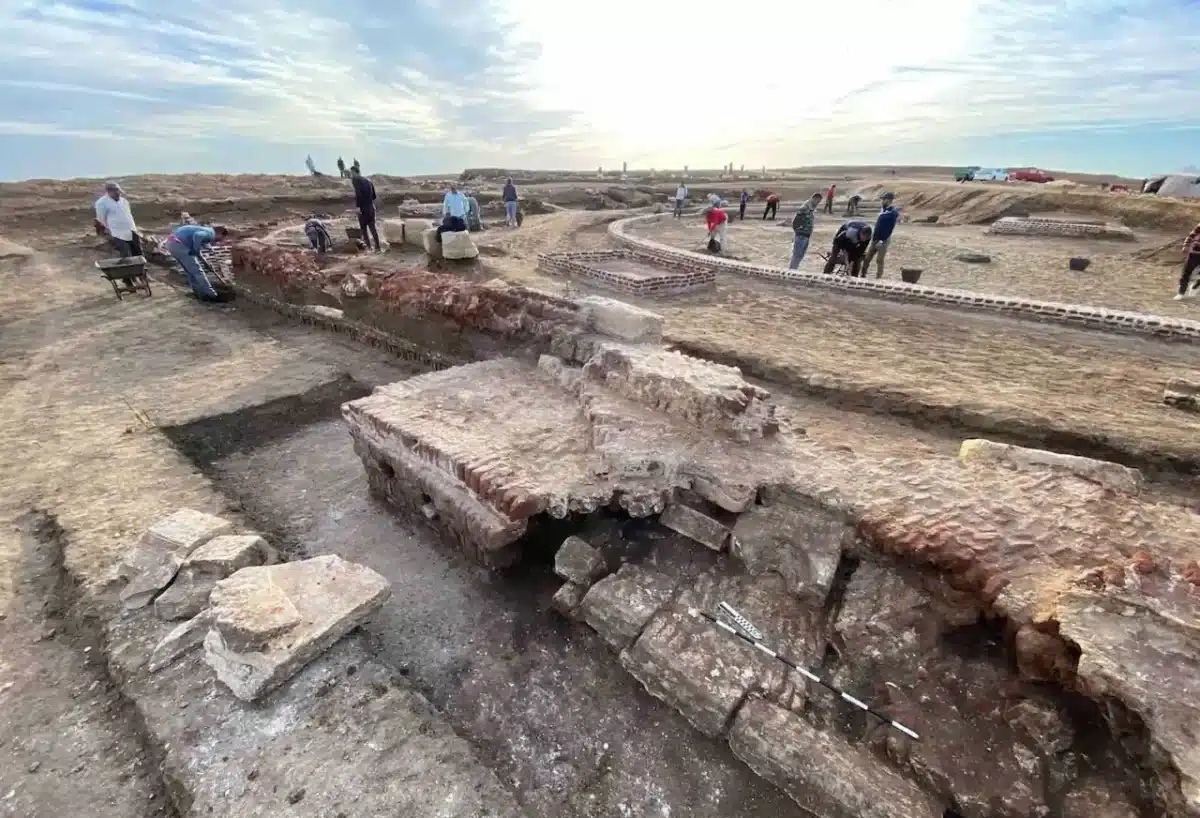 Archaeological remains of the Temple of Pelusius. Credit: Ministry of Tourism and Antiquities
As per statements relayed by the Egyptian Ministry of Tourism and Antiquities in a Facebook post, the complete structure revealed a circular sanctuary, a rare architectural form in ancient Egypt.
This new understanding came only after about a quarter of the temple had initially been explored. As mentioned in the translated statement:
“After six years of archaeological excavations at Tell el-Farama in the city of Pelusium in northern Sinai, the Egyptian archaeological mission of the Supreme Council of Antiquities has uncovered the remains of a unique religious building dedicated to the worship of the city’s local god, “Pelousios”.”
A Basin Connected Directly To The Nile
Professor Mohamed Abdel Badie, Head of the Egyptian Antiquities Sector at the Supreme Council of Antiquities, indicated that at the center of the temple lies a circular basin measuring about 115 feet (35 meters) in diameter. A square pedestal stands in the middle, likely used to support a statue of the local deity Pelusius. The team also noted that the site turned out to have :
“Massive and complex architectural design, featuring a central circular courtyard approximately 35 meters in diameter, surrounded by water channels and reservoirs, with multiple entrances from the eastern, southern, and western sides, while the northern side had been largely destroyed.”
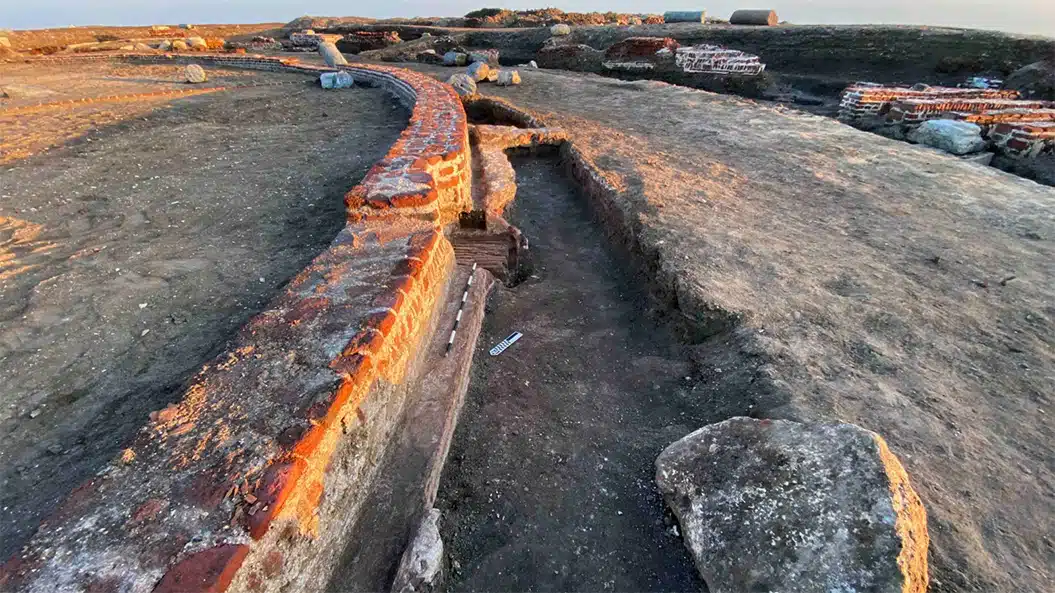 A network of canals connects the temple to the Nile. Credit: Ministry of Tourism and Antiquities
According to the same ministry statement, archaeologists found water and Nile silt inside the basin, which suggests the site was likely used for rituals connected to the river. The name Pelusius, derived from a Greek word meaning “mud” or “clay,” makes that connection even clearer.
A Meeting Point Of Ancient Cultures
The temple was built in the second century B.C. and stayed in use until the sixth century A.D., based on stratigraphic analysis of the site. That long lifespan stretches across major historical shifts, including periods of Greek and Roman influence in Egypt.
According to Hisham El-Leithy, acting secretary-general of Egypt’s Supreme Council of Antiquities, the structure combines Egyptian, Greek, and Roman architectural elements. This combination shows how Pelusium brought different cultures together.
Based on the post shared online, the initial interpretation of the temple building shifted after further scientific discussions with archaeologists.
“After a number of scientific discussions with several archaeology professors, including Jean-Yves Carrez-Maratray, Professor of Classical Archaeology at the Sorbonne University in Paris, the building was reinterpreted. It was established that it could not have been a civic council house, but rather a sacred water installation associated with religious rituals.”