
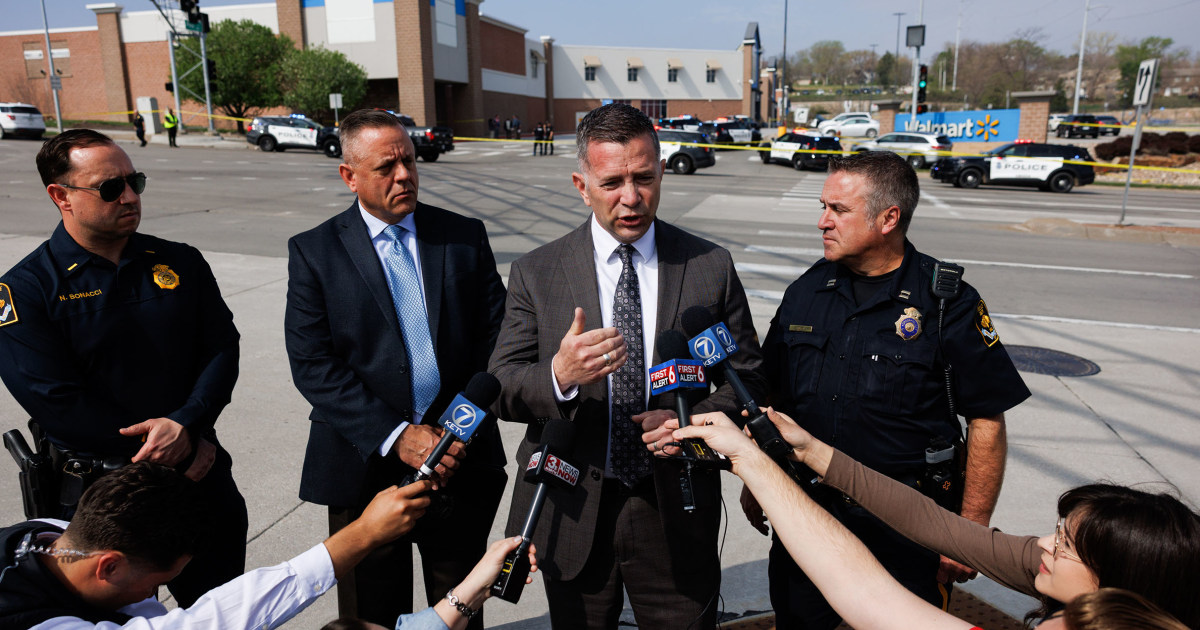
By the time Noemi Guzman held a toddler at knifepoint in front of a Nebraska Walmart, the 31-year-old woman had struggled with mental illness for several years of her life.

Subscribe to read this story ad-free
Get unlimited access to ad-free articles and exclusive content.

Guzman had previously been to court for both allegedly trying to set her father’s house on fire and ransacking a priest’s home — on the same day. For those charges, she pleaded not guilty by reason of insanity. And years earlier, a judge ordered her to stay away from a neighbor she’d allegedly slashed with a knife.
On Tuesday, Guzman sliced a 3-year-old’s face and hand with a kitchen knife stolen from a Walmart in Omaha, and after she refused to put the knife down, Omaha police said, officers shot and killed her.
Guzman had previously been diagnosed with schizophrenia. While people with severe mental illnesses like schizophrenia are more likely to be victimized than to harm others, Guzman had been violent in the past. Local prosecutors deemed her a danger to herself and others. Despite objections from prosecutors, a county judge in 2024 ordered her released from jail following the incident involving her father and the priest.
Those who encountered Guzman over the years have said her tumultuous history and public struggles illustrate the reality of a justice system that struggles to manage mental health crises.
“One of the elephants in the room in the criminal justice system is mental health, and how do we deal with it,” Douglas County public defender Thomas Riley told NBC News. “Treatment for mental illness costs money, and, you know, government entities are very, very tight with, especially these days, how money is being spent.”
Warnings pile up
In 2018, a neighbor said she was lured to Guzman’s backyard in Omaha, where Guzman swiped at the neighbor’s neck with a knife, according to the woman’s affidavit. In 2024, Guzman was charged with four felonies after she slashed her father’s upper body and doused him with flammable liquids, according to a police report. She tore apart the house, threatened to kill him and then started a fire, according to the police report. She then left the house and broke into a nearby church, threatening the priest and ransacking valuable paintings and furniture inside, the report said. She was found not responsible by reason of insanity and remanded to mental health treatment.
Following the March 2024 incident, Guzman was ordered to participate in an outpatient program overseen by a Douglas County psychiatrist, who would track her medication and report any noncompliance to the courts. Her doctor was also instructed to submit a report 30 days before Guzman’s next hearing, which had been scheduled for this June.
Brenda Beadle, the chief deputy county attorney, said prosecutors in her office had urged the court not to release Guzman during her initial bond hearing. They worried she posed a danger to the public and to herself and argued that bond should be set high. But a county judge released Guzman on her own recognizance, a week later amending the conditions of her release to include a 24/7 GPS monitor.
“The charges were just so serious,” Beadle said, adding that Guzman faced four felonies. “It was very scary.”
Cases like Guzman’s typically involve a mental health evaluation by a team of doctors to determine the defendant’s state of mind at the time of the incident, the prosecutor and public defender both said.
If they are deemed mentally unwell, the court will assign the least restrictive setting for treatment, per Nebraska law. In Guzman’s case, her final evaluation was performed in 2025, a year after she was first charged.
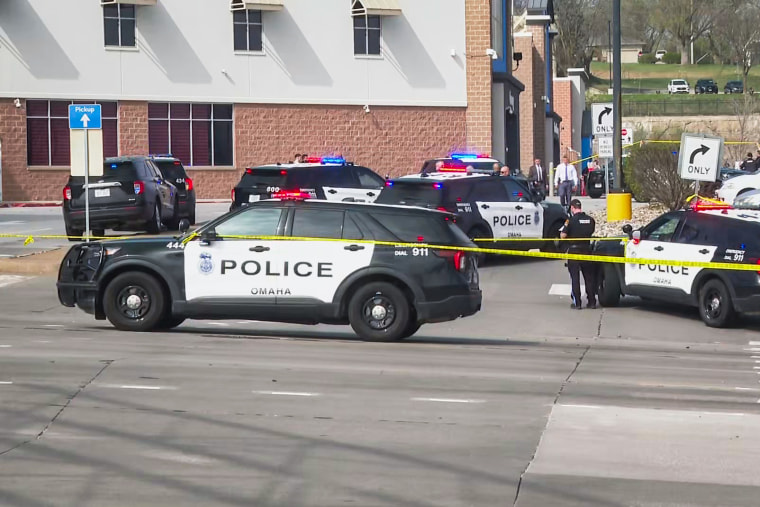 Police on the scene of the shooting Tuesday.WOWT
“By the time our doctor goes to look at her, she’s done what she was supposed to be doing while she’s in the community,” Beadle said. “So what reason would they have to assign her inpatient if she’s already been out for a year?”
Guzman was just one of the many people with mental health conditions who cycle in and out of the criminal justice system. Riley estimates that of the estimated 1,100 pretrial detainees in Douglas County jails, between 25% and 35% have mental health disorders, a quarter of which are severe. There is just one public mental health center in the region, he added.
In fact, half of all Nebraska residents — roughly 1 million people — live in a community without mental health professionals, according to the National Alliance on Mental Health, an independent organization.
“The information emerging about the child’s attacker is disturbing,” Gov. Jim Pillen said in a statement earlier this week. “Her prior acts of violence — including trying to set her father on fire and breaking into a pastor’s home with a knife and trashing it while he barricaded himself in a bedroom, for which she was found not responsible due to insanity — raise grave questions as to why she was free and on the street.”
A family struggles for help
Court records dating back at least to 2013 illustrate a difficult life for Guzman and those closest to her. She had been arrested for a number of incidents, including minor drug and traffic violations.
Guzman pleaded no contest to a felony assault charge in the 2018 altercation with her neighbor in her backyard. She did not go to jail but was given two years of probation and ordered to stay away from the neighbor.
After Guzman’s 2024 confrontation with her family, her stepmother said she feared for her life and did not want her stepdaughter to be released into her or her husband’s care, according to an affidavit. A protective order was issued for Guzman’s stepmother, and Guzman was ordered to stay away from her family’s home.
Guzman broke into a Catholic church armed with a knife on the same day in March 2024, according to court records, and told a priest that she would do “terrible things.”
“It is not my intent to hurt you,” she allegedly told the priest before systematically tearing things off the walls and piling furniture in several rooms. The priest hid upstairs during the rampage, according to court records.
Following the attack on him and his wife, Guzman’s father appealed to the county board of mental health to intervene in his daughter’s care, according to local news reports from 2024. In an interview with KETV, he said that his daughter desperately needed help but that the board did not respond to his petition.
When reached by phone, Guzman’s father declined to comment.
The Douglas County Board of Mental Health said it is prohibited by privacy laws to confirm if the petition was received or reviewed.
Hours before she was killed this week, Guzman had called 911 to report that she was the victim of a domestic violence assault. An Omaha Police Department spokesperson said officers took her to a local hospital to treat her alleged injuries, but Guzman asked to leave the medical facility before being seen by a doctor. Officers let her go, because they saw no reason to make her stay, according to the spokesperson, who added there has not been an arrest related to the domestic case.
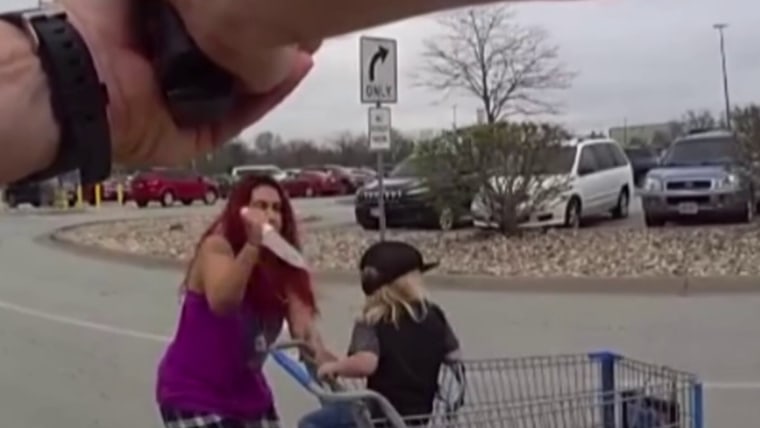
Later that morning, at around 9:13 a.m., police received reports of an armed woman inside Walmart. Surveillance video showed her approaching a 3-year-old boy and his caretaker while wielding a large knife she had taken from the store. With the knife in hand, Guzman forced the child’s caretaker to walk ahead of a shopping cart in which the little boy was seated, police said.
Guzman then instructed them to exit the store and walk into the parking lot. Officers arrived shortly after and ordered her to drop the knife multiple times. Guzman refused and instead slashed the boy’s face, Omaha police said in a statement.
Officers opened fire and Guzman died at the scene. The boy was taken to a local hospital with non-life-threatening injuries on his face and hand.
Because she was killed by police, the incident will be reviewed by a grand jury, officials said. The officers involved in her shooting are on administrative lead pending further investigation.
Following this week’s attack, Pillen said he has ordered his office to “identify weaknesses” in the state’s criminal, detention and mental health systems.
“This perpetrator was clearly dangerous and known to be so,” he said in a statement, adding that “she should not have been free to harm others.”