
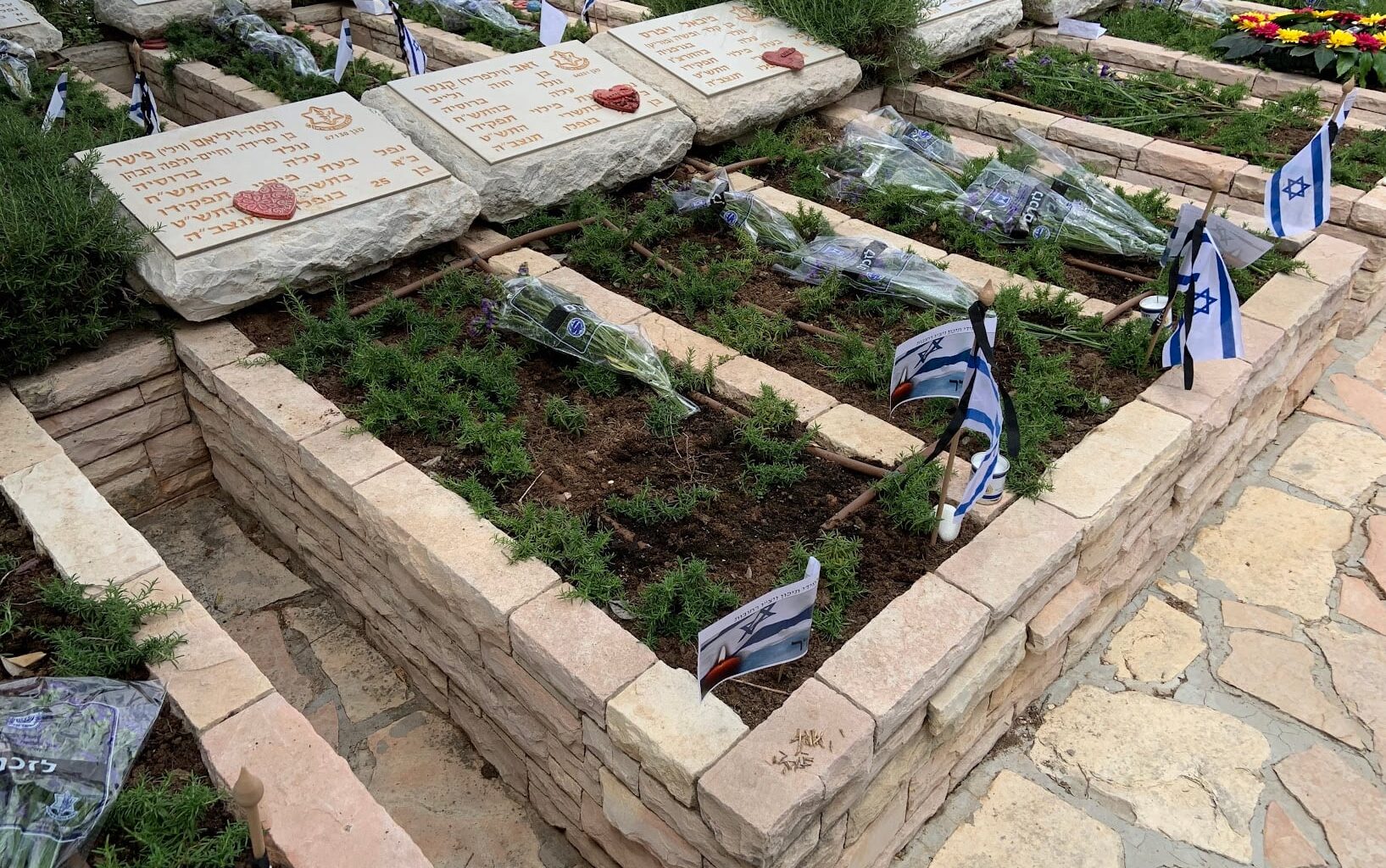
Unlike Israel’s Holocaust Remembrance Day, which is focused squarely on our painful past, the country’s annual Memorial Day for fallen soldiers and victims of terror a week later tends to be a far more visceral experience – with far newer memories.
Nearly everyone in Israel has encountered this grief directly, or at least knows someone close who has, so it all feels very personal and contemporary. This has become even more so since Oct. 7, 2023, given the cascade of casualties added on that horrific day and in the ongoing series of wars that have followed – including the current one with Iran.
But on this Memorial Day, I find myself looking back to Israel’s first casualties of war, those whose graves are rarely visited, but without whom Israel may not have existed in the first place.
They were known as members of Machal, the 4,000+ foreign volunteers who served in every branch of the new Israeli military, offering unparalleled combat experience from their World War II service.
Many are familiar with the Haganah, the Palmach and the Sabra icons of 1948 like Yitzhak Rabin and Ariel Sharon. But far less is known about those who likely contributed most to Israel’s hard-won independence. They were the ones with the training and combat chops to command larger, newly established bodies in the fledgling Israeli military, such as airborne squadrons or armored and infantry brigades.
Among the 123 who fell in the 1948 War of Independence were people like David “Mickey” Marcus, a U.S. Army colonel who became Israel’s first modern general and oversaw the Burma Road Project that broke the siege of Jerusalem. Or Eddie Cohen, a South African pilot who took part in Israel’s first ever aerial attack, widely credited for saving Tel Aviv from advancing Egyptian forces. Or George “Buzz” Beurling, a non-Jewish pilot who, as Canada’s top World War II ace, became known as “The Falcon of Malta.”
These characters, and many others, are fresh in my mind since they are among those featured in my recently published book: Zaidy’s Band, The Untold Stories of a Jewish Band of Brothers in World War II.
In the book, I set out to discover my Canadian grandfather’s own military past, a pursuit that ultimately evolved into a broader narrative about the Jewish men and women like him who fought in World War II, and whose legacy has remained jarringly absent in our collective consciousness.
While little is known about the significant service and sacrifice of the 1.5 million Jewish soldiers who fought in World War II, even less is told about those select few who chose to channel that life-altering experience toward the fight for Israeli independence.
[Could insert one of these images of Wilf Canter here]
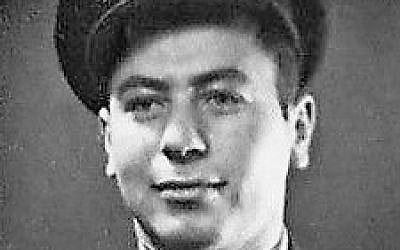
Wilf Canter (Photo: Courtesy of Aron Heller)
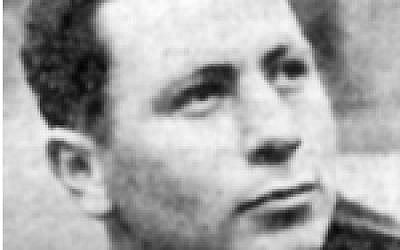
Wilf Canter (Photo courtesy of Aron Heller)
My grandfather was not one of them, but his good friend Wilf Canter was. After being shot down twice in World War II – once surviving for nine days in hiding on a broken leg and another for nine months in a notorious Nazi POW camp – he joined the newly minted Israeli Air Force as one of its few aviators with significant operational experience.
The first part of my book is devoted to the fate of the final flight he piloted in Israel, and how his crew of fellow foreign volunteers came to represent for me a potent symbol of early Israel’s desperate fight for survival. Since they left few descendants behind to advocate for their commemoration, I’ve made a point in recent years of making the pilgrimage to their respective graves in Rehovot, Haifa and Rosh Pina.
Perhaps the most powerful of these visits came on Yom Hazikaron exactly four years ago. I had just published an article about the most captivating character of the bunch and felt compelled to join the masses at the Rehovot military cemetery that day.
The grounds were packed with thousands of mourners gathered tightly around the 438 graves of fallen soldiers. It was all hustle and bustle as soldiers chatted and grieving mothers wept over gravesites.
But when the siren wailed at 11:00 a.m., all went silent, and everything came to a standstill as it did everywhere else in Israel at that moment. It’s an experience I’ve had so many times in so many different circumstances: with classmates at school, with fellow soldiers on military bases, with the country’s top leadership at the national cemetery in Jerusalem, alongside other drivers who had stopped along the side of a highway, or just alone at home. Each locale added its own unique experience.
However, looking down at the graves of these men whose stories I had resurrected generated its own kind of emotion. To my surprise, I found a half-dozen air force officers and soldiers there who joined me. I learned from them that the military makes sure not a single fallen soldier’s grave is unattended on Yom Hazikaron, dispatching active service members to watch over the plots of those who died decades earlier and don’t have next of kin to pay homage to them.
As it were, the soldiers I encountered learned about these men from a previous story I had written about them, and which was featured in the memorial hall at their base. So, on that Israeli Memorial Day, I improbably found myself fielding questions from young soldiers about the lives of these long-forgotten casualties who suddenly appeared forgotten no more.
That profound moment galvanized a recurring sentiment I found while unpacking the plights of many of the other characters in my book.
Nearly all of them are gone now. While their stories may seem like a mere ode to history, I have come to see them as remarkably relevant. They speak to us today as we endure perhaps the most dangerous wave of antisemitism worldwide since then and the most perilous period for Israel as well.
The paths they took and the choices they made were carved among similar dilemmas of faith, values, belonging, courage and sacrifice that still define the Jewish experience today. This is not an exercise in nostalgia. They remind us of what we fight for and there is much we can still learn from them.
As I have navigated through the modern-day challenges of what it means to be an Israeli and a Jew, I’ve often looked back at these stories in search of guidance and inspiration.
They were among the last remaining voices from that historic era. Hearing and remembering them enriches our understanding of their time and ours – especially today.
–
Zaidy’s Band: The Untold Stories of a Jewish Band of Brothers in World War II is available for purchase at utpublishing.com and major book retailers. Learn more about Aron Heller at www.aronheller.com
Aron Heller is a reporter, writer and broadcaster, and the author of Zaidy’s Band, The Untold Stories of a Jewish Band of Brothers in World War II. He focuses on technology storytelling and podcasting and was previously a long-time Associated Press correspondent and journalism lecturer. He has covered ten Israeli elections, four Mideast wars and dozens of other major world events across five continents.