
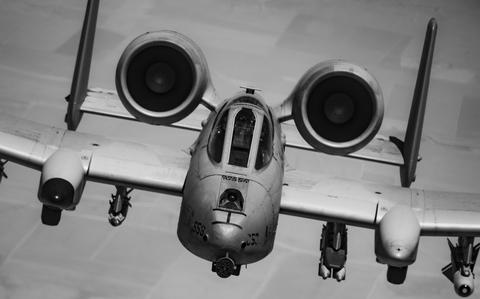
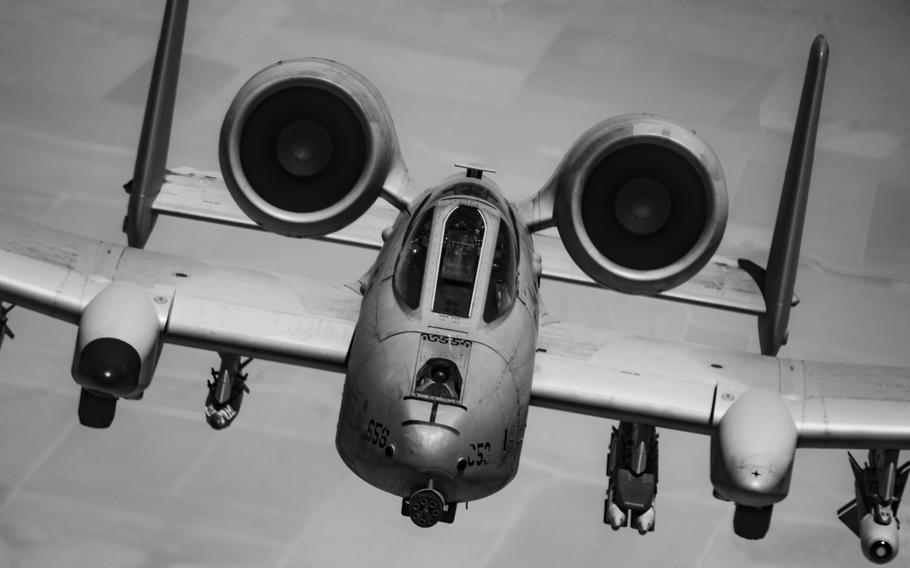
A U.S. Air Force A-10 Thunderbolt II from Selfridge Air National Guard Base’s 107th Expeditionary Fighter Squadron flies over an undisclosed location within the U.S. Central Command area of responsibility on July 22, 2024. (U.S. Air Force)
In an about-face from earlier years, the Air Force announced Monday that it will maintain the A-10 Thunderbolt II ground-attack jet to 2030.
“We will EXTEND the A-10 “Warthog” platform to 2030,” Air Force Secretary Troy E. Meink said in a post on X. “This preserves combat power as the Defense Industrial Base works to increase combat aircraft production.”
The move means that for the first time in more than a decade, the Air Force will not be attempting to cut or completely shut down the use of the twin-engine jet known best by its nickname, “Warthog.”
The Pentagon is releasing its detailed 2027 spending plan this week, and expectations were that the Air Force would attempt to cut the A-10 again.
The Air Force first tried to get rid of all the A-10s in 1984, the year production ended, according to a 2015 Congressional Research Service report. Congress has repeatedly balked at Pentagon attempts to zero out the A-10, most recently last year when it proposed a one-year phase-out of the remaining 162 jets in the Air Force inventory.
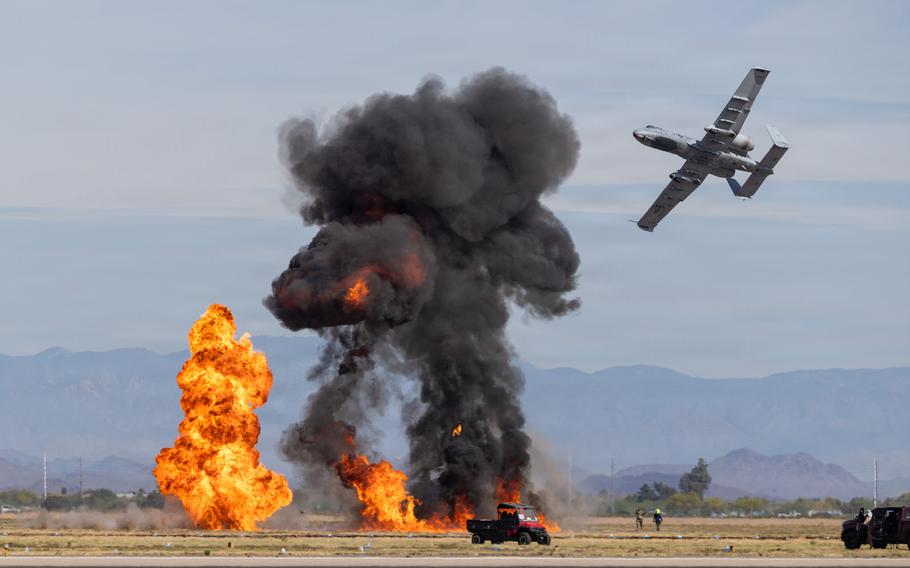
An A-10 Thunderbolt II flies over a combined arms demonstration at the Luke Days air show on March 22, 2026, at Luke Air Force Base, Ariz. (Hampton Stramler/U.S. Air National Guard)
Congress said no and required the Air Force to maintain more than 100.
The Air Force seemed to be moving toward more cuts this year. The Pentagon announced that an April 3 graduation ceremony at Davis-Monthan Air Force Base, Ariz., marked the last class of Warthog pilots. The Air Force has also closed its A-10 specialized maintenance hub at Hill Air Force Base, Utah.
But the A-10 continues to fly. More than a dozen have been sent to the Middle East to fly missions as part of Operation Epic Fury, the U.S. attacks on Iran.
One A-10 was lost on April 3 during the effort to help rescue crew members of a downed Air Force F-15 in Iran. Known for being able to absorb ground fire, the A-10 was able to fly to friendly airspace over Kuwait before the pilot ejected to safety.
The A-10 began production at Fairchild Republic’s factory in Farmingdale, N.Y., in 1975, with the last plane rolling off the production line in 1984. A total of 713 were built for the Air Force.
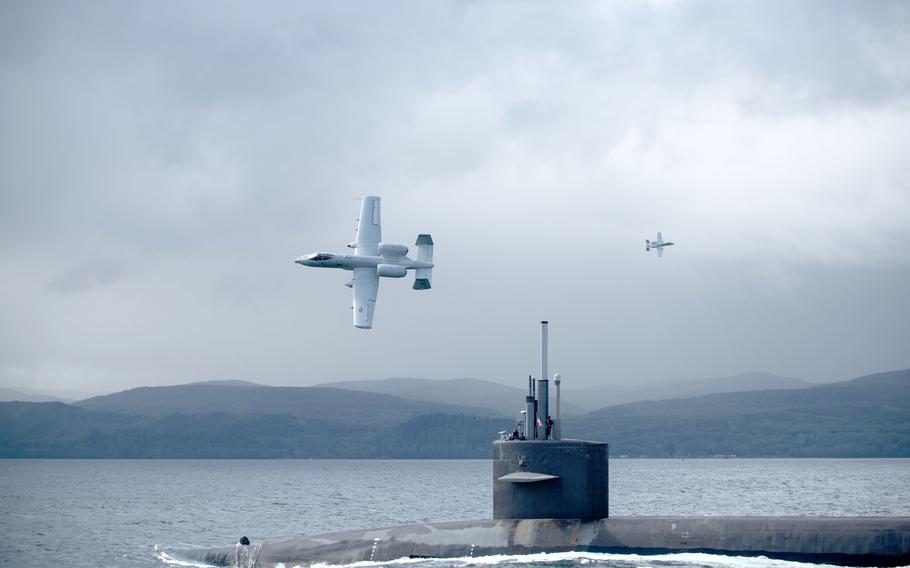
The Ohio-class ballistic missile submarine USS Nebraska transits the Strait of San Juan de Fuca escorted by U.S. Air Force A-10 Thunderbolt II aircraft and U.S. Coast Guard screening escort vessels. (Gwendelyn Ohrazda/U.S. Navy)
Armed with a GAU-8 30mm cannon firing 3,900 rounds per minute, it was originally intended as a Cold War-era Soviet tank buster. Instead, with the collapse of the Soviet Union, the A-10 earned a reputation for close air support in Operation Desert Storm and the wars against terrorism following 9/11.
Supporters of the Warthog say it fills a one-of-a-kind role in combat, able to fly low and slow over the battlefield, raking enemy positions with cannon and carrying loads of bombs and rockets for close air support.
But the Air Force had continued to argue that the A-10 is a weapon ill-suited for what it saw as the future likely wars against “near-peer” adversaries such as Russia and China with sophisticated anti-aircraft radar and weapons.
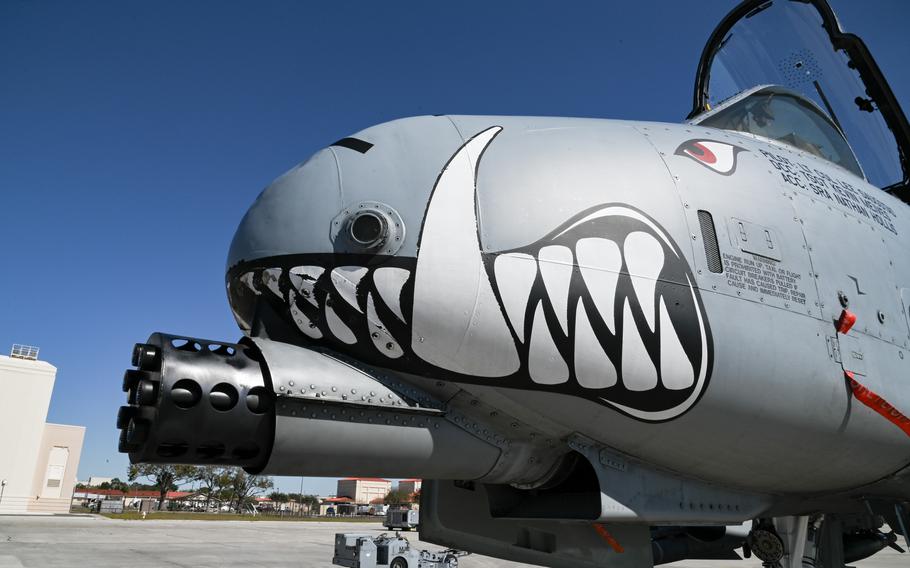
An A-10C Thunderbolt II of the 303rd Fighter Squadron at Whiteman Air Force Base, Mo, Feb. 6, 2024, sits on the tarmac at MacDill Air Force Base, Fla. (Sterling Sutton/U.S. Air Force)
Critics of the A-10 argue it is siphoning money and manpower away from its preferred programs, such as the F-35A Lightning II fighter, the F-15EX Eagle, B-21 Raider stealth bomber and planning for the next generation F-47 fighter.
Those still flying are an average more than 43 years old and require increased maintenance. In the 2026 budget plan, the Air Force estimated it would save over $400 million by dropping the A-10.
In his post on X, Meink said there would be “more to come” on the decision.
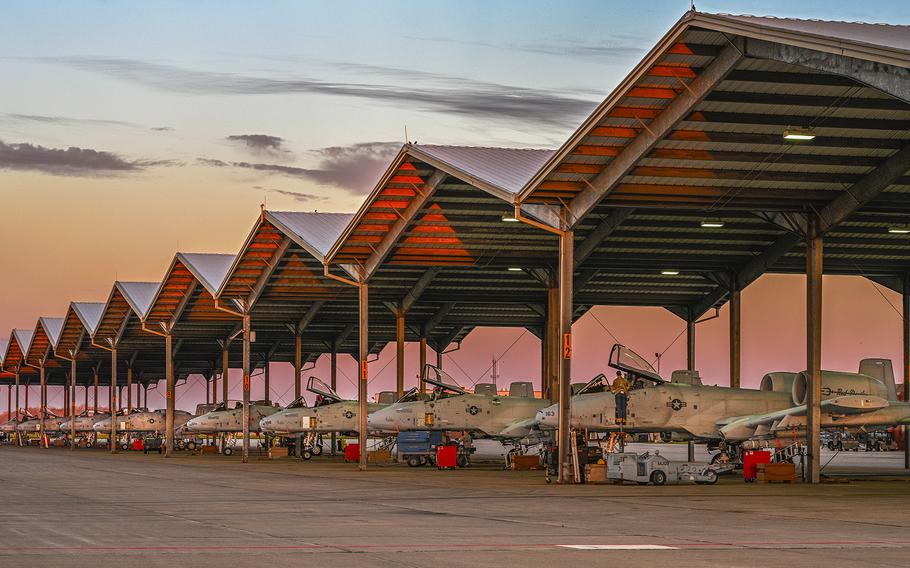
A row of A-10 Thunderbolt II aircraft, also known as “Warthogs,” flown by the 107th Fighter Squadron at Selfridge Air National Guard Base, Mich., on Nov. 2, 2022. (Terry Atwell/U.S. Air National Guard)