
(
Apr. 21, 2026
/ JNS
)
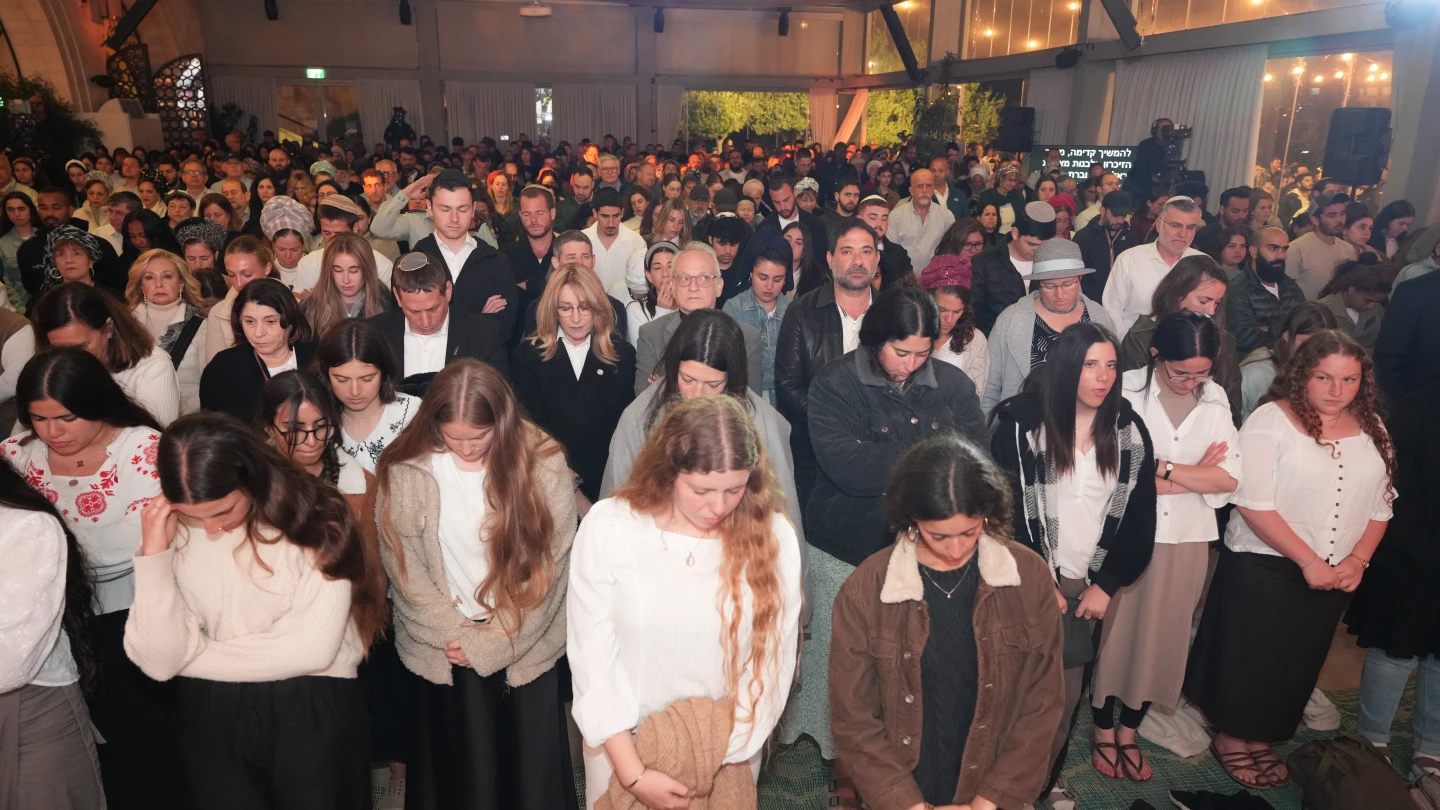
The first wish, everyone at the Haas Promenade understood, could never be granted. The door would not open. Their son, daughter, husband, wife, brother or sister—the people they had lost—were not coming home. And so, on the eve of Yom Hazikaron, more than 1,000 bereaved Israelis gathered under the Jerusalem sky to grapple together with what comes next.
The annual memorial ceremony of OneFamily—Israel’s leading organization supporting victims of terror and war—centered this year on a single, searing question posed to every bereaved family in attendance: What is your deepest wish? The answer, spoken in different voices and heart-wrenching tones throughout the night, was always the same in its first breath.
Then came the harder question: What is your second wish?
OneFamily founding director Chantal Belzberg framed the evening’s theme around what she called “Option B”—the choice to keep living when the life you planned has been shattered.
“Option B is not surrender,” she told the audience. “It is courage. It is the decision to find the strength to get up in the morning, even when the heart is heavy with grief.”
Belzberg described the more difficult option as the growth that can emerge from trauma—the conviction that even when life has been shattered, something new, strong and filled with love can be built from the broken pieces.
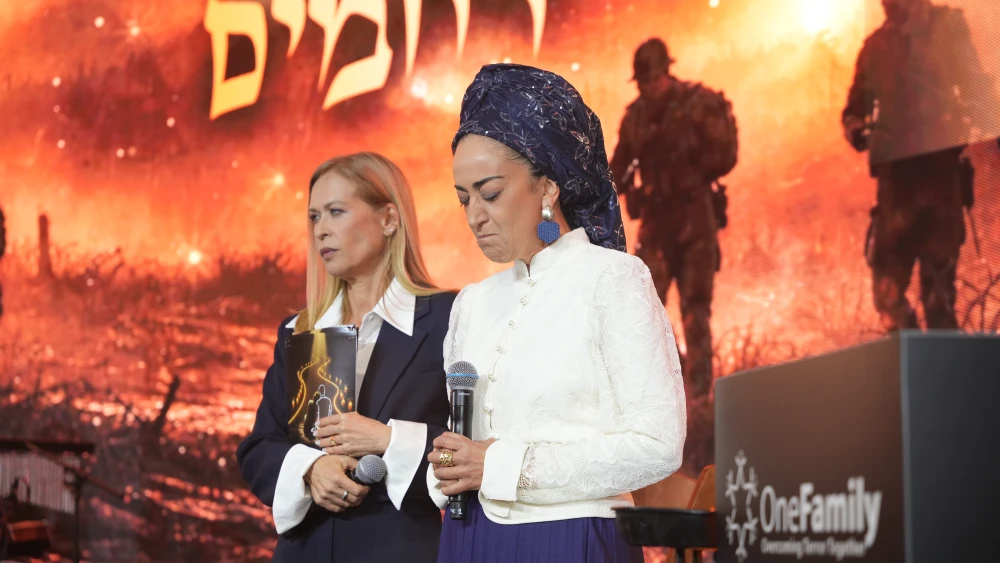
Hosts of the OneFamily ceremony Lali Derai and Liat Smadga, whose sons, Sgt. Saadia Yaakov and Staff Sgt. Omer Smadga, were killed in Gaza on June 20, 2024. Photo by Meir Pavloski.
The ceremony was co-hosted by two women brought together by shared loss. Lali Derai is the mother of Sgt. (res.) Saadia Yaakov Derai; Liat Smadga is the mother of Staff Sgt. (res.) Omer Smadga. Both young men fell in combat in Gaza on June 20, 2024.
“Fate bound us together forever,” the two mothers told the audience. “Saadia and Omer fell together, at the same time, in the same incident. Since then, we have become one family, connected by something deep and unbreakable through the memory of our sons.”
Throughout the evening, families took the stage to share fragments of the lives they are carrying forward. Each story was different, but the grief was shared.
Moriel Zagdon, whose daughter Rinat Hodaya was murdered at the Nova Music Festival on Oct. 7, 2023, at age 23, spoke about the relationship between memory and healing.
“Memory brings comfort, and comfort grows out of memory,” he said. “Comfort is not denial. It is the decision to live, to rebuild, to grow.”
Nadav Elkabetz spoke about his sister Sivan z”l, murdered alongside her partner Naor Hasidim in their home in Kfar Aza on Oct. 7. Both were 23 years old and had been together for seven years. Before he spoke, the audience heard a song written by his father, Shimon Elkabetz, titled “Never Again.”
“Our responsibility as families, as a society, is to tell the story, to bear witness, to hold onto the truth even when it’s unbearable,” Nadav said. “Because if we don’t tell it, someone else will. Sivan used to say, ‘A day without a smile is a day wasted.’”
Millie Zim, mother of Staff Sgt. Ariel Zim, who fell in combat in northern Gaza on May 10, 2024, at age 20, delivered a tribute that drew audible emotion from the crowd.
“On your last Shabbat, you said to me, ‘Mom, imagine: in a few years I’ll be married, I’ll have children,’” she recalled. “You taught me not to give up. And I won’t give up. I am proud to tell your story. And I miss you endlessly.”
Niv Teka spoke about his brother, Binyamin Teshager Teka, who fell defending the Kissufim outpost on Oct. 7 at age 21.
“He loved the army, he loved his country, and he loved his family with all his heart,” Niv said. “I believe there will be joy again. I believe our home will find its music again. And I will carry him with me always.”
Shira Steinberg, a National Service volunteer at OneFamily and daughter of Col. Yonatan Steinberg z”l—one of the first officers to respond to the Oct. 7 attacks, who was killed that morning—shared words her father had delivered at a previous Yom Hazikaron ceremony.
“Memorial Day is also a day that lifts us to see the bigger picture,” he had said. “You meet those who fell in Israel’s wars and understand that they are part of the generations who fought for this land.”
Looking out at the audience, Shira added, “Dad, thank you. Your words serve as a compass for us now.”
The ceremony also highlighted families coping with compounded loss. Yael Kedar lost both parents, Shmuel and Ofra, in the Hamas assault on Kibbutz Nir Oz. Eti Bracha is now raising her grandchildren after her daughter, Gal and son-in-law Naji, were murdered at the Nova festival.
The memorial torch was lit by the Katz family: Smadar Katz and her four children, who lost their husband and father, Oren Katz, in an Iranian missile strike on Beit Shemesh on March 1, 2026. Smadar was also injured in the attack. Their son Yosef recited Kaddish. Meir Hershkovitz, father of Maj. Netanel Hershkovitz, delivered the memorial prayer.
Rabbi David Hatuel, president of OneFamily, also addressed the gathering. Hatuel’s wife Tali z”l, who was eight months pregnant, and their four daughters—Hila, Hadas, Roni and Meirav—were murdered in a terror attack on the Kissufim Road in May 2004. He has since remarried and rebuilt his family, embodying the long arc that Option B sometimes demands.
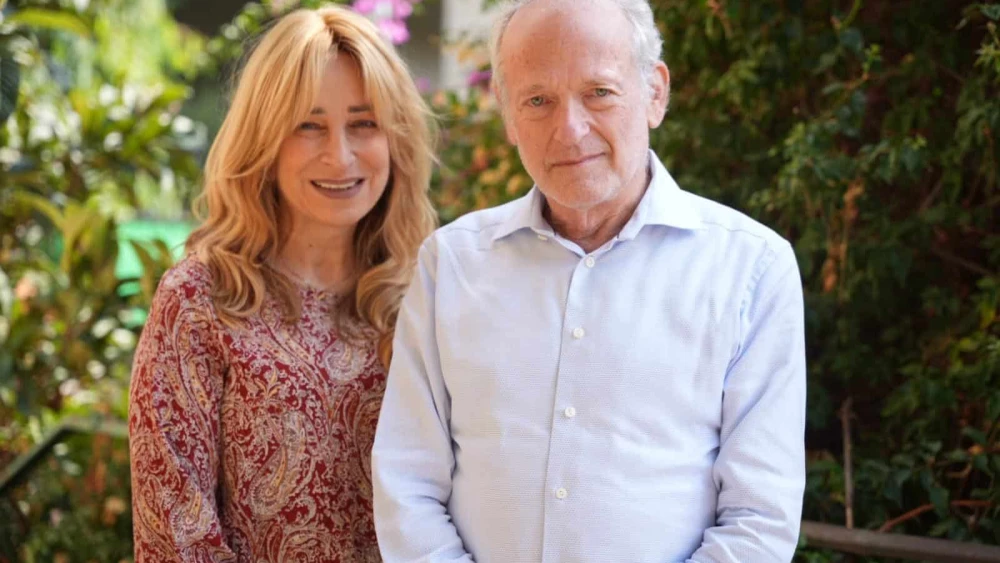
Chantal and Marc Belzberg. Credit: Courtesy of OneFamily.
Spotlight on Belzerg
In one of the evening’s most emotional moments, the bereaved families on stage turned the spotlight back on Belzberg herself. Speaking on the eve of receiving the 2026 Israel Prize, she said she would stand at the ceremony not in her own name, but as their messenger.
“This prize is the embrace of the people of Israel for you,” she said, “and a national recognition that even with broken hearts, you are the backbone of this nation.”
“For Israel’s bereaved families, Yom Hazikaron isn’t just one day a year—they live this pain every single day,” Belzberg added. “Sadly, since Oct. 7, thousands of new families have joined us. We will continue to be there for them, to kindle the point of light, and to live the second wish each day anew—choosing life, and choosing it together.”
According to figures shared at the ceremony, 25,650 individuals have fallen in defense of the Jewish homeland since 1860. Since last Yom Hazikaron, 174 names have been added to the list, along with 54 disabled veterans who died of injuries sustained in service and were officially recognized as fallen.
After the formal ceremony ended, many families remained at the Haas Promenade deep into the night, singing, speaking and sharing memories beneath the Jerusalem sky. The informal gathering has become its own tradition within the OneFamily community, reflecting the organization’s core belief that within this extended family, there is space to cry, to laugh and, above all, to remember together.
Rachel Moore, a longtime supporter of OneFamily who attended the ceremony, described the impact of the evening.
“I left filled with sadness at the pain our people have endured and are enduring,” she said. “It is a very difficult privilege to understand the individual stories of so many families torn apart. At the same time, people outside Israel may not fully comprehend how deeply Israelis feel that we have something worth defending—the love for the country, the land and the commitment to one another was profoundly present in the room.”
The ceremony was livestreamed and reached thousands of viewers worldwide with English subtitles.
OneFamily (onefamilytogether.org) is Israel’s leading organization supporting victims of terror and war and their families.