

This is a weekly column where Jon Mackenzie notices something from one of the weekend fixtures in the Premier League. Read last week’s inaugural edition here.
When it comes to finding solutions on a football pitch, it’s easy to fall into the trap of thinking that innovation must come out of nowhere, hitting a player, coach or analyst like a bolt out of the blue in the same way that the concept of displacement came upon Archimedes in the public baths of Syracuse.
But in some instances, tactical innovation can occur by looking backwards. In fact, did you notice that Pep Guardiola has started looking back in time to find tactical precedents to solve modern problems? And one of these tactical precedents has been causing Arsenal several problems in their past few fixtures with Manchester City.
Before we get to that, though, we need some context.
Over the past few seasons, the Premier League has shifted to a more ‘man-oriented approach’ to defending. When a team are trying to build attacks from the back, their opponents’ players will jump upfield towards them and attempt to go man-to-man around the ball, making it hard to maintain possession.
In this instance, when the red team’s goalkeeper passes out to the left centre-back, the blue team’s players all look to lock onto an opponent around (and including) the red team’s centre-back who is in possession.
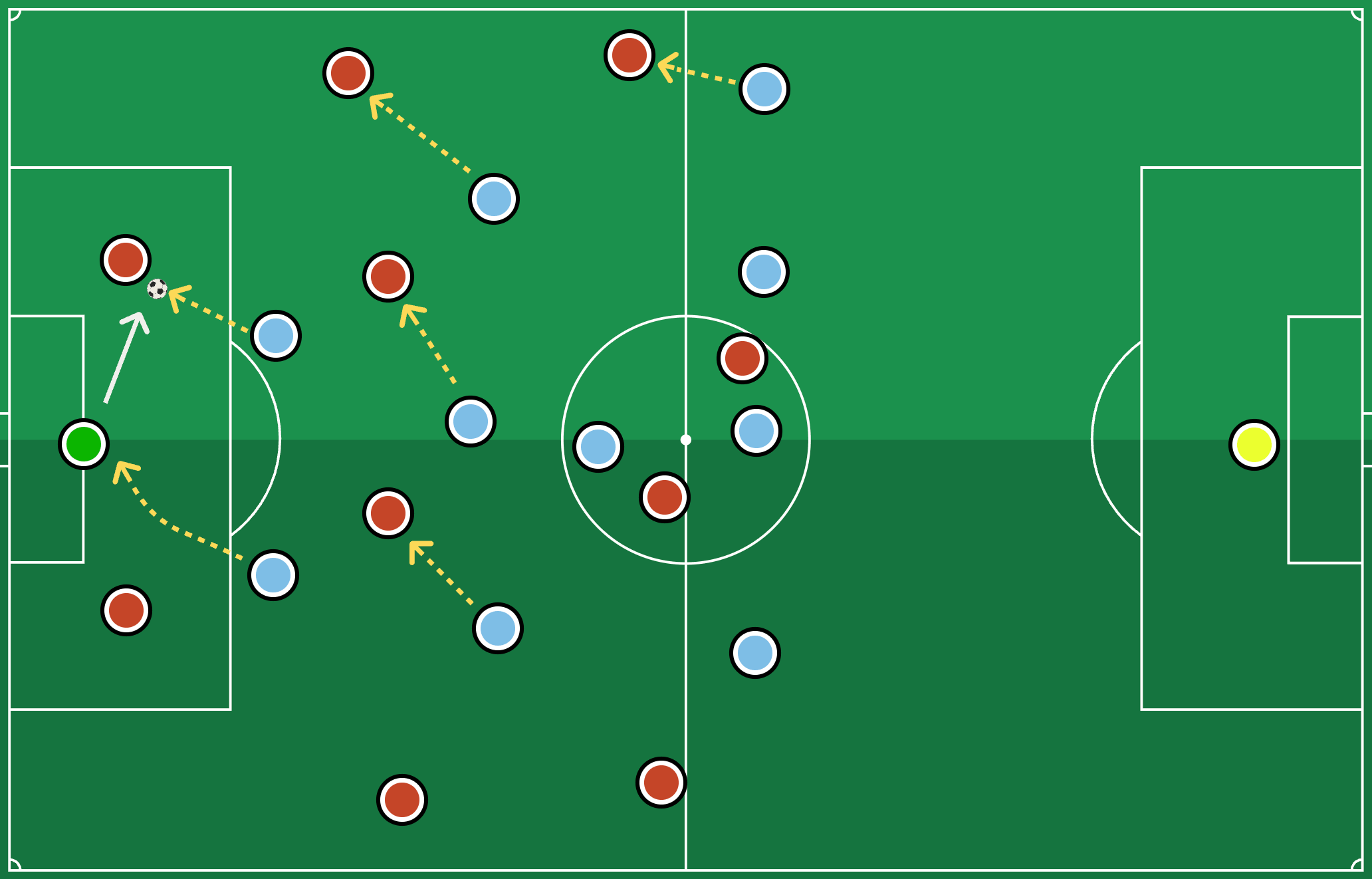
For this centre-back, all easy passing options become limited and, under pressure from an opponent, the likelihood of playing the ball to a team-mate successfully is significantly reduced.
If the blue team time their man-to-man press correctly, they can force the red team to lose the ball either immediately through the pressure on or around the ball or indirectly through a forced risky pass.
Of course, necessity is the mother of invention — or innovation in this instance — and so, in this new man-to-man-oriented age, we’ve seen teams find new build-up solutions.
One of the principal answers to the puzzle has been player rotation.
In a world where man-to-man logics are employed defensively, the basic idea is that you are not covering space but individuals. In other words, this is about achieving proximity to opposition players so that space doesn’t matter. To undermine this approach, then, the team in possession have to establish distance between their players and their markers. In tactical parlance, your players must generate ‘separation’ from their opponents.
Player rotation can help generate separation. By shifting positions in the build-up phase, you pose questions for your opponent. Do they track their players everywhere, leaving big spaces that can be exploited if someone evades their marker? Or do they let their player go, giving the opponent a free, unmarked passing option?
Arsenal are very good at using these sorts of rotations to generate ball progression.
In this example from last month’s 2-1 win against Chelsea at the Emirates Stadium, Mikel Arteta’s side are trying to build up an attack against a man-to-man approach.
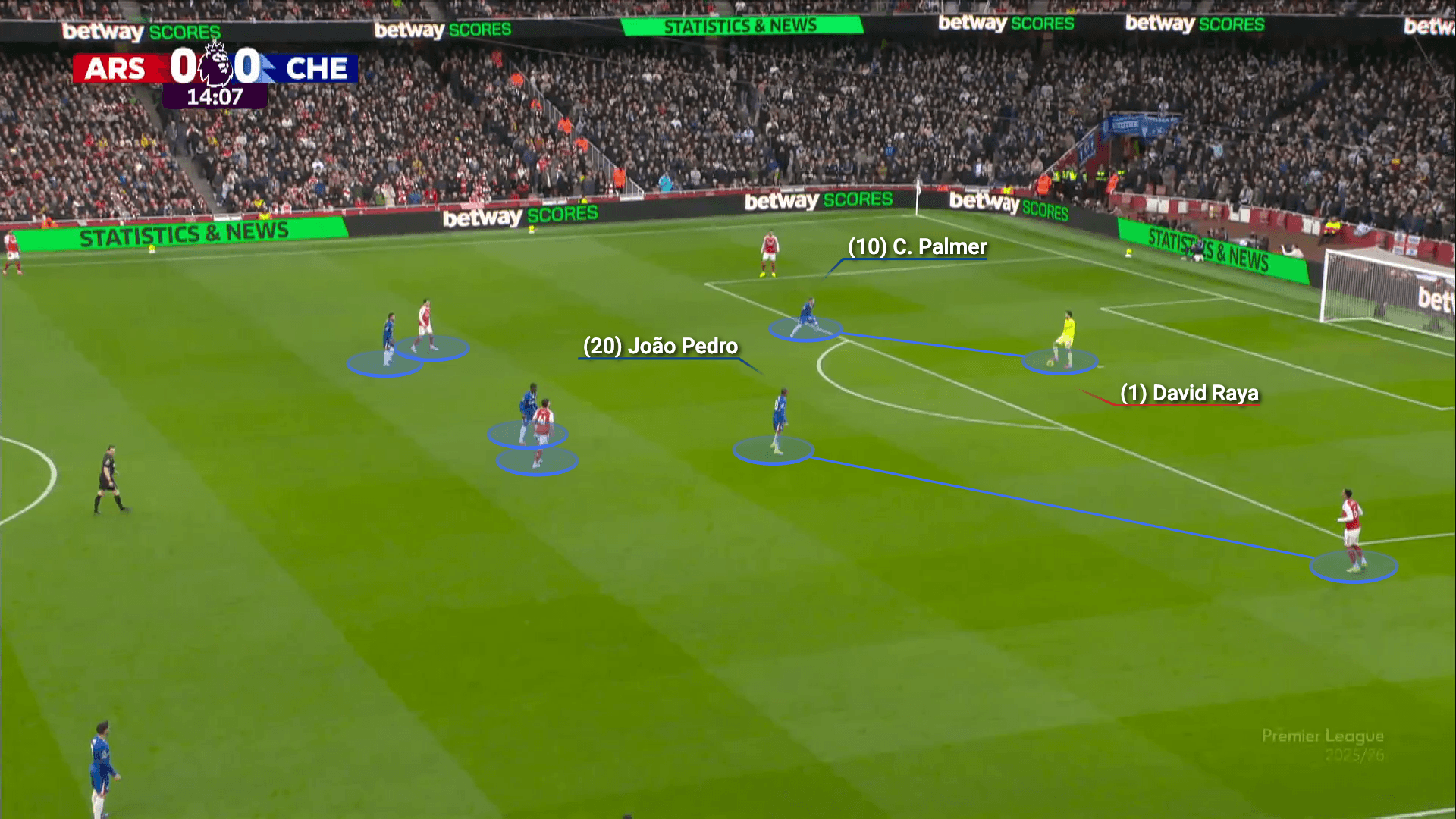
With goalkeeper David Raya on the ball, Cole Palmer puts him under pressure while also closing off the passing lane to William Saliba. On the other side of the pitch, Joao Pedro has good access to Gabriel should Raya choose to pass to him. Elsewhere, the Chelsea players are closely marking their Arsenal counterparts.
At this point, Declan Rice drops deep to give Raya a passing option. In doing so, he drags Moises Caicedo with him, creating space in the midfield. Keep that voided area in mind because it will be accessed by another Arsenal player in a moment.
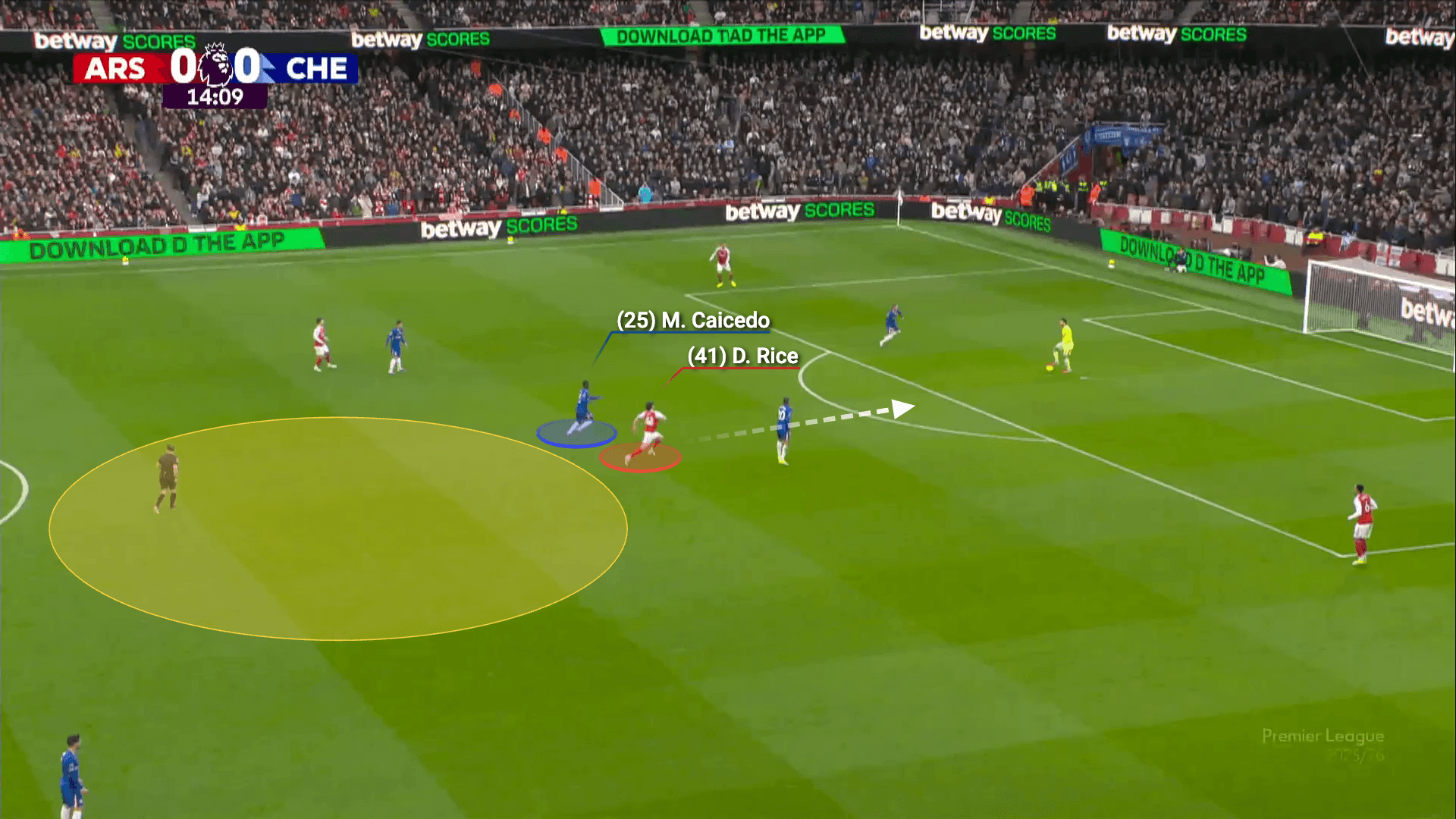
Raya plays the ball to Gabriel and Joao Pedro closes him down comfortably. But we can already see left-back Piero Hincapie pushing up the pitch, dragging his marker, Pedro Neto, with him.
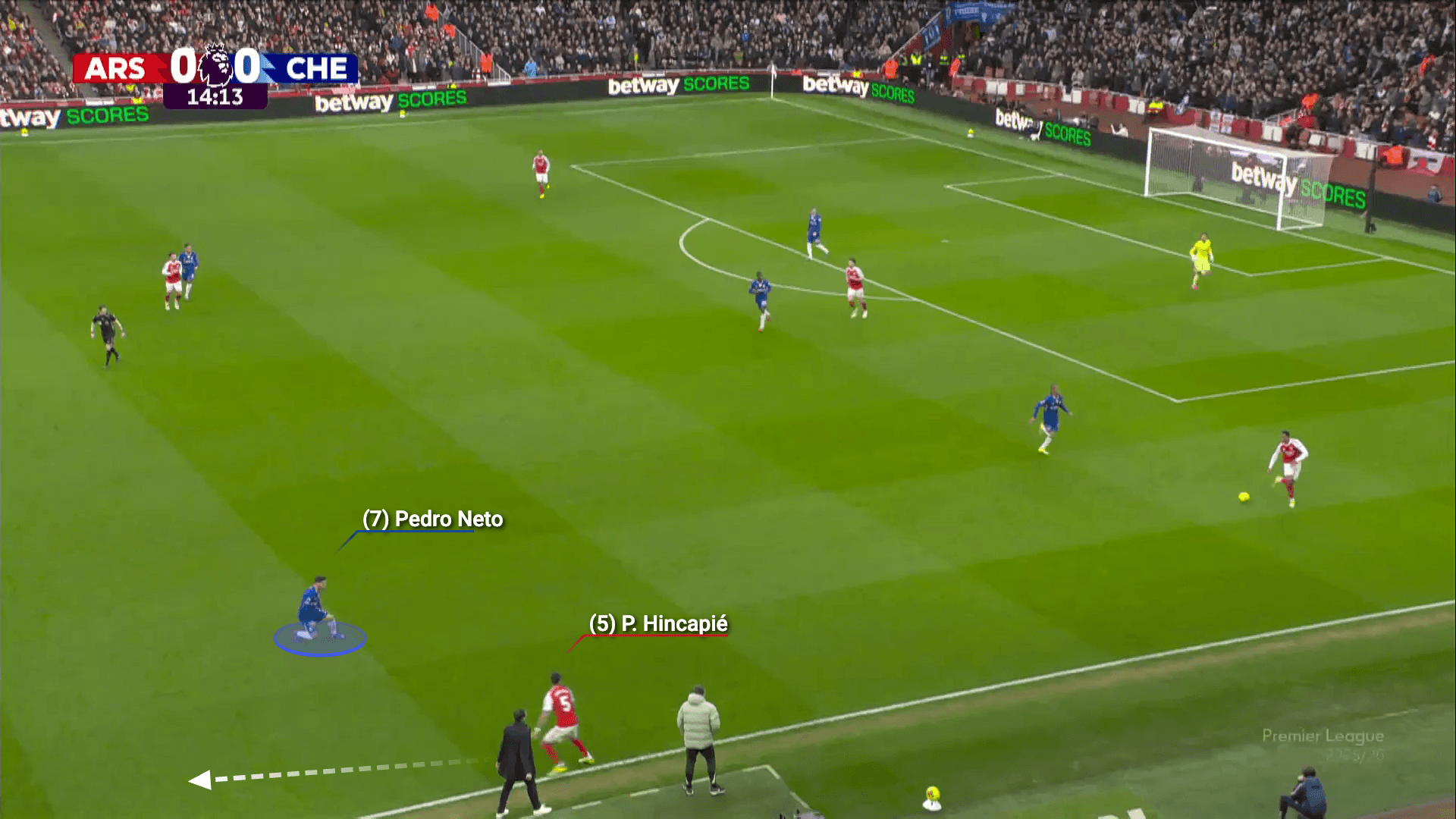
Hincapie can make this movement because team-mate Leandro Trossard is already dropping into that space Rice vacated moments earlier.
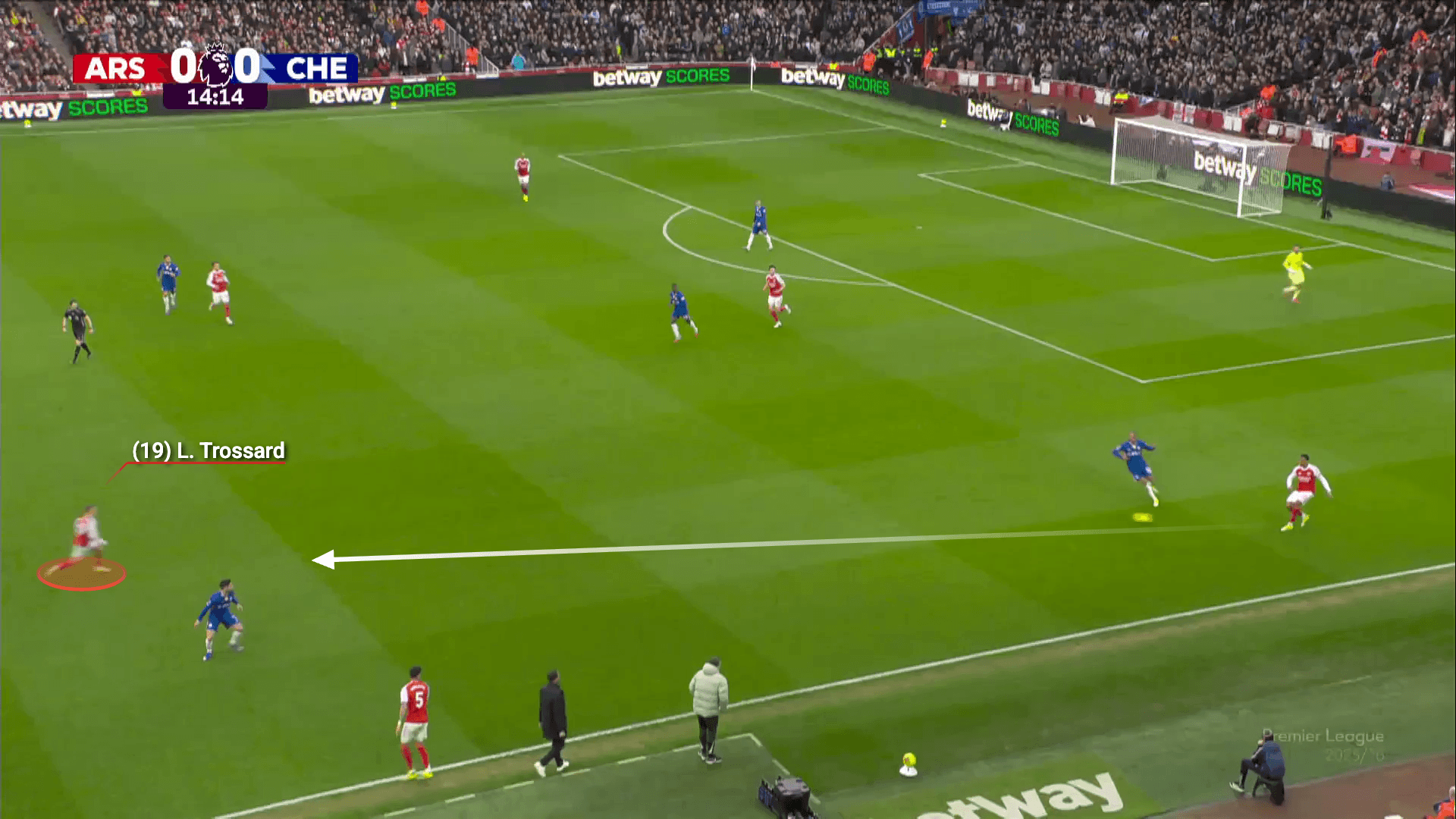
Dropping at speed helps Trossard arrive in the space ahead of his marker, Reece James, who is chasing him.
Not only have Arsenal generated enough separation for Trossard to receive the ball, but they have also opened space in the channel on that side for Hincapie to step into.
But the rotations don’t end there — Trossard plays the ball back to Raya and continues his run into the space where you might expect Rice to be. Recognising this (and the fact that Hincapie has stepped up to replace Trossard’s position), Rice moves out into the left-back zone.
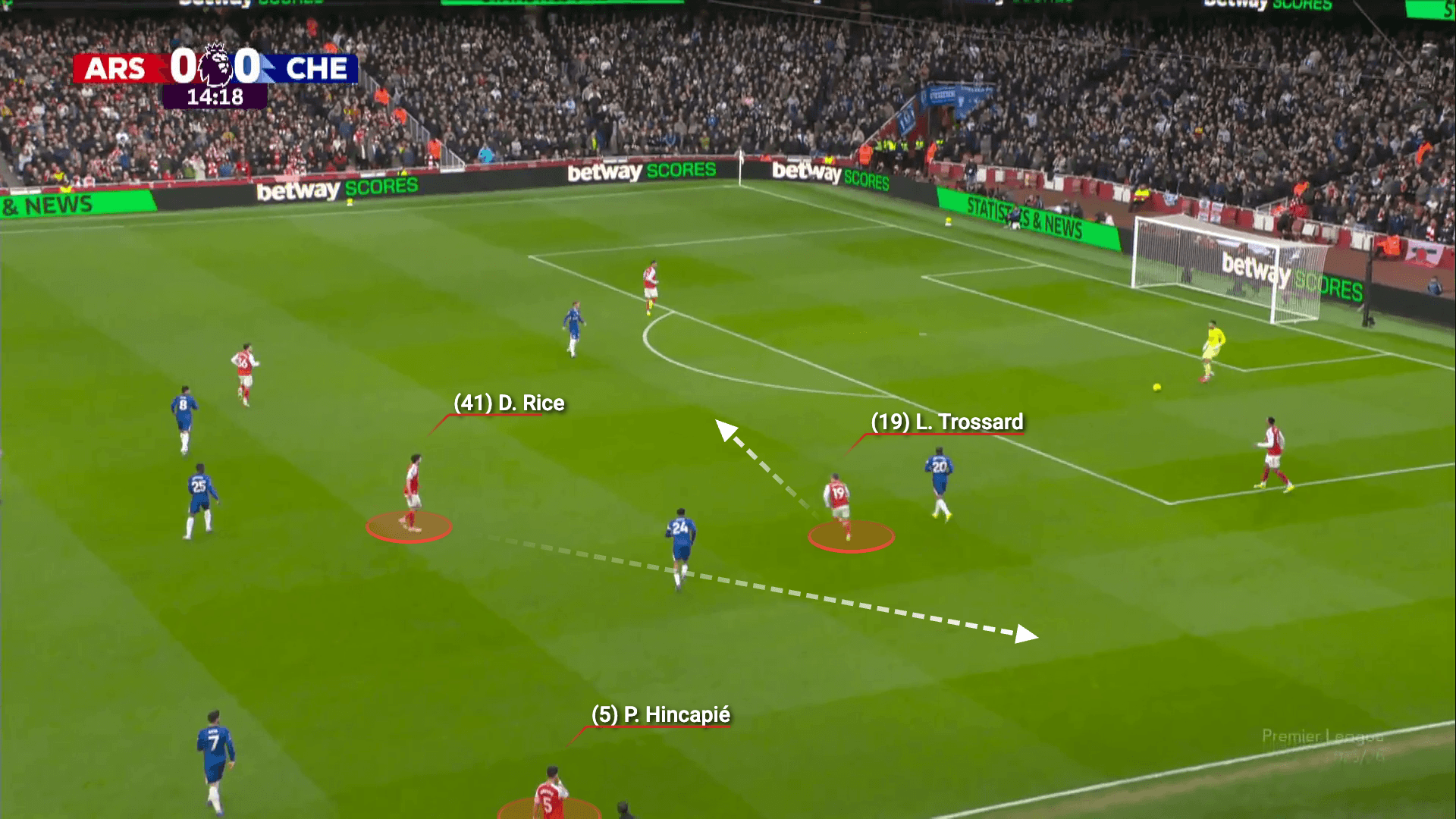
As they move the ball to the other side of the pitch, Trossard is now playing as a central midfielder, Rice is a left-back and Hincapie has gone into the left-winger slot.
Using these kinds of rotations, Arsenal destabilise their opponents, pull their defensive structure apart and create the separation necessary to exploit the gaps that open up.
But what if the opponents aren’t using these principles to cause you problems in build-up?
This was precisely what was at stake in March’s Carabao Cup final against City, because in that game, Guardiola oriented his team to mark Arsenal more zonally in a 4-2-4 block, rather than going man-to-man.
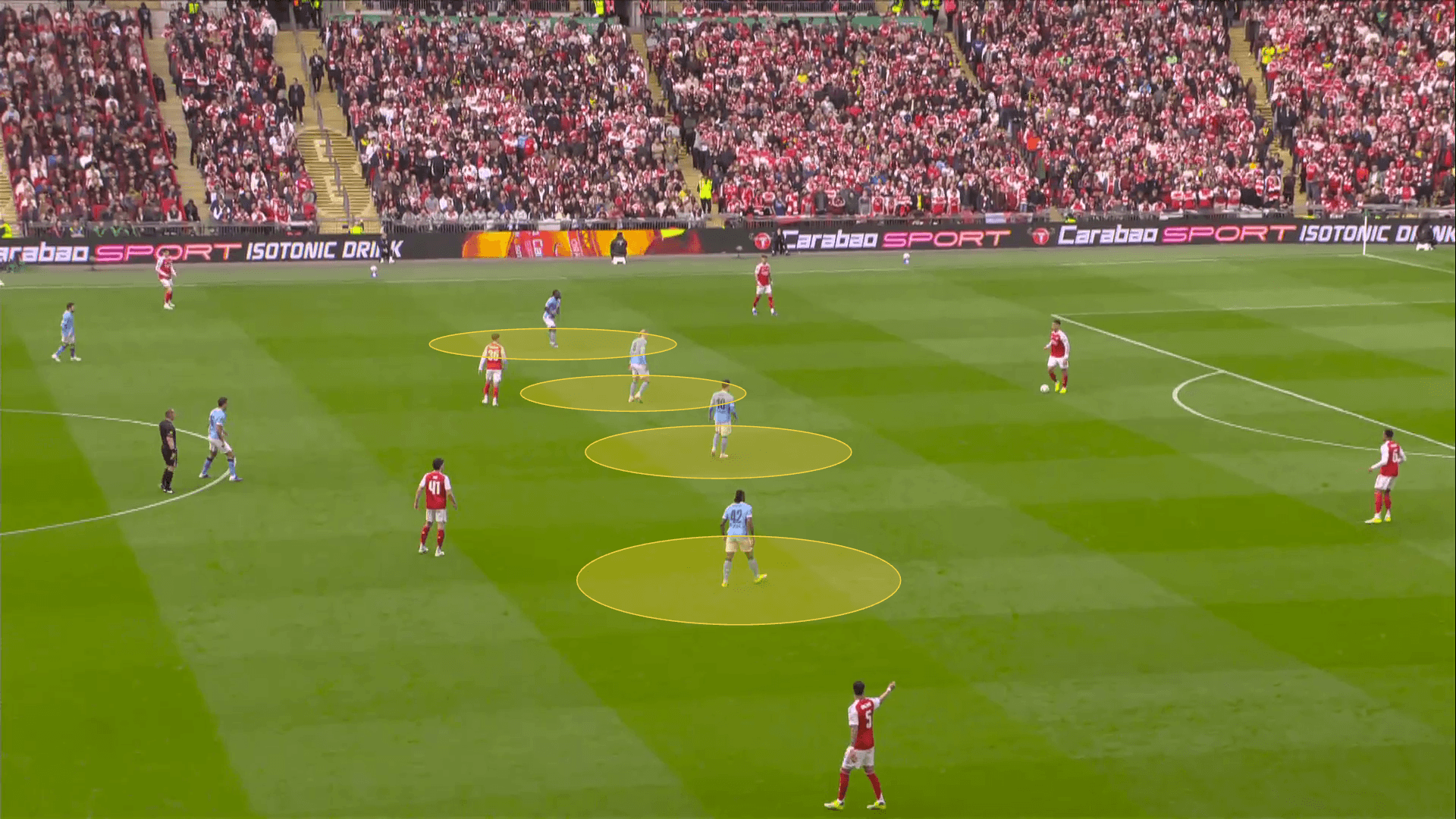
The plan was to prevent Arsenal’s pivots (the players who help out in the middle of the pitch in build-up) from influencing the game. City did this by getting their front line to sit in front of these pivots, blocking the passing lanes into them — or at least making any possible balls to these players incredibly risky.
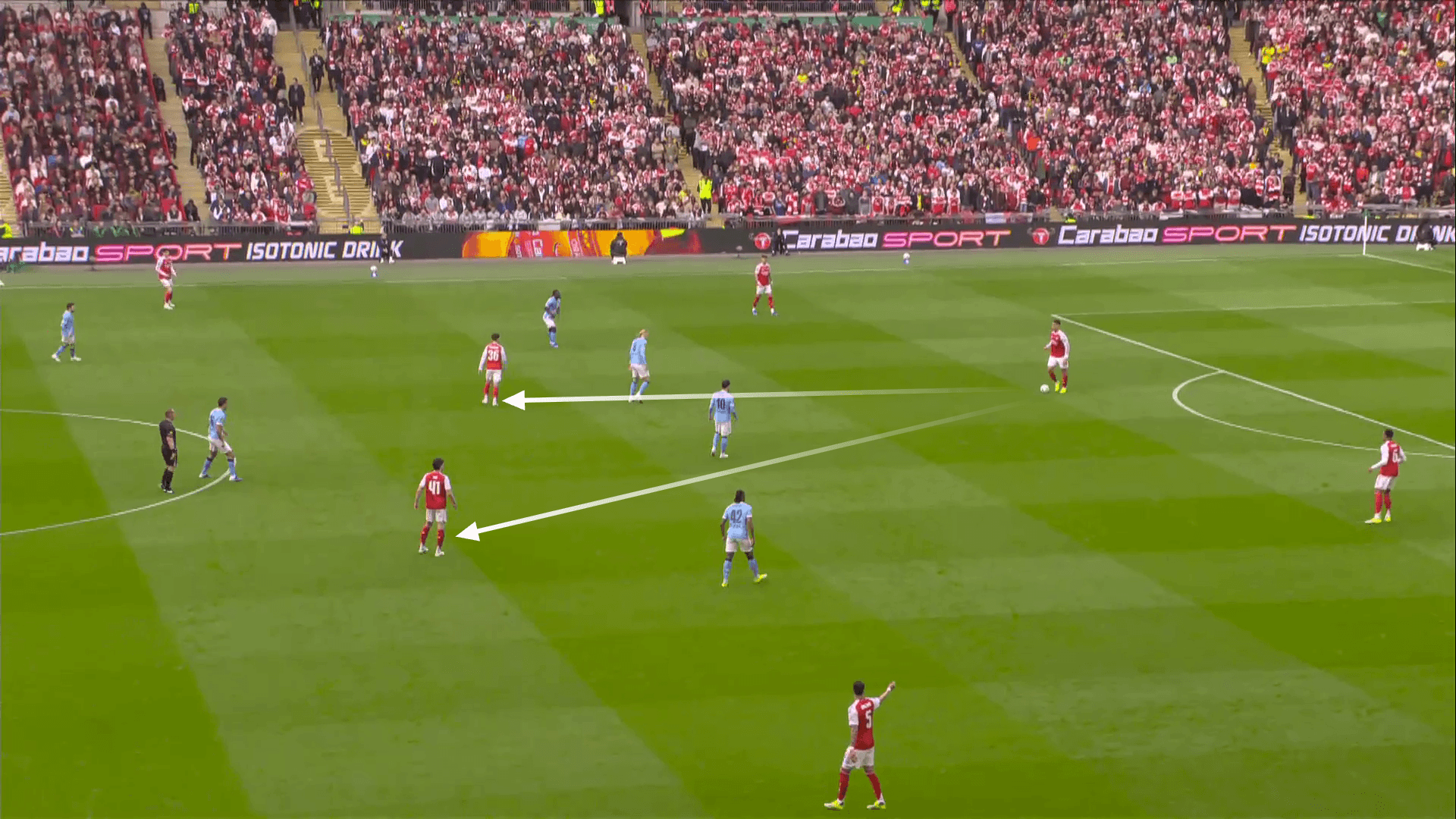
This discouraged central passing, and when Arsenal attempted safer options around the side of the block, City would shift across, preventing them from getting out.
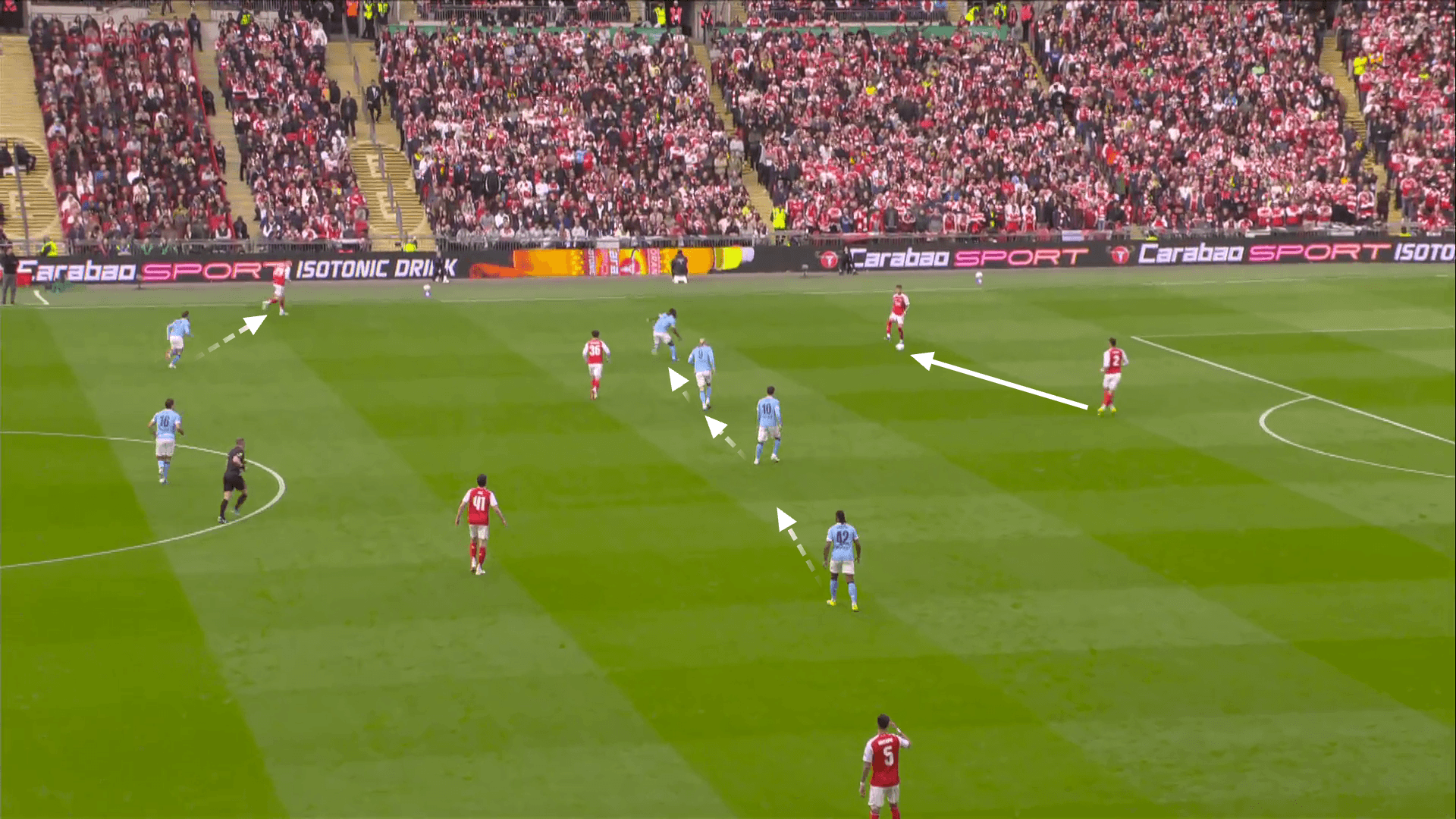
Effectively, City were putting the onus on the Arsenal centre-backs and goalkeeper to move the ball from the first line of their build-up to the more advanced ones. So when they couldn’t find ways through or around the City block, Arteta was left with a problem.
At this point, Arsenal would normally rotate their players to find solutions, but against a zonal structure, that doesn’t really work.
In this next sequence, Rice gestures for Hincapie to push up and then goes to fill in the space that the Ecuadorian leaves behind.
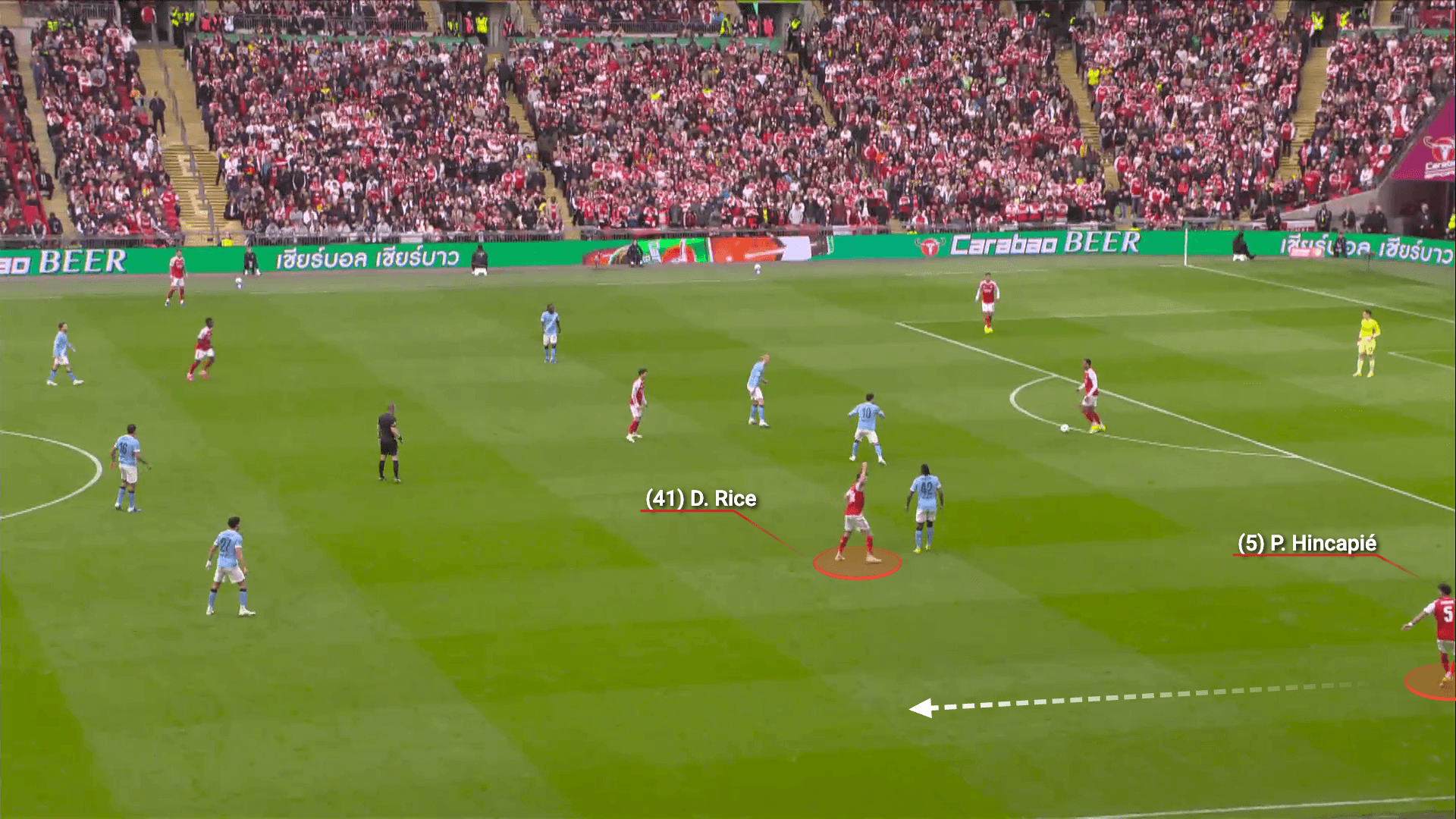
But nothing changes with the structure at all.
Antoine Semenyo is happy to allow Rice to drop out as long as he stays ahead of the City line, and Matheus Nunes is waiting on the left, just off the screen in the shot below, to pick up Hincapie if play shifts to that side.
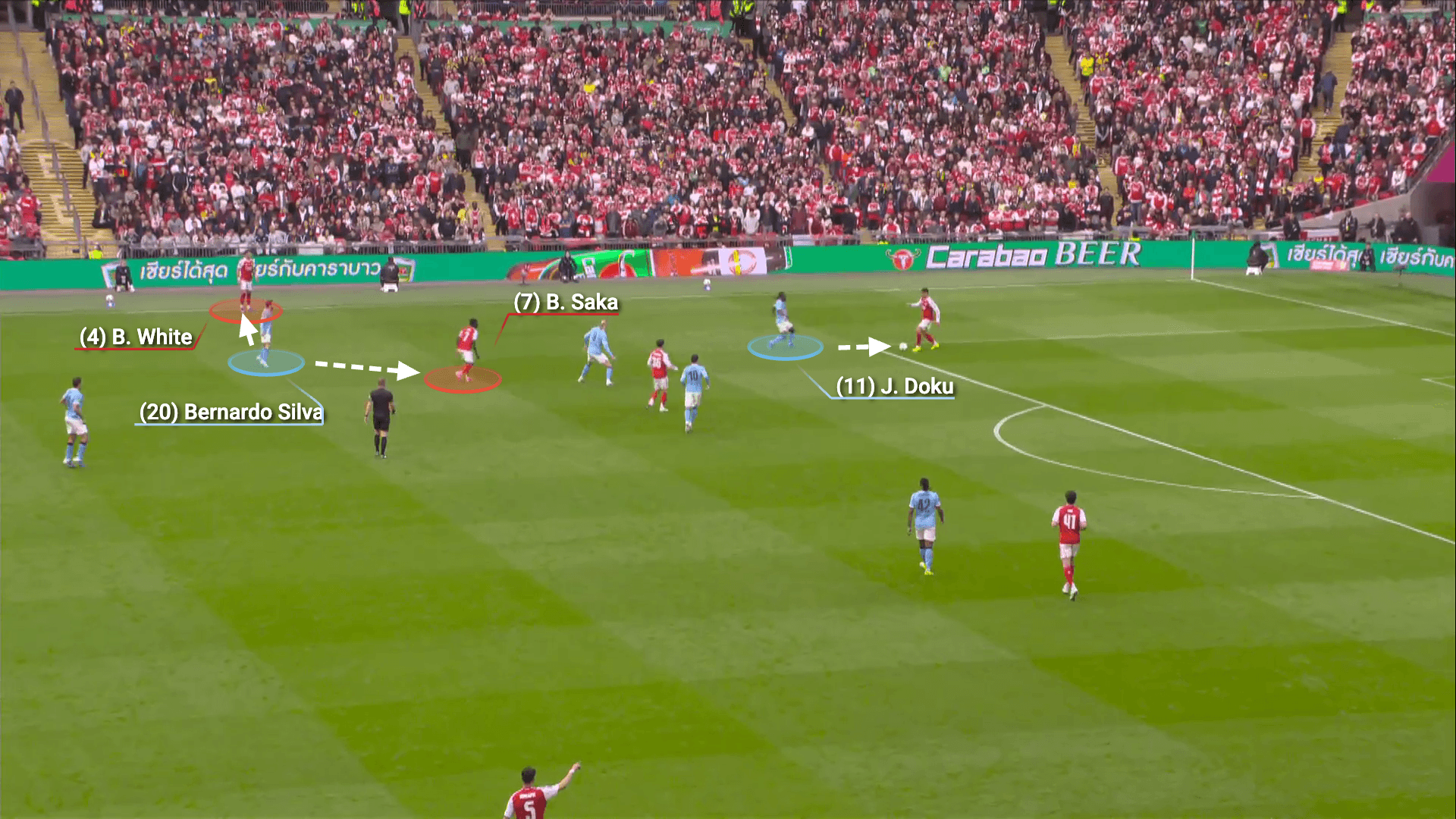
Even with Bukayo Saka dropping in to help out, City’s shape doesn’t change. The front line makes sure to cover the passing options into Saka, with Bernardo Silva sitting ready to jump to him or Ben White in the space behind, depending on how the play unfolds.
Throughout that Carabao Cup final, Arsenal found very few solutions to the problem that their opponents had set for them.
It would be tempting to blame personnel restrictions. Martin Odegaard and Eberechi Eze were injured and unavailable that day, and Raya was rotated out of the starting XI in favour of backup goalkeeper Kepa Arrizabalaga. But in the crunch title fixture between these two teams in Manchester a few weeks later, those three players were on the pitch and the same problems persisted — if anything, Arsenal seemed even less interested in building through the City block than they had been at Wembley.
In this sequence from Sunday’s league game, you can see Arsenal doing exactly what you need to do against a zonal structure: passing it around their back line to try to stretch City’s front line and then overload their midfield to find free players between the lines.
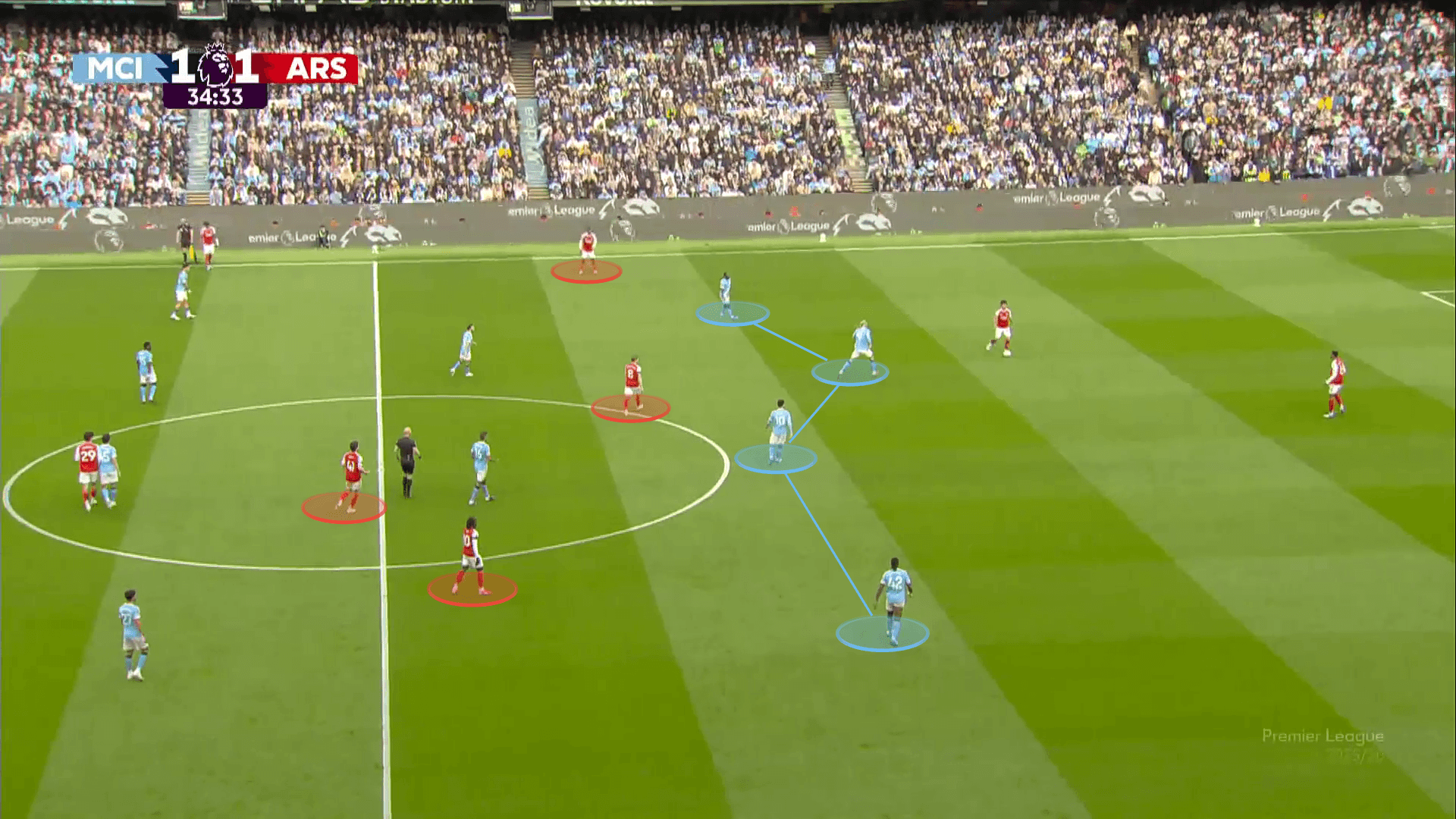
With Bernardo pinned between Rice and Cristhian Mosquera, a gap opens in the City front line and Gabriel finds the pass through to his team-mate.
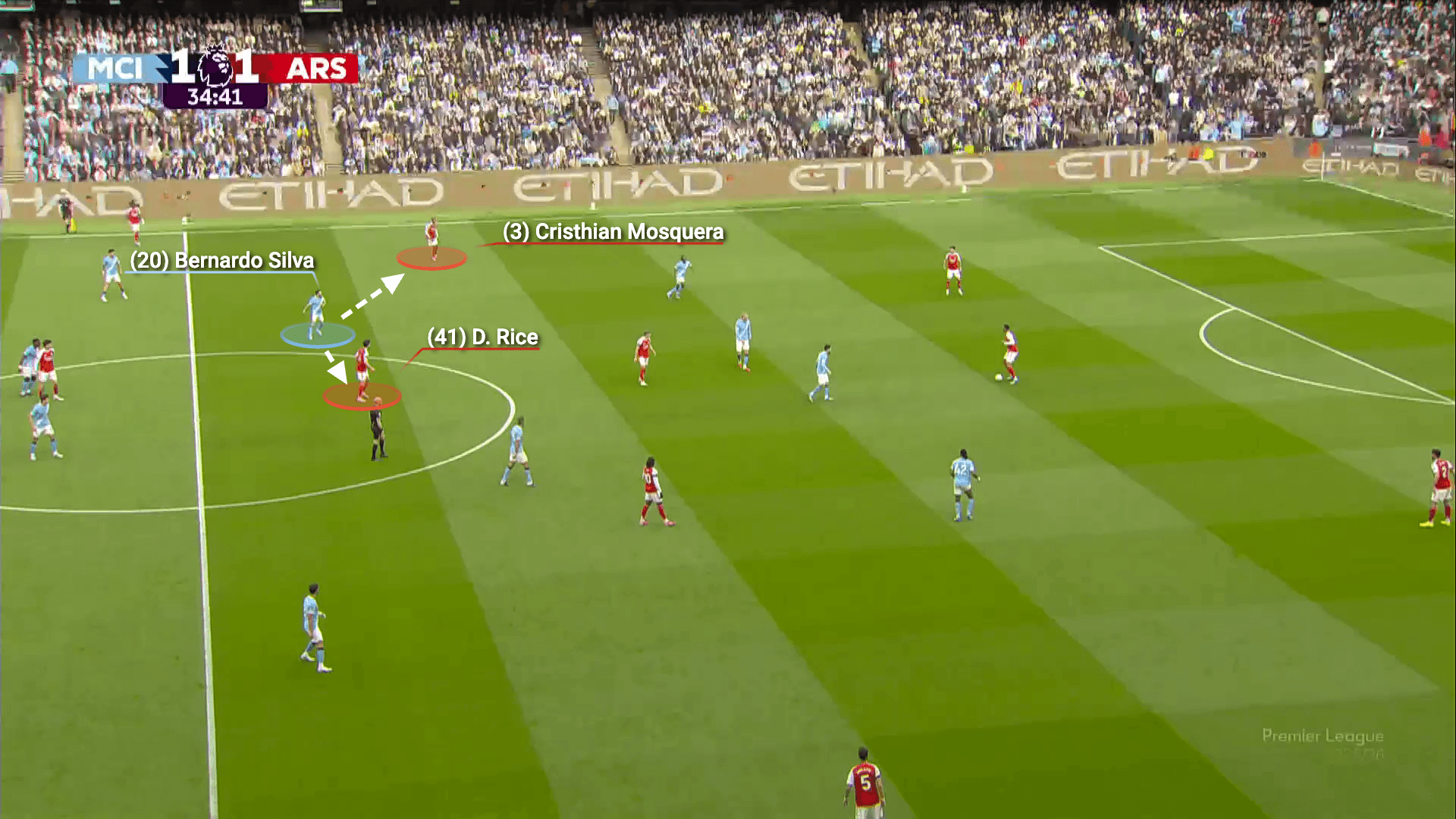
But once there, Mousquera fails to take advantage of the two-vs-one that he and Rice formed against Bernardo, and he ends up playing the ball back to the first line of Arsenal’s build-up.
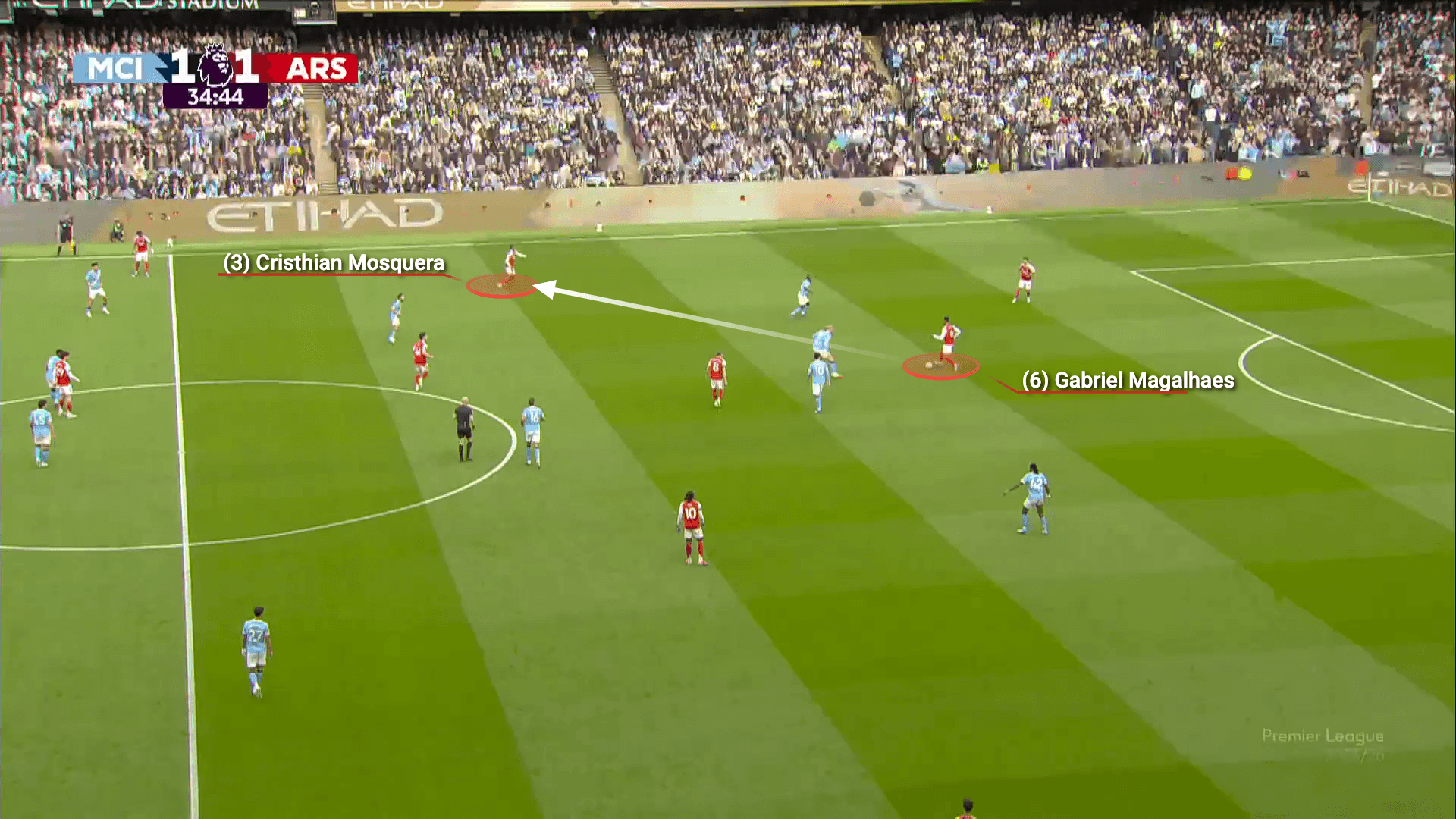
In the end, Arsenal reverted to going long over the top of the City block. They created several chances by playing more directly, but also handed the possession advantage to their rivals, who ended their 2-1 win having had 59 per cent of the ball.
This raises an interesting question: why couldn’t Arsenal find a more workable solution to the build-up problem that City posed?
You could argue that Arteta had decided the direct approach was the best way to find a win at the Etihad — but that ignores how there were still times when Arsenal tried to play through the City block. Despite fielding more players in their regular first-choice XI and having a few weeks since Wembley to practise playing against City’s zonal shape, they still could not find solutions.
Perhaps the more plausible explanation is that, with man-to-man marking becoming so pervasive in England’s top flight, the players are unaccustomed to breaking down a zonal block.
Where man-oriented pressing calls for rotations and movements to generate separation between players and markers, zonal approaches require the ability to shift structures around, force gaps between the lines of these structures, and then create and find free players in the spaces that open out.
We know that Arteta can coach this approach — we saw him do it to great effect in 2022-23, when he built an Arsenal team in Guardiola’s image that only narrowly missed out on the Premier League title. But football coaching isn’t just about possessing knowledge: it’s about instilling it in your players so that they know what to do when they’re on the pitch.
Even in the few years that intervened between zonal structures being so prevalent and the rise of man-to-man, it’s remarkable how quickly that knowledge can be lost unless players are using it day to day.
As the season draws to a close, Guardiola has taught us a vital lesson about the tactical side of the game: innovation doesn’t have to move forward in a progressive direction, sometimes it can be achieved by going backwards.
By posing an Arsenal team who are completely steeped in the modern theory of football with a problem from the past, he may have done just enough to shift the title race in City’s favour.