
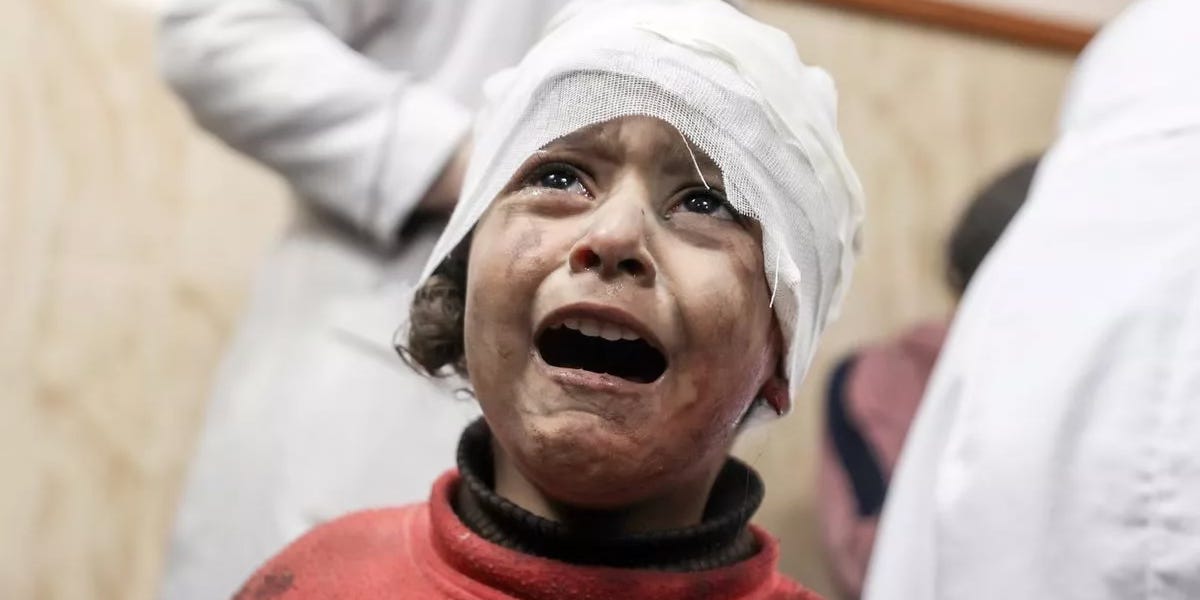
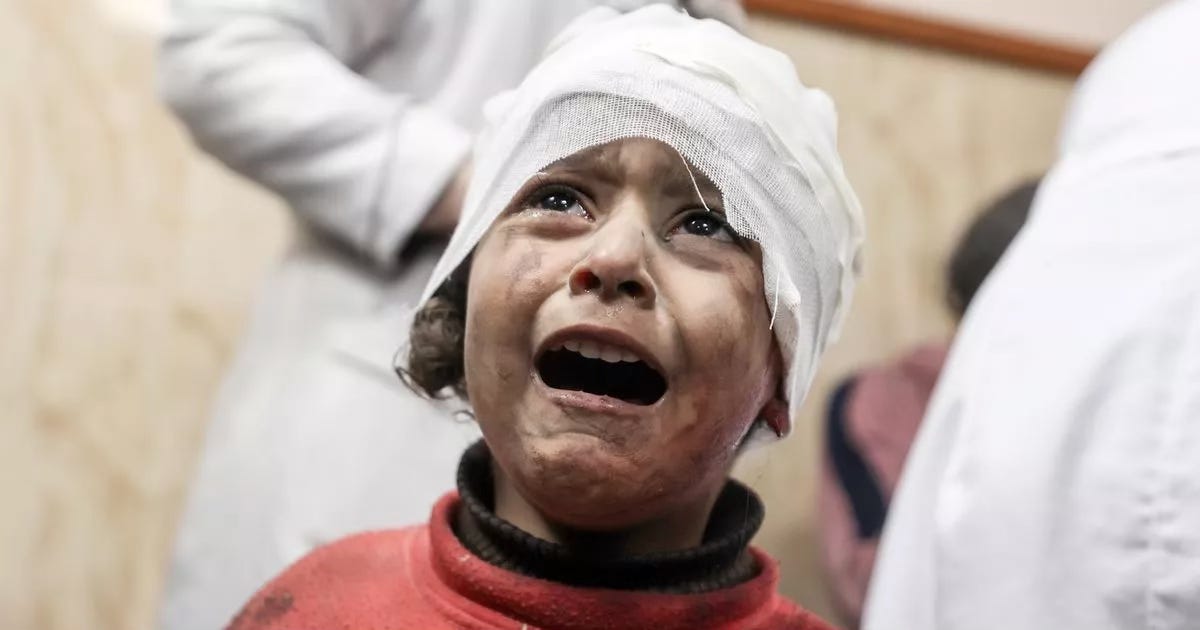
 A child injured by Israeli bombing(Image: Anadolu via Getty Images).
A BLACK FLAG hovers over military orders issued by Israeli Defense Force Chief of Staff Lt. General Eyal Zamir, backed by Defense Minister Israel Katz and Prime Minister Benjamin Netanyahu, as Israel prepares this week to expand the war in Gaza and to conquer the area.
First coined by a judge in the trial of soldiers who carried out a cold blooded massacre of 49 Israeli Arab villagers on the eve of the 1956 Sinai campaign, a “black flag” refers to an unmistakably immoral and illegal order, one that must be disobeyed.
The mass killings of Gaza civilians would seem to qualify for a black flag, yet not a single high-ranking officer in the Israeli military or defense establishment has refused participation in a campaign that has devastated the enclave, drawn international scrutiny for potential war crimes, and drawn Israel into being labeled a pariah state.
By January 2025, more than 80,000 Palestinians had been killed in the conflict, according to independent research published last month in Nature. The actual toll may exceed 100,000. Half of them were women, children and men over 65, while disease, starvation, and destruction—nearly 70% of Gaza’s buildings lie in ruins—evoke comparisons to Dresden and Tokyo in World War II.
Still, silence dominates the Israeli security elite. Not one general, ambassador, or intelligence chief has stood up to say: Enough. This moral void is especially stark given past precedents.
During the First Lebanon War in 1982, an IDF colonel, Eli Geva, refused to lead his tank brigade into Beirut, fearing unnecessary civilian casualties. He was dismissed within days. Brig. Gen. Amram Mitzna, then the Northern Corps Chief of Staff, resigned after the Sabra and Shatila refugee camps massacre, saying he had lost trust in the leadership.
Today, no such voices have emerged.
Notably, many of the current security officials were vocal critics of the Netanyahu government before Oct. 7, 2023, particularly over its efforts to weaken the judiciary. Reserve pilots, intelligence officers, and former Mossad leaders marched in protest and threatened to refuse duty. But after the brutal Hamas attacks, the capture of hostages and the eruption of the war in Gaza 22 months ago, those voices vanished.
Opposition Voices
Former IDF chiefs of staff, directors of Mossad and Shin Bet, as well as former police commissioners, oppose the war and have called on the government to stop it. But they have refrained from condemning the atrocities conducted by Israeli troops. The Air Force, once a center of ethical soul-searching, is still relentlessly bombing Gaza, where the majority of casualties are civilians. Only former IDF Chief of Staff and Defense Minister Moshe Ya’alon has publicly stated that Israel is committing war crimes in Gaza.
This silence stands in contrast to 2003, when 27 reserve pilots publicly refused to take part in missions over Gaza that endangered civilians following the air strike assassination of Hamas commander Salah Shehadeh, which killed 14 others, including children. At the time, they called such orders “blatantly illegal.”
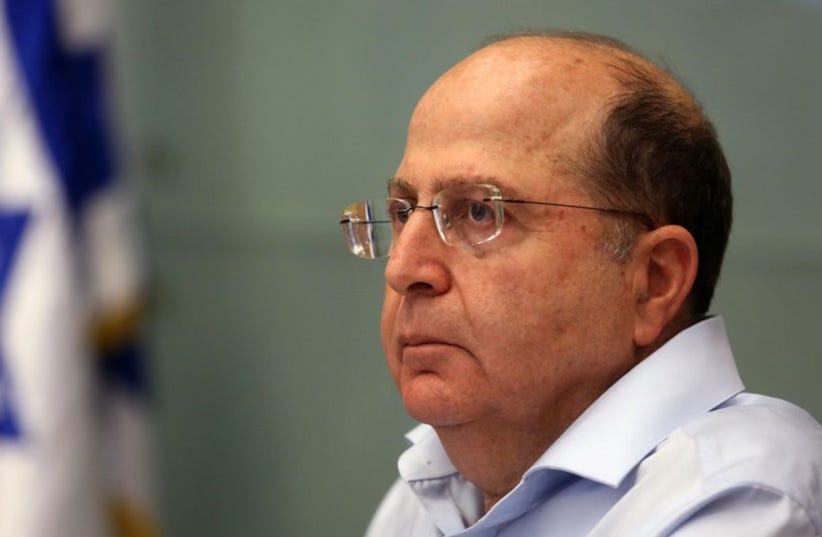 Lone voice of conscience: Moshe Ya’alon (Marc Israel Sellem, Jerusalem Post)
The reluctance to speak out today may stem from deep entanglements within Israel’s defense establishment. Many former officials remain in the reserves or serve as consultants, bound by a culture of loyalty—a tightly knit “old boys’ network” that discourages dissent.
Uri Saguy, a former major general and chief of military intelligence, who has publicly criticized Netanyahu and his right wing government, said “it’s hard for me to understand why high ranking officers are silent,” although he volunteered “that I am no longer in the loop so I don’t have inside information.” But he speculated that “they may fear to be punished.” In any event, he added, “as Israeli society has changed, so has the army. I noticed already a few years ago a culture of fear [had arisen] , and not telling the truth has been spilling over from society to the military/”
Trauma Culture
The silence of the present and former Israeli security establishment, in face of the terrible events in Gaza , can be explained by four recent developments. First is the trauma of Oct. 7, 2023, in which nearly 1,200 Israelis were butchered by Hamas and another 251 carted away as hostages, many of whom have died in captivity. The assault created overwhelming public support for military retaliation, eclipsing humanitarian concerns. The brutality of the attack silenced voices of restraint.
Second is a wave of indoctrination. Media and official messaging repeatedly amplify the suffering of Israelis, fostering a climate of self-victimization and collective justification for war.
Third, the rise of a far-right government. Politicians once considered fringe now dominate, and their rhetoric—often extreme—has penetrated the military, particularly among younger soldiers.
Finally, a religious-messianic shift within the IDF has taken root. Many senior officers today are graduates of extreme religious academies that preach Jewish supremacy and nationalism. Some openly wear religious patches on their uniforms or quote far-right rabbis. This trend is most visible in ground forces but is spreading across all units, despite a reported 2024 ban on outward signs of religious extremism.
Future scholars will study how a democratic society like Israel adopted such a lethal ideology—and how its military committed possible war crimes without triggering mass refusals from within. Meanwhile, in the absence of moral opposition from within the ranks, the burden falls to civil society, the courts, and the international community to pressure Israel to stay within the ground rules of war. As the war drags on, however, Israel’s silence may speak louder than its bombs.
Yossi Melman is an Israeli writer and filmmaker on security and intelligence affairs.