
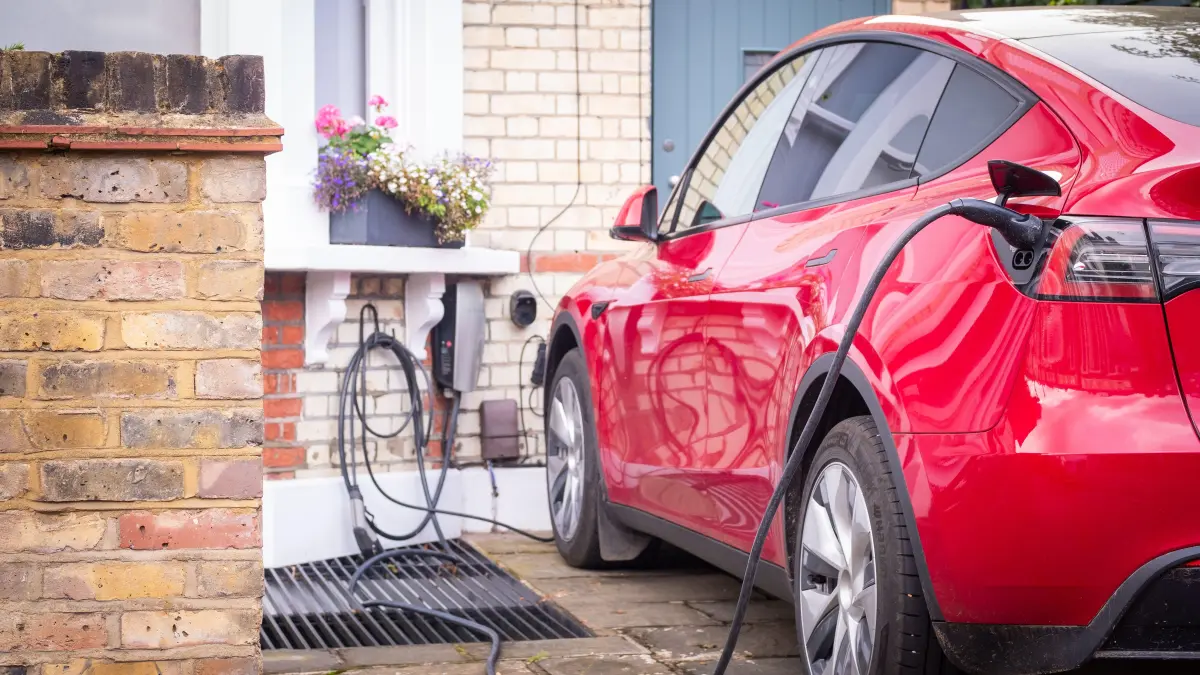
Households without a driveway will soon no longer need planning permission to adapt pavements so they can charge their electric car from home, as the government doubles down on a shift away from fossil fuels.
The risk of a trip hazard means people are not allowed to trail a cable across the pavement. However, the government has announced it will pass legislation this summer that will make the installation of pavement “gullies” a permitted development.
Officials said that means by the end of this year people can have one of the cable channels fitted without planning approval. It would allow drivers to temporarily run the cable through the gully to recharge their car’s battery.
Charging at home is much cheaper than relying on the public charging network. While the average cost of a public charger is 72p/kWh, according to the website Zapmap, dedicated home energy tariffs for electric cars can cost as little as 8p/kWh.
In some parts of the country, councils are paying for the installation of the cross-pavement gullies. In others, households will have to fund the cost, which can be in the region of £1,000. However, the cost can be quickly offset by the cheaper charging rates.
High petrol and diesel prices have sparked a surge of interest in electric cars. Octopus Energy reported electric vehicle sales up a fifth in the first three weeks of March compared with the same period in February.
Figures show that electric car sales across the European Union, not including the UK, rose 51 per cent last month compared with March 2025. Electric models accounted for more than a fifth of all new car sales, said NewAutomotive, a transport research firm.
New electric cars in Britain have also become cheaper, on average, than petrol models. The average new electric model cost £42,620 compared with £43,405, the first time the two technologies have crossed over, according to Autotrader, an automotive marketplace.
Today the government will lay out plans to bring down electricity prices by breaking their link to the cost of gas. Gas sets the price of electricity about 60 per cent of the time. Wholesale gas prices have soared since the Iran conflict disrupted the Strait of Hormuz, which accounts for a fifth of the world’s shipborne gas supplies.
The Treasury is expected to announce incentives for renewable power generators, including the developers of the first wave of wind farms, to switch from “legacy” subsidies to new fixed-price contracts. About a third of the UK’s electricity generation is covered by the old subsidy regime.
The government was unable to say exactly how much the move would shave off household energy bills, as take-up of the switch will be voluntary. However, it is understood it will be at least scores of pounds off a typical bill.
Ed Miliband, the energy secretary, is expected to use a speech on Tuesday to reject calls for Britain to abandon Labour’s focus on clean energy. Miliband will say it would be “completely irresponsible” to abandon the shift away from fossil fuels in light of the energy shocks caused by conflict in Ukraine and Iran.
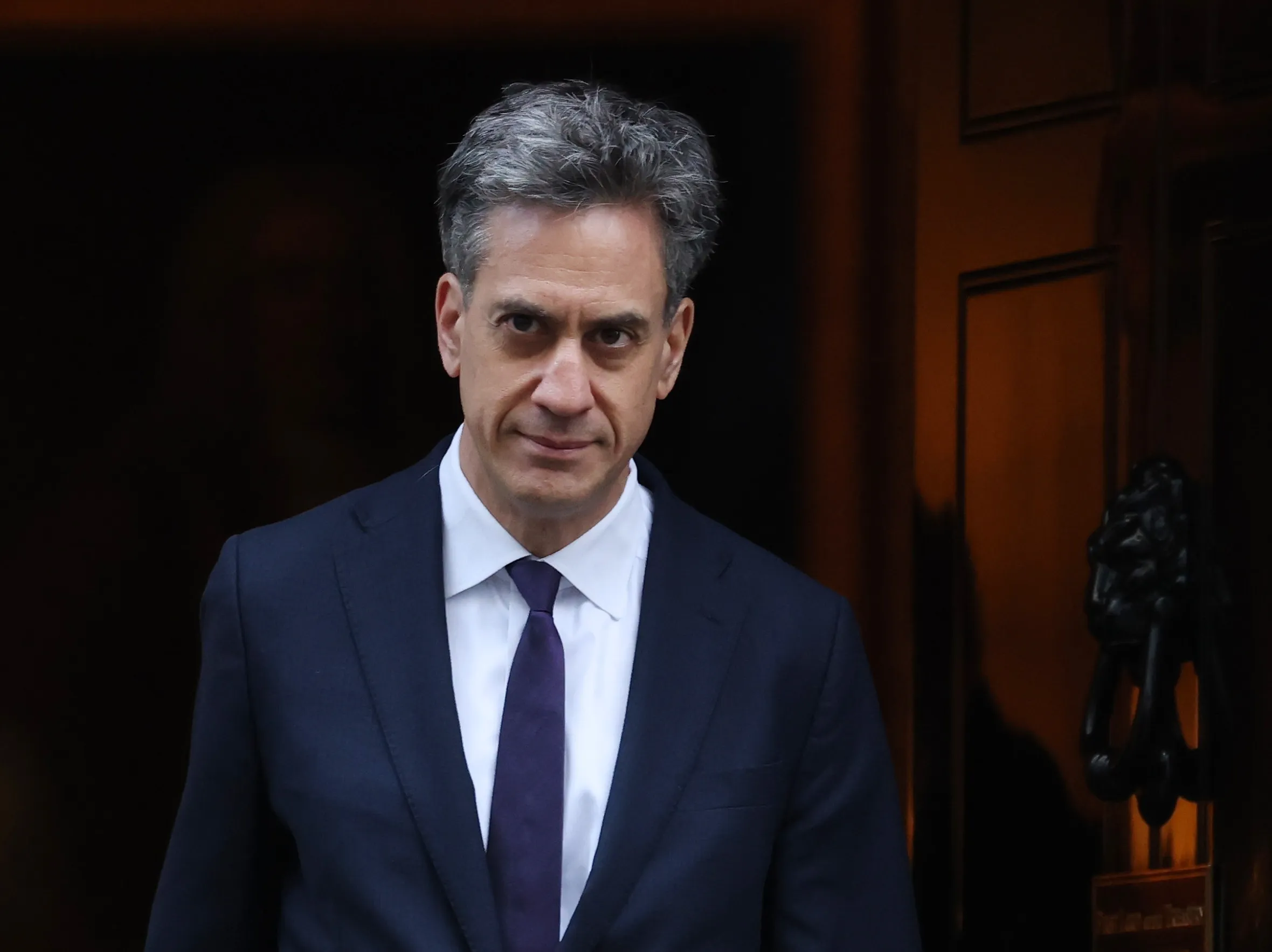 Ed Miliband EPA/Andy Rain
“While some have said we have gone too far and too fast, I… disagree. In response to recent events, our action must now be faster, deeper and more wide-ranging,” he is expected to say.
The government has been looking to Spain, which has a high share of renewable energy and has seen electricity prices rise by less than in Britain since the Iran conflict, as a model for insulating the country from energy price shocks.
Miliband’s team also pointedly said they had rejected calls by the Tony Blair Institute, the former prime minister’s think tank, to slow down the switch to green energy.
Environmental groups welcomed the government’s stance. “Britain is sick and tired of an energy system where pump prices and… bills go up and down based on Trump’s latest social post,” said Angharad Hopkinson, political campaigner for Greenpeace UK. “The government is absolutely right to be looking at every possible solution.”