
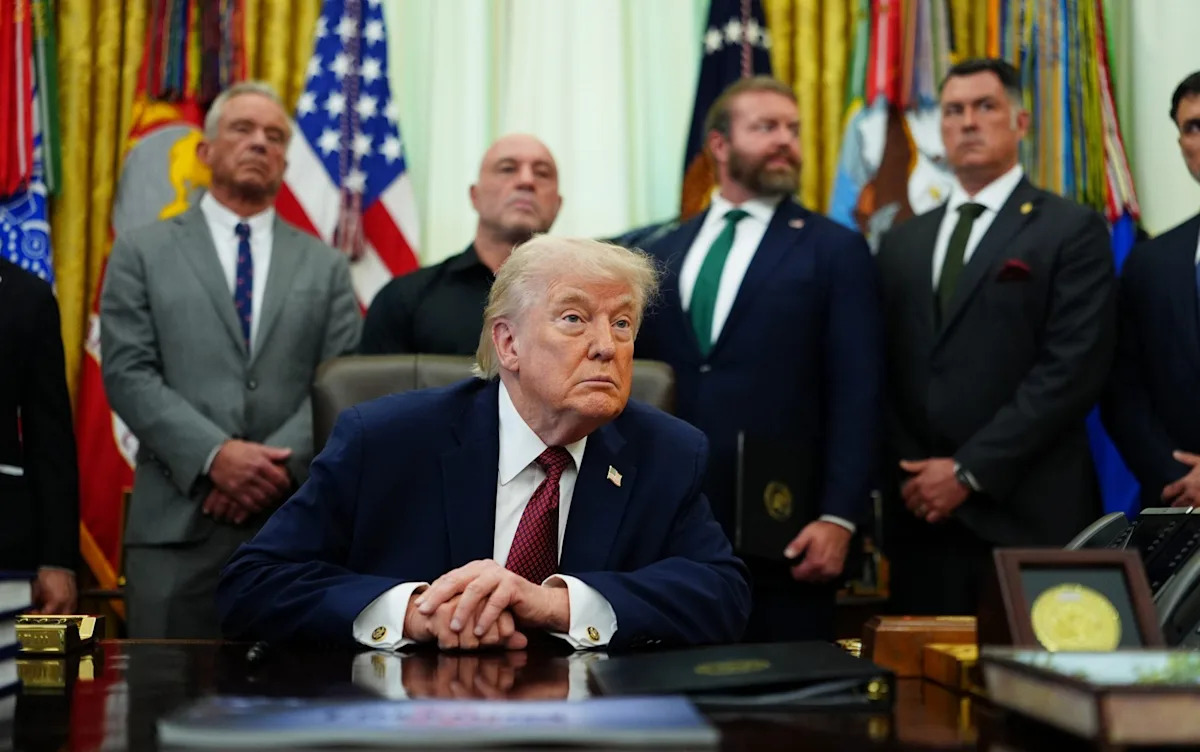
An army of yes men, in thrall to Donald Trump’s shifts of temper and short attention span, is hampering any prospect of peace with Iran. And with the president’s indefinite extension of a ceasefire being announced on Tuesday, a day after he threatened to resume bombing, the White House’s claims of success are running out of road, insiders say.
In the past 48 hours alone, the US president claimed that a deal was “close”, before then saying it was out of reach. Typifying the confusion, JD Vance, the vice-president, was still at the White House, after Mr Trump said on Sunday that his deputy was heading to Pakistan for talks with Iranian negotiators.
Tehran, after days of stalling, moved first, saying it was pulling out of the peace process, which had been cratering for days.
Mr Trump’s subsequent statement came minutes after US stock markets had closed. With the war in its eighth week, the president backed off again, saying Iran would be given more time to come up with a peace proposal.
“No one in the administration seems to know what’s going on. What the plans are. What we’re even aiming for now. It’s all just a giant clusterf— and there’s zero accountability, either,” a Trump-world source told The Telegraph.
Even Mr Trump’s closest aides are struggling to keep pace with his updates on Truth Social, which have generated a lot of noise but no discernible diplomatic progress.
No clear plan on Iran
On Sunday, Mike Waltz, the US ambassador to the United Nations, and Chris Wright, Mr Trump’s energy secretary, told morning news programmes that Mr Vance would be heading up negotiations in Islamabad.
At the same time, Mr Trump was telling reporters that his vice-president would not be travelling for security reasons, before changing tack and saying he was going to Pakistan after all.
Former officials say such actions indicate that the president is increasingly detached from the structures that typically guide an administration when conducting war operations.
Instead, Mr Trump relies on instincts and advice from a tight circle of loyalists who shape – and in some cases soften – the picture of the war.
Having long passed the “four to six weeks” he said the war would take, the constant mixed messaging and exaggerated claims about a deal point to one reality: there is no clear plan.
What once looked like a calculated campaign to prevent Iran from obtaining a nuclear bomb has deteriorated into daily updates with no consistency.
Social media posts fired off by the president and Mohammad Ghalibaf, the Iranian parliament speaker, tend to shape the media narrative far more robustly than any comments made by cabinet ministers or even the president himself in various interviews.
The claims from Iran and the US remain at odds, reflecting that their respective demands have so far been irreconcilable.
Mr Trump’s actions indicate he has little patience for the long, structured national security meetings that traditionally anchor US decision-making during war. He prefers to react to events as they unfold, a style aides desperately tried to pry him away from during his first term.
“That is just not what happens anymore, Trump doesn’t like it, he feels constrained by it,” John Bolton, the president’s former national security adviser, told The Telegraph about the abandonment of traditional decision-making.
“It was more [of a] process in the first term because we were able to explain to him why it benefited him. Now he thinks he can do what he wants.”
Susie Wiles, Mr Trump’s all-powerful chief of staff, is said to have expressed concern that aides are giving the president “a rose-coloured view” of the war. But the stalemate between Iran and the US suggests she hasn’t been persuasive in changing the president’s unwavering view that all is going to plan.
“There is no one group in their command that speaks for the nation,” a source close to the president said.
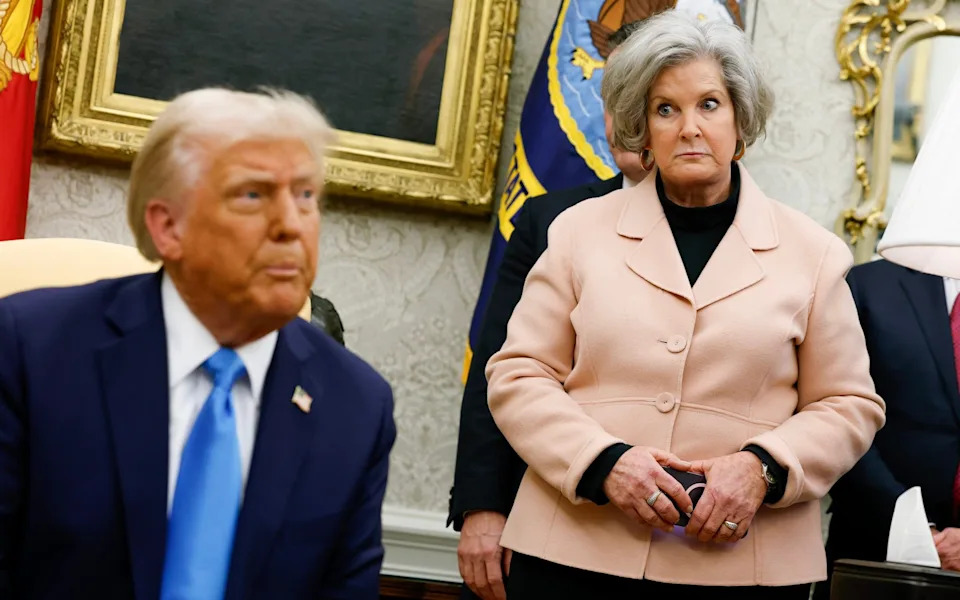
Susie Wiles, Mr Trump’s chief of staff, has expressed concern that aides are giving the president ’a rose-coloured view’ of the war – Anna Moneymaker/Getty Images
One of Mr Trump’s closest allies when it comes to the conflict is Pete Hegseth, the defence secretary. He has framed the combat operations as divinely sanctioned, repeatedly invoking religious rhetoric removed from pragmatic tactics or war doctrine.
The president has even claimed that Mr Hegseth does not want the war to end, telling journalists, “Pete didn’t want [the war] to be settled”, and that he was one of the first to throw support behind the initial bombing campaign.
Mr Vance, an isolationist who voiced his displeasure with foreign wars throughout Mr Trump’s 2024 presidential campaign, said little at the outset and has since been prevented from criticising the war effort by being tasked with negotiating peace.
Tulsi Gabbard, Mr Trump’s director of national intelligence, was also a fierce critic of foreign wars before the president appointed her to the cabinet. Reportedly already at risk of losing her position, she appears to be staying quiet.
The president is provided with daily videos of US military successes, but insiders say he has been shielded from the conflict’s misadventures, which include a US missile attack which reportedly killed more than 170 schoolchildren near its designated target.
Mr Trump and the Pentagon had said they were investigating the strike, which occurred during the early days of the war.
When not extolling the US military’s abilities, the president has sought to vent his frustration at European allies for not helping.
“There is panic and the White House realises that nobody is coming to rescue them, the Europeans aren’t going to step up. It has been deemed on him now that we have to get out of this,” a source added.
“His patience is short and he is telling people he doesn’t even want to deal with it anymore.”
‘His posts are causing chaos’
One source described how Mr Trump had become more irritable, claiming he was sleeping less and writing unchecked posts on Truth Social, as aides – who reportedly urged the president to curb his social media activity – have been unable to intervene.
But Truth Social was where his latest update was made – minutes after stocks close down on a day when oil prices again rose, nearing $100 (£74).
The president’s comments about the Strait of Hormuz, the strategic shipping lane, have only undermined efforts by Pakistan and others to strike a deal to end the war, a Gulf diplomatic source said.
“His posts are what are causing the chaos,” the diplomat said. “It’s good and bad but the bad has major effects. Behind every single tweet there is a reason for posting, often at the stock market.”
Behind the presidential podium in Cross Hall of the White House on April 1, Mr Trump addressed the nation and told the US that its military objectives were almost complete and that the war was “very close” to being over.
Yet, 21 days later – and 52 days since the first strikes were launched – the same roadblocks remain.