
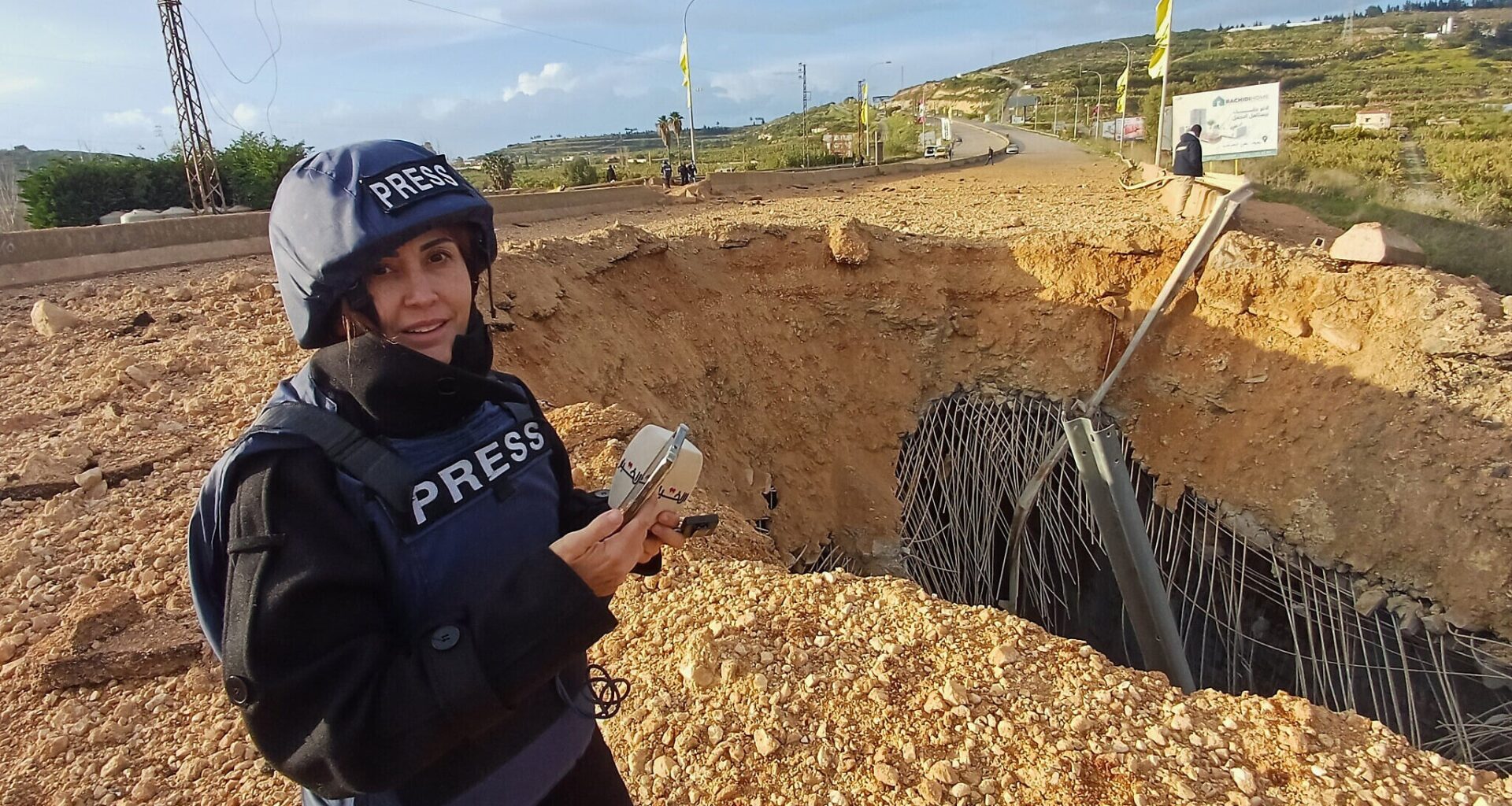
The body of a Lebanese journalist killed by an Israeli airstrike was pulled from under the rubble of a building in an Israeli-held security zone in southern Lebanon late Wednesday night, hours after the attack.
The Israel Defense Forces said it had targeted Hezbollah operatives who crossed its “forward defense line” — in southern Lebanon, demarcating the IDF’s new security zone — and that the details regarding journalists being hit were “under review.”
The pro-Hezbollah daily Al-Akhbar newspaper confirmed that its reporter, Amal Khalil, was killed by the strike on a house in the village of at-Tiri, where she took cover after an earlier Israeli airstrike hit a vehicle in front of the car she was traveling in with another colleague.
The Lebanese health ministry said the first strike killed two people whose bodies were retrieved by rescue workers, who were also able to get to Faraj. It claimed that the rescuers were then targeted by Israeli fire, forcing them to halt attempts to reach Khalil. Her body was retrieved shortly before midnight, at least six hours after the strike.
The head of the Union of Journalists in Lebanon reported that Faraj suffered a head wound.
Get The Times of Israel’s Daily Edition
by email and never miss our top stories
By signing up, you agree to the terms
According to the IDF, the incident began when troops identified two vehicles setting out from a building known to be used by Hezbollah in the at-Tiri area.
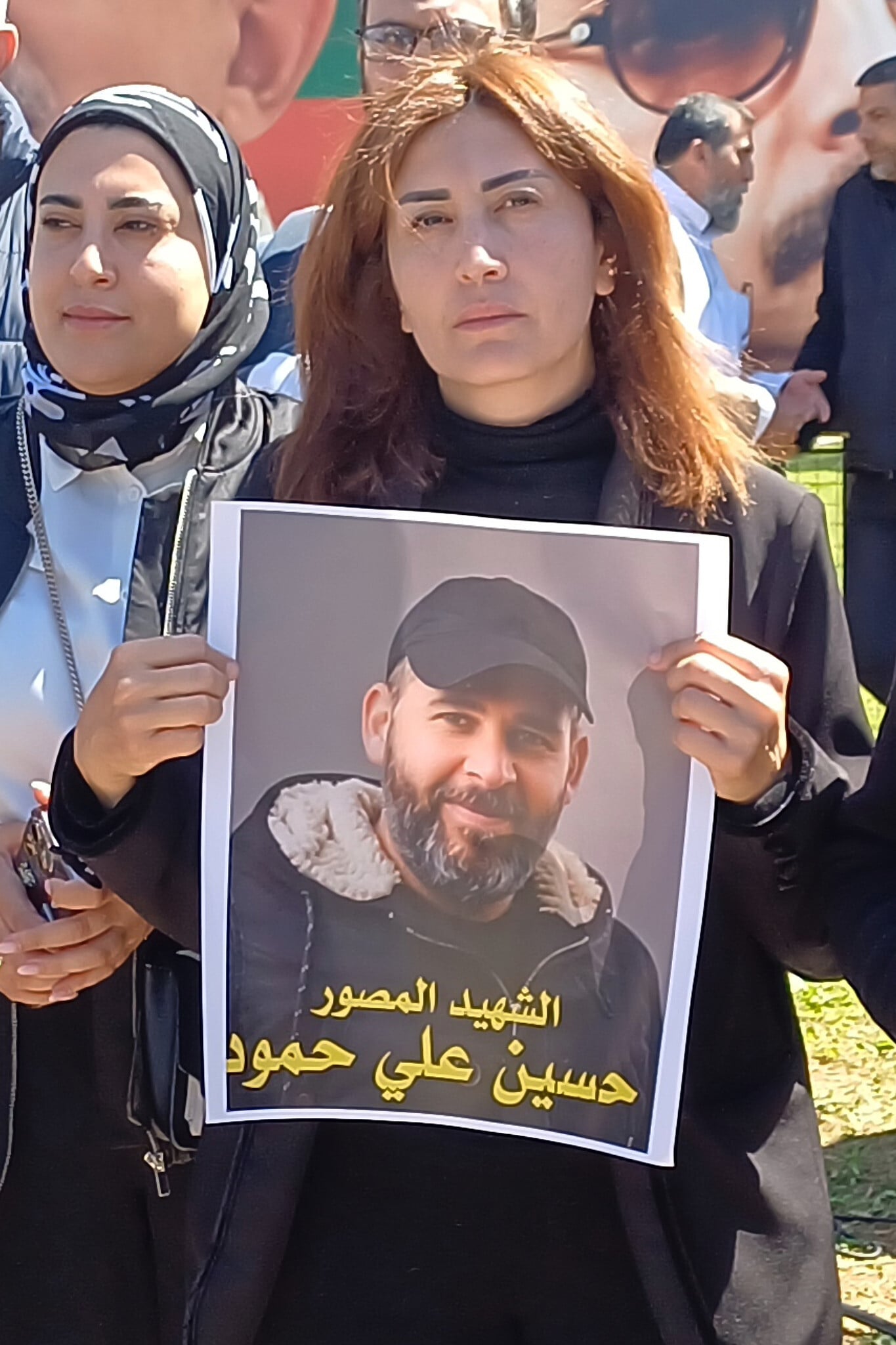
Lebanese journalist Amal Khalil holds a portrait of a photographer who was killed in an Israeli airstrike, during a sit-in in the southern port city of Sidon, March 31, 2026. (AP Photo/Mohammed Zaatari)
“The terrorists crossed the forward defense line and approached the forces in a manner that posed an immediate threat,” the military said.
“After being identified as violating the ceasefire,” the IDF said, the Israeli Air Force struck one of the vehicles and then a building “to which the terrorists fled.”
The military said it then received reports that two journalists were injured as a result of the strike.
“The IDF is not preventing rescue forces from reaching the area at this stage,” the military said, after Reuters reported that an Israeli drone dropped a grenade on rescuers trying to lift one wounded journalist from rubble.
The military also stressed that it “does not target journalists and acts to mitigate harm to them while maintaining the safety and security of its troops,” while adding that “the map of the forward defense line has been published and the area has been evacuated.”
Khalil’s death comes on the eve of the second round of direct talks between Israeli and Lebanese officials in Washington, DC, on extending the ceasefire that went into effect last Friday. Her death was denounced by Lebanon’s Prime Minister Nawaf Salam, who said the targeting of journalists and the obstruction of relief efforts constituted “war crimes.”
“Lebanon will spare no effort in pursuing these crimes before the relevant international bodies,” he said on X.
Khalil, who was from southern Lebanon, had been covering the area since 2006 for Al-Akhbar. Her latest reporting was about Israeli demolitions of Lebanese homes in villages where the IDF is now positioned inside Lebanon as part of a buffer zone.
Her death brings to nine the number of journalists killed in Lebanon so far this year. At least 2,300 people have been killed in Israeli strikes since the latest Israel-Hezbollah war erupted on March 2, according to Lebanese figures that don’t differentiate between civilians and combatants. The IDF has said that it has killed some 1,700 Hezbollah operatives during the fighting, including hundreds of members of the terror group’s elite Radwan Force.
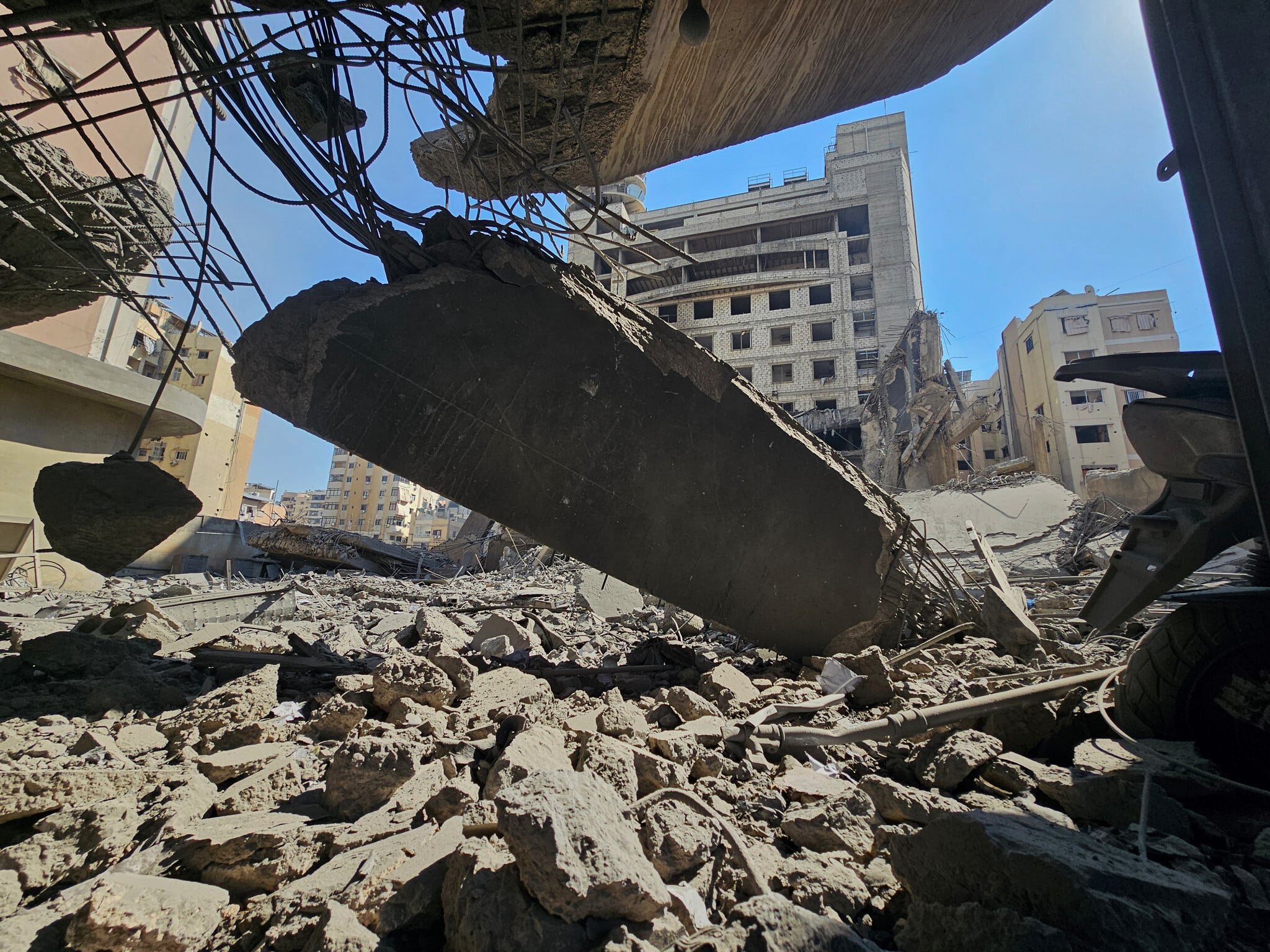
Debris cover the site of Hezbollah’s Al-Manar TV headquarters after it was hit in an Israeli airstrike on Dahiyeh, a southern suburb of Beirut, Lebanon, Tuesday, March 3, 2026. (AP Photo/Hassan Ammar)
In late March, an Israeli airstrike on southern Lebanon killed three journalists covering the conflict, which began when Hezbollah attacked Israel amid the US-Israel war with Iran. Hezbollah’s al-Manar TV said its longtime correspondent Ali Shoeib was killed. The IDF confirmed it targeted Shoeib, accusing him of being a Hezbollah intelligence operative.
Also killed in the same strike was reporter Fatima Ftouni, who worked for Hezbollah-affiliated Al-Mayadeen TV, along with her brother Mohammed Ftouni, a video journalist.
Days earlier, an Israeli airstrike on an apartment in central Beirut killed Mohammed Sherri, the head of political programs at Hezbollah’s at Al-Manar TV, along with his wife.
You appreciate our wartime journalism

You clearly find our careful reporting of the Iran war valuable, at a time when facts are often distorted and news coverage often lacks context.
Your support is essential to continue our work. We want to continue delivering the professional journalism you value, even as the demands on our newsroom have grown dramatically during this ongoing conflict.
So today, please consider joining our reader support group, The Times of Israel Community. For as little as $6 a month you’ll become our partners while enjoying The Times of Israel AD-FREE, as well as accessing exclusive content available only to Times of Israel Community members.
Thank you,
David Horovitz, Founding Editor of The Times of Israel