

I keep returning to a line from Amos Oz.
Fanatics do not wrestle.
Only those who can hold complexity wrestle.
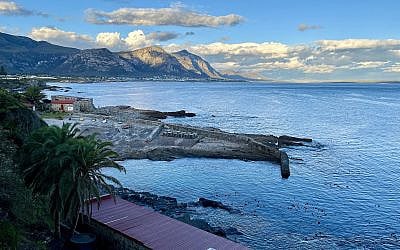
Michael Shandler. Hermanus, South Africa
The sentence has been echoing in my mind as the war with Iran expands and new layers of the story surface.
Michael Shandler. Hermanus, South Africa
Michael Shandler. Hermanus, South Africa
My reaction to this war did not begin on the morning the bombs fell. For years I had followed the slow tightening of the confrontation with Iran — the regime’s pursuit of nuclear capability, its expanding ballistic missile program, and its sustained investment in the “Ring of Fire”: Hamas, Hezbollah, the Houthis, and other proxy militia armies across the region, funded, trained, armed, and strategically guided as extensions of its reach.
I was aware as well of the longer entanglement between Iran and the United States, stretching back at least to the overthrow of the democratically elected Mohammad Mossadegh in 1953 and the installation of the Shah. Nothing about that history is simple or morally clean. It includes the 1979 hostage crisis in Tehran, which coincided with the birth of the Islamic Revolution — a moment that seared humiliation and anger into the American psyche. The failed helicopter rescue attempt that followed only intensified that wound. It extends through episodes like the 1983 bombing of U.S. Marines in Beirut, widely attributed to Iranian-backed forces, and continues across decades marked by mutual hostility, miscalculation, and escalation.
That reach was not confined to the Middle East. It extended far beyond it, including the 1994 bombing of the Jewish community center in Buenos Aires, carried out by Hezbollah operatives and widely attributed to Iranian direction and support — an attack that killed 85 people and wounded hundreds more.
It is in that context that, over the past two-and-a-half years, watching events closely, I began to feel an uneasiness I could not dismiss. Israeli analysts spoke increasingly of a narrowing window. Iran’s nuclear progress appeared to accelerate. Its missile development continued even after the dramatic U.S. bombings at the end of the Twelve Day War of 2025. The atmosphere carried the sense of something approaching.
I remember telling my wife, weeks before the first strikes in late February 2026, that it felt as though events were moving toward a collision. I had no idea what form it might take. If anything, I assumed that the confrontation, if it came, would be between Israel and Iran alone.
When the war finally arrived — and when the United States entered it alongside Israel — I was as startled as anyone. What struck me, beyond the dramatic nature of the alliance itself, was how unprepared the American public seemed for what was unfolding.
In my experience, many Americans are not consistently attuned to international affairs, and I found myself puzzled that so little effort appeared to have been made to explain or contextualize the stakes of this moment. In Israel, by contrast, the reality of war is not abstract. It is woven into daily life, into memory, into expectation. That difference in lived experience matters.
In the absence of preparation, the news seemed to land here on familiar ground — older narratives of Israel as aggressive, war-driven, or self-interested. Without a shared understanding of the pressures Israel perceives itself to be facing, those interpretations appear to fill the gap.
I cannot know how broadly this perception is held. But I notice, in the conversations around me, that where outcomes are uncertain or ambiguous, suspicion tends to deepen rather than soften. In that atmosphere, judgments about Israeli intransigence — and, at times, something that feels uncomfortably close to older patterns of anti-Jewish sentiment — seem to find renewed footing.
Beneath the shock there was also the uneasy recognition that the confrontation many observers had feared for years had finally arrived.
What followed did not bring clarity.
It deepened the unease.
A friend sent me a report about the American Secretary of War, Pete Hegseth. The department’s name had been changed from Defense several months earlier at President Donald Trump’s direction. Apparently, Hegseth carries on his body the symbols of the Crusades — the Jerusalem Cross and the phrase Deus Vult, “God wills it.” He has spoken about the conflict with Iran in language that echoes that older history: warriors of faith, providence, God training hands for battle.
The symbolism sits uneasily.
The Crusades were not only wars against Muslims. As crusading bands moved toward Jerusalem, Jewish communities along the Rhine were slaughtered — entire centers of Jewish life destroyed by mobs inflamed with the same religious fervor. The cry of Deus Vult did not always distinguish between Muslim and Jew. Symbols carry memory, whether we acknowledge it or not. They carry the heat of conviction, the permission to divide the world into the saved and the condemned.
And once that line is drawn with certainty, the field of vision narrows.
Fanatics do not wrestle.
They do not pause, or question, or hold complexity. They move forward with God on their lips and a certainty that admits no doubt— and anyone who stands outside that certainty is expendable.
Now, in this strange turn of history, the banner of the Crusader appears again — this time alongside Israel.
I cannot say that I like the symbolism.
Watching the daily war briefings, I notice another layer of discomfort. Hegseth’s press conferences have a gung-ho quality — spectacles of righteousness and fire and fury mixed with accusations that critics are determined to undermine the administration.
Standing beside him are the military generals.
Their demeanor is strikingly different: careful, restrained, professional. They speak quietly about the immense power they command and the risks it carries. Their tone suggests responsibility rather than triumph.
The contrast is palpable.
And hovering above it all is Donald Trump — impulsive, bellicose, zig-zagging in his statements, seemingly drawn to displays of overwhelming force. The most powerful man on the planet.
To be clear, I am not a supporter of Trump. I did not vote for him and never would. His mercurial temperament, his relentless lurching from crisis to crisis, his ego and appetite for spectacle leave me uneasy about the stability of the system itself.
Nor do I trust Benjamin Netanyahu. I experience his decades-long dominance of Israeli politics as something corrosive — a consolidation of power, a willingness to align with hardline factions, and a pattern that, to my eye, places political survival above broader Jewish ethical responsibility.
And yet here I am, reluctantly aligned with both men on one point: the danger posed by the Iranian regime.
American support for Israel has long been a constant — billions in military aid, diplomatic backing, and a deep strategic partnership rooted in shared interests, including extensive cooperation in intelligence and regional security. But under Trump, that support took on a new intensity and visibility: recognition of Jerusalem as Israel’s capital, acknowledgment of Israeli sovereignty over the Golan Heights, and a posture that moved from steady alliance to overt political embrace. That embrace has been widely welcomed within Israel. But in the United States, the response has been far more uneven. Israel’s standing among many Americans appears to have eroded, and expressions of identification or solidarity often land in a cooler, more skeptical climate.
For some, the association evokes not reassurance but suspicion — even, at times, a resurgence of older, more troubling currents.
At the same time, the political climate itself appears to be shifting. Israel has become increasingly unpopular among Democrats, and there are signs of dissent emerging among some Republicans as well. Questions about the scale and nature of American support — including the billions in military aid — are being raised more openly. In Israel, this shift is not unnoticed, and there are indications that longer-term planning is already underway to reduce dependence, including efforts toward greater self-sufficiency in arms and ammunition.
That entanglement is not unfolding in a vacuum. Within the United States, the war itself is deeply unpopular, and Donald Trump remains a polarizing and, for many, deeply distrusted figure. In that climate, even the mention of Israeli involvement evokes, in some quarters, a reflex of suspicion — a mix of anger, fatigue, and mistrust that has little patience for nuance. Trump, for his part, has described Israel as an exemplary partner, carrying its weight and more. But for many Americans already uneasy with his leadership — and ambivalent or critical toward Israel — that framing does not reassure. It lands flat, or worse, deepens the unease.
And with that realization, an old and uneasy recognition returns — the odor of association.
Israel, seen by many as shaping the course of American action.
An American president already distrusted across much of the world.
And Jews, once again, pulled into a narrative we know too well — the whisper of influence, the insinuation of hidden sway over power.
I feel the danger in that perception, even as I resist it.
The irony is not lost on me.
I once thought I had left my “skunk of the nations” status behind when I left apartheid South Africa. Yet somehow the scent seems to follow me: South Africa, Israel, America.
Still, another reality refuses to disappear.
The Iranian regime itself operates from a certainty far more absolute than anything I see in Washington.
Within its most hardline ideological expressions, there is little room for doubt, little room for ambiguity, little room for compromise — no room for wrestling. America is cast as the “Great Satan,” Israel as the “Little Satan.” Martyrdom is sanctified. The destruction of Israel is invoked, at times, in the language of destiny.
At the core of the regime’s worldview is not simply nationalism, but a fusion of religious authority and state power that leaves little space for dissent. In its most hardline expressions, Shi’a revolutionary ideology is not only political but eschatological — history is understood as moving toward a divinely ordained end, in which struggle, sacrifice, and even martyrdom are not aberrations but instruments of fulfillment. Within that frame, compromise can appear as betrayal, and endurance in the face of overwhelming odds as a form of faithfulness. Ambiguity, while often employed strategically, does not occupy the same place within the regime’s ideological self-understanding.
For a people like the Jews — shaped by a long memory of being cast, again and again, as the obstacle within someone else’s redemptive vision — such a worldview does not register as abstract. It carries a familiar unease.
And something in me recoils.
Even with that unease — perhaps because of it — I find myself arriving at a more difficult recognition — a regime organized around absolute certainty, openly committed in its rhetoric to the destruction of both Israel and the United States, and moving ever closer to nuclear capability while building a vast arsenal of long-range missiles — feels more dangerous. The chants of “Death to America” and “Death to Israel” are not rhetorical flourishes but enduring signals of intent. Combined with a long pattern of deception surrounding its nuclear program, and the stark reality that Israel sits well within missile range, the threat, to me, does not feel abstract. It feels immediate, and increasingly difficult to ignore.
We have already seen, in this war, how much damage even a diminished Iran can inflict — on Israel, a tiny country, and on its Gulf neighbors. The threat is not hypothetical. It lands close.
And with it, a feeling that this is something that must be resisted — something that cannot simply be explained away or absorbed into complexity.
The brutality of the regime toward its own people is equally stark. Earlier this year, tens of thousands of Iranian citizens were killed during nationwide protests, according to reports that have circulated widely across multiple channels. Demonstrators were shot in the streets, sometimes with armor-piercing ammunition. Some were deliberately blinded by pellets fired into their eyes. It was the violence of a government at war with its own population.
I think back to the Sharpeville Massacre in South Africa during apartheid — sixty-nine protesters shot by police, hundreds wounded — an event that made headlines around the world and marked, for many, a turning point in global awareness of apartheid. By comparison, the scale of what is being reported now in Iran feels almost incomprehensible.
And I notice something else in myself.
Not doubt about what happened.
But unease about how unevenly such violence seems to register.
I do not fully understand that.
But I feel it.
When I hear language of holy struggle and divine purpose in response — the old vocabulary of Deus Vult, warriors of faith, history ordained by God — another uneasiness surfaces.
Fanaticism staring back at fanaticism.
That possibility troubles me deeply.
It is not an abstract concern for me. I learned early in life that environments shaped by rigid certainty can produce both genuine kindness and sudden hostility, sometimes from the same source.
And so, I arrive, reluctantly, at the position that troubles me most.
The Iranian regime is brutal and dangerous.
The language of holy war unsettles me.
My distrust of the leaders prosecuting this war remains.
Despite this I find myself supporting the effort to prevent this regime from obtaining nuclear weapons and the means to deliver them.
Not because war is desirable.
Not because the actors involved inspire confidence.
In fact, part of what deepens my unease is watching a volatile and deeply flawed leadership — at times reckless, at times self-deluding — bring the world to the brink with language and posturing that feels both dangerous and unmoored from consequence. Even now, as I write, the situation feels precarious, with enormous power held in ways that do not inspire trust.
And still, the alternative — a regime organized around absolute certainty, armed with nuclear weapons and long-range missiles — feels more dangerous.
Both things remain true.
Perhaps dignity begins exactly there — not in certainty, but in the refusal to collapse complexity into a single, righteous stance. In resisting the pull toward hatred, even when fear is real. In holding the tension without surrendering to it.
Fanatics do not wrestle.
Only those who can hold complexity wrestle.
And that, it seems to me now, may be the only way to remain human in a war like this.