
Topline
The Trump administration’s acting attorney general Todd Blanche signed an order on Thursday reclassifying FDA-approved and state-licensed medical marijuana as a less dangerous drug, placing it in the less strictly regulated Schedule III category.
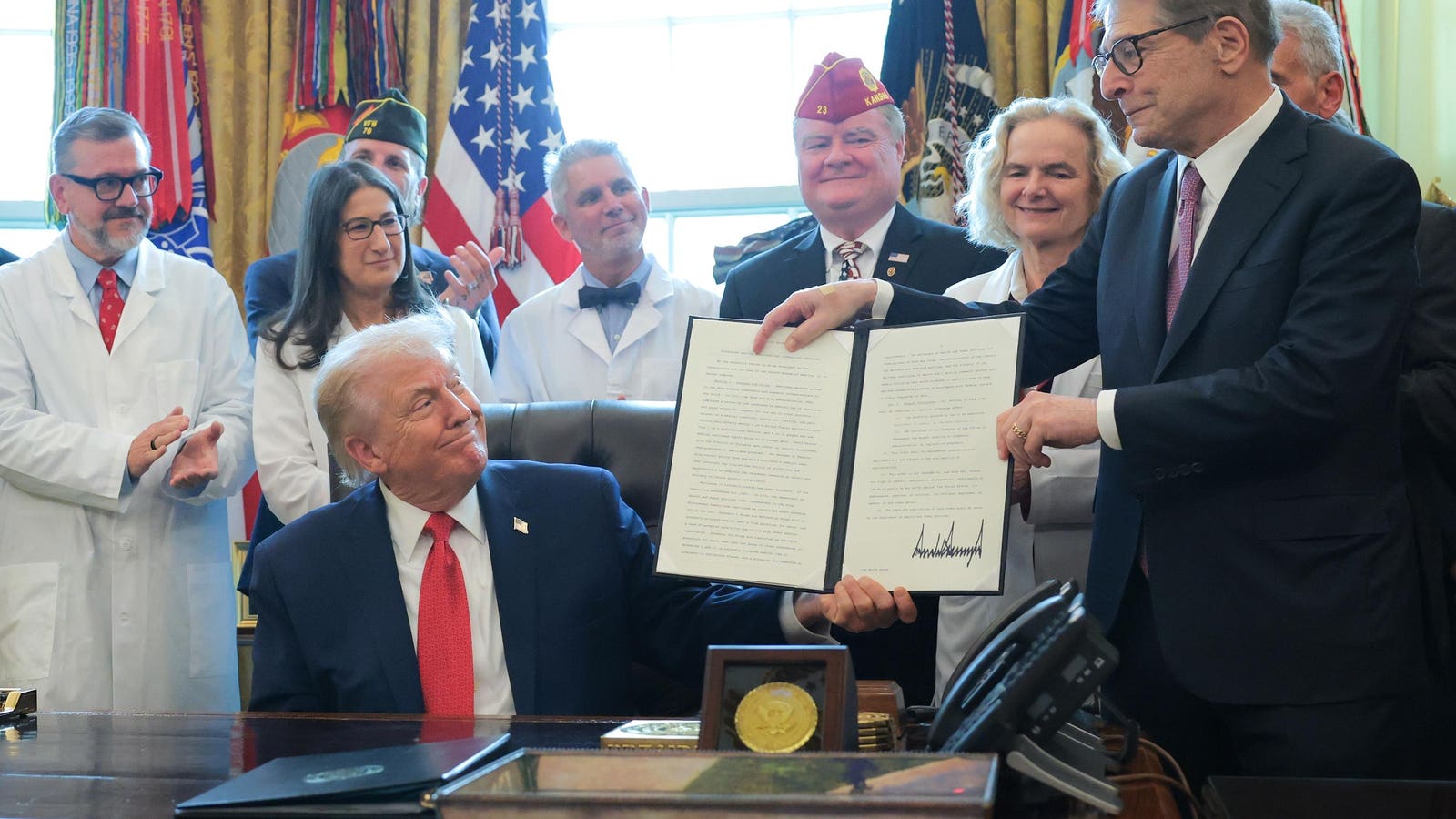
President Trump previously directed the Justice Department to reschedule the drug in a December executive order.
Getty ImagesKey Facts
The move will not legalize marijuana for medical or recreational use under federal law, but instead moves state-licensed medical marijuana from Schedule I to Schedule III, aligning it with dozens of states that have already legalized medical marijuana.
Blanche also scheduled a hearing for June for the Drug Enforcement Administration to consider reclassifying marijuana more broadly as Schedule III.
Blanche said in a statement the move will also facilitate “research on the safety and efficacy of this substance,” which he said will provide “patients with better care and doctors with more reliable information.”
Schedule III drugs have a “moderate to low potential for physical and psychological dependence,” and include anabolic steroids, ketamine and products with less than 90 milligrams of codeine, such as Tylenol with codeine, according to the Drug Enforcement Administration.
Does The Reclassification Legalize Marijuana?
Marijuana is still illegal on the federal level. Because of federal laws, interstate marijuana commerce is still illegal, although penalties for violating federal marijuana laws may be less severe because of the drug’s Schedule III status, Reuters reported. Marijuana is legal for medicinal purposes in 40 states, and 25 states have legalized it for adult recreational use. Jaret Seiberg, an analyst at TD Cowen, previously wrote in a memo the “most likely outcome is the status quo with states as the primary regulator of medical and recreational cannabis,” though these markets would “still be in violation of federal law and still at risk of a crackdown if a President at some point decides to act.”
Key Background
The push to reschedule marijuana began under former President Joe Biden, who in 2022 directed the Department of Health and Human Services to study whether the drug should be classified as Schedule I. The results of that study from the Food and Drug Administration came in 2023, and recommended the DEA move the drug to Schedule III. Schedule I drugs are defined as having no accepted medical use and have a high potential for abuse, according to the DEA, and include drugs like heroin, LSD, ecstasy and peyote. The FDA study recognized that dozens of states have legalized marijuana for medical use in some form to treat things like chronic pain. Biden supported moving marijuana to Schedule III, but the effort stalled until the Trump administration revisited it last year. Trump signed an executive order in December citing the 2023 study and instructing then-Attorney General Pam Bondi to reschedule the drug in a “most expeditious manner.”
What To Watch For
Rescheduling marijuana would likely reduce the tax burden cannabis companies currently face. While marijuana is a Schedule I drug, cannabis companies are required to pay an effective tax rate of about 60% of gross revenue before business deductions.
Further ReadingForbesPresident Trump Signs Executive Order To Reschedule Cannabis As Less Dangerous DrugBy Will YakowiczForbes$28 Billion Hemp Industry Faces Extinction With Government Re-OpeningBy Will YakowiczForbesWhere Is Cannabis Legal? A Guide To All 50 StatesBy Will Yakowicz