
The Agriculture Department is expanding its reorganization plans, moving hundreds of additional employees from its component agencies out of the Washington, D.C. area and reshuffling its workforce beyond the capital region.
USDA announced on Thursday that the Food Safety and Inspection Service will move about two-thirds of its D.C. metro area workforce out of the region to relocate them to “mission-critical locations,” including new facilities in Iowa and Georgia.
As part of this new phase of USDA’s reorganization, FSIS will open a new National Food Safety Center in Urbandale, Iowa. The facility, which will repurpose existing FSIS space, will be the agency’s largest office in the country and will be staffed by about 200 employees.
USDA said the new National Food Safety Center will serve as the “primary locations” for the FSIS administrative, technical and support operations. The center will act as a hub for FSIS resource management, training, food safety education, financial operations, information technology and administrative services.
]]>
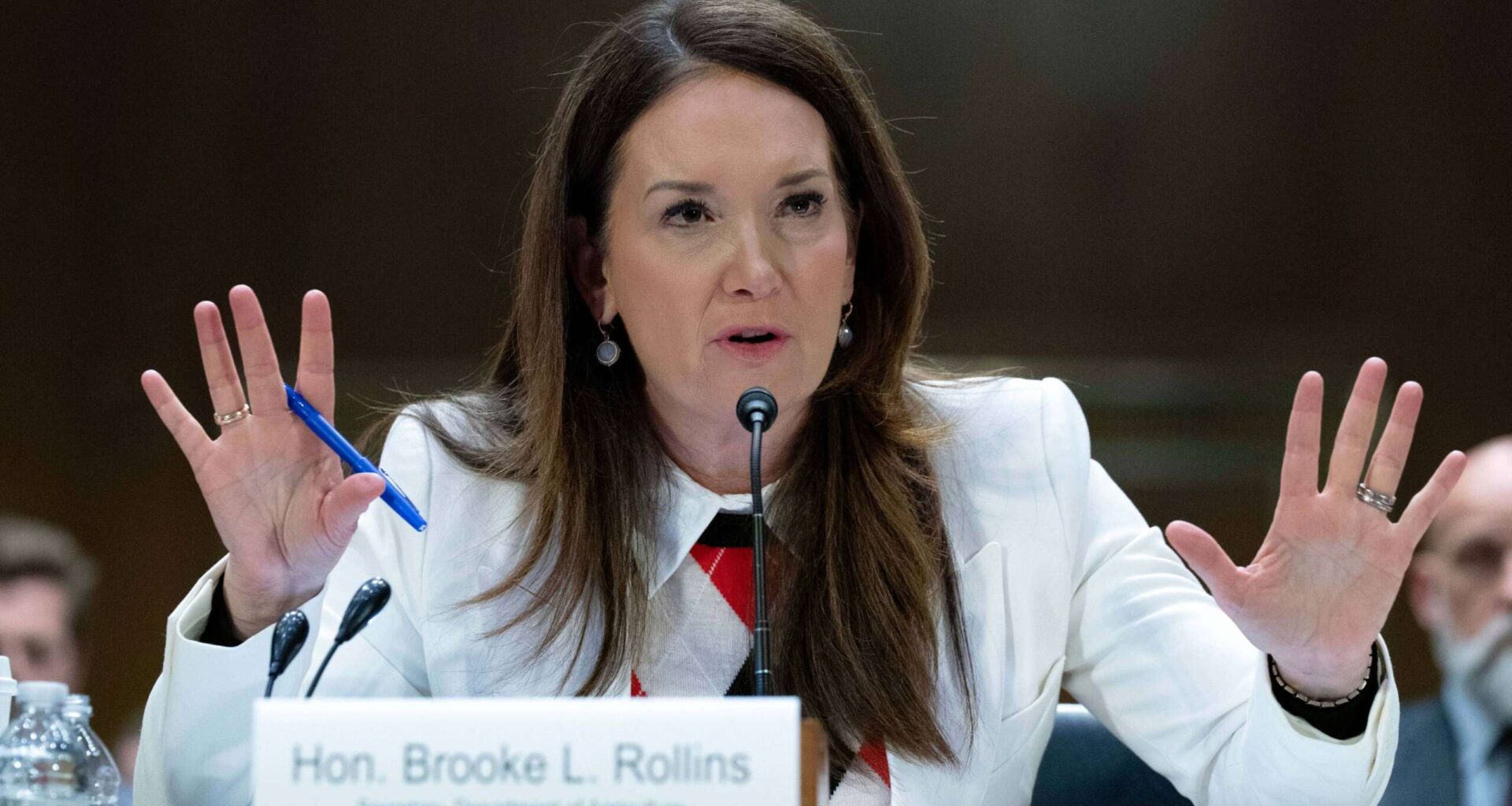
Agriculture Secretary Brooke Rollins said in a statement that this reorganization ensures FSIS “is positioned where it can best support American agriculture and protect public health.”
“These changes reflect our commitment to modernizing the department while staying focused on delivering results for the American people,” Rollins said.
USDA Deputy Secretary Stephen Vaden said these changes “will reduce duplication and improve accountability.”
FSIS will also open a Science Center in Athens, Georgia, building on its existing Eastern Field Services Laboratory and expanding its capabilities in microbiology, chemistry and epidemiology.
In total, about 200 D.C.-based FSIS employees will be reassigned as part of this agency reorganization. But roughly 100 positions will remain in the national capital region to support congressional engagement, policy development and interagency coordination.
The agency will also set up operations in Fort Collins, Colorado, for staff who support international activities.
FSIS said its frontline inspection workforce would not be impacted by these changes and that the relocations would only impact a small fraction of its workforce. FSIS inspectors make up 85% of its total workforce.
]]>
USDA expands reorganizations started under first Trump administration
USDA is also doubling down on relocation plans for employees in its research operations that started under the first Trump administration.
During President Donald Trump’s first term, the Economic Research Service (ERS) and National Institute of Food and Agriculture (NIFA) relocated hundreds of D.C.-based employees to Kansas City. But more than half of the employees who received relocation notices left the agency rather than opt to move.
USDA announced Thursday that it would move more ERS and NIFA employees in the national capital region to Kansas City. The department said that other ERS and NIFA employees who were moved to Kansas City in 2019, but who have shifted to other parts of the country since then, “will be relocated to Kansas City, as intended.”
The National Agricultural Statistics Service (NASS) will also relocate some employees in the D.C. area and beyond. Some impacted employees will be reassigned to the agency’s regional office in St. Louis, while others may be moved to the agency’s other regional offices.
USDA said its Agricultural Research Service (ARS) will begin decommissioning the Beltsville Agricultural Research Center, a complex of more than 400 buildings in Maryland, and relocate research programs to facilities across the country that are “better aligned with regional agricultural needs.” The department said many of BARC’s buildings are outdated or underutilized. Like much of the federal real estate portfolio, these buildings also face a significant backlog of maintenance and repairs.
USDA said this reorganization will allow the department to modernize its research footprint and “better connect researchers with the producers they serve.”
“ARS has evaluated its nationwide footprint to identify locations best suited to absorb ongoing research, ensuring continuity while increasing opportunities for collaboration with farmers and industry partners,” the department wrote in a press release.
USDA said its D.C.-based Office of the Chief Scientist will continue to oversee its research operations.
Last year, USDA said it would relocate more than half of its DC-based workforce to five hubs across the country — Raleigh, North Carolina; Kansas City, Missouri; Indianapolis, Indiana; Fort Collins, Colorado; and Salt Lake City, Utah. More than 2,000 USDA employees in the D.C. area will be asked to relocate. In February, the USDA announced plans to sell one of its D.C. headquarters buildings.
]]>
While the USDA saw a high rate of attrition amid the first Trump administration’s relocation plans, Vaden told lawmakers last summer that department leaders expect fewer employees to refuse to move this time around, because mass layoffs across the federal workforce have made the job search more challenging in the D.C. area.
“I think many of them will choose to come, because given cuts made by other federal agencies here in Washington, D.C., the job market isn’t what it once was here,” Vaden told the Senate Agriculture, Nutrition and Forestry Committee last June.
D.C. currently has the highest unemployment rate in the country, and according to The Guardian, federal employees who were laid off last year are still struggling to find new jobs.
USDA let over 15,000 employees leave in 2025, after they accepted deferred resignation and early retirement offers.
The department is also embarking on a multi-part reorganization of the Forest Service.
The Forest Service is planning to move its headquarters to Salt Lake City, Utah.
In addition, 57 of its 77 research facilities are at risk of closure. Forest Service Chief Tom Schultz said the agency has definitive plans to keep 20 of its research facilities open, and that the other sites are under review. The agency’s FY 2027 budget request proposes eliminating 800 of its approximately 1,110 research scientist positions, with the expectation that affected employees would find similar jobs in the private sector or at the state level.
The Forest Service also plans to close all nine of its regional offices.
The Trump administration’s FY 2027 budget proposal also seeks to merge the wildland firefighting capabilities of the Forest Service and the Interior Department into a single agency. Congress rejected that plan in a comprehensive spending deal for fiscal 2026, but lawmakers directed USDA and the Interior Department to hire an outside group to conduct a study on the feasibility of consolidation.
If you would like to contact this reporter about recent changes in the federal government, please email jheckman@federalnewsnetwork.com, or reach out on Signal at jheckman.29
Copyright
© 2026 Federal News Network. All rights reserved. This website is not intended for users located within the European Economic Area.