
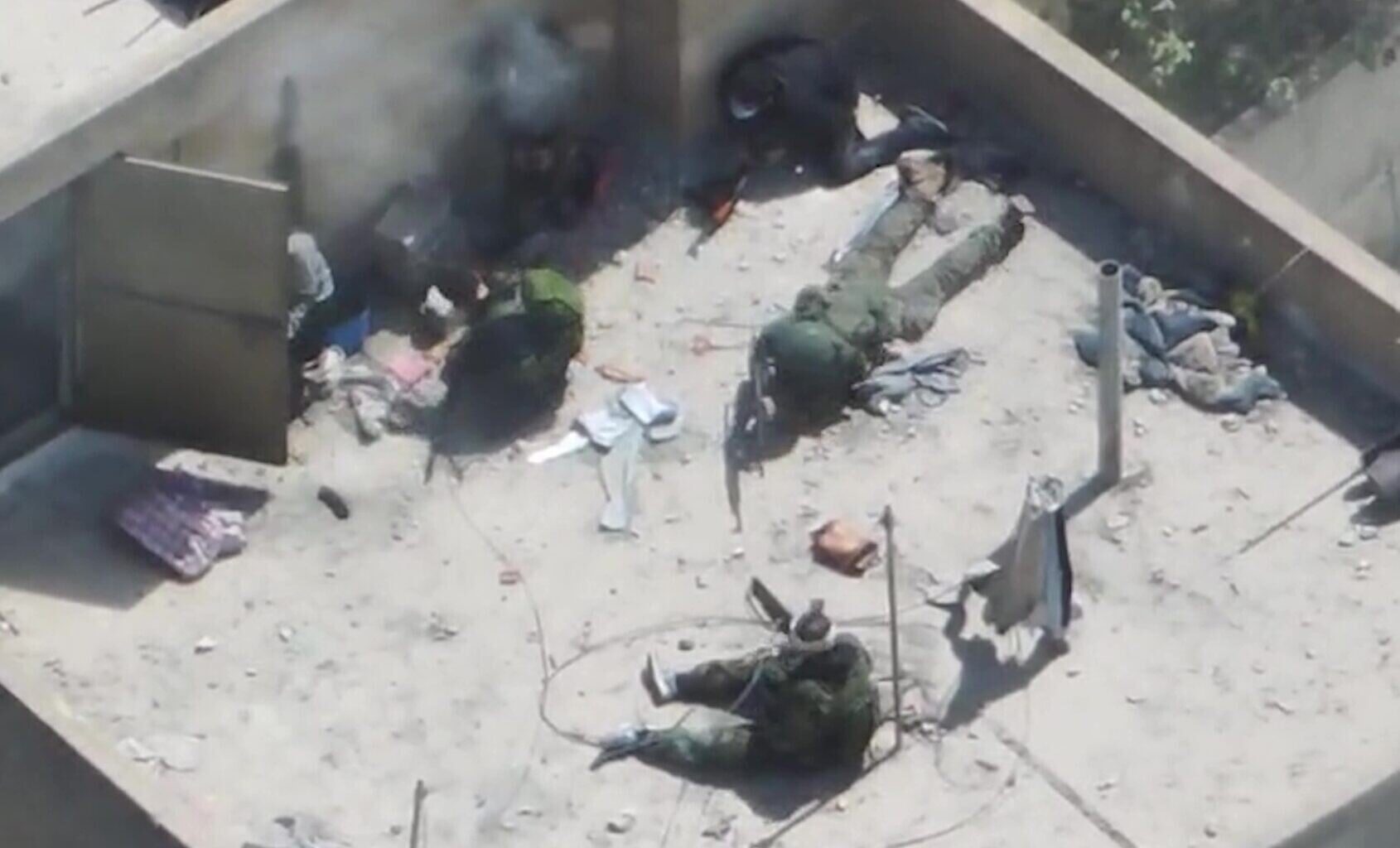
Hezbollah carried out several attacks on Israeli forces stationed in southern Lebanon on Friday, as the Israel Defense Forces published footage showing six of the terror group’s gunmen being struck after exchanging fire with troops in the town of Bint Jbeil.
Meanwhile, the Israeli military issued an evacuation order and carried out strikes in southern Lebanon in response to a rocket barrage that the Iran-backed terror group fired at Israel late Thursday.
The incidents came despite an ongoing ceasefire in Lebanon, which US President Donald Trump said Thursday night would be extended by three weeks, while noting that Israel could carry out strikes in Lebanon in self-defense.
The IDF has said that since the truce took effect on April 17, it has killed over 30 Hezbollah operatives who posed a threat to troops, and destroyed hundreds of the terror group’s sites. Hezbollah, meanwhile, has been carrying out multiple attacks per day on Israeli forces stationed in southern Lebanon amid the ceasefire, while claiming that it is responding to alleged Israeli violations of the truce.
Trump announced the ceasefire extension after hosting Israeli and Lebanese envoys for the second round of the two countries’ highest-level negotiations in decades. The sides in a joint statement agreed on the “urgent need” to revive a November 2024 ceasefire deal that required the Lebanese government to disarm Hezbollah.
Get The Times of Israel’s Daily Edition
by email and never miss our top stories
By signing up, you agree to the terms
On Friday morning, six Hezbollah gunmen were killed in the southern Lebanese town of Bint Jbeil, the military said.
Hezbollah terrorists on a rooftop in the southern Lebanon town of Bint Jbeil are seen exchanging fire with Israeli troops before being targeted in strikes, April 24, 2026. (Israel Defense Forces)
Bint Jbeil is located in the Israeli-held security zone in southern Lebanon. The IDF assessed that, as the ceasefire took effect last week, several Hezbollah operatives remained holed up in the town after more than 100 were killed during the fighting there in recent weeks.
The military said that soldiers of the Paratroopers Brigade spotted fresh food and military equipment at the entrance to a building in Bint Jbeil’s “kasbah,” or fortified quarter.
The paratroopers sent in a drone and a dog from the Oketz canine unit to scan the site before the soldiers entered. The dog revealed the position of the six gunmen before being shot dead by them.
The soldiers then surrounded the building and identified the gunmen fleeing to the rooftop using the drone.
Within an hour and a half of the initial identification, all six gunmen were killed by troops with light arms, tank shelling and an explosive drone. The IDF said that at least two of the gunmen were killed by the paratroopers, with the other four killed in the strikes. No Israeli soldiers were hurt.
The incident was a “blatant violation of the ceasefire understandings by the Hezbollah terror organization,” the IDF said.
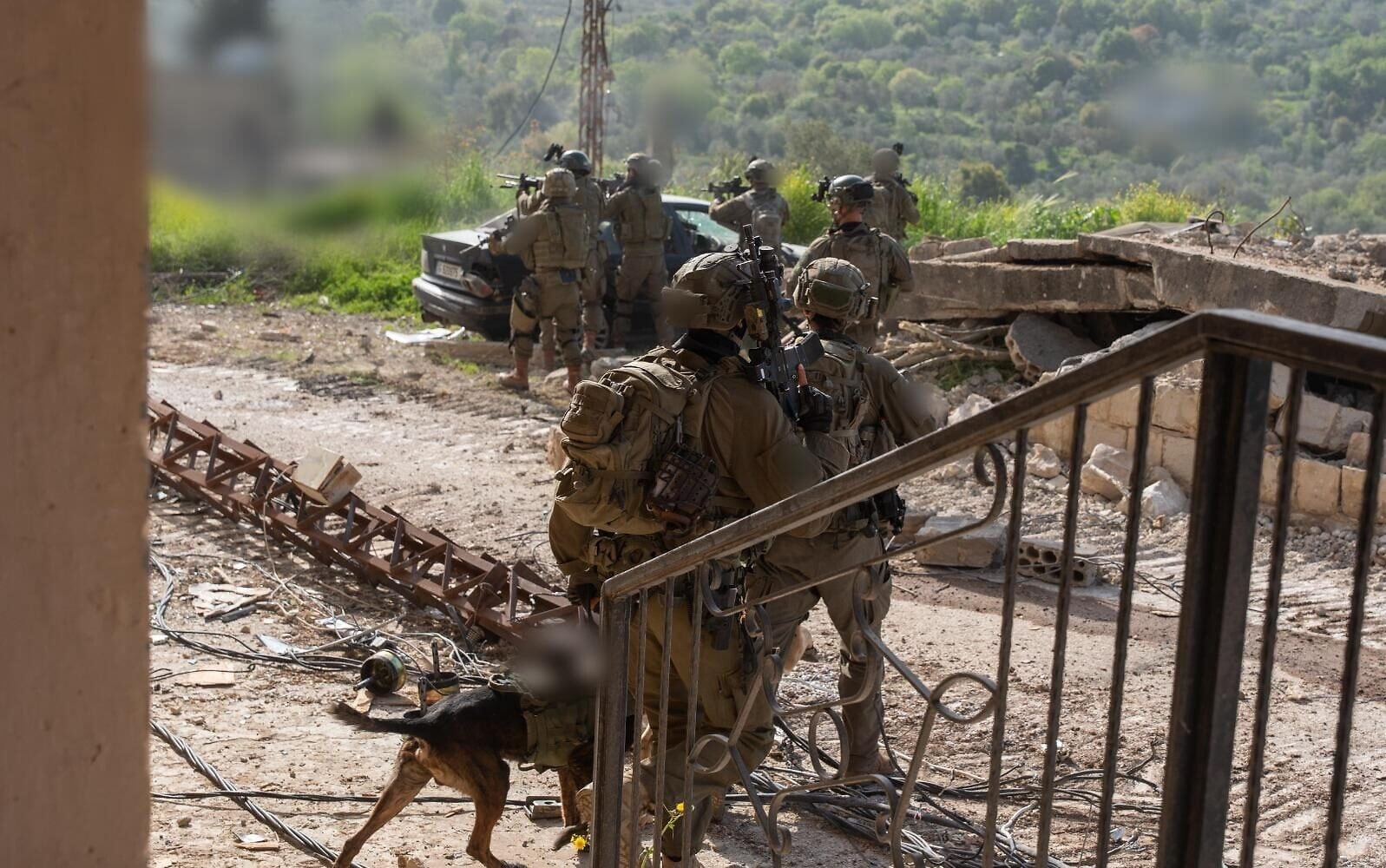
IDF troops operate in southern Lebanon, in a handout photo issued on April 23, 2026. (Israel Defense Forces)
Separately, the IDF said Friday morning that it struck buildings used by Hezbollah in the southern Lebanese towns of Khirbet Selm and Touline in response to the terror group’s late-night rocket barrage on the northern border community of Shtula.
The buildings were used by Hezbollah to advance attacks on troops and Israel, according to the military.
The IDF also ordered residents to evacuate a southern Lebanon town from which the attack on Shtula was launched.
“Hezbollah’s terror activities and the launching [of rockets] from the village force the IDF to act against it in your area of residence,” army spokesman Col. Avichay Adraee warned residents of Deir Aames, which is located north of the Israeli buffer zone.
Adraee called on the residents to “immediately” evacuate their homes and move at least a kilometer from the village, which is located outside of the Israeli-held security zone in southern Lebanon.
The IDF later said it struck buildings in Deir Aames that Hezbollah used to launch the barrage on Shtula. Lebanese state media reported three Israeli strikes in the town. No casualties were reported.
צה”ל תקף מבנים צבאיים של ארגון הטרור חיזבאללה בכפר דיס עמס – ממנו שוגרו רקטות לשתולה
צה”ל תקף לפני זמן קצר מבנים צבאיים בכפר דיר עמס שנמצא צפונית לקו ההגנה הקדמי בדרום לבנון, וממנו שוגרו אמש רקטות לעבר מושב שתולה.
המבנים שהותקפו שימשו את ארגון הטרור חיזבאללה לקידום מתווי טרור… pic.twitter.com/c3RIQofAo4
— צבא ההגנה לישראל (@idfonline) April 24, 2026
On Friday afternoon, sirens sounded in several border communities in the Western Galilee, warning of a Hezbollah drone attack from Lebanon. The IDF said it shot the drone down before it crossed the border from Lebanon.
Elsewhere in southern Lebanon, Hezbollah launched several explosive-laden drones at Israeli troops stationed in the Israeli-held security zone.
The IDF said the drones struck near the forces, but no injuries were caused.
Another suspected drone was identified over an area of southern Lebanon where troops are stationed, according to the military. The IDF said it lost contact with that drone, indicating that the drone crashed.
“The Hezbollah terror organization once again blatantly violated the ceasefire agreement,” the IDF said.
Hezbollah, in several statements, said it had targeted troops operating in the villages of Qantara and Ramyeh, located in the Israeli buffer zone.
The terror group has made use of small first-person view (FPV) drones in its attacks on Israeli troops. Some of the drones are guided using a spool of fiber optic cable, which mitigates efforts to electronically jam their signal. According to military officials, the FPV drones have ranges of up to 15 kilometers.
The Israeli military separately confirmed that one of its own drones was shot down by a Hezbollah anti-aircraft missile over Tyre in southern Lebanon on Friday afternoon. Footage published by Lebanese media showed the immediate aftermath of the interception.
“The incident is under investigation,” the IDF said.
Hezbollah took responsibility for the incident, saying it shot down an Israeli Hermes 450 unmanned aerial vehicle.
مصادر لبنانية: إسقاط مسيرة إسرائيلية من سماء مدينة صور. pic.twitter.com/Ql3JZv9flj
— الجرمق الإخباري (@aljarmaqnet) April 24, 2026
Also on Friday, troops also struck surveillance equipment at a Hezbollah rocket-launching site in the southern Lebanon town of Kounine, the IDF said, adding that the equipment “posed a direct threat to the forces operating in the area.”
In another incident, the IDF said it struck several Hezbollah rocket launchers in the southern Lebanon towns of Yater and Kafra, which are located north of the Israeli-held security zone.
The launchers “posed a threat to IDF troops and Israeli civilians,” the military said.
צה”ל ממשיך לתקוף משגרים של ארגון הטרור חיזבאללה בדרום לבנון
צה”ל תקף לפני זמן קצר, משגרים של ארגון הטרור חיזבאללה, במרחבים יעטר וכפרא שבדרום לבנון, צפונית לקו ההגנה הקדמי. המשגרים שהותקפו היוו איום על כוחות צה”ל ואזרחי מדינת ישראל.
מוקדם יותר היום, ארגון הטרור חיזבאללה שיגר… pic.twitter.com/8OxQh0V6Tg
— צבא ההגנה לישראל (@idfonline) April 24, 2026
Amid the Hezbollah attacks on troops and Israel, the mayor of Metula, Israel’s northernmost town, accused Prime Minister Benjamin Netanyahu on Friday of cowing to Trump’s ceasefire.
Some northern municipal leaders have expressed skepticism about the diplomacy and urged the government to wipe out Hezbollah, which has rained hundreds of rockets and drones a day on their region.
Writing on Facebook earlier Friday, Metula Mayor David Azulay said: “This morning we woke up to another day in our dismal reality.”
“We got a message from President Trump about three more weeks of ceasefire. I didn’t know he’s the leader of the State of Israel,” said Azulay, adding that Netanyahu was “trapped in (Trump’s) bear hug.”
A separate statement from Azulay said the city had put up US flags in a jab at the government’s purported subservience to the White House. “It’s sad that the government of Israel and its head are losing our independence as an independent, sovereign and democratic state,” the statement read.
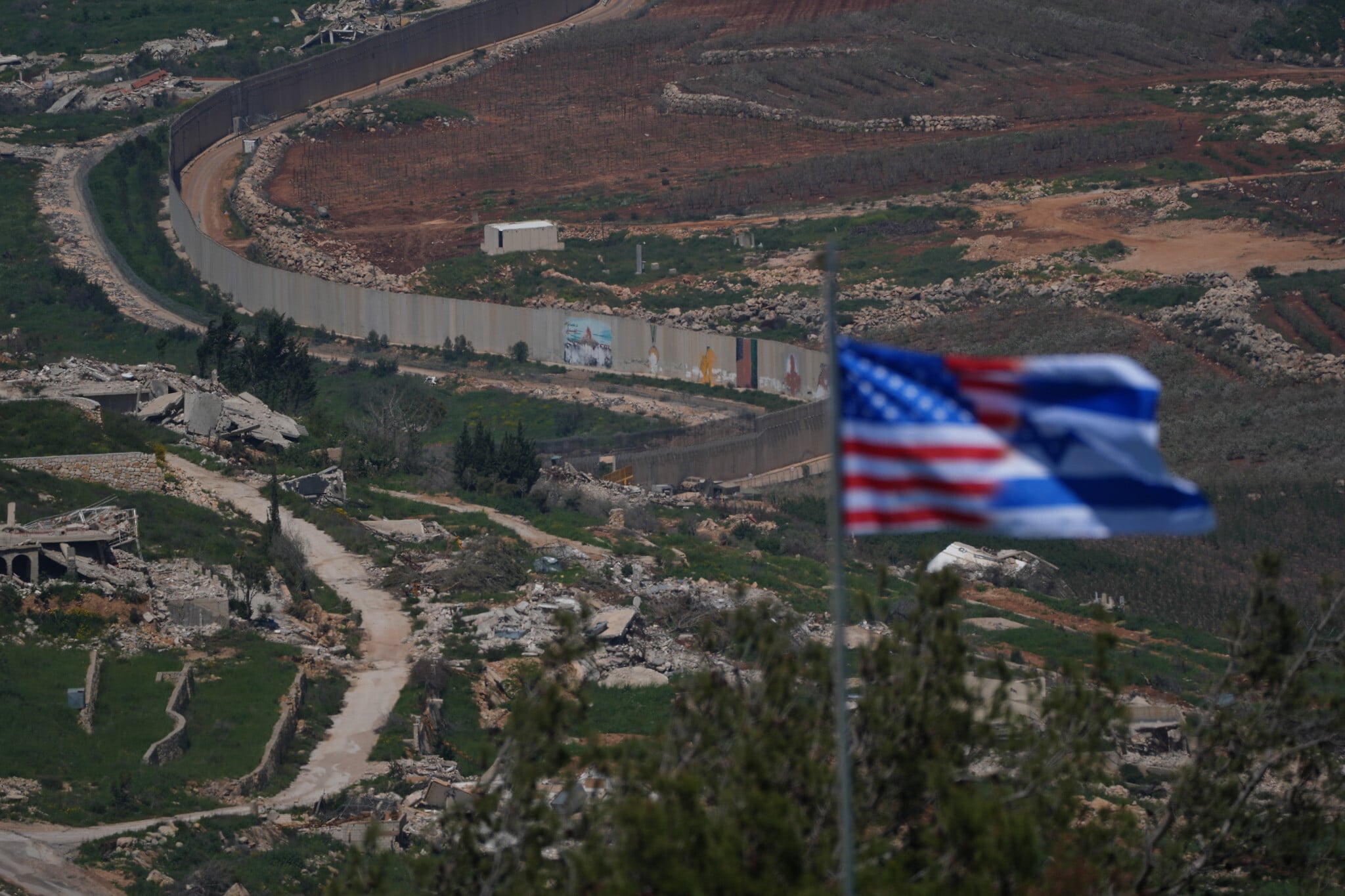
A combined US and Israeli flag can be seen on the Israeli border with Lebanon, northern Israel, on April 23, 2026. (Ayal Margolin/Flash90)
Later Friday, breaking a nearly day-long silence on the ceasefire, Netanyahu said Israel was “maintaining full freedom of action against any threat” in Lebanon, and accused Hezbollah of seeking to “sabotage” peace talks between Israel and Lebanon.
“We struck yesterday and we struck today. We are determined to restore security to the residents of the north,” he said.
Meanwhile, Lebanese lawmaker Mohammed Raad, head of Hezbollah’s parliamentary bloc, called on Beirut to “withdraw” from the direct talks with Israel.
“The authorities ought to feel ashamed before their people and withdraw from what has been called direct negotiations with the Zionist enemy,” he said, adding that “any official contact or meeting bringing together the Lebanese and Israeli sides amid the ongoing war… will in no way enjoy Lebanese national consensus.”
“Any so-called truce that grants the occupying enemy in Lebanon a special exemption to open fire… is not a truce at all, but rather a devious deception and an attempt to dupe others, one that entails covering up Israeli hostility and turning a blind eye to the enemy’s continued violations,” Raad accused.
Israel has pushed troops deeper into Lebanon and carried out massive airstrikes there after Hezbollah started firing rockets at Israel on March 2 for the first time since the November 2024 ceasefire agreement. That agreement ended over a year of conflict initiated by Hezbollah, during which Metula was largely evacuated and heavily damaged by rocket fire.
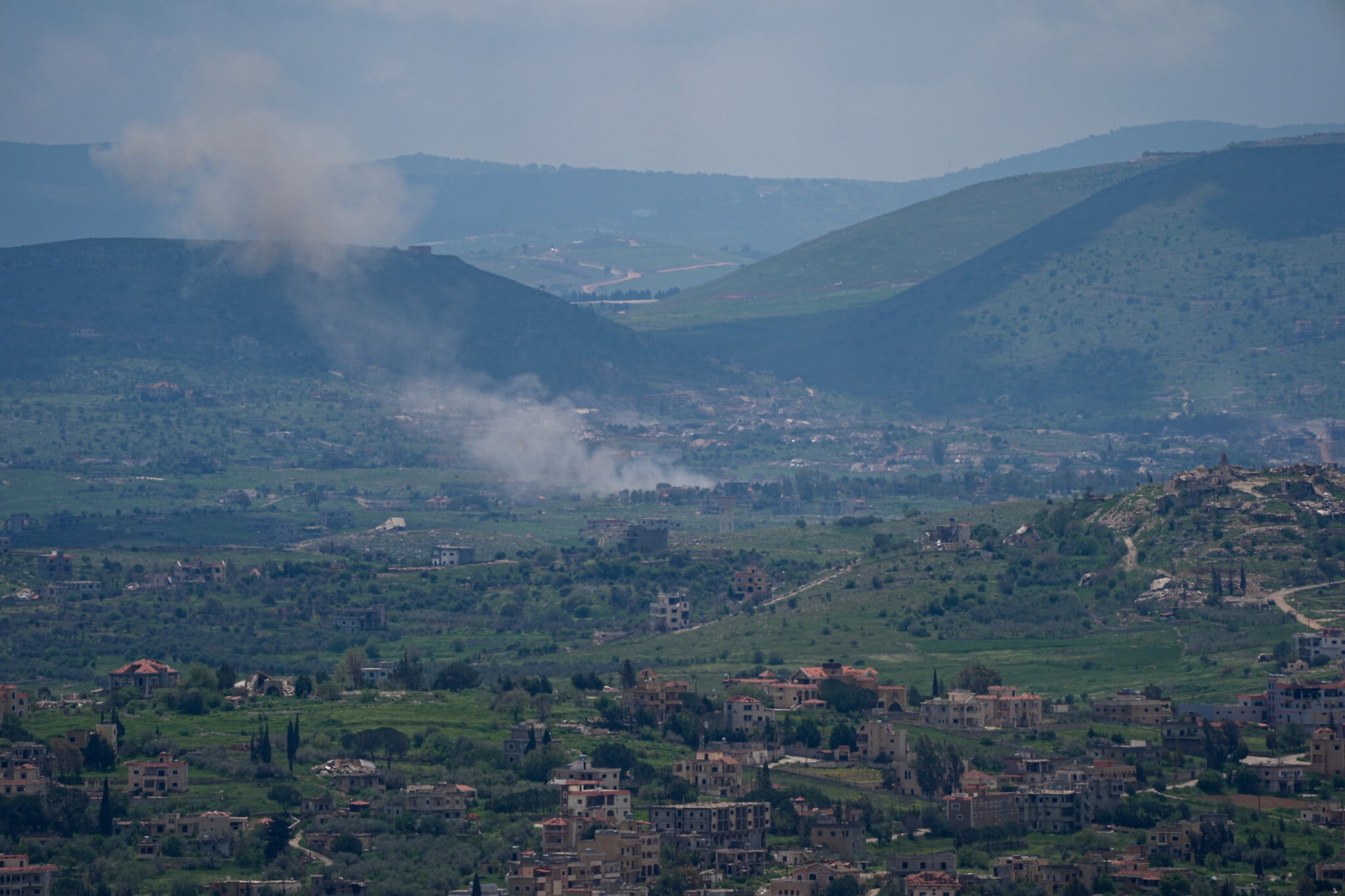
Smoke rises from southern Lebanon during an Israeli military operation, April 20, 2026. (Ayal Margolin/Flash90)
The terror group has said it renewed its attacks in response to both Israel’s continued attacks and presence in Lebanon since that agreement, and the killing of Iran’s supreme leader, Ali Khamenei, at the start of the US-Israeli bombing campaign in Iran on February 28.
The ceasefire with Lebanon started on April 16 amid warnings from Iranian officials that failure to stop the fighting there could upend the Iran ceasefire that began on April 8.
Separately, on Friday, the IDF published footage that it said demonstrated Hezbollah’s use of ambulances for military purposes.
The footage showed weapons troops found inside ambulances bearing the logo of the Risala Scout Association, a paramedic group affiliated with the Hezbollah-allied Amal movement.
❗️EXPOSED: Hezbollah’s use of ambulances for terror
Hezbollah uses ambulances and medical teams as cover for transporting weapons and operatives, undermining the special protections granted to medical facilities and equipment under international law.
During IDF searches in… pic.twitter.com/h9qCVu1pBs
— Israel Defense Forces (@IDF) April 24, 2026
The IDF said Hezbollah “systematically and repeatedly uses medical facilities and equipment — particularly ambulances — to conceal terrorist activity,” including by using “vehicles and medical teams as cover for transporting weapons and operatives, thereby undermining the special protections granted to medical facilities and equipment under international law.”
During an incident this week, the IDF said, several armed Hezbollah operatives were killed in the Qantara area after violating the ceasefire terms and posing a threat to troops. During scans in the area following the incident, troops of the Golani Brigade located “an ambulance used by the terrorists to conceal weapons,” including explosive devices, mortar shells, magazines and a grenade, the military said.
In another incident this month, troops of the 7th Armored Brigade killed an RPG-wielding Hezbollah operative near an ambulance. The IDF said, “Weapons were uncovered inside the ambulance, which had been used by the terrorist to establish himself in the area and carry out attacks from a ‘protected’ position.”
Additional footage released by the IDF showed what it said were Hezbollah operatives who survived Israeli strikes fleeing and hiding until an ambulance arrived to collect them.
According to the IDF, Hezbollah has “increased its use of ambulances to transport operatives between locations while disguising their identities,” due to Israeli warnings to Lebanese civilians ahead of strikes, which make it “harder for Hezbollah operatives to blend in with non-combatants and move throughout the area.”
UNIFIL says 2nd peacekeeper dies of wounds from apparent Israeli strike
An Indonesian peacekeeper died Friday from wounds sustained in an apparent Israeli strike on one of the observer force’s bases in southern Lebanon last month. Another Indonesian peacekeeper was killed during the incident.
“UNIFIL deplores the passing today of Corporal Rico Pramudia, who was critically injured following a projectile explosion in his base in Adchit Al Qusayr on the night of 29 March,” UNIFIL said in a statement.
Pramudia, who was critically hurt, succumbed to his injuries at a hospital in Beirut, the multinational force said.
Statement on the passing of an Indonesian peacekeeper injured last month:
UNIFIL deplores the passing today of Corporal Rico Pramudia, who was critically injured following a projectile explosion in his base in Adchit Al Qusayr on the night of 29 March. pic.twitter.com/YPJcR7XhBr
— UNIFIL (@UNIFIL_) April 24, 2026
A UN source told AFP on condition of anonymity that investigations had shown the fire came from an Israeli tank, adding that “debris from a tank round has been recovered” at the site.
The IDF has said it is investigating the incident.
Times of Israel staff, Lazar Berman and Agencies contributed to this report.