
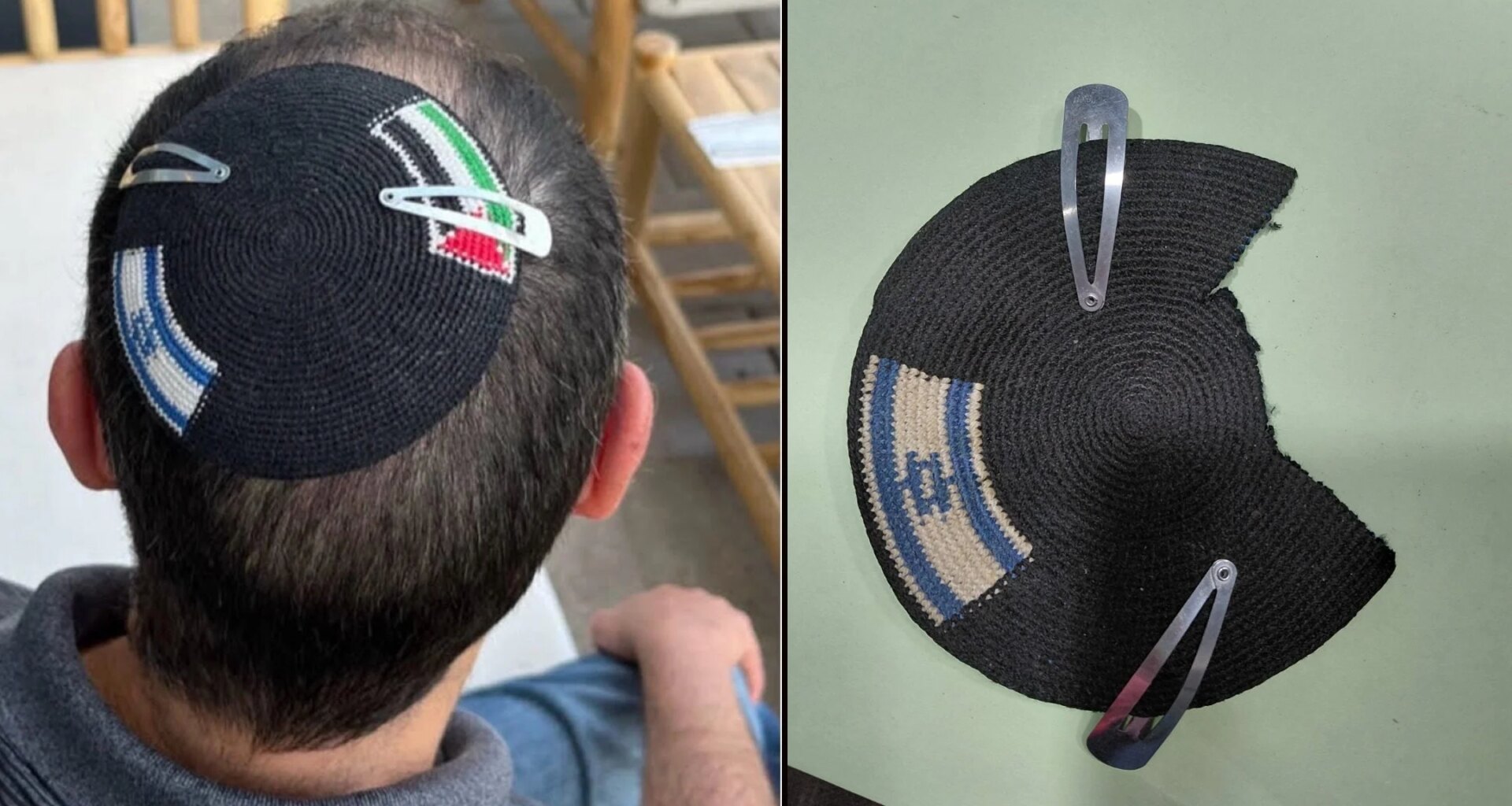
JTA — Alex Sinclair had no idea what would follow when he posted a picture of his mutilated kippa to Facebook on Thursday.
Sinclair, who lives in central Israel, described being detained by police officers who told him that his kippa, which had both the Israeli and Palestinian flags woven in, was illegal. When he was released from their custody, he was allowed to take his kippa home — but only after the Palestinian flag was cut out, leaving him with roughly half a head-covering.
To Sinclair, a British-born writer and educator whose books include “Loving the Real Israel: An Educational Agenda for Liberal Zionism,” the situation was galling, and not just because he had been accused of breaking a law that does not exist.
“She’d taken my possession, a religious ritual object, something that is very dear to my heart, and destroyed it,” he wrote about the officer who returned his kippa. He added, “That was it. I walked home, shaken, angry, depressed.”
A day after publishing his account of the encounter, eliciting hundreds of almost universally supportive comments, Sinclair said he had not heard from anyone in the government about his Facebook post or the complaint he filed on the Israel Police website.
Get The Times of Israel’s Daily Edition
by email and never miss our top stories
By signing up, you agree to the terms
But he had gotten offers of legal aid; calls from left-wing politicians, including Yair Golan; and even Shabbat flowers from a prominent liberal activist. His phone had been ringing off the hook with calls from journalists, and someone he barely knows is making plans for a rally outside the police station in Modiin, where he was detained.
“I’ve never experienced anything like this,” Sinclair said in an interview with the Jewish Telegraphic Agency on Friday afternoon.
The Israel Police has acknowledged the incident, saying publicly that a man had been detained after they were contacted about his kippa and had been released “following a clarification process.” They said the official complaint about the incident prevented further comment.
Sinclair said he thought the image of the defiled kippa was resonant for Jews who instinctively associated it with centuries of antisemitism. But he said he wondered whether the depth of the response reflected something else, too.
After the ceasefire in the Iran war, Israelis were “beginning to be able to breathe a little bit and look above the parapet and just sort of see, OK, maybe we can start to think about the future in a way that we really weren’t able to as a society for the past couple of years,” he said. Now, the thought for many is: “If we are looking ahead, oh my God, is this what is in store for us?”
The incident comes amid a broad crackdown on Palestinian symbols in public spaces, and allegations that police, who have come under the control of a far-right minister, are increasingly intimidating liberal activists.
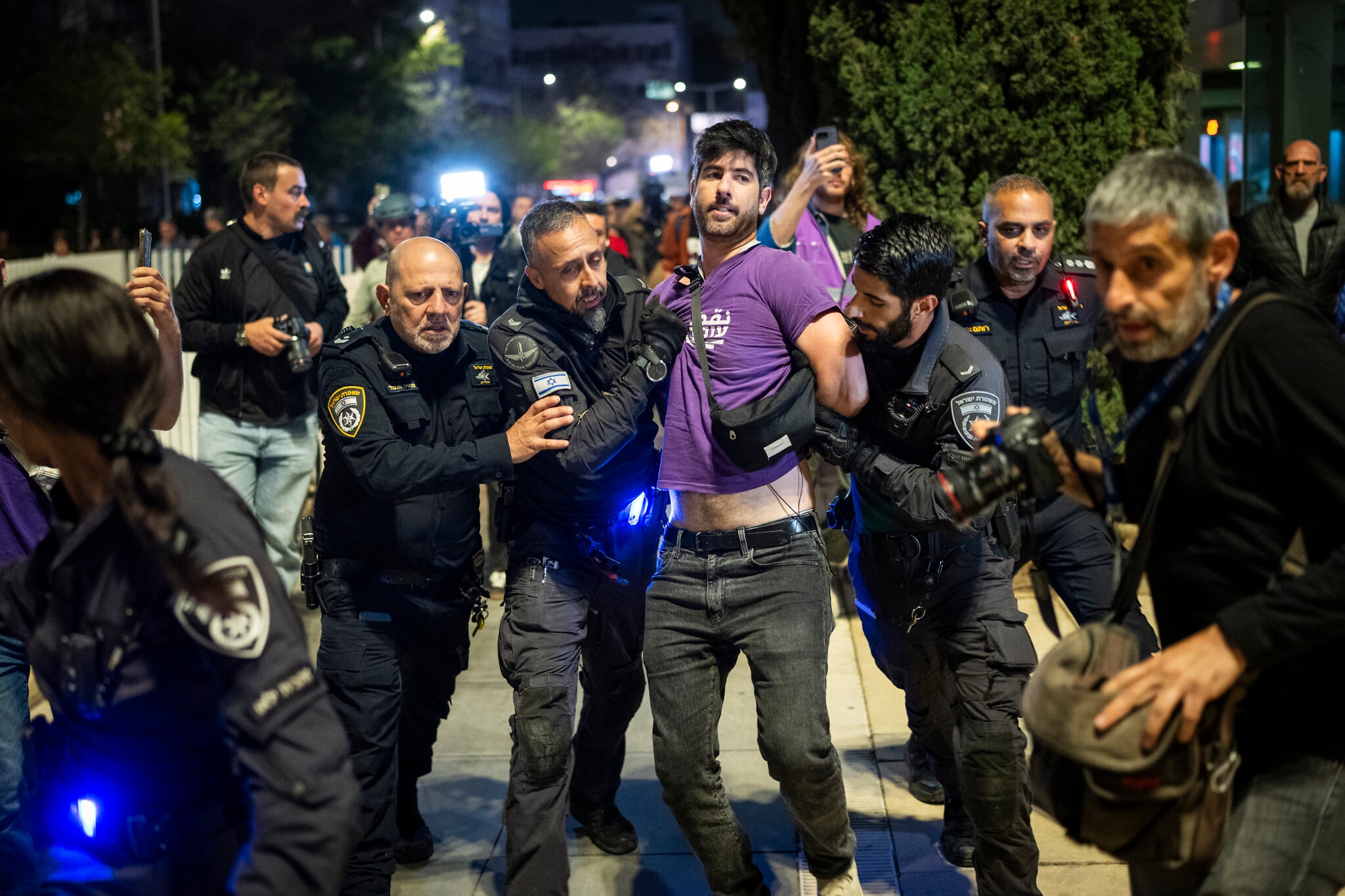
Police detain Alon Lee Green, co-founder of Standing Together, at a rally against the ongoing war with Iran, Tel Aviv, April 4, 2026. (Flash90)
Soon after being named national security minister in January 2023, Itamar Ben-Gvir told Israeli police officers to exercise wide latitude in removing Palestinian national flags from public places in order to preserve public order. He characterized the flag as a terrorist symbol, even though it is legal in Israel.
“It cannot be that lawbreakers wave terrorist flags, incite and encourage terrorism, so I ordered the removal of flags supporting terrorism from the public space and to stop the incitement against Israel,” he said at the time. Following the bloody October 7 onslaught on Israel later that year, the crackdown intensified even more.
During the same period, the police have been accused of using inappropriate force against people protesting against the right-wing government. Sinclair said he was concerned about the threats to liberal values in his chosen country.
“The job as a police officer is not to police people’s political opinions,” he said. “That happens in other countries that we don’t want to become.”
Among the hundreds of people responding to Sinclair’s Facebook post were many who echoed that sentiment — even while saying they did not share his appreciation for the Palestinian flag. (Elsewhere in Israel and online, Sinclair drew more scorn.)
“While I don’t agree with your choice of kippa, I do agree you have every right to wear it,” wrote one commenter. “This is awful and I’m sorry you experienced it. And I hate that this is where we are now, that someone could be detained for something like this.”
Gilad Kariv, a Reform rabbi and member of the opposition in Israel’s parliament, said in a statement that there was “systemic madness” within the Israel Police and that he believed a criminal investigation and civil lawsuit would be appropriate. He also called for introspection.
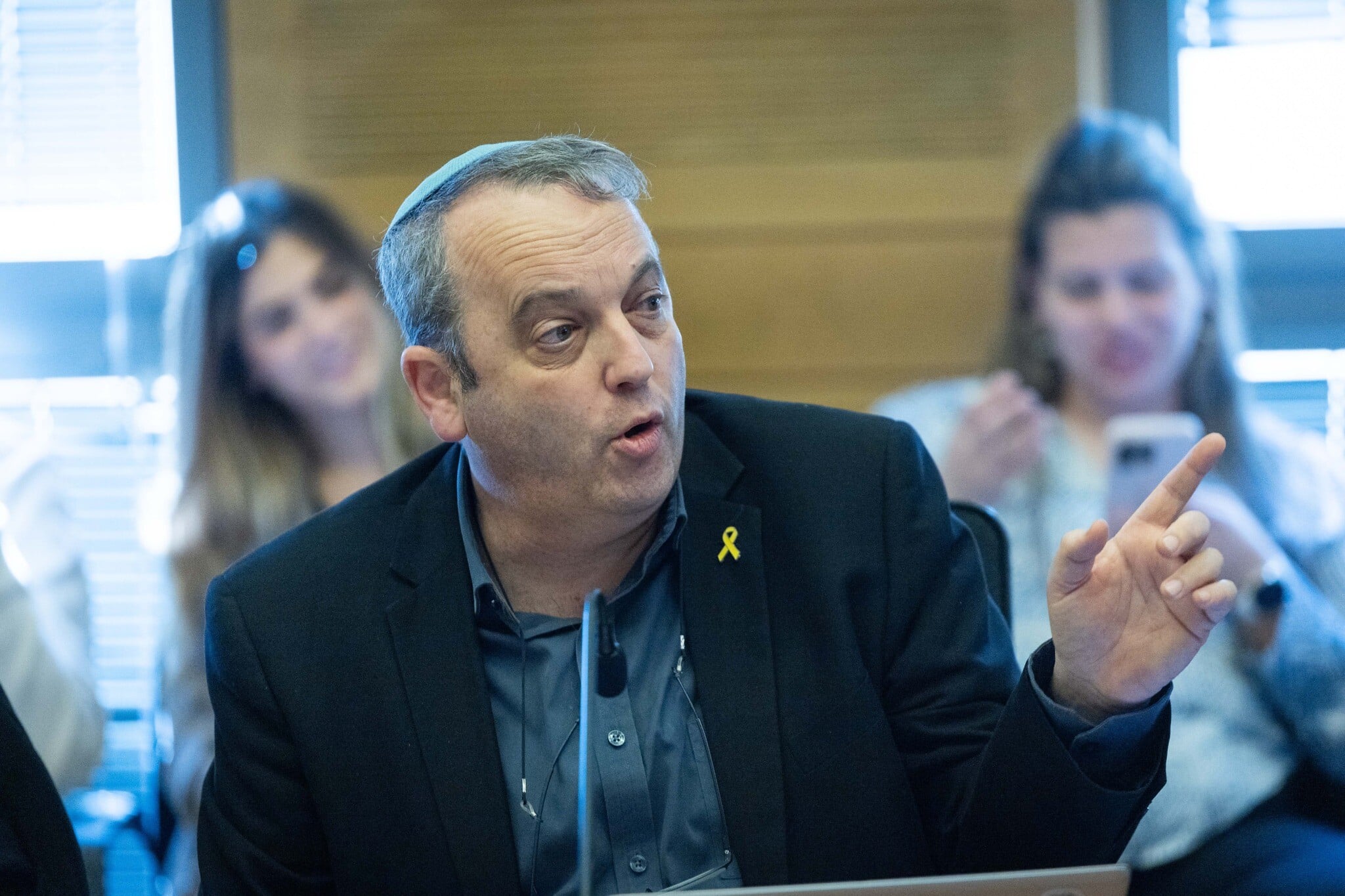
The Democrats MK Gilad Kariv attends a committee meeting at the Knesset on January 26, 2026. (Yonatan Sindel/Flash90)
“If police officers had cut off a Jew’s kippa in any other country in the world, there would have been an uproar here in Israel,” Kariv wrote.
Sinclair said the kippa that was destroyed was not his first with the same design. After the wind blew away the first one, which he had custom-made by a popular Jerusalem vendor nearly 20 years ago, he ordered a replacement — that’s how motivated he was to wear his values on his head.
“I’m a Zionist, and I believe in the Jewish people’s right to self-determination in this part of their historic homeland. And I also think that the Palestinians are also people who have a right to self-determination in part of this place, which is also their historic homeland,” Sinclair said.
“By the ironies of history, the same chunk of land ended up being a place where two peoples have a legitimate connection, and we have to figure that out,” he continued. “People from both sides who want to delegitimize or erase the other side forget about whether they’re being nice or nasty; they’re just not being true to history.”
That was once a relatively widely held view among Israelis and Jews around the world. But decades of failed peace efforts, violent attacks on Israelis from Palestinian terrorists, and increasing extremism among both Jews and Arabs have caused a two-state solution to fall sharply out of favor during that period.
Sinclair says he sees himself as a peace activist, though he called the term “grandiose” and said, “I’ve got a lot of respect for people whose life is much more about the activism than mine.”
What he is, he says, is a Jew who loves Israel and is scared for its future. His next book, out this fall, will tackle what he believes is “a struggle for the soul of the Jewish people,” a topic on which he has suddenly become an unwilling case study.
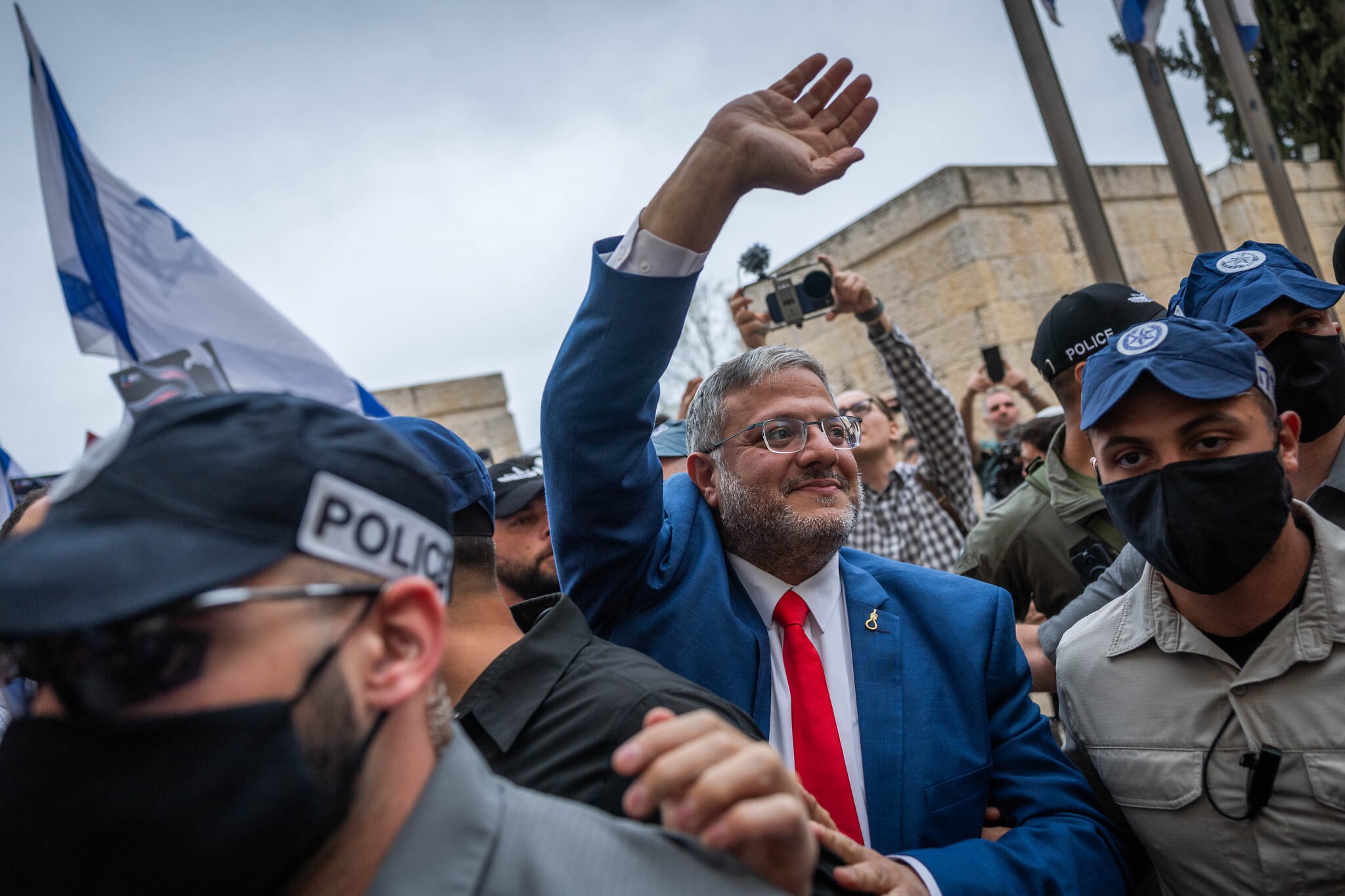
National Security Minister Itamar Ben Gvir outside the High Court in Jerusalem, April 15, 2026 (Yonatan Sindel/Flash90)
On one side, he said, are far-right extremists, including Ben-Gvir, who “want a kind of Judaism and an Israel which doesn’t have a place for all kinds of things that feel very important to me,” including egalitarianism, Palestinians and left-leaning politics. (That side, he noted, is currently advancing legislation that would ban egalitarian prayer at the Western Wall.)
On the other side, he said, are those who promote an Israel that “is open and pluralist,” one in which people tolerate people who practice Judaism in ways they would not and hold values they do not.
“We’re in a struggle between these two versions of Judaism and versions of Zionism,” Sinclair said. “I very much hope that we’ll win the struggle. I think it’s not too late to win that struggle. … But it’s not a slam-dunk. And we, the Jewish people, are in real trouble if we lose.”
Sinclair believes his book could help turn that lofty vision into a how-to guide for Israeli liberals. But he also has more practical concerns, like where to get another kippa. He isn’t sure the vendor who made it before will be willing to do so again. And this time, it’s not just him but many of his friends who say they are interested in getting their hands on one.
“Some bright lefty entrepreneur,” he joked, “has got a big money-making opportunity there.”