
Food prices were already straining Americans’ pocketbooks. The Iran war could eventually make that problem even starker.
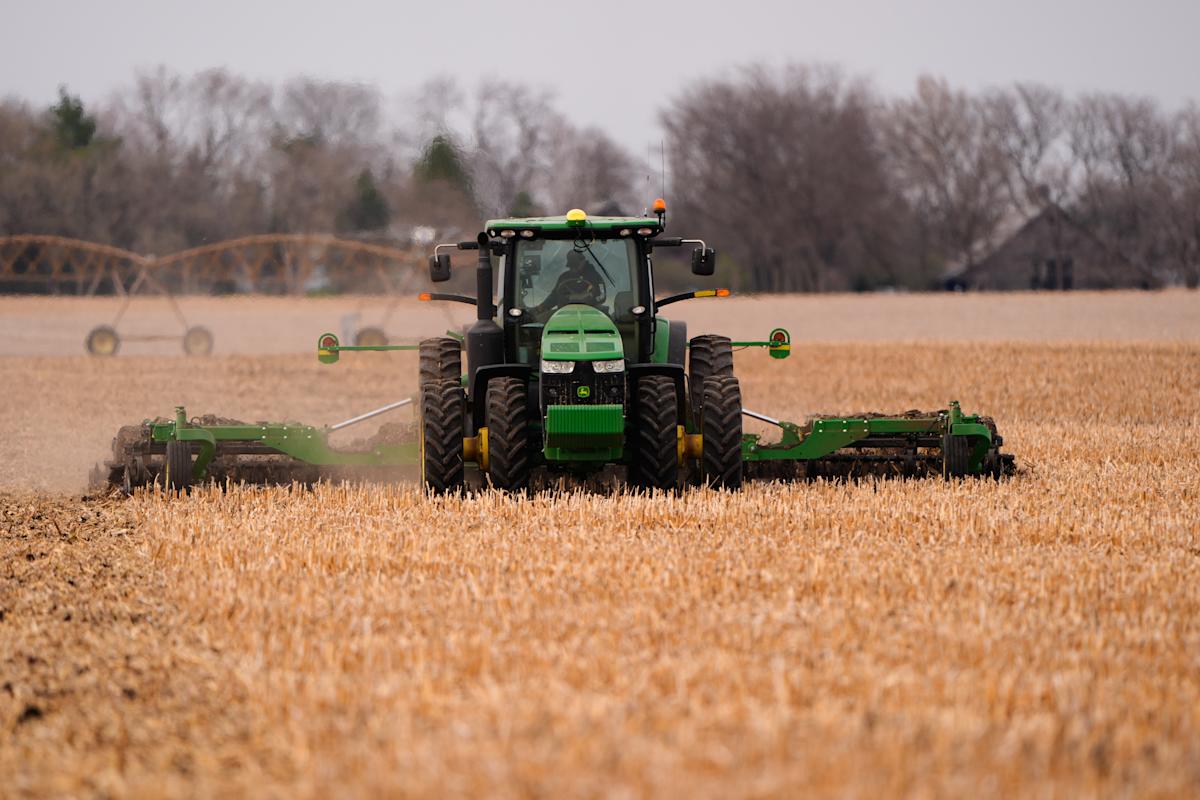
So long as Iran is choking off the Strait of Hormuz, around 25% of seaborne oil and one-third of seaborne fertilizers are left without a crucial transit point to reach global markets. The cost of both goods is spiking as a result — all of which weighs on US farmers, who rely on costly fertilizer for their crops and diesel for their equipment.
Most food in the US also travels by diesel-powered trucks, adding another pricing pressure. Produce, meat, dairy, and other products need refrigeration, which could sting thanks to higher electricity bills. Then there’s the spiking cost of petrochemicals, which are needed to package pretty much all processed food.
In short: There’s nowhere to hide from higher prices.
But unlike the hit to gasoline prices, it takes a bit for price shocks at the producer level to trickle down to consumers. Purdue University’s Ken Foster, a professor of agricultural economics, and Bernard Dalheimer, an assistant professor of macroeconomics and trade, wrote in March that if the conflict continues and the Strait of Hormuz remains blocked, food-at-home inflation could rise by 3 to 6 percentage points over the next 12 to 18 months, calling it “a broad but lagged and sticky shock.”
Read more: Iran war sends gas prices skyrocketing, airfare climbing
Where could that shock be seen first? “It’s in dairy where the transportation cost share is highest, and we need to cool the dairy all the way through,” Dalheimer said, though it’s difficult to say how exactly that will hit consumers.
Indeed, energy prices are felt more immediately and across more foods, while higher fertilizer prices will burden a smaller group of products and take longer to work their way through to US food prices, Foster and Dalheimer told Yahoo Finance. Many commercial-scale farmers in North America had already purchased much of their fertilizer for 2026 before the conflict with Iran began, and they won’t begin to look at shifting their crop production to account for less or more expensive fertilizer until next year, Foster said.
“If the conflict persists and starts to affect the prices that farmers pay for the ‘27 crop, then you start to see real food price effects in ‘27,” Foster said.
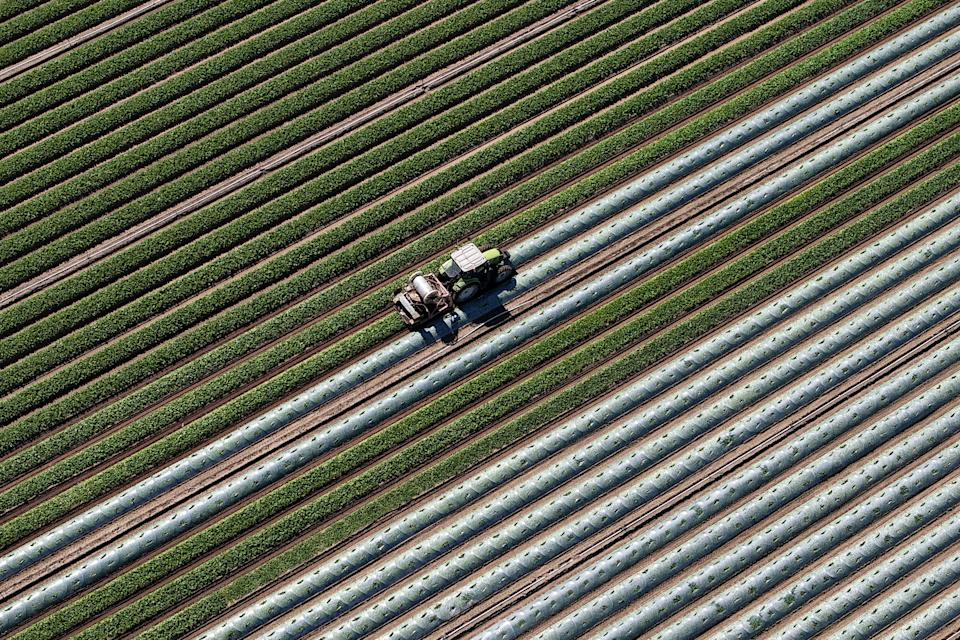 A drone view shows a tractor in a field in Saint-Julien-de-Concelles near Nantes, France, April 7, 2025. (Reuters/Stephane Mahe) · REUTERS / REUTERS
Jacqui Fatka, a farm supply and biofuels economist in CoBank’s Knowledge Exchange research division, agreed that it will take time for food price increases in the supply chain to show up in US consumers’ budgets.
While farm diesel prices are surging, for example, many farmers “likely secured diesel prices for spring planting between December and February,” she wrote in a report this month. But if the conflict drags on, higher prices this summer could snag farmers looking to purchase fuel for the fall, squeezing their margins.
David Ortega, food economist and professor at Michigan State University, also said higher diesel prices — which were down slightly this week from earlier this month, averaging about $5.40 per gallon — are worth watching for their impacts on food prices.
Still, “this is not going to be a shock that’s going to be showing up overnight,” Ortega said. The impacts of higher fertilizer costs will be even slower to unfold.
“A spike in fertilizer prices is certainly an issue for farmers, and a longer-term concern for food production, but not something that is really going to meaningfully drive grocery prices like the rising cost of fuel,” Ortega said.
Emma Ockerman is a reporter covering the economy and labor for Yahoo Finance. You can reach her at emma.ockerman@yahooinc.com.
Sign up for the Mind Your Money newsletter
Read the latest financial and business news from Yahoo Finance