
The Cowichan First Nation and several allied First Nations have won a major legal battle confirming they hold legal rights to a part of their historic lands in Richmond, as well as the right to fish in a section of the Fraser River for food.
The Supreme Court of British Columbia’s landmark ruling on Thursday could be highly consequential and precedent-setting, challenging long-held assumptions at the core of Canadian society about the fundamental legality of private property by placing Aboriginal title above fee simple ownership — the standard form of private property ownership in B.C. and across Canada.
Early critics warn of potential ripple effects, with highly detrimental consequences for B.C.’s economy, investment climate and confidence, real estate market, law, and overall political and social stability.
This claim by the Cowichan was firmly opposed by the Government of Canada, Government of British Columbia, Vancouver Fraser Port Authority, and City of Richmond, as well as the Musqueam Indian Band and Tsawwassen First Nation. All six of these entities were also the defendants in the case.
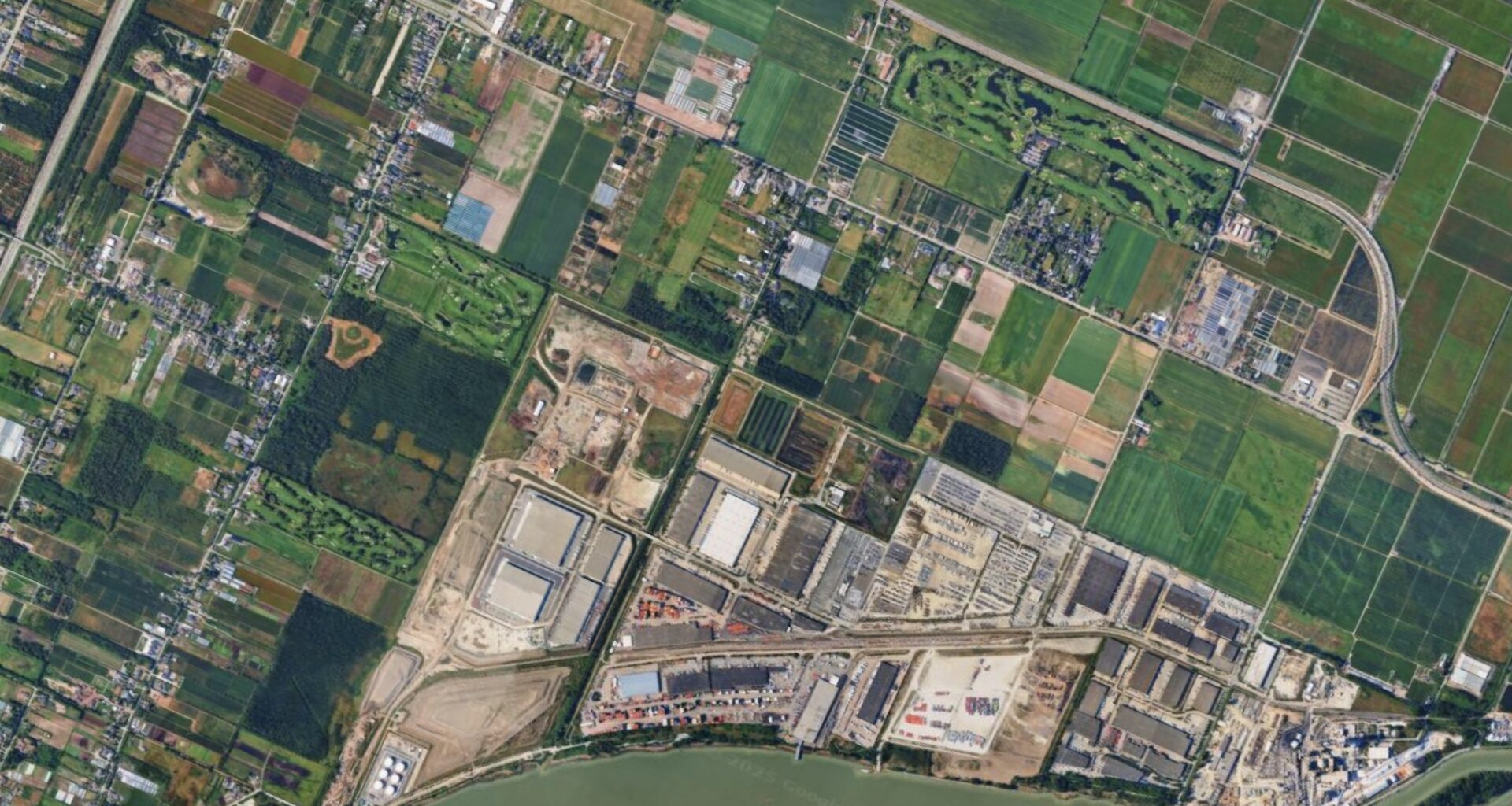
The area in question is called the “Lands of Tl’uqtinus” by the Cowichan — located in southeast Richmond, within an area that sees largely industrial uses on the Fraser River shoreline.
From the outset of the trial, the Cowichan’s requested claim spanned about 1,846 acres of land — nearly twice the size of Vancouver’s Stanley Park — as well as other certain lands held by the federal government or municipal government. It is home to federal port and energy facilities and major industrial businesses, such as a logistics and warehouse facilities for Amazon, Canadian Tire, Wayfair, and UPS. There are also some residential and farmland/agricultural properties on the periphery.
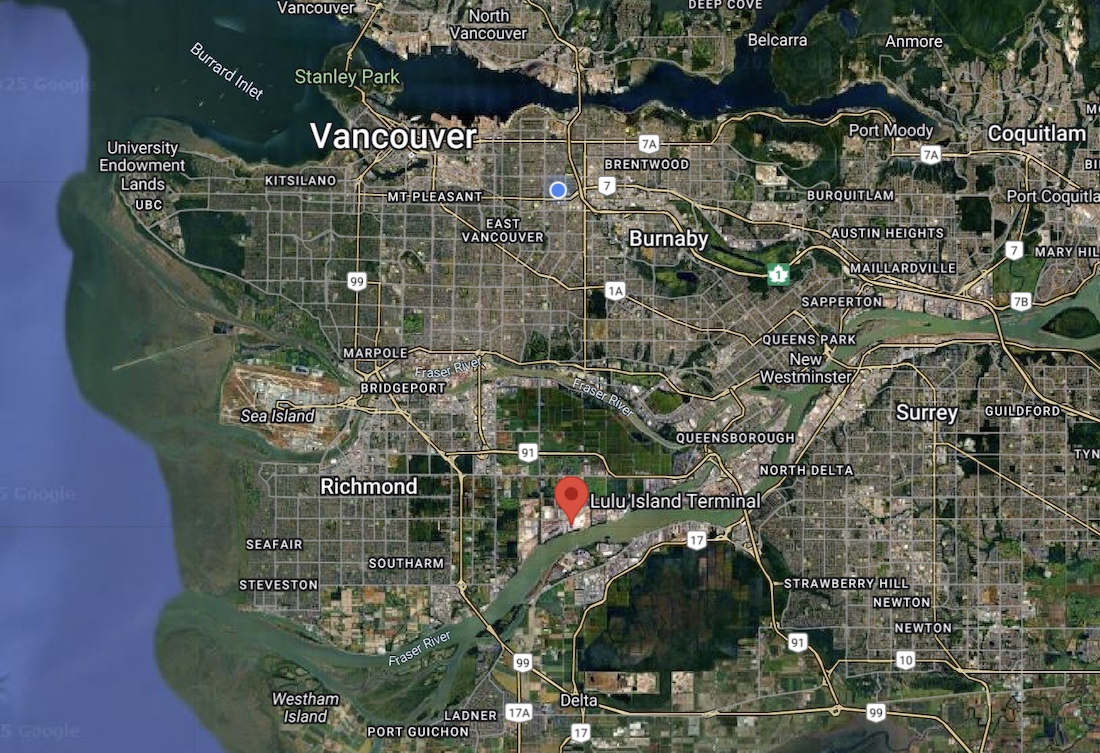
Cowichan First Nation’s claimed area in southeast Richmond. (Google Maps)
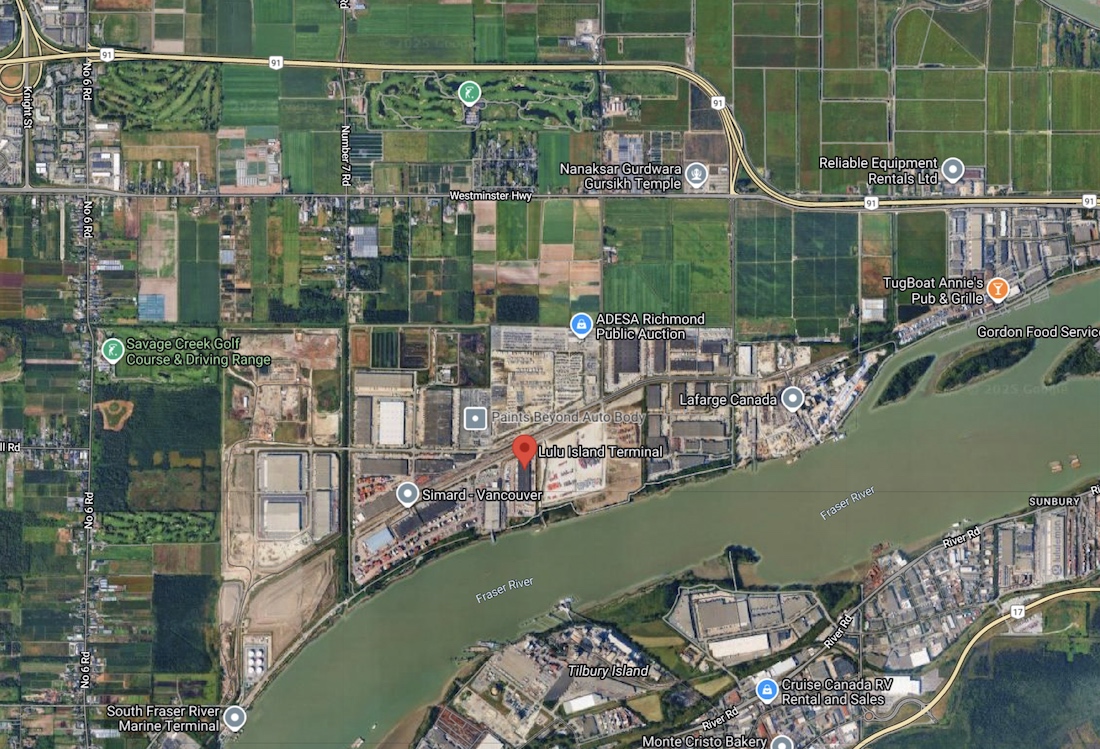
Cowichan First Nation’s claimed area in southeast Richmond. (Google Maps)
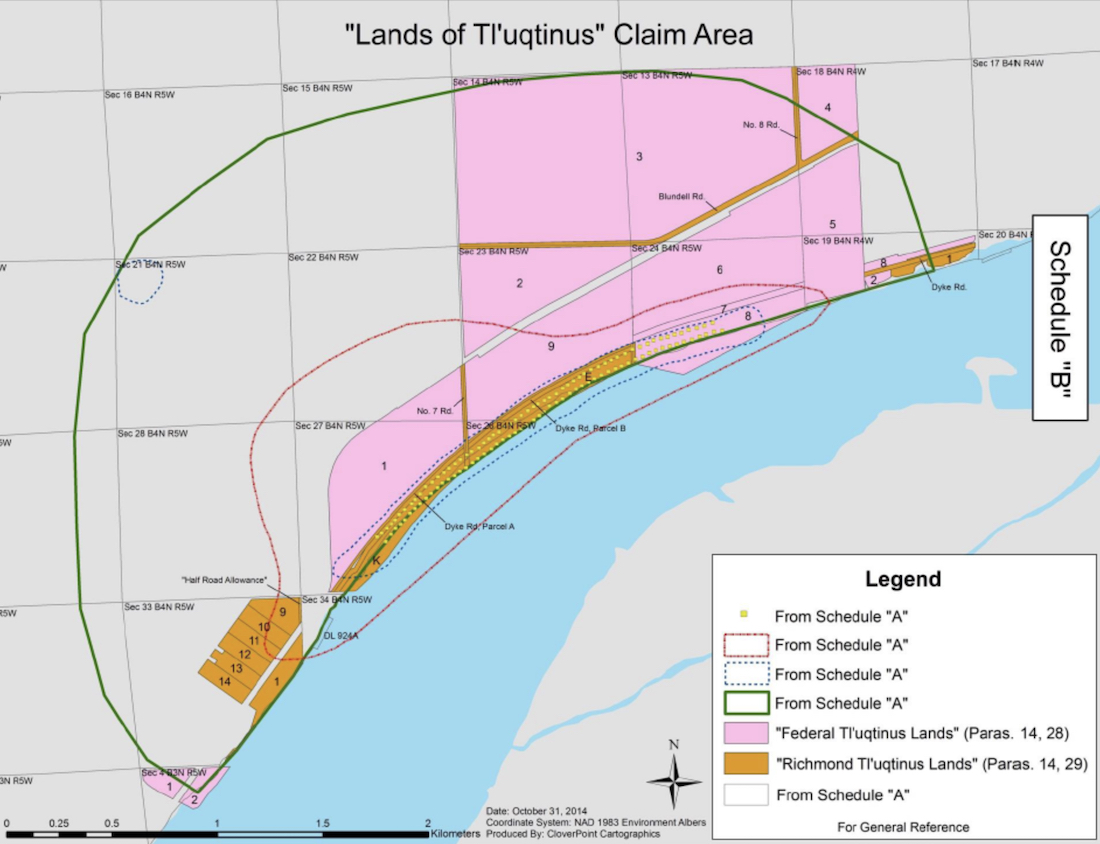
Cowichan First Nation’s claimed area in southeast Richmond. (Supreme Court of B.C.)
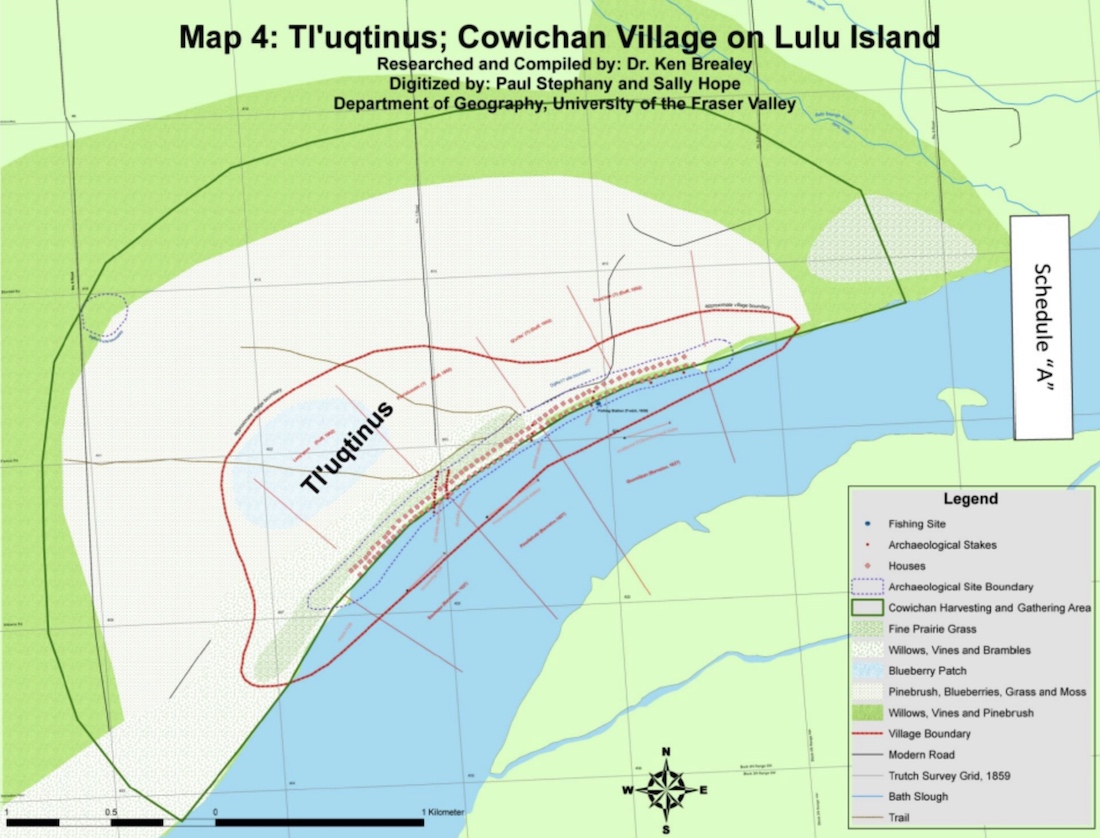
Cowichan First Nation’s claimed area in southeast Richmond. (Supreme Court of B.C.)
“The question is not whether Aboriginal title can exist over fee simple lands, but whether fee simple interests can exist on Aboriginal title lands”
In the written ruling, the judge acknowledged that in making the decision, “the bulk of the evidence in this case spans centuries, particularly the period of 1790 to 1914. In the early part of this period, written records were sparse and incomplete.” But the judge determined there was still a “substantial body of evidence before me, including oral history, historical written records, expert opinion, and ethnographic evidence.”
The judge ruled that Cowichan Aboriginal title is more fundamental than fee simple ownership, asserting that Aboriginal title is protected by the Canadian Constitution and comes first in the legal hierarchy.
However, the Cowichan did not ask the court to overturn or invalidate existing private property titles. That means private land owners still legally own their land for now — unless a court decides otherwise in the future, or unless the issue is settled through negotiation, purchase, or some other agreement.
Provincial government lawyers argued that Aboriginal title should be limited by existing private property rights. The Province’s lawyers told the judge it should only apply to land owned by the parties in this case, and any rights declared must be subject to the current private ownership. The Province’s position is that Crown land grants and the resulting private property titles are legally valid, and that private ownership temporarily suspends Aboriginal title for as long as there’s a conflicting private interest. Any declaration of Aboriginal title, according to the Province, must reflect the limits of what the Cowichan can actually exercise right now.
The judge disagreed, writing that Aboriginal title should not be defined in relation to private property because the government’s original grants of private land were themselves an unjustified infringement of Aboriginal title.
Because those private ownership rights still exist, the Cowichan cannot freely use or control the parts of their title lands that are already privately owned if that use would conflict with the current owner’s rights. The judge suggested that resolving these overlapping rights is the responsibility of the provincial government — not individual private landowners — and that the Province and the Cowichan should work together to find a solution.
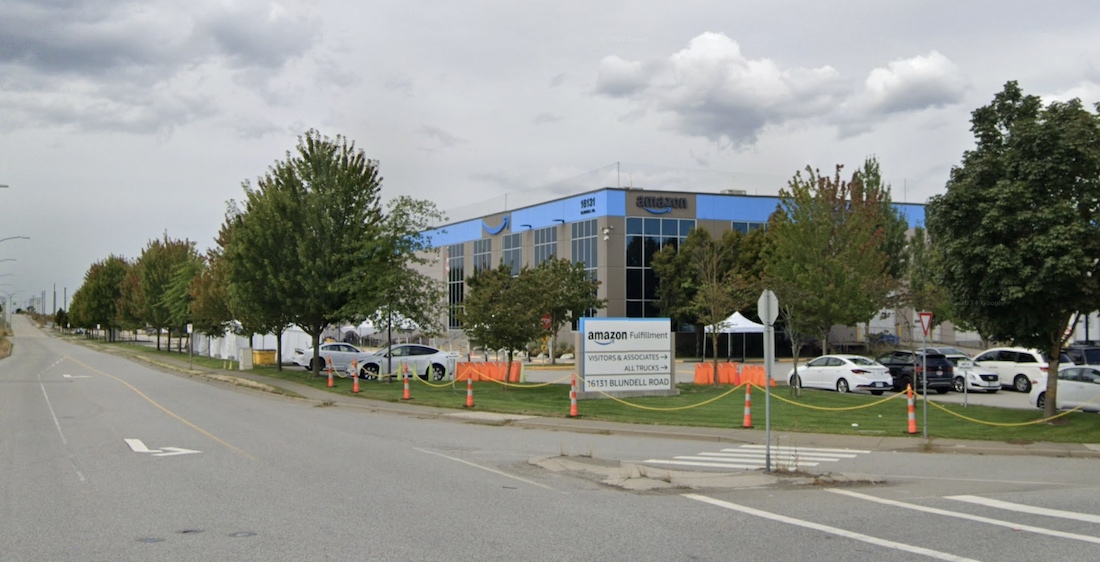
Examples of properties impacted by the Cowichan First Nation’s land claims. (Google Maps)
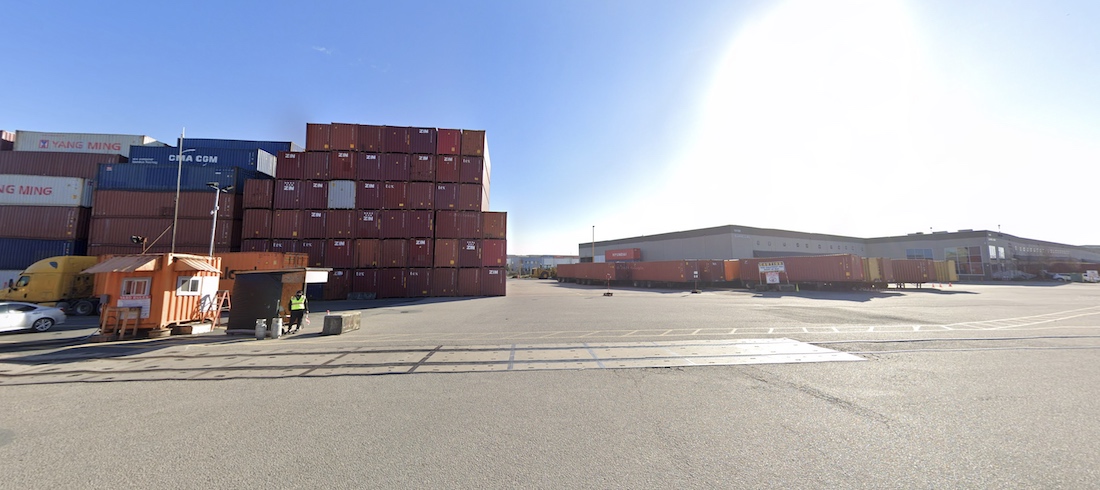
Examples of properties impacted by the Cowichan First Nation’s land claims. (Google Maps)
The real legal question is not whether Aboriginal title can exist where there is private land — it is whether private land can legally exist on top of Aboriginal title. Consequentially, the judge says the law has evolved, and the answer is yes, it can — at least for now.
Here is a full key excerpt from the judge’s reasoning in the written ruling:
“The fee simple interests do not displace Cowichan Aboriginal title. Aboriginal title is a senior, constitutionally-protected interest in land. However, the Cowichan have not challenged the validity of the private fee simple interests and those interests are valid until such a time as a court may determine otherwise or until the conflicting interests are otherwise resolved through negotiation. The Cowichan’s exercise of their Aboriginal title is constrained by the existing fee simple interests to the extent it is incompatible with the fee simple interests. This finding will provide some certainty for the Cowichan and the Crown with respect to the private landowners’ continued fee simple interest rights. These interests may be resolved through negotiation, challenged in subsequent litigation, purchased, or remain on the Cowichan Title Lands. That is not a matter for this Court to address. B.C. and the Cowichan should be afforded space to reconcile these competing interests. It is an issue for the Crown and not the private landowners to resolve.”
“BC argued vigorously that any declaration of Aboriginal title must be made subject to the existing fee simple interests. While I agree with BC that the private landowners’ fee simple interests are valid and remain so for the time being, I do not agree that recognition of the Cowichan’s Aboriginal title is appropriately defined with reference to those interests. Nor would doing so be consistent with my determination that the Crown grants of fee simple interest are an unjustified infringement of the Cowichan’s Aboriginal title. The question is not whether Aboriginal title can exist over fee simple lands, but whether fee simple interests can exist on Aboriginal title lands. In my view, the law has evolved and the answer to that question is ‘yes’.”
However, the City of Richmond argues that its property rights and those of neighbouring owners are inseparable, because they all stem from the same government land grants, and the court cannot simply selectively pick and choose when to apply the validity of those grants just for convenience.
If Richmond’s ownership is invalid because of a flaw in those grants, then the same would apply to all the other owners whose land came from those grants. Their only protection would be if the Cowichan chose not to evict them.
For this reason, the City warns that a declaration giving Cowichan Aboriginal title priority over fee simple ownership would seriously harm the municipal government and many other property owners and tenants in the area.
Critics say this particular precedent-setting aspect raises major concerns about the potential implications for B.C. and even Canada as a whole.
In its defence, the City not only challenged the legality and fairness of the claim, but also disputed the Cowichan’s historical narrative and questioned their very standing to bring the case.
“Richmond submits that if the Court finds Aboriginal title and that the Crown grants of fee simple interest were unlawful, the Court should elect a remedy that vindicates the plaintiffs’ rights while protecting the reliance interest of innocent third parties, like Richmond, who were not responsible for or aware of an historic injustice,” reads the judge’s ruling.
“Richmond says the plaintiffs have failed to establish that they are the appropriate rights-bearing collective. Richmond denies the facts alleged regarding the composition of an historic Cowichan Nation, and denies that the plaintiffs are its descendants or present-day Aboriginal rights holders. Richmond says whether each plaintiff brings this action on their own behalf or as an authorized representative on behalf of all descendants of the historic Cowichan Nation is outside its knowledge.”
The Vancouver Airport Authority recently completed a new marine terminal and jet fuel supply pipeline from the port facility in southeast Richmond to Vancouver International Airport (YVR) on Sea Island. Ships unload fuel at the new marine terminal, which is then stored on site and later transported by a 13-km-long pipeline through Richmond to reach the airport. The project drastically increases capacity and improves reliability for YVR’s fuel supply, replacing an aging pipeline and eliminating the previous practice of having 1,000 tanker trucks deliver fuel from the United States, thereby enhancing national and economic security.
The judge noted that the Cowichan and the airport authority consulted outside of the court proceedings, and the First Nation does not oppose leasing 12 acres of land on the shoreline — currently owned by the federal government — for the continued existence and operation of the facility.
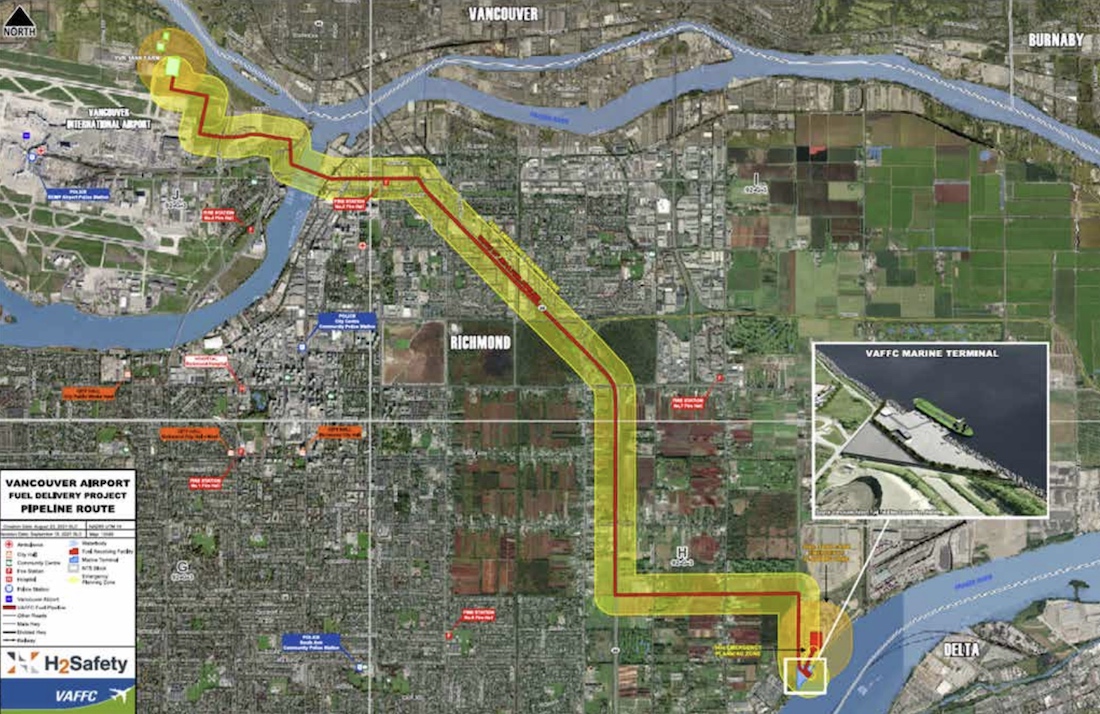
The new Vancouver Airport Fuel Facility in southeast Richmond, and the pipeline route reaching YVR Airport. (Vancouver Airport Authority)
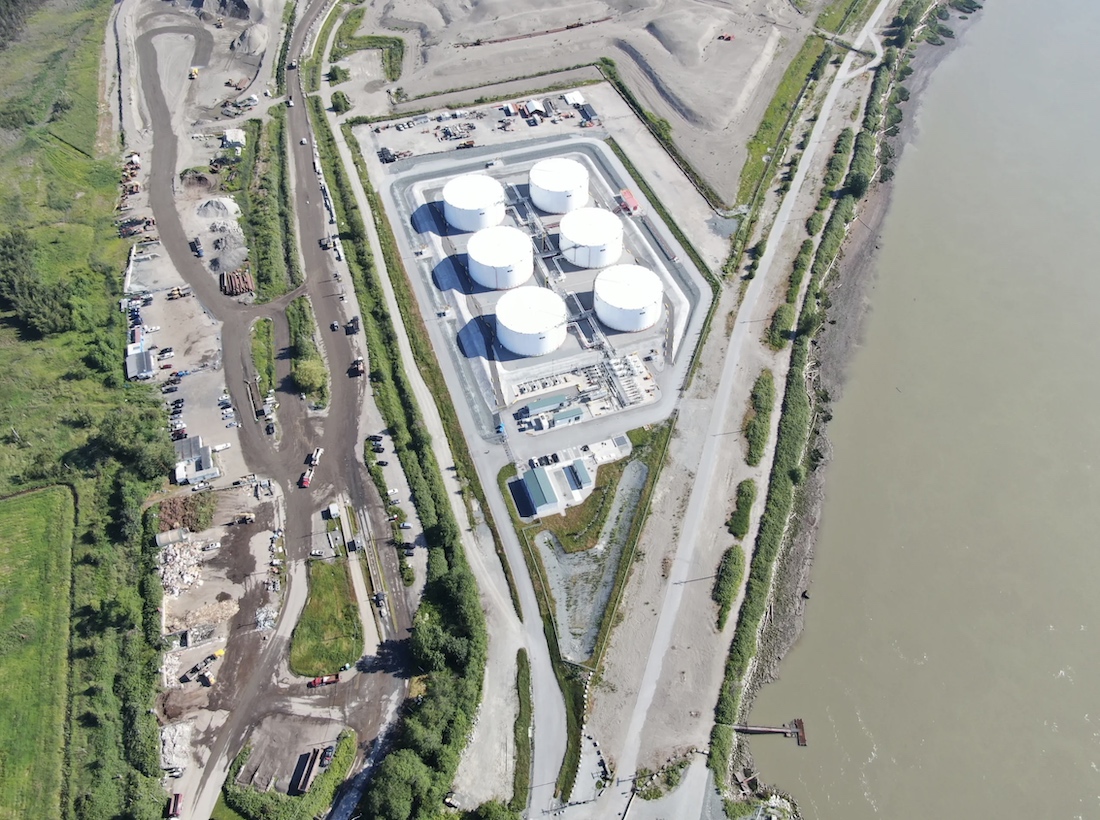
The new Vancouver Airport Fuel Facility in southeast Richmond. (Vancouver Airport Authority)
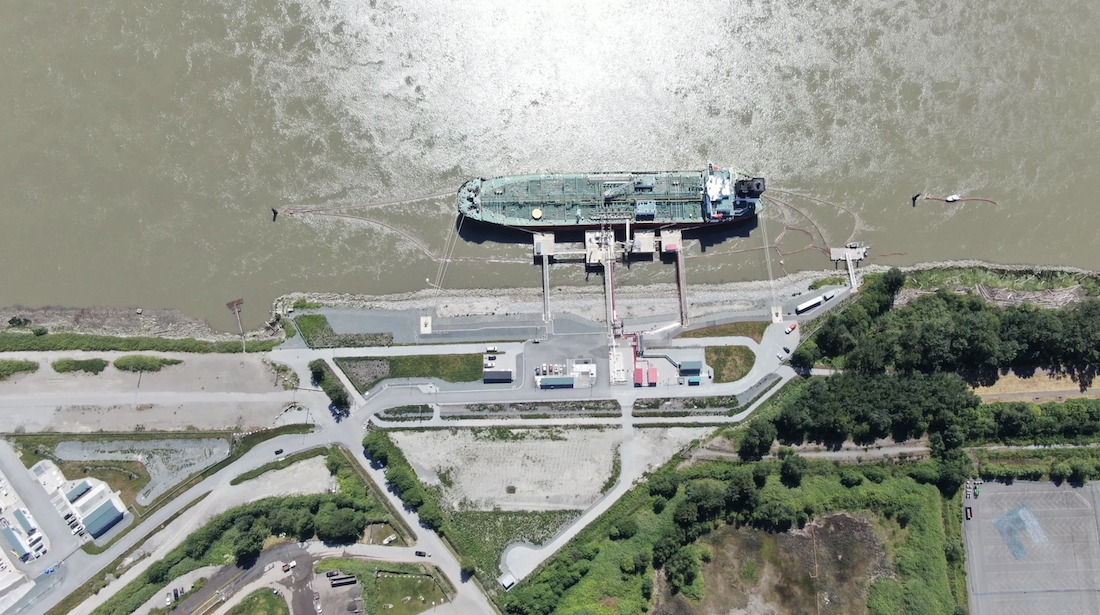
The new Vancouver Airport Fuel Facility in southeast Richmond. (Vancouver Airport Authority)
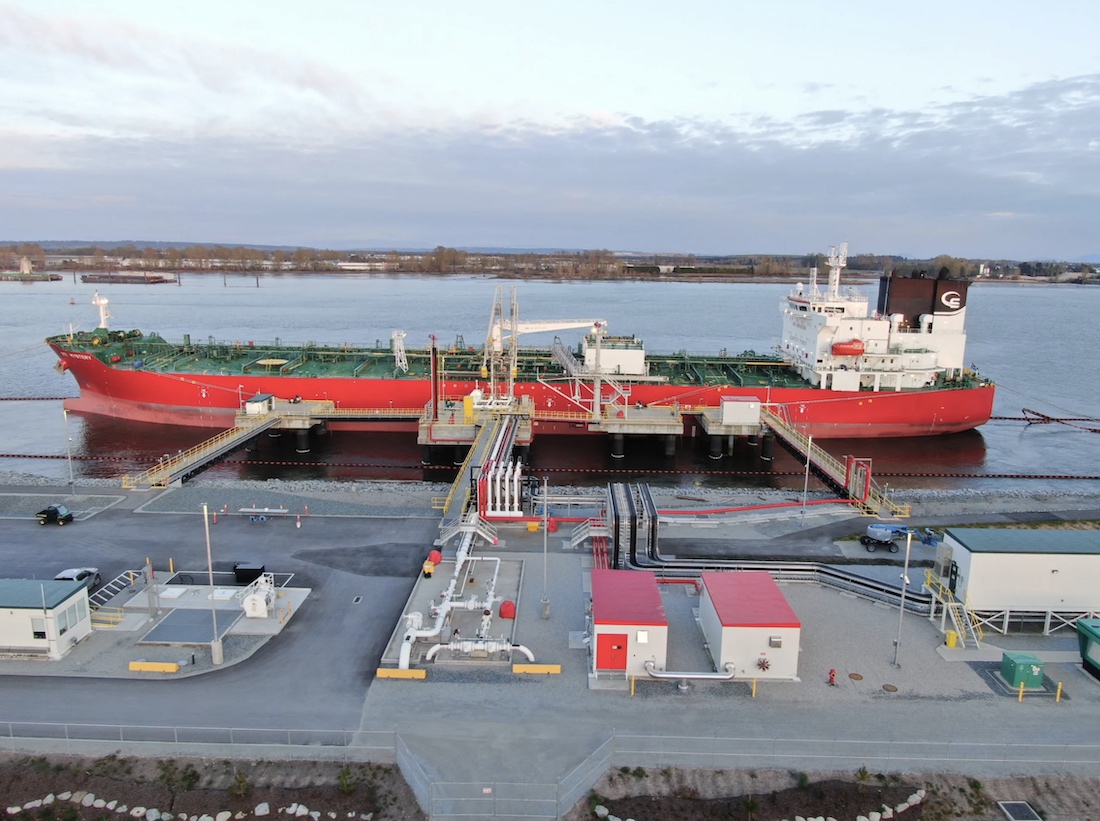
The new Vancouver Airport Fuel Facility in southeast Richmond. (Vancouver Airport Authority)
Federal lawyers maintained that the federal government’s property ownership in the area are “valid.” This includes the property owned by the port authority, which is a federal entity.
However, the judge disagreed on this regard for not only the federal lands, but also the municipal lands.
“Except for Canada’s fee simple titles and interests in certain lands (the “Vancouver Airport Fuel Delivery Project Lands”), Canada and Richmond’s fee simple titles and interests in the Cowichan Title Lands are defective and invalid,” reads the ruling.
The federal government argued that if the court recognized Cowichan Aboriginal title, the boundaries should be clearly defined and apply only to part of the claimed area, not all of it. It should be for “an area significantly smaller than the asserted 1,846 acres.”
On this point, the judge agreed, ultimately declaring Aboriginal title over less than half of the Cowichan’s requested 1,846 acres.
Musqueam and Tsawwassen dispute Cowichan’s very existence
The Musqueam Indian Band and Tsawwassen First Nation opposed the Cowichan’s claims, disputing both their history and their right to represent the area. They went so far as to reject the Cowichan’s existence and legitimacy as a First Nation, and argued that the Cowichan historically had to ask for permission to fish in the waters they are now claiming.
“Musqueam denies that the plaintiffs and the Lyackson are the descendants and present‑day Aboriginal rights and title holders of the Cowichan Nation. Musqueam says the written historical record does not assist the plaintiffs in establishing the scope of what they say is the historical collective because of the overbroad use of the term ‘Cowichan’ in the historical record to describe any number of groups,” reads the ruling.
“TFN denies that there was at any material time a people, nation, or group known as the ‘Cowichan’ or ‘Cowichan Nation’. TFN submits there was never a recognizable polity, collective or organized society that was the Cowichan Nation.”
While the ruling acknowledges numerous references to the Cowichan as a nomadic or semi-nomadic people, the judge agreed they “sufficiently and exclusively occupied their permanent village, its surrounding lands, and the strip of submerged lands” in the area.
In a statement on Friday reacting to the court’s decision, Musqueam Chief Wayne Sparrow said he is “extremely disappointed that Cowichan Tribes, Stz’uminus, Penelakut, Halalt and Lyackson would go against our shared Coast Salish protocols and challenge our traditional resource-sharing practices. It is especially concerning that they resorted to the colonial legal system, which was not established to respect or reflect our traditional teachings.”
Furthermore, continued Sparrow, he is “particularly disheartened the court didn’t recognize the importance of oral history and traditional governance protocols which guide intercommunity relationships since time immemorial. Musqueam has always granted access to First Nations with direct family relations to stay on our shores and fish in our water, but that access comes with the recognition and respect that the south arm of the Fraser River has been stewarded by Musqueam.”
The Aboriginal title dispute in southeast Richmond went to trial in September 2019 and spanned a total of 513 court hearing and trial days, making it the longest in Canadian history.
Justice Young’s written decision — 863 pages long with 290,000 words — could have major implications for other land claims in the future.
“We raise our hands to the generations of leaders who fought with nuts’a’maat shqwaluwun (one mind, one heart, and one spirit) for the return of our settlement lands at Tl’uqtinus and our fishing rights in the south arm of the ‘Fraser River’, ever since the Crown began its unauthorized alienation of our lands there in the 1870s,” reads a joint statement by the chiefs of the Cowichan Tribes and the allied First Nations of the Stz’uminus First Nation, Penelakut Tribe, Halalt First Nation, and Lyackson First Nation.
“It is in their honour and for the wellbeing of our future generations that the Elders, Knowledge Holders, and Chiefs who have gone before us brought this case forward to recognize our Aboriginal title and fishing rights, as a basis for truth and reconciliation, through the courts.”
The various defendants in this case are expected to appeal Justice Young’s ruling.