
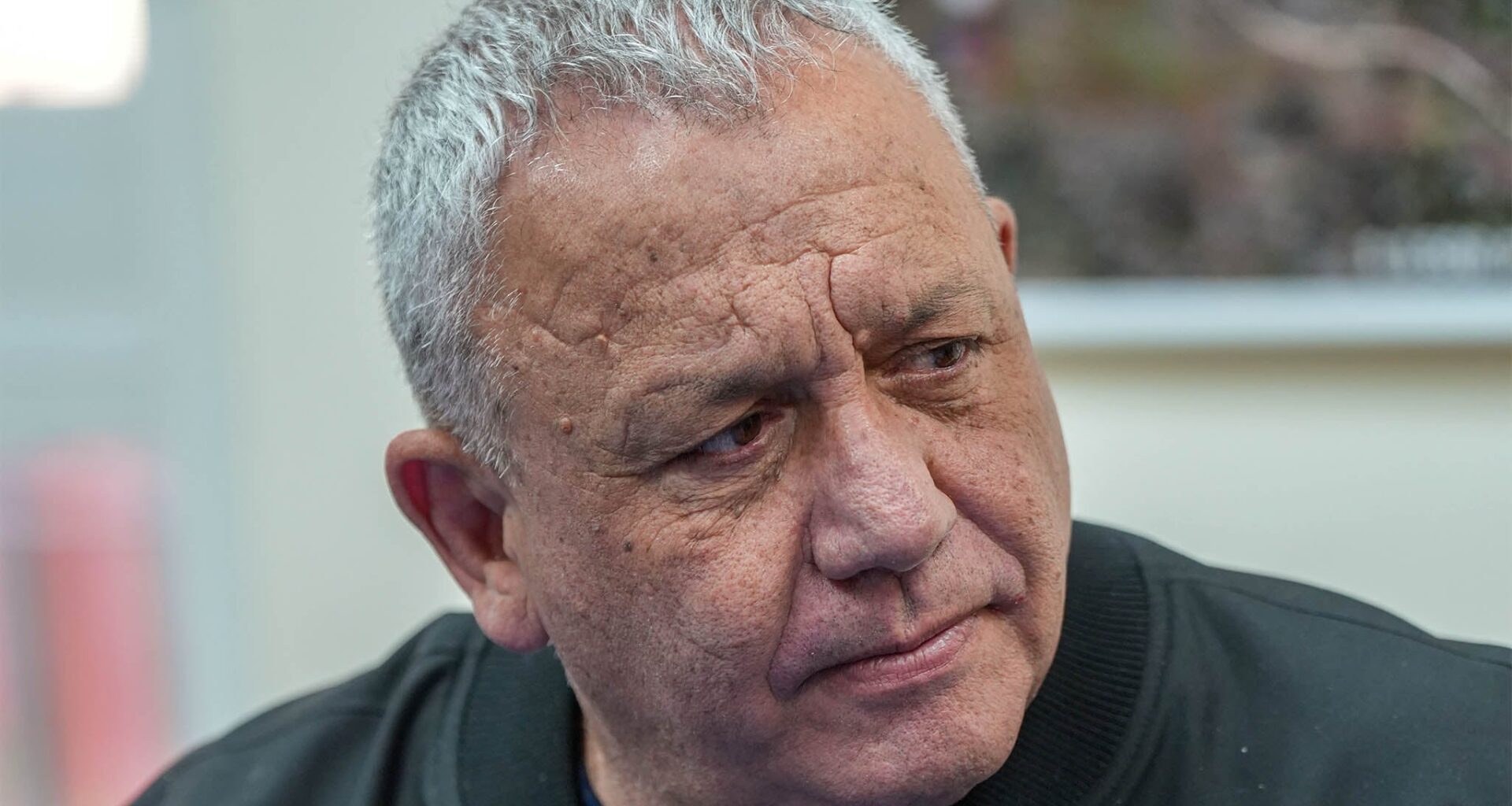
Gadi Eisenkot, leader of the opposition Yashar party, on Monday invited most anti-Netanyahu party leaders to convene for a meeting, in order to coordinate a path to a victory by a “Zionist majority” over Prime Minister Benjamin Netanyahu in elections set for October.
Eisenkot extended the invitation to former prime minister Naftali Bennett and Opposition Leader Yair Lapid, who announced a merger between their parties on Sunday into a new “Together” alliance, and who said the door was open for Eisenkot to join their alliance. Eisenkot has indicated he does not intend to take up that offer.
Also invited by Eisenkot to meet and coordinate were Avigdor Liberman of the Yisrael Beytenu party and Yair Golan of the Democrats. Eisenkot did not invite Benny Gantz, head of the centrist Blue and White party. Eisenkot was previously Gantz’s No. 2 in that party. Arab party leaders were also not invited.
Eisenkot is currently figuring fairly strongly in pre-election polling, heading for 14 seats in a Channel 12 poll last week, for instance. Gantz is polling at below the 3.25% minimum threshold for Knesset representation.
According to a statement from Yashar, Eisenkot reached out to the parties to coordinate a meeting aimed at securing what he described as a “Zionist” majority in the next election, due to be held by late October.
Get The Times of Israel’s Daily Edition
by email and never miss our top stories
By signing up, you agree to the terms
The appeal is the latest in a series of attempts by Eisenkot to broker a broader opposition alliance.
The Yashar leader was reported to have proposed a merger with Bennett and Lapid in January, and Channel 12 reported last week that the three had held talks on forming a new joint party, tentatively dubbed “New Israel.”
On Sunday, Bennett and Lapid, who heads the Yesh Atid party, announced that they would form a new slate, Together, which will be led by Bennett.
Political observers have speculated that Eisenkot held back from joining that slate in part because he was unwilling to play second fiddle to Bennett, particularly as some recent polling has shown the two running neck and neck — and at times with Eisenkot leading.
Even so, Eisenkot immediately welcomed the news of the merger as a move toward the “shared goal” of forming a new government, and Bennett and Lapid, for their parts, made clear on Sunday that there is still room for Eisenkot to join the slate.
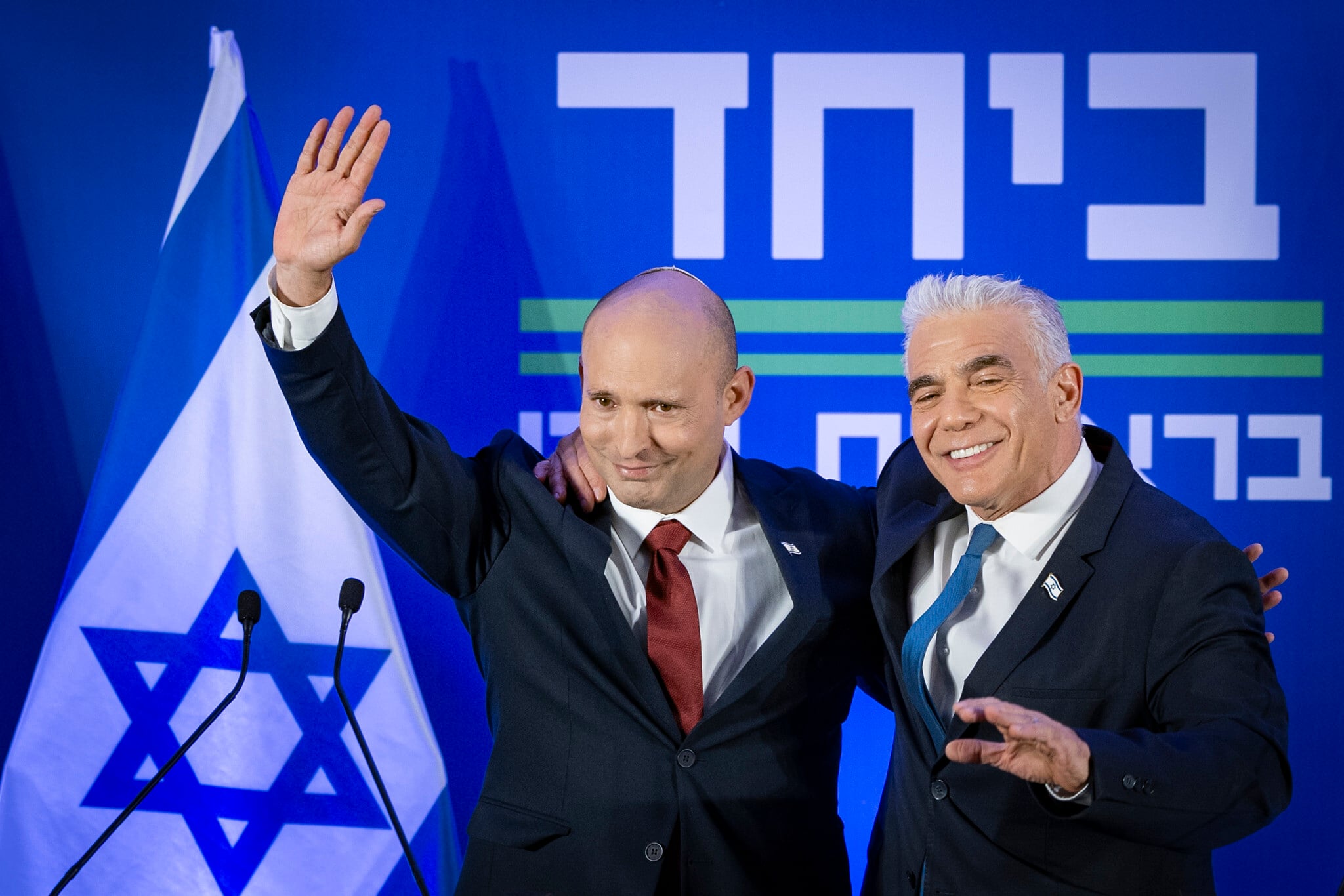
Opposition Leader Yair Lapid (right) and former prime minister Naftali Bennett at a press conference announcing their joint run in the coming elections, in Herzliya, central Israel, April 26, 2026. (Chaim Goldberg/Flash90)
Recent polling had suggested that if Eisenkot, Lapid, and Bennett ran together, their combined ticket would get 38 seats, making it the largest faction in the Knesset, but also that it would not significantly change the respective sizes of the pro- and anti-Netanyahu blocs. Most polls have shown both falling short of a majority, with a few showing one bloc or another just scraping by.
Eisenkot’s call for a “Zionist” majority comes amid a broader strategic debate within the opposition over whether it can return to power without relying on Arab parties. The phrase was a pointed reference to the Arab-majority Hadash-Ta’al and Ra’am factions, whose leaders Eisenkot did not invite to meet.
Several opposition leaders have said they will not sit in a government with an Arab party after the Hamas-led October 7, 2023, attacks. In Sunday’s announcement, Bennett said Together would seek to form a coalition relying only on Zionist parties rather than partnering again with Mansour Abbas’s Ra’am, which joined the Bennett-Lapid government in 2021.
However, even after the Bennett-Lapid merger, it remains unclear if the opposition will be able to assemble a 61-seat majority without support from Arab parties.
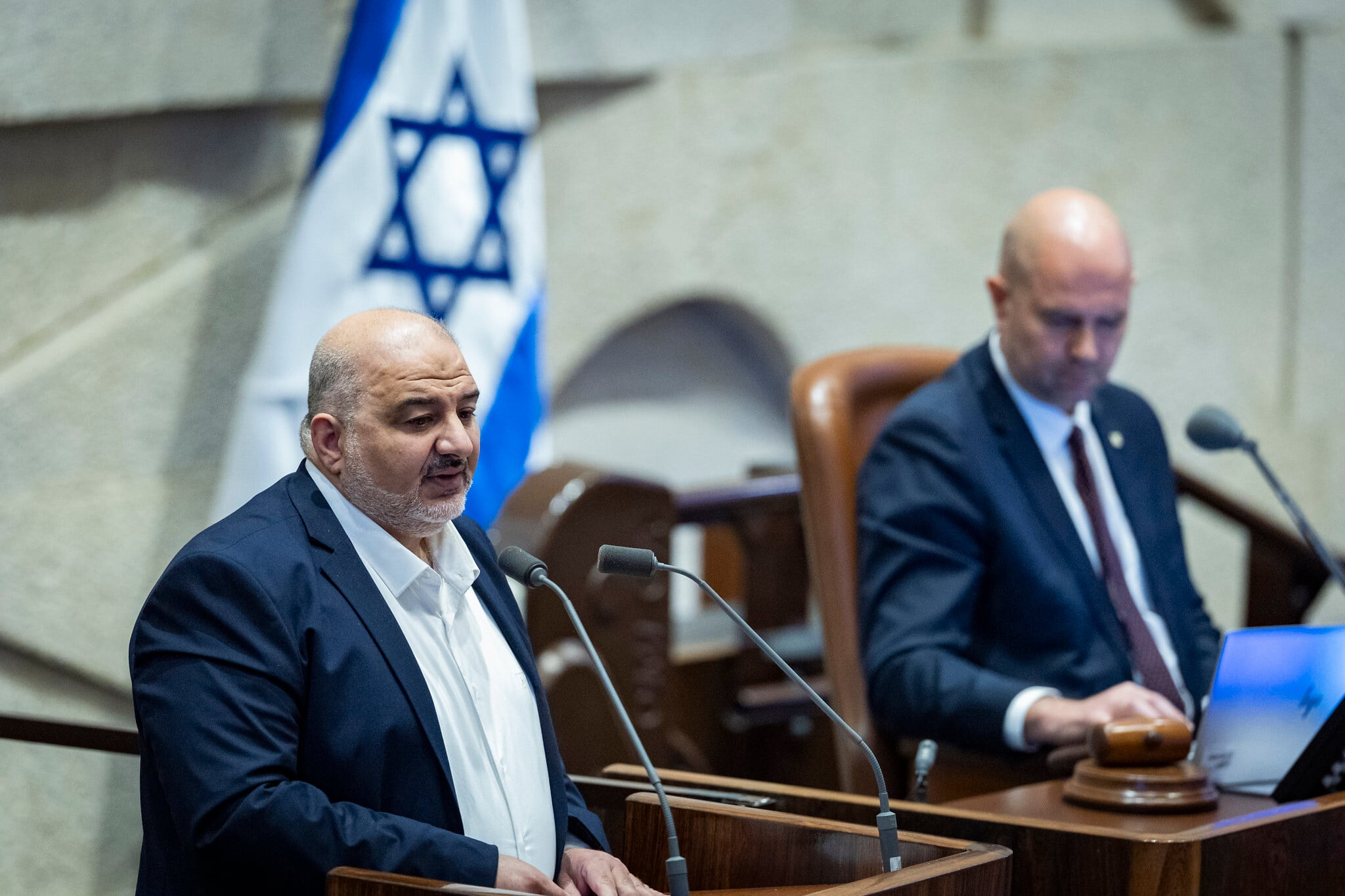
Ra’am MK Mansour Abbas speaks during a 40 signatures debate at the Knesset in Jerusalem, January 19, 2026. (Chaim Goldberg/Flash90)
Likewise, Gantz’s absence from the invitation highlighted the deep political rift between him and Eisenkot and his party’s uncertain place within the opposition camp.
Their deteriorating relationship and differing views led Eisenkot to quit both the faction and the Knesset last summer and form his Yashar party. He has since joined other opposition leaders in calling for the Blue and White leader to consider stepping down, amid months of polling showing the party either hovering around the 3.25 percent threshold to enter the Knesset or failing to cross entirely.
Gantz, who has rejected such calls, has broken with other opposition leaders by suggesting he could join a Netanyahu-led government and has resisted attempts to categorize him as part of the opposition bloc.
You appreciate our wartime journalism

You clearly find our careful reporting of the Iran war valuable, at a time when facts are often distorted and news coverage often lacks context.
Your support is essential to continue our work. We want to continue delivering the professional journalism you value, even as the demands on our newsroom have grown dramatically during this ongoing conflict.
So today, please consider joining our reader support group, The Times of Israel Community. For as little as $6 a month you’ll become our partners while enjoying The Times of Israel AD-FREE, as well as accessing exclusive content available only to Times of Israel Community members.
Thank you,
David Horovitz, Founding Editor of The Times of Israel