
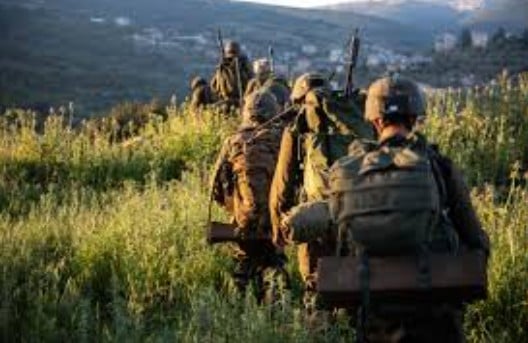
Israel’s military campaign against Hezbollah is strategically necessary. It is also being politically self-sabotaged in real time in Christian villages six kilometers from the Lebanese border.
The case for destroying Hezbollah as a military force is not complicated. The organization is, as Augustus Norton’s definitive study concludes, fundamentally “Janus-faced,” a political party, social services provider, and heavily armed militia whose dimensions are mutually reinforcing rather than distinct. Its military wing exists not to protect Lebanon but to serve Iranian strategic interests. An estimated $700 million annually to sustain Hezbollah’s operations, and IRGC officers, over 150 of whom have now fled Lebanon, as Prime Minister Nawaf Salam confirmed publicly, functioned as its operational command layer. This is not a militant organization in the conventional sense. It is a forward-deployed instrument of Iranian state power embedded inside a nominally sovereign country.
The consequences for Lebanon have been catastrophic. The country’s 2019–2020 financial collapse, among the worst in modern history, was substantially enabled by Hezbollah’s blocking of the political reforms required to unlock international assistance. UN Resolution 1701, which mandated Hezbollah’s disarmament south of the Litani after the 2006 war, was never enforced.
The lesson Israel has drawn, that it cannot rely on international guarantees, is not unreasonable given the evidence.
Lebanon’s current government knows all of this. President Joseph Aoun has pursued disarmament with a seriousness unmatched by any predecessor. His government formally banned Hezbollah in March 2026, adopted the Homeland Shield Plan to extend state authority over armed groups, and ordered state media to stop calling Hezbollah “resistance.” These are not symbolic gestures. Hezbollah’s own new secretary-general threatened that there will be “no life” in Lebanon if the government tries to disarm the organization. Without the IDF’s systematic degradation of Hezbollah’s coercive capacity, Lebanon’s sovereign government cannot govern. Israel’s military campaign is providing the external pressure that makes this internal transformation possible. Supporting Israel and the IDF in this mission is not reflexive partisanship. It is recognition of what Lebanese sovereignty actually requires.
Which makes what is happening in Christian villages of southern Lebanon so strategically inexcusable.
On April 19, an IDF soldier was photographed striking the head of a statue of Jesus Christ with a sledgehammer in Debel, a Christian village near the border. The IDF confirmed the photo’s authenticity the same day. Within days, footage emerged of IDF military excavators damaging the village’s solar panels, the electricity infrastructure a rural community depends on to function. The soldiers responsible for the statue received 30 days in military jail. Earlier, an IDF airstrike in the Christian town of Ain Saade killed Pierre Moawad, a politician of the Lebanese Forces party, the ruling coalition’s flagship anti-Hezbollah movement, along with his wife and a neighbor. Prior to that a priest was killed by Israeli tank fire in a southern village he had refused to evacuate; his death received no official statement comparable to the response to the statue.
The reflexive Israeli government response, apologizing, punishing the individual soldier, and insisting the IDF’s values are not represented by the act, is adequate as crisis management and wholly inadequate as strategy.
Lebanon’s Christian community is not a bystander in the post-war political order. It is that order’s backbone.
Lebanese Forces leader Samir Geagea has stated publicly that direct Lebanese-Israeli negotiations are essential. Kataeb Party leader Samy Gemayel welcomed the ceasefire achievements as the beginning of Lebanon “regaining control of its destiny.” These Christian parties are the core of the Aoun-Salam governing coalition. Their ability to sustain this posture depends on retaining the confidence of their community base.
When Lebanese Christian voters watch an IDF soldier destroy the face of Christ and then see excavators tear up their solar panels, they are not engaged in geopolitical abstraction. They are deciding whether the political bet their community made, on sovereignty, on engagement, and on the Lebanese Forces’ alignment against Hezbollah, was wise. Every such incident makes that bet harder to defend.
The historical warning is explicit. Israel’s 1982 invasion achieved significant battlefield results and then failed strategically because it could not convert military success into a stable political order. The prolonged occupation that followed generated the popular legitimacy that turned Hezbollah from an Iranian project into a genuine mass movement.
The question is whether Israel is beginning to generate the same dynamic among Lebanon’s Christians. Not Hezbollah 2.0 — Christians will not turn to an organization that has threatened their own president. But political disillusionment, retreat from engagement, and the electoral punishment of the parties that bet on Israel; these outcomes would dismember precisely the political architecture that Israeli military action is supposed to protect.
The destruction of Hezbollah’s military capacity is justified and deserves support. Israel’s military achievements in the current campaign, including senior commanders eliminated, IRGC personnel expelled, and infrastructure degraded, are real and strategically significant. But military victory without political consolidation is temporary. Israel learned this at enormous cost between 1982 and 2000.
Lebanon’s Christians are watching whether the IDF is an army whose stated values it actually holds. They are watching whether the party that bet on sovereignty and engagement was right. They are watching whether Israel treats them as central to the campaign’s ultimate purpose or as incidental to it.
The greatest long-term threat to Israeli security in Lebanon is not Hezbollah’s remaining rocket arsenal. It is the photograph of a soldier with a sledgehammer, standing before the broken face of Christ, in a Christian village that is supposed to be on Israel’s side.
Dr. Aaron Walter teaches International Relations. He writes on American foreign policy towards Israel. In addition to topics directly related to U.S.-Israeli politics, he has written on the presidency and security studies as linked to U.S., Europe, and Israeli studies