
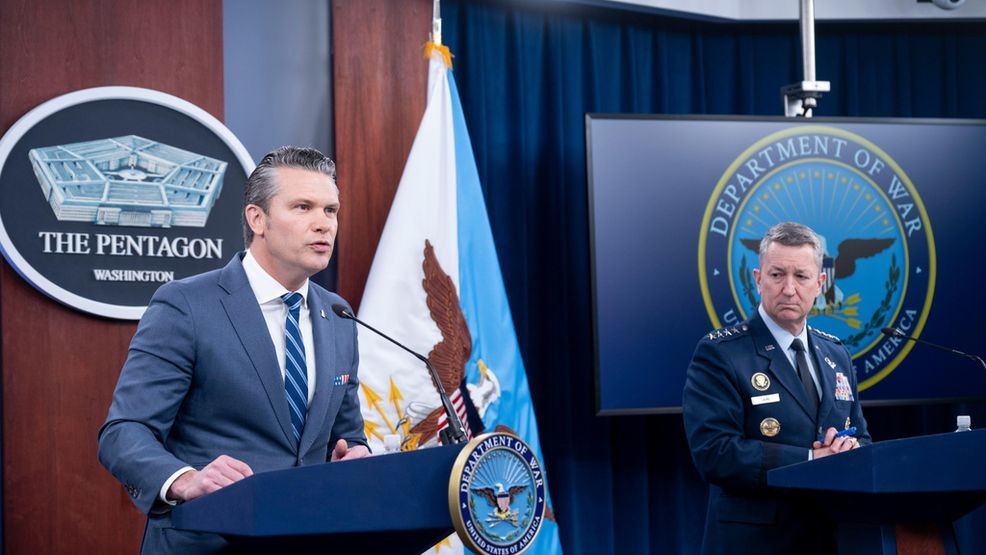
WASHINGTON (TNND) — Defense Secretary Pete Hegseth will face questions from lawmakers Wednesday in his first sworn testimony since the war between the U.S. and Iran began in late February, as tensions remain high despite a fragile ceasefire.
Hegseth will appear alongside Chairman of the Joint Chiefs of Staff Gen. Dan Caine before the House Armed Services Committee to discuss the Trump administration’s 2027 military budget proposal. Both are expected to emphasize the need for increased investment in drones, missile defense systems and warships amid the ongoing conflict.
The hearing comes as President Donald Trump last week indefinitely extended a fragile ceasefire with Iran at the request of Pakistan’s Prime Minister Shehbaz Sharif, whose government has been mediating negotiations between the two countries. Trump said the pause in fighting will continue until Iranian leaders present a unified proposal.
Meanwhile, congressional Democrats have unsuccessfully pushed multiple war powers resolutions that would require Trump to halt military action without congressional authorization.
Lawmakers in both parties have grown increasingly eager for the conflict to end, particularly after Iran’s closure of the Strait of Hormuz — a vital global oil shipping corridor — sent fuel prices sharply higher and complicated the political landscape ahead of the midterm elections. The U.S. responded by imposing a Navy blockade on Iranian shipping and expanding its military presence in the region, including deploying three aircraft carriers to the Middle East for the first time in more than 20 years.
Tehran on Monday offered to reopen the strait in exchange for an end to the U.S. blockade, but negotiations remain stalled. Secretary of State Marco Rubio rejected the proposal, calling it unacceptable.
“What they mean by opening the straits is, yes, the straits are open, as long as you coordinate with Iran, get our permission, or we’ll blow you up and you pay us,” Rubio said during an interview with Fox News. “That’s not opening the straits. Those are international waterways. They cannot normalize, nor can we tolerate them trying to normalize, a system in which the Iranians decide who gets to use them.”
Iranian officials have indicated that discussions on their nuclear program could come at a later stage.
Hegseth has largely avoided direct questioning from lawmakers about the war, though he and Caine have held televised Pentagon briefings. A U.S. delegation had been expected to attend talks in Pakistan over the weekend, but Trump canceled the trip, citing a lack of progress. “They can call us anytime they want,” he said.