
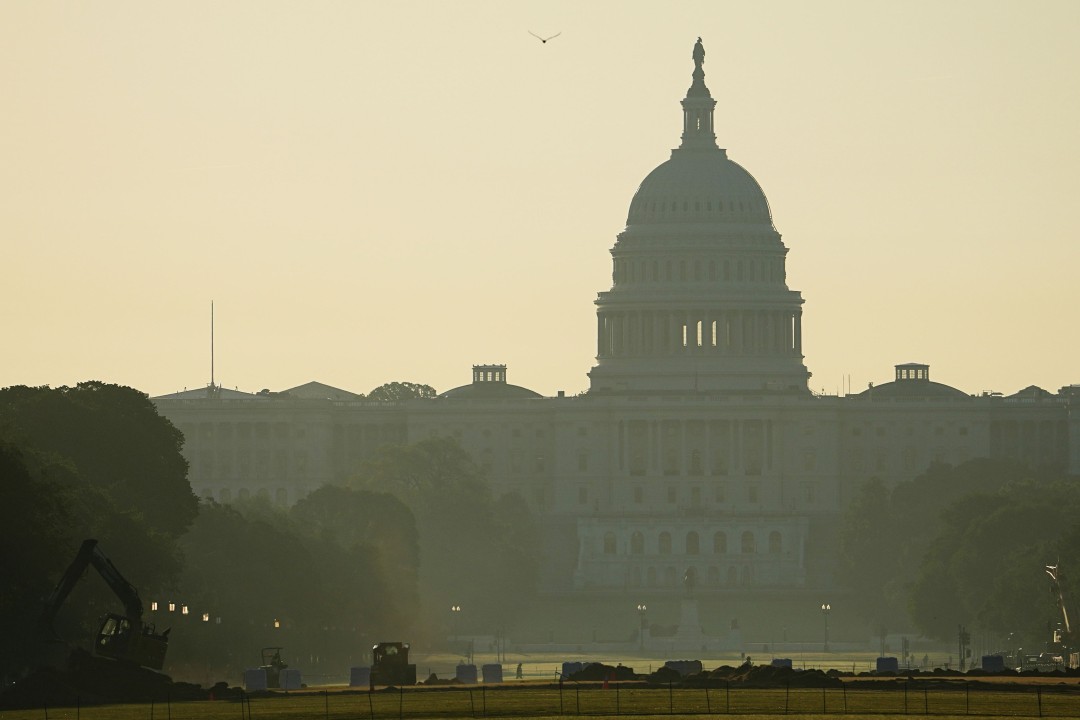
The House has signed off on keeping a major surveillance tool in place, voting 235-191 on Wednesday to extend the government’s warrantless spying authority under Section 702 of the Foreign Intelligence Surveillance Act. Section 702, which is set to lapse Thursday without action, permits surveillance of foreign targets overseas but also sweeps in Americans’ communications when they interact with those targets. The House bill would renew the program for three years, the Hill reports. It makes a series of changes, such as expanding which members of Congress can view material sent to the Foreign Intelligence Surveillance Court and requiring FBI supervisors to sign off on searches involving Americans.
The bill creates added review by a civil liberties office in the Office of the Director of National Intelligence, mandates monthly FBI reporting on queries of people in the US, and increases penalties for officials who misuse the system. The revisions did not quiet critics in either party who want a warrant requirement before US communications can be examined. Democrats argued that the Trump administration cannot be trusted with such powers, while some Republicans who have long demanded stricter limits nonetheless rallied behind renewal, citing Trump’s presence in the White House and improved compliance statistics from the FBI.
“This bill is a three-year permission slip … to keep abusing the sweeping FISA Section 702 surveillance authority,” said Democratic Rep. Jamie Raskin. House Judiciary Chair Jim Jordan, a Republican, argued that earlier changes have sharply cut improper searches. To secure backing from House Freedom Caucus members, Republican leaders attached a separate measure to bar the Federal Reserve from creating a central bank digital currency, a move supporters say is aimed at preventing federal monitoring of consumer spending. The bill goes to the Senate next; Axios reports senators of both parties oppose that ban. “FISA needs to be gutted. Just start over, it’s not going to work,” said GOP Rep. Tim Burchett, per the Washington Post. “Nobody trusts it, it was used to spy on American citizens.”