
The international jury of the upcoming Venice Biennale Art Exhibition resigned en masse on Thursday in a row over the organization’s decision to allow Israel and Russia to participate in this year’s event.
The five-strong jury, headed by Brazilian curator Solange Farkas, said last week that “in the defense of human rights,” it would not consider works from countries whose leaders face charges at the International Criminal Court, as Prime Minister Benjamin Netanyahu and Russian President Vladimir Putin do.
Biennale President Pietrangelo Buttafuoco has refused to back down on his decision to include Russia and Israel, saying the festival is “a space of coexistence for the whole planet” without censorship.
At the same time, the Biennale did not criticize the jury for boycotting the Russian and Israeli artists, saying the panel, which also included Zoe Butt, Elvira Dyangani Ose, Marta Kuzma and Giovanna Zapperi, operated with “full autonomy and independence.”
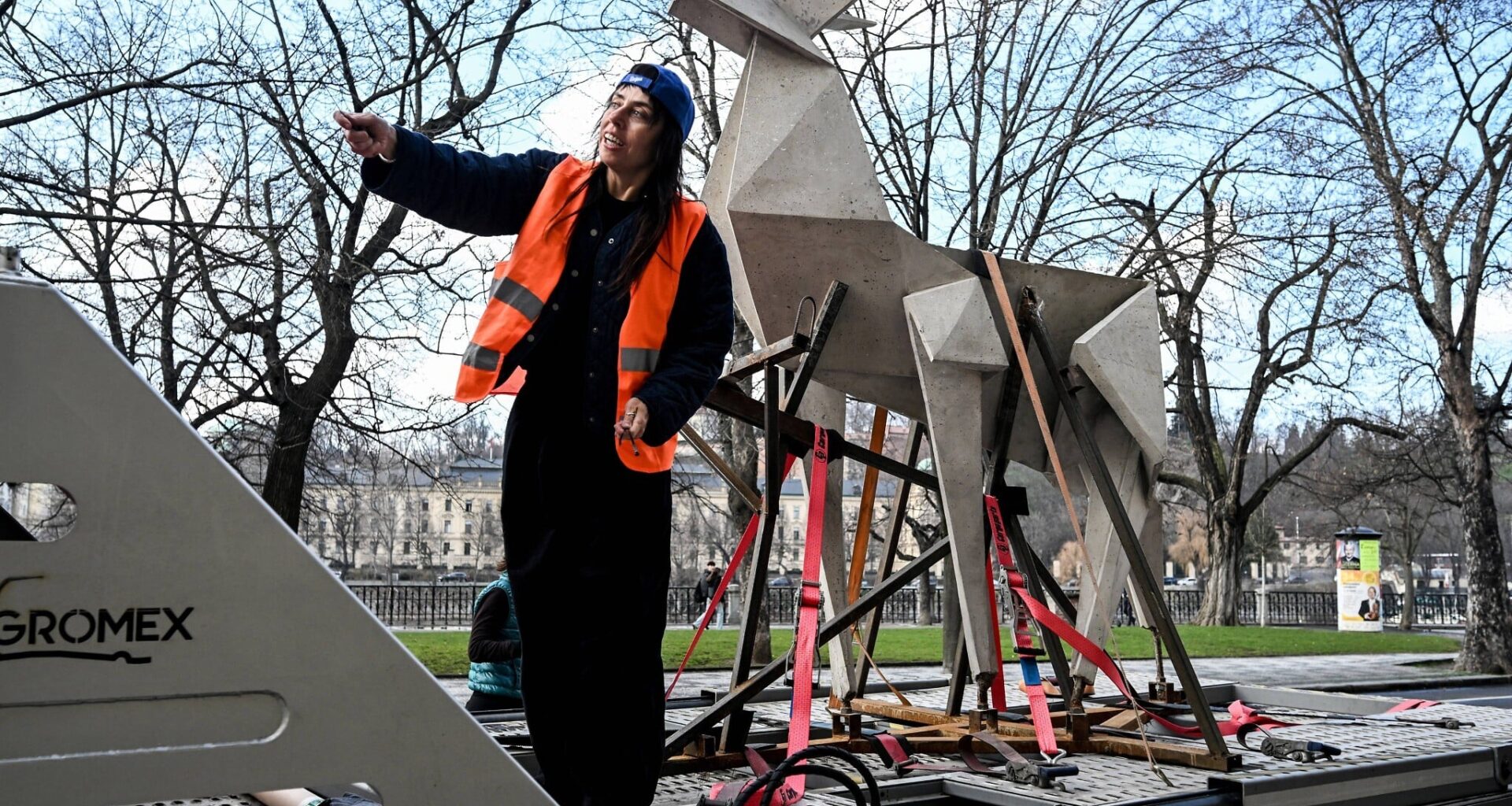
The jury’s decision to snub the two nations had been widely criticized in some quarters, with the Israeli artist showing at Venice, sculptor Belu Simion Fainaru, accusing the jury of racial discrimination and threatening legal action.
Get The Times of Israel’s Daily Edition
by email and never miss our top stories
By signing up, you agree to the terms
Israel’s Foreign Ministry also condemned the “political jury,” accusing it of turning the event into a “spectacle of false, anti-Israeli political indoctrination.” Jerusalem has strenuously denied all accusations of war crimes and genocide, branding the charges as “antisemitic.”
The Venice Biennale is an international cultural organization started in 1895 that presents major cultural festivals and runs its flagship art and architecture exhibitions on alternating years.
Participating countries set up pavilions in Venice, and the art biennial typically attracts more than 600,000 visitors over its seven-month run. This year’s festival is set to open on May 9.
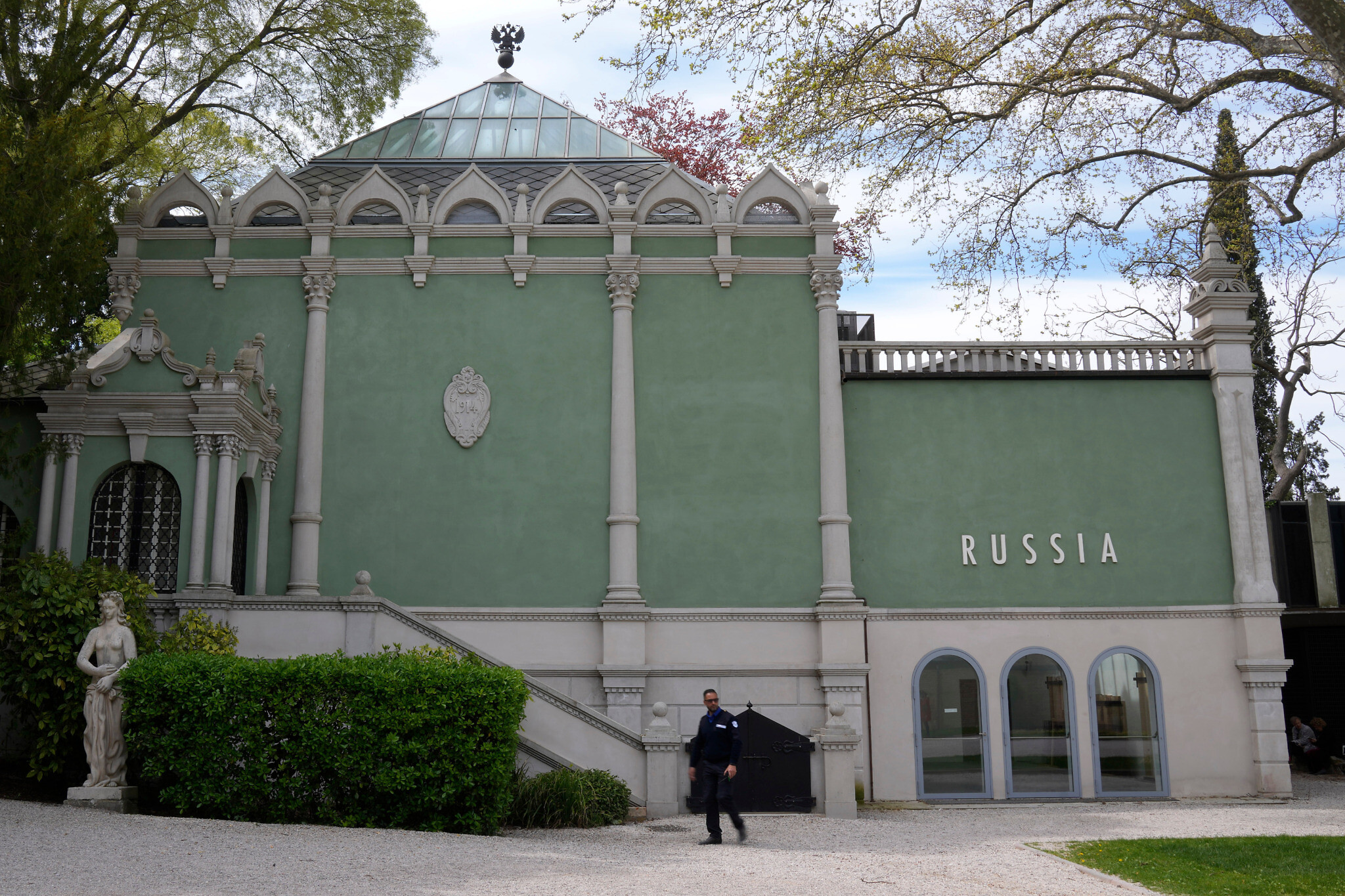
A private security officer walks past next to a closed Russia’s pavilion at the 59th Biennale of Arts exhibition in Venice, Italy, Tuesday, April 19, 2022. (AP Photo/Antonio Calanni)
The organizers of the Biennale said in March that they would allow Russia to take part. But the decision has been strongly criticized by Ukraine and the EU, with critics arguing Russia’s participation would provide a prominent platform for soft power flexing.
Brussels warned it could cut funding, while the Italian government — which has supported Ukraine in the war — stressed the Biennale was acting “entirely independently” of Rome’s wishes.
Ratcheting up the pressure, Italy’s culture ministry on Wednesday dispatched its inspectors to Venice to obtain information about how Russia came to be readmitted, looking for any bureaucratic errors that could be used to rescind the invitation.
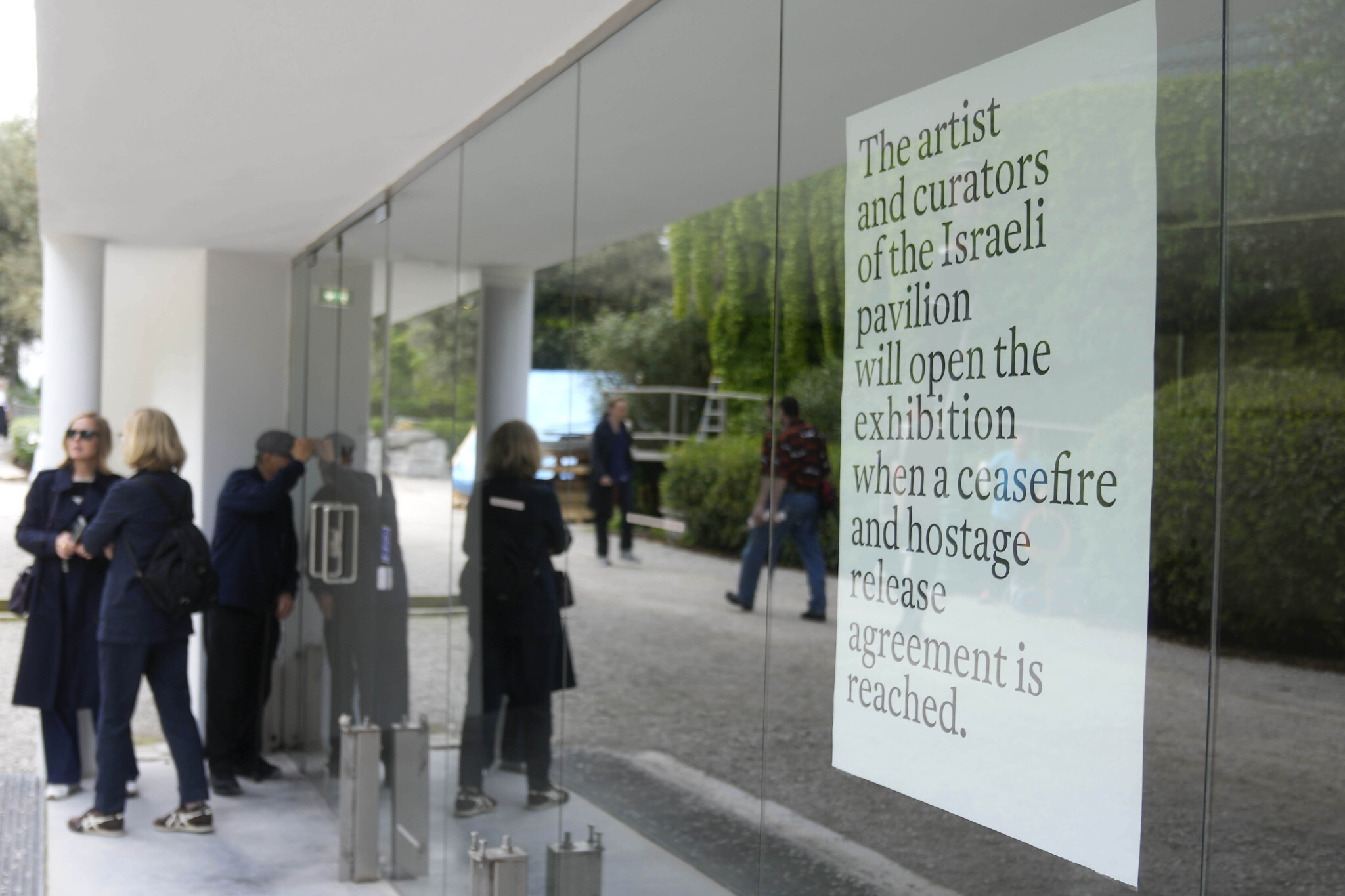
People stand in front of the closed Israeli national pavilion at the Biennale contemporary art fair in Venice, Italy, Tuesday, April 16, 2024. (AP Photo/Luca Bruno)
Following the jury’s resignation on Thursday, the Biennale said it had “decided that the award ceremony of the 61st International Art Exhibition, previously scheduled for May 9, will take place on Sunday, November 22.”
It also said it would hand out two awards, one which could be won by any of the “National Participations included in the 61st Exhibition, as per the official list, following the principle of inclusion and equal treatment.”
Which gorgeous bird do you prefer?

THIS MONTH ONLY: Join our reader support group for as little as $6/month and receive an exclusive tote bag featuring one of Israel’s native birds.
Choose between the Duchifat (yellow), Israel’s national bird, or the Shaldag (blue), a beloved symbol of the Israeli landscape.
As a member of the Times of Israel Community, you’ll also enjoy:
An ad-free experience of our site and podcasts.
Exclusive access to award-winning films via DocuNation.
Weekly letters from founding editor David Horovitz.
Join ToI Community & claim my bag
Already a member? Sign in to stop seeing this
You appreciate our wartime journalism

You clearly find our careful reporting of the Iran war valuable, at a time when facts are often distorted and news coverage often lacks context.
Your support is essential to continue our work. We want to continue delivering the professional journalism you value, even as the demands on our newsroom have grown dramatically during this ongoing conflict.
So today, please consider joining our reader support group, The Times of Israel Community. For as little as $6 a month you’ll become our partners while enjoying The Times of Israel AD-FREE, as well as accessing exclusive content available only to Times of Israel Community members.
Thank you,
David Horovitz, Founding Editor of The Times of Israel