
LIV Golf, as far as any normal person need be concerned, died on Thursday.
The league still exists, even though it just canceled an upcoming event in New Orleans. But unless you are one of an apparently tiny number of fans, LIV Golf ceased to exist when the Public Investment Fund of Saudi Arabia announced on Thursday that it was pulling its funding come the end of this season. Because if LIV Golf does not exist as a geopolitical influence project, LIV Golf has to exist as “a golf league,” and precious few people on the planet have ever watched a LIV Golf event.
The league says it will look for new investors. Those investors would have to be on a powerful cocktail of drugs, because there is no capitalistic reason to want to be involved. The Saudis spent hundreds of millions of dollars, at least, on multiyear contracts for a big handful of the most famous players in men’s golf. They then put those players in events that drew, almost literally, no television viewers. If a murderous prince’s golf league falls in front of a couple hundred thousand TV homes, does it fall at all? The tour continues down its death spiral having bled billions of dollars since its launch in 2021.
Some details need to be ironed out. The league’s players need to find places to flee to, and the PGA Tour needs to decide to what extent it will pick at LIV’s carcass. But we can now take stock of LIV Golf’s five-year run as a headline-making (if not profit-making) part of the sports landscape. Was it fun? Not really. Did it fundamentally change golf? No, it didn’t do that either, and that’s the problem. Tour-level golf remains a tiny speck on the global sports landscape, one that has given fans a worse experience over the past five years because of LIV’s existence. LIV didn’t change golf but did transform how the best golfers in the world see themselves. That contradiction will leave the sport much worse off, and all golf fans got in exchange was a clear look into the souls of the world’s most shameless athletes.
Some parties have intentionally forgotten it over the years, but the first problem with LIV Golf was that it was gross. The Saudis are all over the global economy and have bought into plenty of sports teams, but LIV was something different. LIV wasn’t an ordinary capitalist endeavor that attracted state-affiliated investors, but a new vehicle tailor-made for them. Its raison d’être was to serve the geopolitical goals of Mohammed bin Salman, a man who dismembers dissidents and represses human rights as often as he breathes. Whatever purposes LIV had, none were outside of that scope. Every person who worked for the tour knew this and signed up anyway. “They execute people over there for being gay,” Phil Mickelson told his biographer before the league launched. “Knowing all of this, why would I even consider it? Because this is a once-in-a-lifetime opportunity to reshape how the PGA Tour operates.”
Mickelson was at least somewhat honest. LIV’s other stars feigned not to understand why people would take issue with their participation. Bryson DeChambeau and many others defaulted to telling inquisitors that they just wanted to “grow the game,” something they surely did so much of by making hundreds of millions of dollars to play in tournaments without audiences. One of LIV’s only true business purposes was to serve as a bribery tool for the Saudis with Donald Trump, who has been paid to host several of their events at his courses. In one of the funnier comedic twists of Trump’s presidency, the PGA Tour was holding an event at Trump’s Doral course as the PIF announced it was cutting LIV’s spigot. If LIV was useful for anything, it was in revealing world-historic hypocrisy on the part of its rival tour, which went from exploiting Sept. 11 families in an anti-LIV marketing campaign to trying to do a deal with the Saudis. The “framework agreement” the sides announced in 2023 never came to fruition, though, as the PGA Tour looked elsewhere to shore up its financial position against its upstart rival.
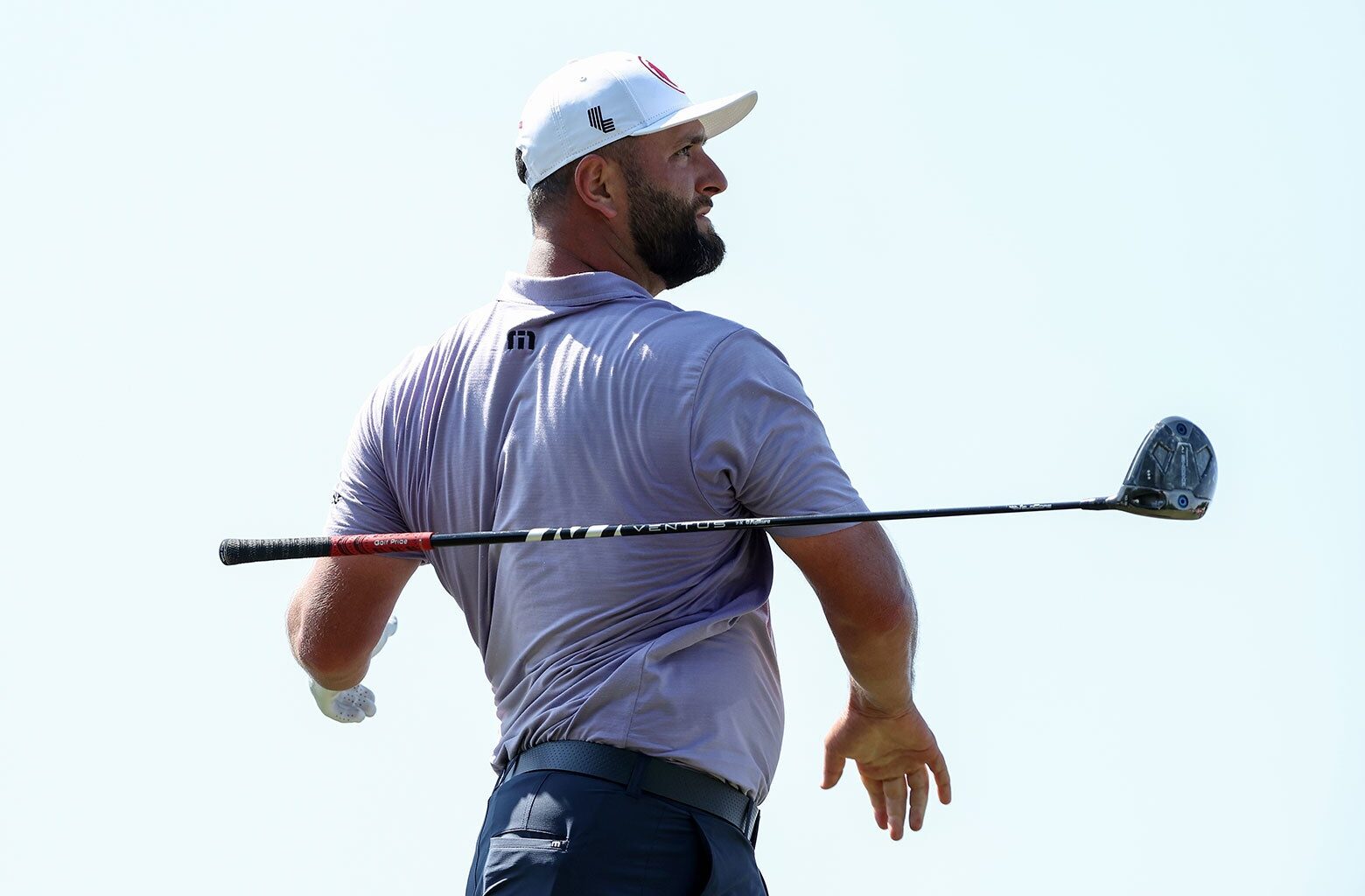
LIV could have succeeded anyway. Nothing in professional golf was ever a moral enterprise. The league flopped because it did not produce compelling sports drama, much less distribute it. The league’s early hauls of star players—Mickelson, DeChambeau, Brooks Koepka, Dustin Johnson, Cameron Smith, and more—were enough to pique a lot of curiosity. The addition later on of Jon Rahm, still one of the world’s best players, piqued more. But the PGA Tour always had more stars, and stars weren’t the point anyway. Almost no golfers are stars. The biggest one, Tiger Woods, stayed with the PGA Tour. LIV had one needle-mover, but DeChambeau’s enormous social media following did not translate to people caring about his LIV career. They could catch him at the major championships or on YouTube.
The tour had a few fun moments. Its tournament in Australia, a good golf country without a PGA Tour event, was a rollicking time. The league dusted off the career of disappeared PGA Tour player Anthony Kim, who won an event this year and made an emotional scene. But none of it ever translated into a feeling of relevance on its own terms. LIV Golf organized itself into teams, on the theory that fans would identify with them. (Didn’t your grandfather take you to Crushers tournaments when you were little?) It held three-round events rather than four, making its tournaments feel cheap. It had small, unimpressive fields. Rahm admitted in public that he was a “realist” about what a streak of Top 10 finishes on this tour meant.
Maybe it still could’ve worked, with the right marketing and management. But the people who ran LIV Golf were manifestly incompetent, from founding commissioner Greg Norman all the way down the list of toadies who have led the organization. Key to the league’s business “plan” was to make people care so much about LIV’s individual teams that they would build enterprise value and be sold off for hundreds of millions or billions of dollars. This ChatGPT-level plan yielded a great press conference moment, in which DeChambeau bragged about how his team had been “EBITDA-positive for the past two years.” Unfortunately, for reasons unknown, the strategy did not yield billions of dollars in acquisitions.
Because so many people involved in LIV Golf needed to lie from the start in a flailing effort to protect their images, the league never had much credibility when it dealt with opposition. The Public Investment Fund clearly paid for social media agitators to defend its pet, and LIV’s executives and their paid shills had a habit of saying unbelievable things. Just weeks ago, the league’s chief executive, Scott O’Neil, said in a league-produced video that LIV would need more funding “to keep us going” beyond the season. Smooth operators that they are, LIV’s content people deleted the clip and reuploaded it with the boss’s comment cut out. LIV Golf was founded on a lie—that its aim was to “grow the game”—and lived its brief life with that spirit of dishonesty.
Alex Kirshner
It Was Supposed to Be the Future of Pro Golf. Then It Collapsed Spectacularly.
Read More
If anyone involved with LIV won, it was Koepka, the five-time major winner who took the Saudis’ money but left to return to the PGA Tour before everything crumbled. Various older players collected nice checks as they sailed off into the sunset. Other stories were much bleaker. Rahm collected a reported nine-figure payout but sacrificed some of his prime years to a tour nobody cared about, and his performance in majors cratered while he spent most weeks playing lesser events. Norman, one of the best players of the 20th century, had been a thorn in the PGA Tour’s side for years and finally got a shot to run his own league with an irrationally large budget. He couldn’t make it work. Mickelson will always defy easy description, but he’s given people more reason to focus on his degeneracy and less on his incredible career.
The Devil Wears Prada 2 Gives Its Predecessor a Much-Needed Makeover
There is another group of winners, though. The best few dozen players on the PGA Tour now compete for a lot more money every week. The tour restructured its competition format in response to LIV, putting more cash in those players’ hands and eventually soliciting a major investment from some American sports titans to make it all work. Their peers had taken untold millions from the Saudis, who were making no real effort to turn a profit, and those who remained on the PGA Tour became convinced that they were much more valuable than they would have been had a petrostate not distorted the market. With LIV as leverage, they made significant gains for themselves. Only time will tell if those gains become sustainable. If they do, it will be because golf fans were willing to subsidize them.
All of this was poorly timed for anyone who actually cared about the sport’s health. Golf enjoyed a pandemic boom and came out of 2020 and 2021 with more amateur enthusiasts than ever. As Golf Digest’s Joel Beall wrote this week, the industry “then spent the next five years asking that audience to care about a labor dispute between multimillionaires and a sovereign wealth fund.” Meanwhile, the week-to-week fields on the PGA Tour were watered down, leaving DeChambeau to only face Rory McIlroy and Scottie Scheffler four times a year. How many potential fans did that pointless bifurcation cost golf? Whatever the number, it’s more than the sport has to spare, with only 1 percent of Americans calling it their favorite sport. LIV Golf did not grow the game, but it may well have shrank it.
Get the best of movies, TV, books, music, and more.