
Tensions around the Strait of Hormuz quickly escalated Monday in the hours after President Trump announced a new plan to try to break the deadlock.
Responding to a new US effort to “guide” ships through the shipping channel, Iran said it fired a “warning shot” at a US Navy ship. The nation’s semiofficial news agency even suggested that Iranian missiles had struck a US frigate.
That drew a quick rebuke from US Central Command, which responded, “No U.S. Navy ships have been struck” and then later said that two U.S.-flagged vessels had successfully made the transit.
Meanwhile, the United Arab Emirates reportedly issued an alert to its citizens about a potential missile attack, asking residents to “immediately seek a safe place in the closest secure building.”
The rapid-fire developments were a notable escalation in tensions in the region after weeks of a tenuous ceasefire. Crude oil prices were volatile on Monday amid a new sense that increased fighting could be in the offing.
“We are not the provocateurs here, but if the Iranians want to escalate here, we are willing to escalate, ”Treasury Secretary Scott Bessent said on Monday in a Fox News.
President Trump had announced a plan Sunday afternoon to have the US military “guide” commercial ships not directly involved in the war through the strait, in what he described as a humanitarian mission “so that they can freely and ably get on with their business.”
The president called the mission “Project Freedom” and said it would take effect Monday — a direct challenge to Iran’s blockade of the crucial waterway where about one-fifth of global oil passed before the war.
Trump has imposed a blockade focused on Iranian oil exports and added in his lengthy social media post Sunday that if Iran interferes with US efforts to get other ships through, then “that interference will, unfortunately, have to be dealt with forcefully.”
The Trump administration quickly followed up on Monday to suggest that the move was beginning to work. US Central Command said that Navy guided-missile destroyers were now operating in the Arabian Gulf and called the transit of two US merchant vessels “a first step.”
Read more: What an extended war with Iran could mean for gas prices
But how much Trump’s move will change the reality for nervous shippers with assets stuck in the Persian Gulf was unclear. Senior administration officials immediately drew a distinction between Trump’s new plan to “guide” ships and a previous effort to directly “escort” them through the strait.
The plan was described to Axios and the Wall Street Journal as more akin to locating mines and determining the safest routes, then passing that information along to shippers.
It drew immediate threats from Iranian officials.
The head of the national security commission of the Iranian parliament called Trump’s post ‘delusional’ and warned on social media that any new US actions “will be considered a violation of the ceasefire.”
Also on Monday, a top Iranian security official reportedly claimed that Iran had control of the waterway and warned that any outside ships — “particularly the aggressive US military” — would be attacked.
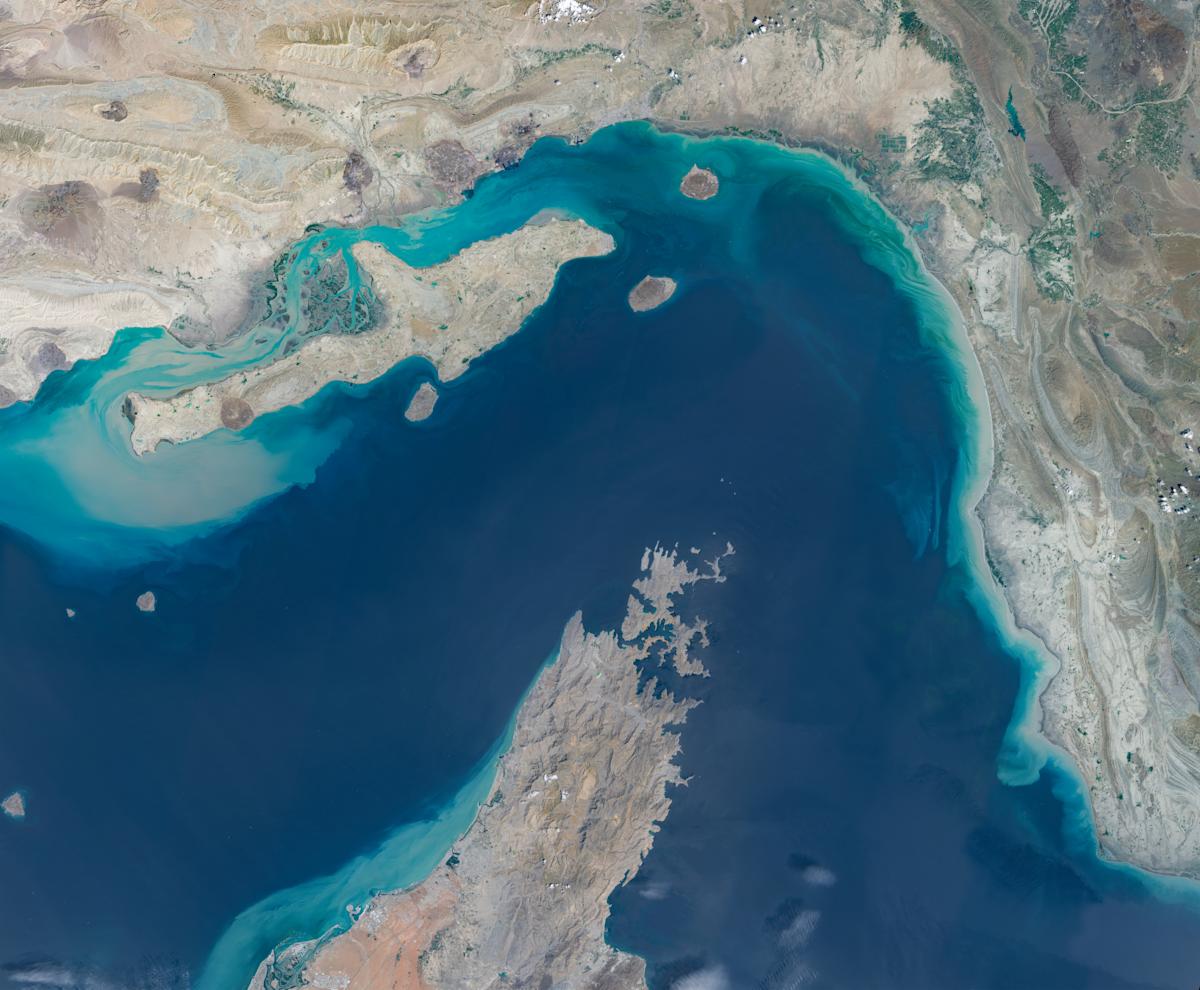
 Satellite imagery shows the Strait of Hormuz between southern Iran and Oman’s Musandam Peninsula. (Maps4media via Getty Images) · maps4media via Getty Images
Market observers noted that the war in Iran remains without a clear off-ramp.
“Don’t overread this. Don’t see what you wish for,” warned Terry Haines of Pangaea Policy in a note to clients. He added that there is a high probability of renewed fighting, which could spook markets.
In its own note, Raymond James offered that “the path forward for ending the U.S.-Iran war remained hazy throughout the weekend.”
This story has been updated with additional developments.
Ben Werschkul is a Washington correspondent for Yahoo Finance.
Read the latest financial and business news from Yahoo Finance