
The ceasefire in the Middle East appears even more fragile as President Donald Trump pushes to reopen the Strait of Hormuz.
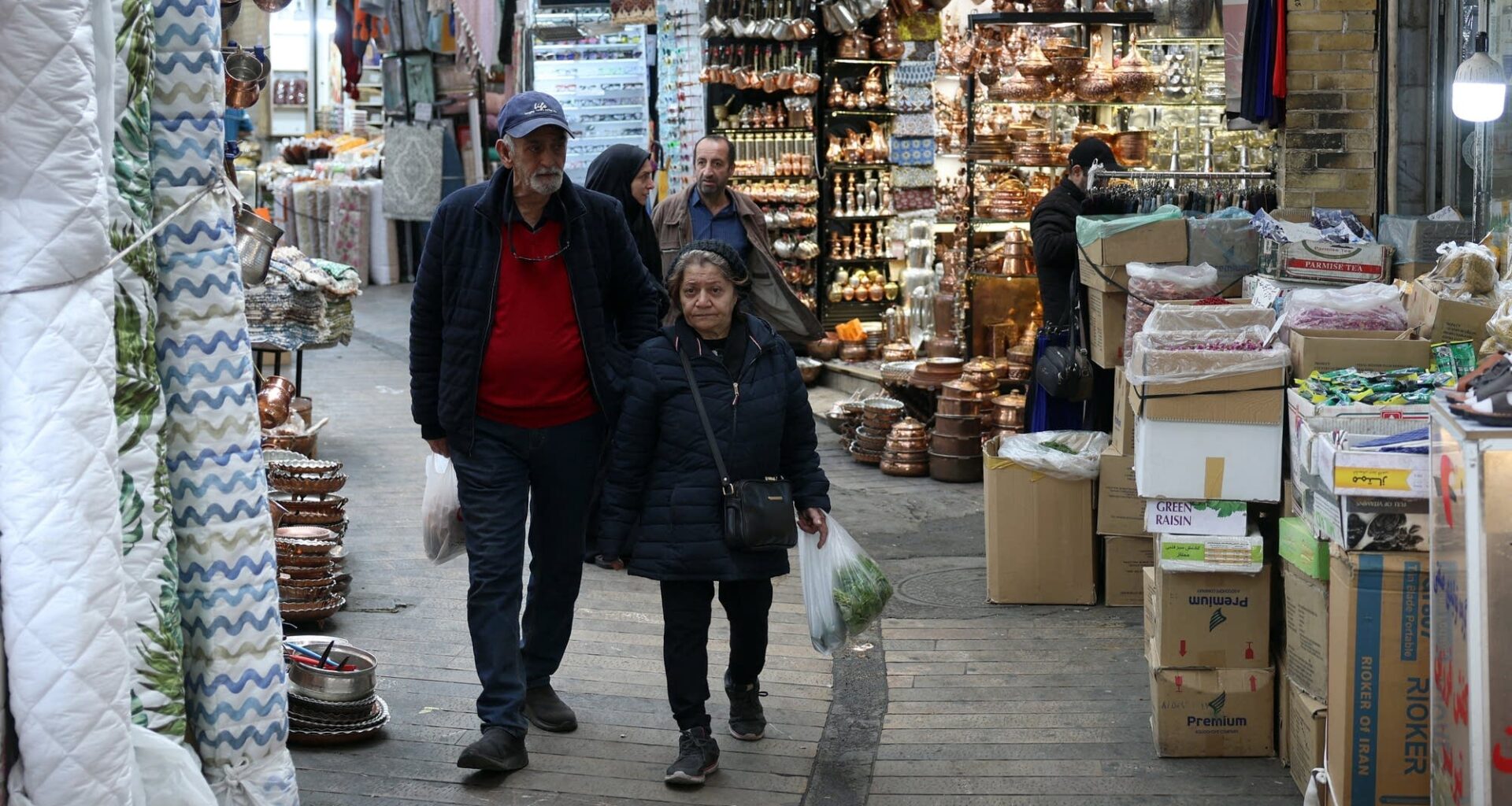
Outside of Iran, markets are shaky. And inside Iran, the economy is struggling. More than a million people are out of work, food prices are spiking, and businesses are closing.
For more about the economic hardship and how the Iranian people and government are responding, “Marketplace Morning Report” host Sabri Ben-Achour spoke with Djavad Salehi-Isfahani, a professor of economics at Virginia Tech. The following is an edited transcript of their conversation.
Sabri Ben-Achour: What is Iran’s economy like right now?
Djavad Salehi-Isfahani: Well, it’s very much an economy at war. There has been considerable destruction of property and factories. Prices are rising very fast because supplies are limited. Inflation last month was over 100%. So, nobody is making any plans about the future because of this waiting nature. I think the most important characteristic of the economy is that it is waiting for something to happen.
Ben-Achour: How much of this uncertainty that you are describing, how much of it is the actual bombardment of infrastructure, how much of it is the closure of the Strait?
Salehi-Isfahani: Well, the closure of the Strait isn’t all that important at this time, because I think the critical supplies, those of food, and Iran has other ways of getting food. The land routes — as half a dozen countries border it, that can supply Iran with food, if it has money. So, I don’t know how much foreign reserves they have, but as long as they have dollars, they can get their food. The other important thing in Iran is that a lot of industrial establishments were bombed, especially of heavy industries like steel, petrochemicals. Although they did not employ many people, they have a huge downstream effect. A lot of other factories will not be able to operate. So, jobs are being lost at the rate of maybe 100,000 a month. Those are the people that are in huge stress because they’re not able to live without the wage and salary and have to depend on cash transfers that the government deposits, which is barely enough to buy daily food.
Ben-Achour: So, the government actually has a cash program where it provides people with a certain amount of money, and they’ve been doing this for a while. How long can efforts like that go on?
Salehi-Isfahani: The main constraint, in a way, is cash, because once the food supplies — the inventory — is run down, they have to buy new supplies, which can come through Pakistan, from Turkmenistan, Iraq, and Azerbaijan. It’s possible that they can buy stuff on credit, especially if the Russians are willing to lend them. Chinese may be able to; in fact, they may be interested in helping Iran survive this, because if Iran falls, both China and Russia stand to lose. So, I think on the Iran side, it isn’t as deterministic as people imagine sometimes, that they’re doing so badly that in a couple of months, this spirals. I don’t see that. I think that’s the kind of exaggerations about Iran that has got us into this difficult situation now.
Ben-Achour: This is kind of a fraught question, but who do you think Iranians blame for this economic situation?
Salehi-Isfahani: Well, that’s a very interesting question too, because the answer to it has changed since the war started. I think before the war, the average person would blame the government, because sanctions were kind of an invisible barrier, and it was easy to blame high prices and shortages on these two favorite explanations: inefficiency and corruption. “Mismanagement and corruption” — you constantly heard that. But since the war started, it’s as if all the damages the sanctions were causing became visible. And the government, not only it wasn’t standing by the side, it was actively trying to help people survive this. So, I think the government has reinvented itself, repositioned itself, and the side of the people opposing these two characters, not very much liked in Iran at all: President Trump and Prime Minister Netanyahu.
Ben-Achour: So, it sounds like this experience has galvanized the Iranian people. Does that mean economic pressure would not as easily be able to force Iranian leaders to negotiate a quicker end to the war, do you think?
Salehi-Isfahani: Yes, I think that is fair to say. And partly because the government also has a strong repressive apparatus. So, the opposition is cramped under the circumstances. They can’t really do a whole lot. I suspect that the Iranians can manage another maybe 20% to 30% decline in living standards. They have already lost quite a bit in the last year, and in a situation like that, you kind of get used to living in difficult times. And marginal declines do not precipitate coming to the street and facing armed guards. So, you know, that’s a situation that’s very difficult from the distance, from my position to read. But I can tell you that opinions about the war have changed drastically. Whereas maybe a fair size of the population — maybe a majority — saw the possibility that aerial bombardment would help them get rid of the Islamic Republic, they now see it as mostly destroying productive capacity and making life much harder than it was.
Related Topics