
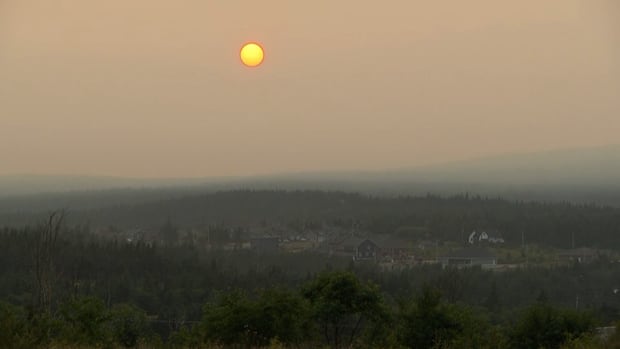
After a weekend of hot temperatures and high winds, the Kingston wildfire in Newfoundland and Labrador has grown to more than 5,000 hectares.
In a live update at 5 p.m. local time on Sunday, N.L. Premier John Hogan announced that fire projections show the fire might grow to reach Ochre Pit Cove by Sunday evening.
Hogan also said there have been confirmed reports of more structures impacted by the fires on Saturday and Sunday, including in Adam’s Cove, Kingston and Western Bay.
However, due to smoke and conditions, officials are unable to confirm at this time what structures have been destroyed, Hogan said.
Evacuation orders remain unchanged at this time.
The premier also announced that some firefighting assets from other provinces have been cancelled or delayed. Two water bombers from Quebec were not able to come due to maintenance issues.
Additionally, two water bombers from Ontario have been delayed as they are being used to fight wildfires in their own province.
However, Hogan said there is confirmation that a high-capacity helicopter has been contracted from Manitoba to assist. As well, two Quebec water bombers and a bird dog plane also arrived on Saturday to provide support.
“It is a significant asset that will certainly help tomorrow,” he said.
Fire suppression efforts continue
Throughout the day Sunday, many assets continued to work on the growing Kingston fire.
As of Sunday evening, four water bombers are working to contain the fire’s North End, Hogan said, adding that this is N.L.’s entire fleet.
One bird dog aircraft, five helicopters, two Coast Guard helicopters and 50 ground crew members are working on the fire. “Of course, the safety of our brave front-line heroes is a priority,” Hogan said.
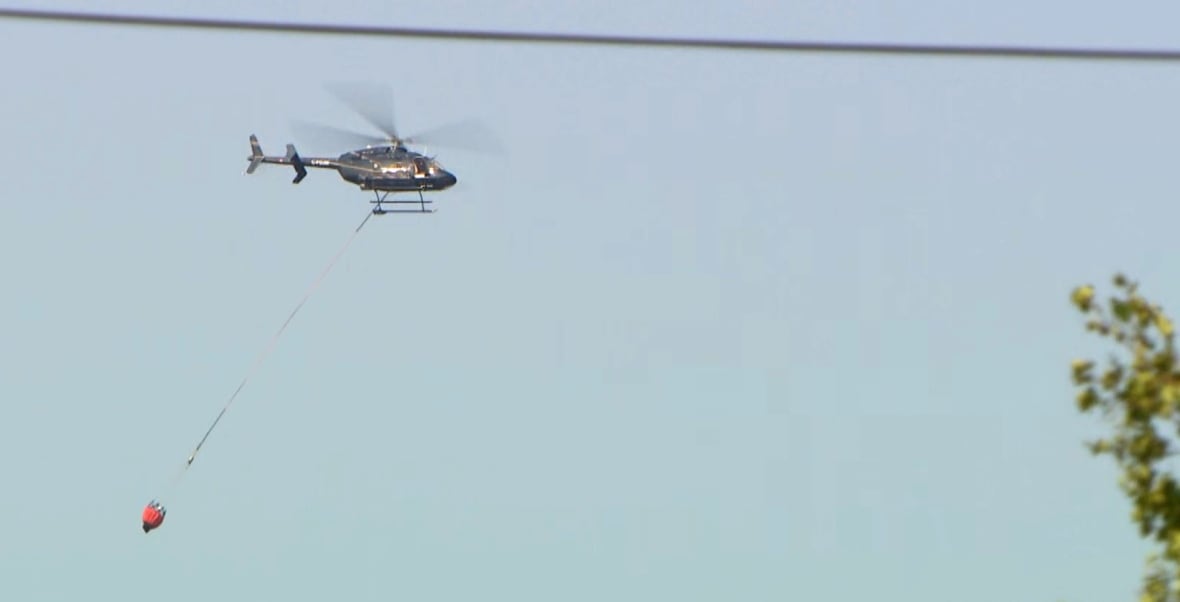 The province’s Forestry Department says there will be four water bombers, four helicopters and ground crews working the Kingston fire on Sunday. (Catherine Morasse/Radio-Canada)
A regional state of emergency was declared on Saturday for the Bay De Verde peninsula in Newfoundland and Labrador, from Bristol’s Hope to Whiteway.
“A regional state of emergency allows the province to co-ordinate the activities of all provincial and municipal services in the area and to engage personnel as required,” Department of Justice and Public Safety spokesperson Eric Humber wrote in an update on Saturday.
The province clarified that the state of emergency does not mean the entire region is under evacuation order but that all residents should be prepared to evacuate at a moment’s notice.
The government said Saturday’s “extremely volatile” weather made fire suppression efforts challenging.
On Sunday morning, the province’s Forestry Department said weather remained extremely volatile, with “30 km/h southwest winds and forecasted gusts of 50 km/h.”
Labrador, central N.L. fires continue
On Saturday the province also reported a fire near Happy Valley-Goose Bay on the Grand Lake Forest access, which has since been declared out.
However, Hogan said crews are now assessing another wildfire 19 kilometres south of Happy Valley-Goose Bay. Helicopters and ground crews are also responding.
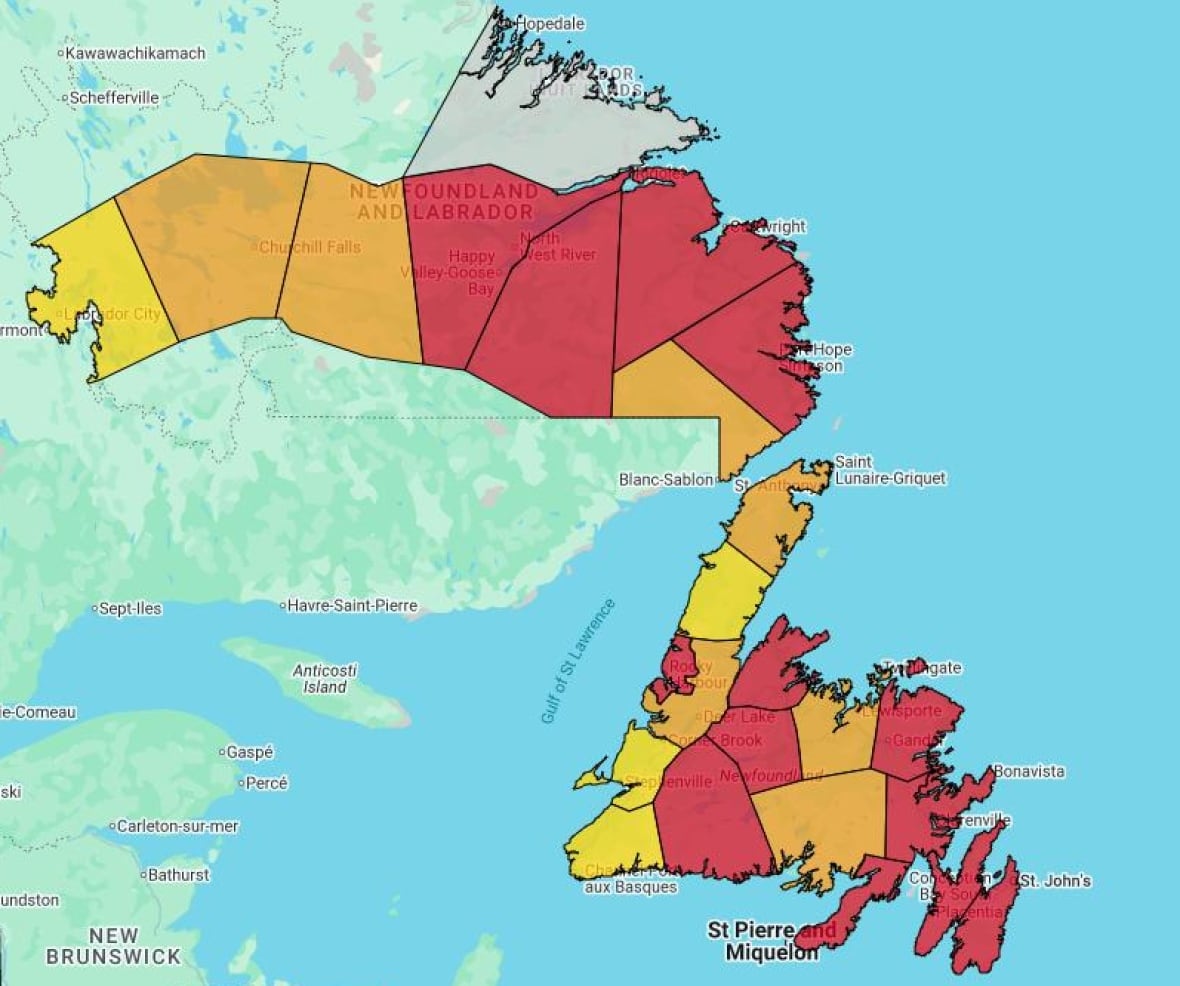 Much of Newfoundland and Labrador is under an extreme or very high risk of fire as of 2 p.m. NT on Saturday. (Government of Newfoundland and Labrador)
The province said both of the Labrador fires appear to have been caused by lightning.
The Martin Lake fire remains out of control, at 245 hectares, but Hogan said that suppression crews have continued to hold the northern area of the fire.
Two water bombers from Quebec, a bird dog aircraft, and three air tractors from New Brunswick continued to provide aerial support alongside ground crews throughout the day on Sunday, the premier said.
Hogan said crews are focusing on that fire’s southwestern edge and near the cabin areas.
At this time there is still no impact to the Bay d’Espoir Highway.
Evacuees in Holyrood and Conception Bay North were allowed back home on Saturday. Hogan said the fire is being held and remains at 22 hectares.
Open fires reported
Provincial fire duty officer Mark Lawlor said there are still reports of people having open fires, despite the provincewide fire ban and stricter fines.
Fines were increased to $50,000 for a first offence on Friday. Subsequent offences are now $75,000 to $150,000, and those who default on a payment could see up to a year in jail.
The St. John’s Regional Fire Department reported seven bonfires and two brush fires overnight Saturday. One fire was determined to be illegal and authorities were notified.
Lawlor is asking that people obey the fire bans. “Our resources are stretched. So if people could obey the ban, it would significantly help us out,” he said.
He also asked that ATV riders keep their machines clean. “No mud on the mufflers, on the engine. We don’t want to have another fire started by somebody outdoors in the woods recreating,” he said.
Evacuation orders
The growth of the Kingston fire on Saturday led to more evacuation orders in the area. Burnt Point-Gull Island-Northern Bay is now under an evacuation order.
The following areas are currently under evacuation order in the region:
Town of Small Point–Adam’s Cove–Blackhead–Broad Cove Town of Western Bay Town of Salmon Cove Kingston Perry’s Cove Ochre Pit Cove Burnt Point-Gull Island-Northern Bay
For now cabin owners in Martin Lake, Great Rattling Brook and Rushy Pond areas of the Bay d’Espoir Highway, including all cabins from Rushy Pond to Rifle Lake, remain under an evacuation advisory.
Download our free CBC News app to sign up for push alerts for CBC Newfoundland and Labrador. Sign up for our daily headlines newsletter here. Click here to visit our landing page.