
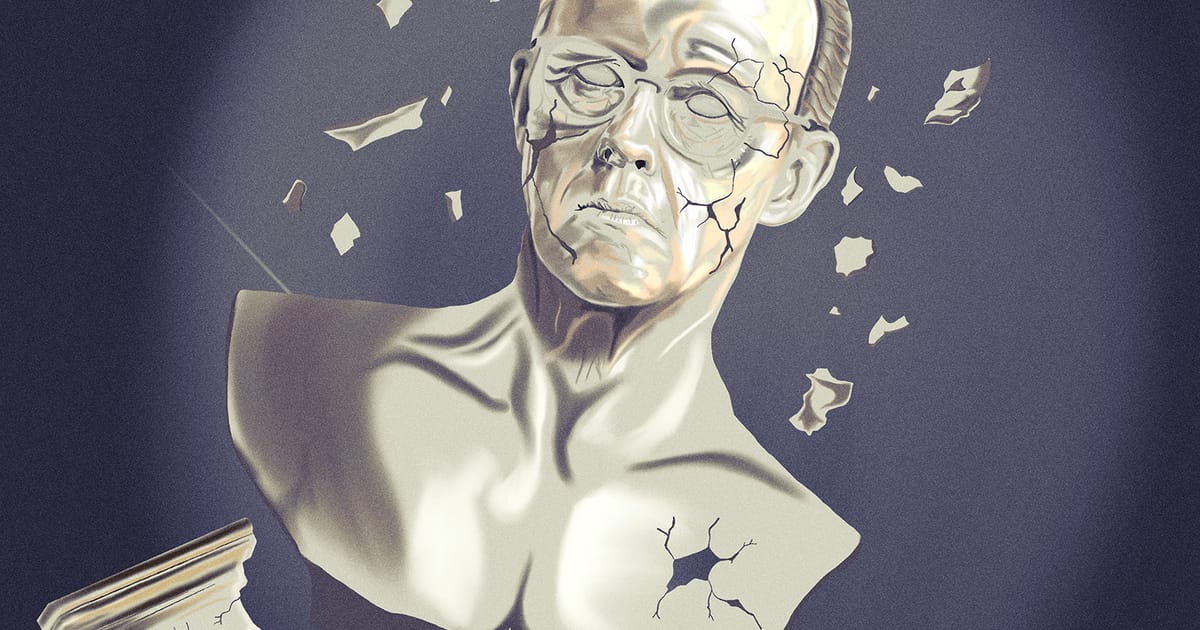
In March, the chancellor stepped up to a podium in the European Council building in Brussels. It was late at night after a long meeting of the EU’s national leaders, and the 6-foot-6-inch-tall chancellor stooped as he leaned forward to speak into the microphone. “Well, ladies and gentlemen, good evening or good morning, whichever you prefer,” he said. “I’m glad you held out. We had to do the same.” Then the geniality disappeared.
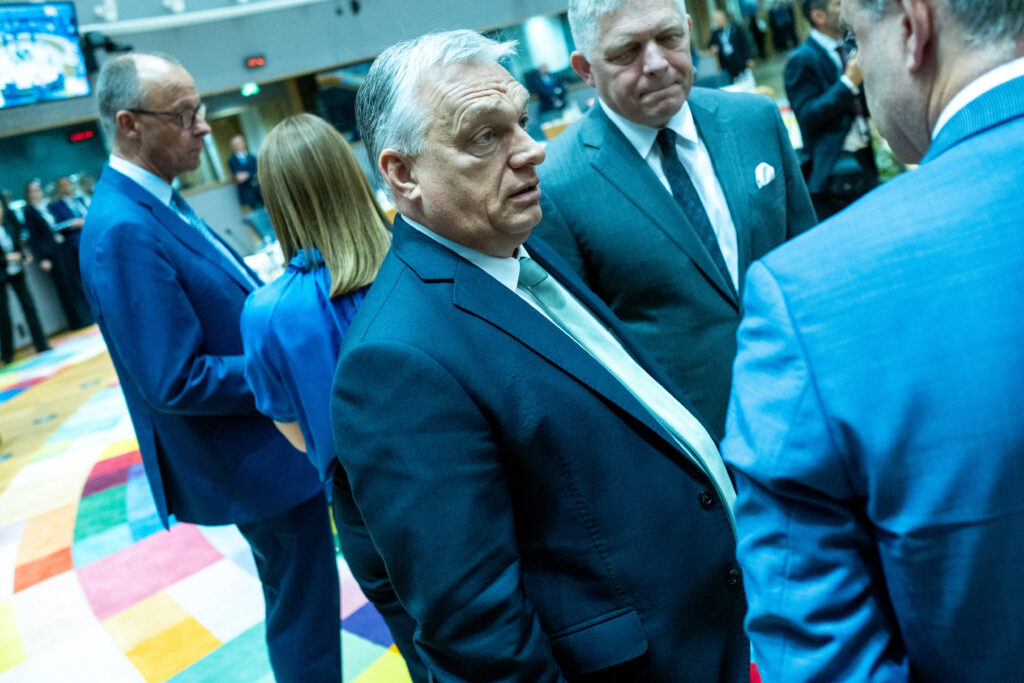 European leaders discuss Ukraine and the Middle East during a summit in Brussels on July 26, 2025. | Martin Bertrand/Hans Lucas / AFP via Getty Images)
Merz turned on Viktor Orbán, the nationalist Hungarian prime minister who had blocked an aid package for Ukraine. Orbán’s veto, Merz said, was “an act of gross disloyalty in the European Union” that would leave “deep scars.” The chancellor was not alone in his anger toward the Hungarian leader, but the directness of his assault stood out. The timing made his attack even sharper. Orbán, a Trump ally, was headed into a difficult campaign for an election he would ultimately lose.
Are Merz’s outbursts simply a matter of clumsy communication and an occasionally loose tongue? In Germany, he has a reputation for both. Or is the strain of his troubled coalition at home beginning to spill over into his conduct abroad? A chancellor weakened domestically may be tempted to sound stronger internationally. The danger is that, in doing so, he harms the German interests he means to defend.
Coalition troubles
One reason for Merz’s troubles is coalition arithmetic. The chancellor has tied himself to the political center, emphatically, almost morally, rejecting any suggestion of cooperation with the far right. “I have made a final decision to seek support for our policies exclusively in the center,” he said at a CDU party conference in Stuttgart in February. “At the moment, that narrows us down to a coalition with the SPD.” The line was meant as a declaration of democratic hygiene. It also amounted to ceding power to Lars Klingbeil, the vice chancellor, finance minister and co-leader of the Social Democrats.
Klingbeil clearly understands how to handle Merz. Twenty-two years younger than the chancellor, he has often looked like the sharper tactician. Again and again, Klingbeil has played the role of the pragmatist who would like to go further but simply cannot sell certain policies to his comrades in the party.
Senior politicians from Merz’s CDU have often only learned later what had already been agreed between the two men. When Katherina Reiche, Germany’s economy minister, recently criticized Klingbeil’s flirtation with a tax on oil-company “windfall profits,” she was reprimanded by the chancellery. Only after CDU resistance stiffened did Merz join in the defense of his minister.