
TEHRAN, Iran — Iranian President Masoud Pezeshkian said Thursday that he had met with the country’s Supreme Leader Ayatollah Mojtaba Khamenei, who has not been seen in public since his appointment in early March.
Pezeshkian did not say when their meeting took place.
“What struck me most during this meeting was the vision and the humble and sincere approach of the supreme leader of the Islamic Revolution,” the president said in a video broadcast by state television.
Khamenei, said wounded in strikes on the first day of the Middle East war that claimed the life of his father and predecessor, Ali Khamenei, has appeared to release only written statements since his appointment.
His 86-year-old father was killed in US-Israeli strikes in late February after more than three decades at the helm of the Islamic Republic.
Get The Times of Israel’s Daily Edition
by email and never miss our top stories
By signing up, you agree to the terms
Ali Khamenei himself had succeeded the founder of the republic, Ayatollah Ruhollah Khomeini, in 1989.
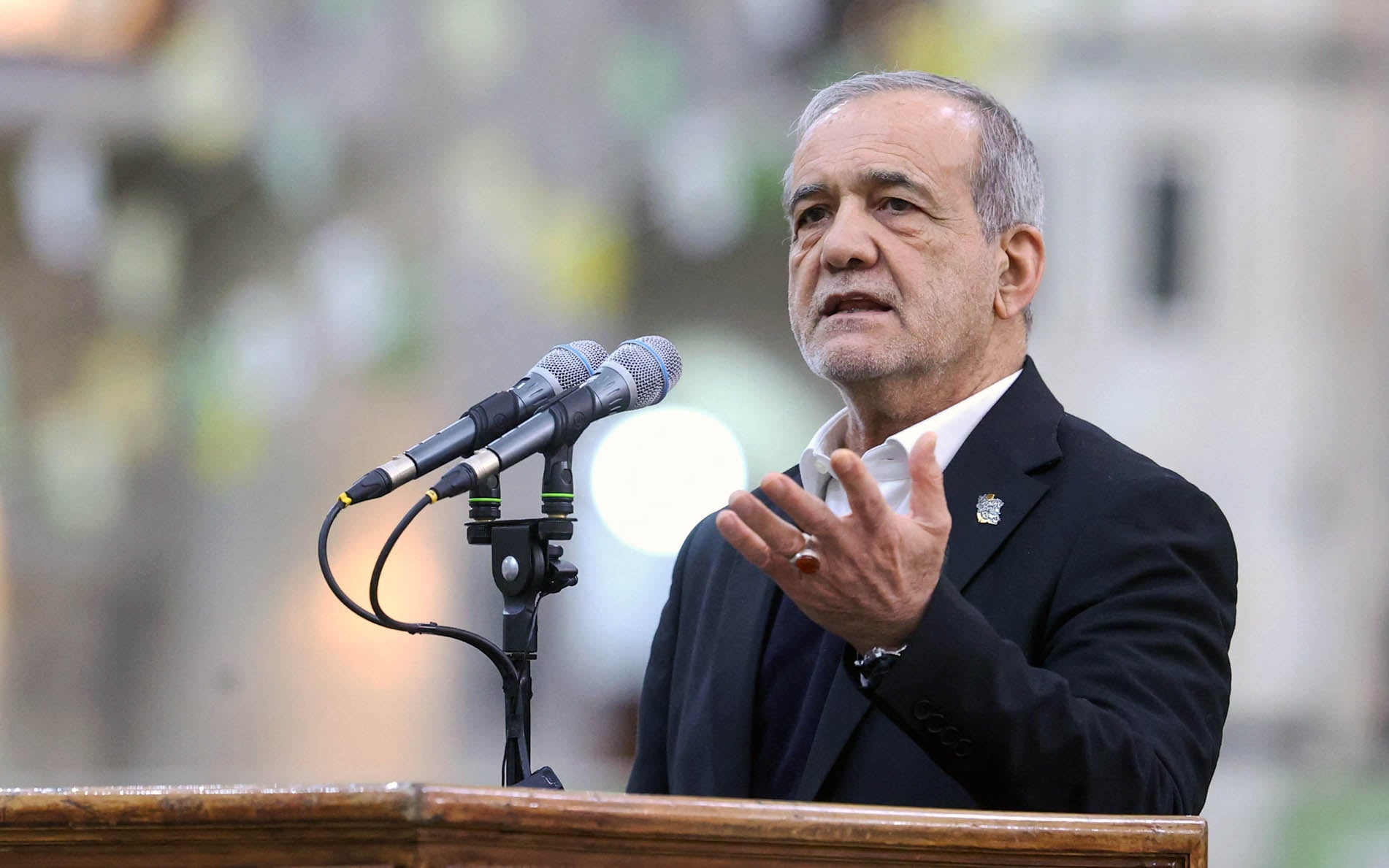
Iran’s President Masoud Pezeshkian addresses cabinet members, as they visit of the tomb of the late Iranian revolutionary leader ayatollah Ruhollah Khomeini, in Tehran on January 31, 2026. (Handout/Iranian Presidency/AFP)
Mojtaba’s appointment by Iran’s Assembly of Experts, an 88-member body responsible for selecting the supreme leader, was announced by state television on March 9.
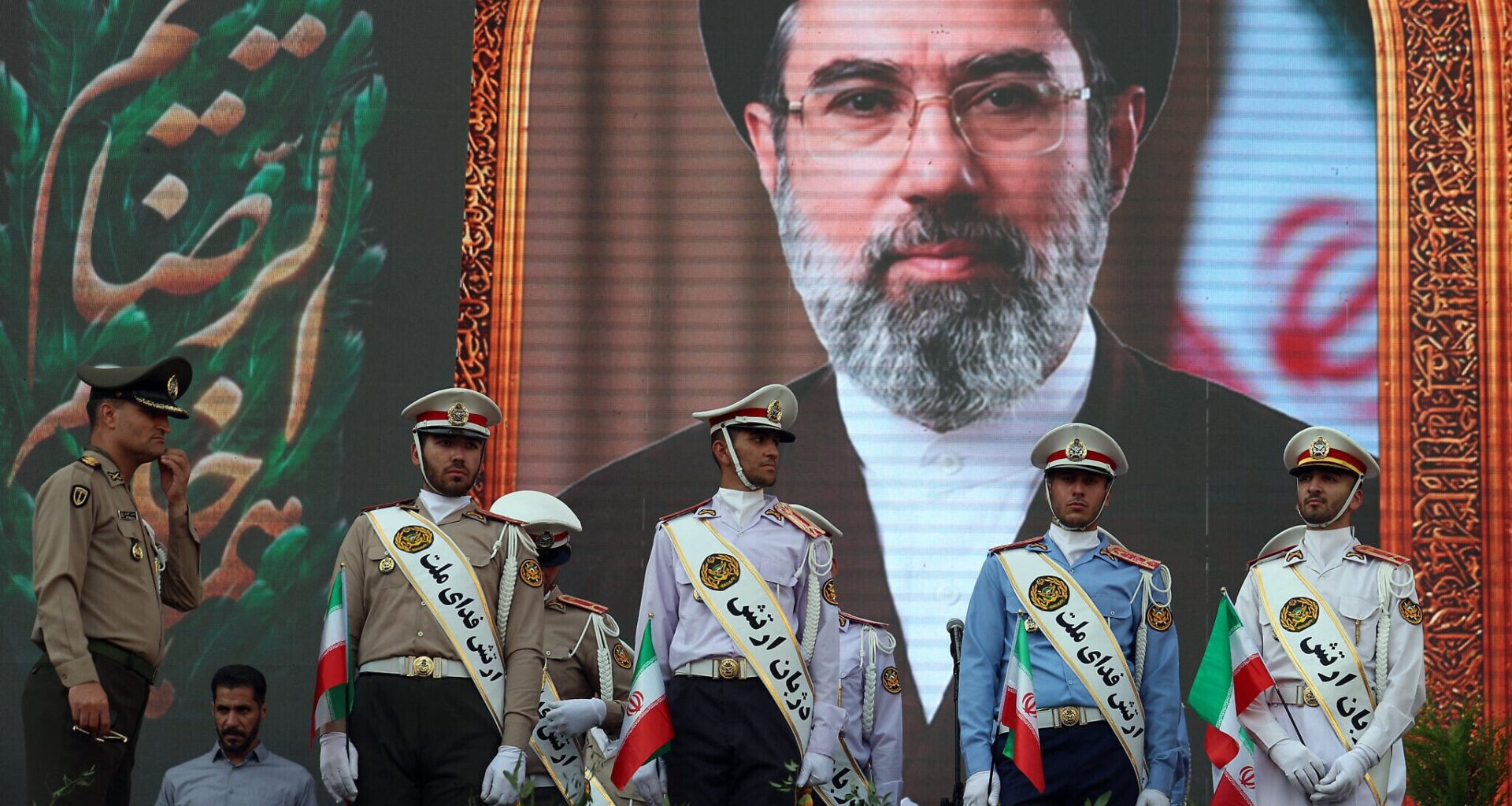
Since then, portraits of the 56-year-old have become ubiquitous in the streets of Iran, but the new leader has been conspicuous in his absence from the public stage, in stark contrast to frequent appearances made by his father.
According to anonymous sources, he suffered severe facial and leg injuries but remains mentally sharp and is taking part in meetings with senior officials via audio conferencing. Other sources have claimed that the younger Khamenei is not exercising the same centralized authority as his father, with power instead shifting to senior commanders in the Islamic Revolutionary Guard Corps and out of the office of the supreme leader, who remains under close medical care.
Israel launched its campaign against Iran, alongside the US, to degrade the Iranian regime’s military capabilities, distance threats posed by Iran — including its nuclear and ballistic missile programs — and “create the conditions” for the Iranian people to topple the regime, the military and other Israeli leaders have said.
Times of Israel staff contributed to this report.
Which gorgeous bird do you prefer?

THIS MONTH ONLY: Join our reader support group for as little as $6/month and receive an exclusive tote bag featuring one of Israel’s native birds.
Choose between the Duchifat (orange), Israel’s national bird, or the Shaldag (blue), a beloved symbol of the Israeli landscape.
As a member of the Times of Israel Community, you’ll also enjoy:
An ad-free experience of our site and podcasts.
Exclusive access to award-winning films via DocuNation.
Weekly letters from founding editor David Horovitz.
Join ToI Community & claim my bag
Already a member? Sign in to stop seeing this
You appreciate our wartime journalism

You clearly find our careful reporting of the Iran war valuable, at a time when facts are often distorted and news coverage often lacks context.
Your support is essential to continue our work. We want to continue delivering the professional journalism you value, even as the demands on our newsroom have grown dramatically during this ongoing conflict.
So today, please consider joining our reader support group, The Times of Israel Community. For as little as $6 a month you’ll become our partners while enjoying The Times of Israel AD-FREE, as well as accessing exclusive content available only to Times of Israel Community members.
Thank you,
David Horovitz, Founding Editor of The Times of Israel