
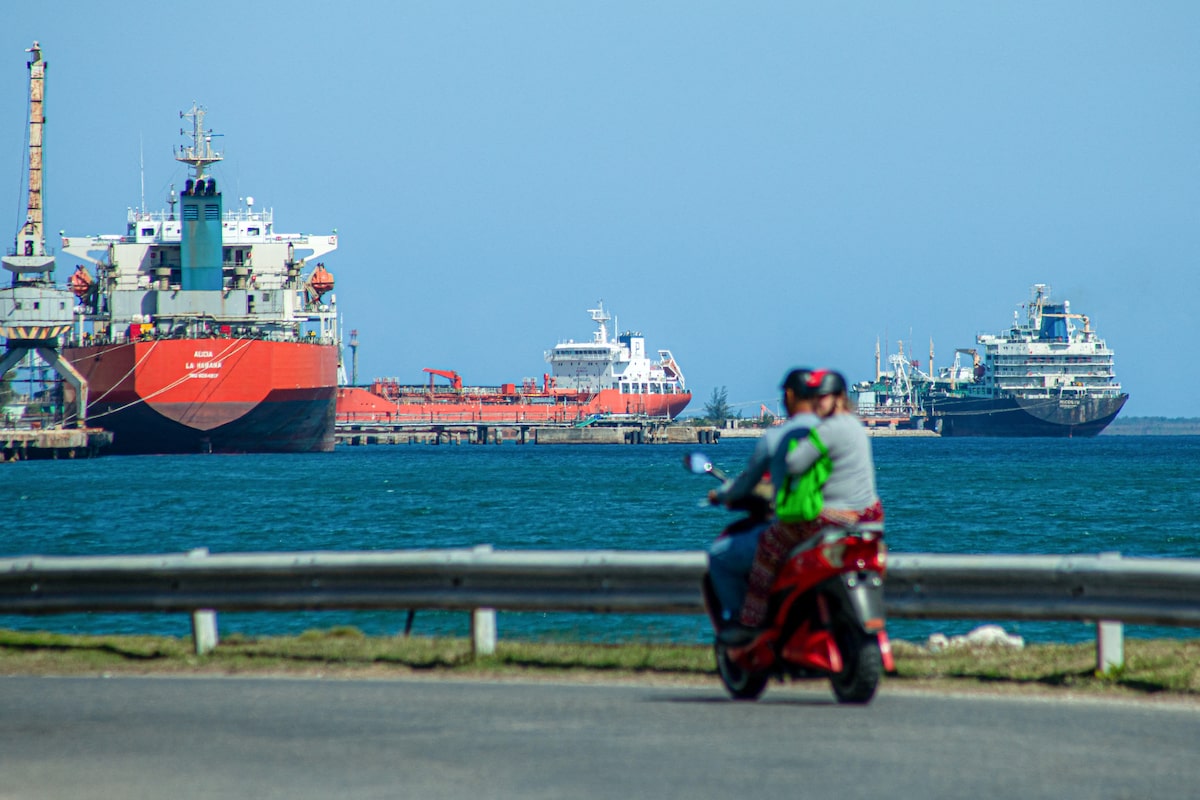
The Nicos I.V. oil tanker, right, is seen alongside other tanker vessels in the port of Matanzas, Cuba, on Feb. 17.STRINGER/AFP/Getty Images
Canadian mining, refining and power producer Sherritt International Corp. is suspending its operations in Cuba and three directors have stepped down after the U.S. expanded sanctions on the Communist Caribbean island.
The Donald Trump administration has been ratcheting up pressure on Cuba for months in an effort to force regime change, including severely restricting its oil imports.
On May 1, the U.S. brought further sanctions against Cuba targeting metals, mining, and other sectors in an executive order.
Toronto-based Sherritt has been heavily reliant on the Caribbean island for decades with a 50-per-cent stake in the Moa Joint Venture which mines, processes and refines nickel and cobalt. It also has a sizable power division in Cuba with a one-third stake in Energas S.A.
Sherritt mine in Cuba to close over U.S. oil blockade
Sherritt said in a statement on Thursday it has suspended its joint venture operations in Cuba, effective immediately. While the company hasn’t been formally designated under the executive order, such a designation could occur at any time, the company added.
“The mere issuance of the executive order itself creates conditions that materially alter the corporation’s ability to operate.”
Mr. Trump’s recent executive order gave the country the power to impose sanctions on any foreign person operating in Cuba’s energy, defence, metals and mining, financial services and security sectors.
The mining company said it is now taking steps to repatriate its expatriate employees in the country.
Brian Imrie, who was chairman of the board, as well as directors Richard Moat and Brett Richards, have resigned from the company.
Shares in Sherritt were down by 34 per cent in trading in Toronto on Thursday.
After the U.S. captured Venezuela President Nicolas Maduro in January, Venezuelan oil shipments to Cuba were halted. That cut the island off from its main supplier. Mr. Trump subsequently signed an executive order imposing tariffs on any country that sold or provided oil to Cuba, further squeezing the country.
Sherritt had already warned in mid-February that its Moa operation was at risk of running out of fuel, saying that it was trying to find other suppliers.
In an interview, National Bank Financial analyst Shane Nagle said the company has enough cash on its balance sheet to operate until the fall. After that, it’s is unclear whether it will be able to meet interest payments on its debt. A refinancing or a debt restructuring may be necessary, he said.
“There’s really just a lack of clarity as to what the pathway forward is,” he said.
Sherritt did not respond to a request for comment on Thursday.
The company operates a nickel and cobalt refinery in Alberta where it further processes metal mined in Cuba. Operations at the plant in Fort Saskatchewan are continuing but the metal supply is expected to run out by mid-June.
Opinion: In this time of crisis and opportunity, Cuba requires true political reform
Sherritt’s market value peaked in the late 2000s, reaching almost $5-billion. But in recent years, its valuation has plummeted with its stock now trading for pennies. Even before the Trump administration pressured Cuba’s administration with new sanctions, the company had been struggling under a high debt load and dealing with low nickel prices.
Much of the historic U.S. sanctions date back to the early 1960s and were ratcheted up during the Cuban missile crisis. Sherritt, which has been operating on the island since the 1990s, has tried to work around the sanctions by not dealing directly with the U.S. and selling its metals to other markets, despite the close proximity. But relations between the company and the U.S. deteriorated significantly in 1996 after senior executives, including its then-CEO Ian Delaney and his family, were barred from entering the United States under the Helms-Burton Act.
Sherritt was originally incorporated in 1927. It formed the Moa Joint Venture with General Nickel Company S.A. of Cuba in 1994.
With a report from Jason Kirby