
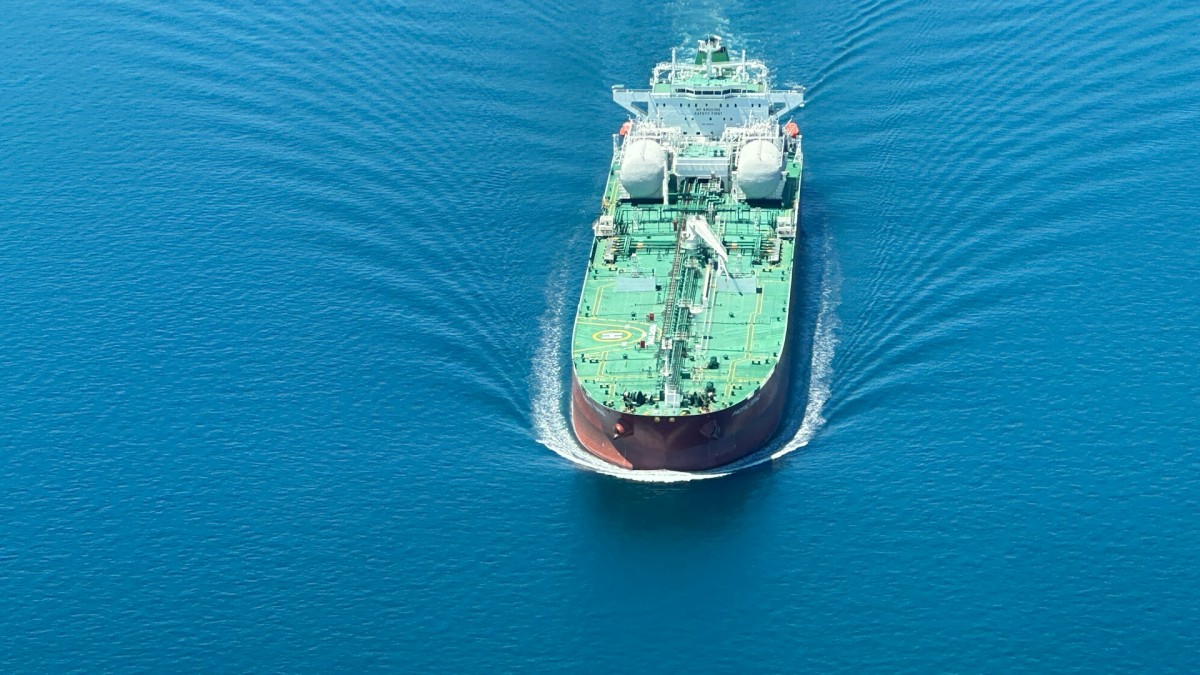
While conventional wisdom, especially after Trump’s counter-blockade of Iran’s blockade, holds that the Strait of Hormuz is completely blocked, the reality is that the UAE is now running loaded crude tankers through the Iranian-controlled Strait of Hormuz with transponders switched off — just like sanctioned Iranian ghost fleets in the pre-war period — just to pry loose a fraction of the oil bottled up in the Gulf.
According to shipping data reported by Reuters, industry sources, and satellite tracking, Emirati state-owned energy giant ADNOC and willing Asian buyers have moved at least 6 million barrels of Upper Zakum and Das crude out of the Gulf in April alone via four tankers. While that’s a drop in the bucket compared to pre-war exports, it proves participants are willing to roll the dice with Iranian drones and speedboats to unlock trapped supply.
The specific vessels: a VLCC called the Hafeet loaded 2 million barrels of Upper Zakum inside the Gulf on April 7, slipped through the strait by April 15, then executed a ship-to-ship transfer to the Olympic Luck outside the strait, which delivered it to Malaysia’s Pengerang refinery — a joint venture of Petronas and Saudi Aramco. Another VLCC, the Aliakmon I, carried 2 million barrels of Das crude out on April 27 and offloaded into Oman’s Ras Markaz storage. Two Suezmax tankers — the Odessa and Zouzou N. — each carrying 1 million barrels of Upper Zakum, sailed directly to South Korean refiners. All three Suezmax vessels are managed by Greece-based Dynacom Tankers Management.
Emirati tankers are sailing with AIS trackers deliberately shut off — the same tactic Tehran has used for years to evade U.S. sanctions. The tactic also makes it near impossible to track total ADNOC export volumes, meaning the April numbers could be higher than what shipping data captured.
Tehran’s blockade is the response to U.S.-Israeli strikes that began February 28, which killed Supreme Leader Ali Khamenei. Iran effectively shut Hormuz to all non-Iranian traffic, bottling up roughly a fifth of global oil and gas supply. A subsequent U.S. blockade of Iranian ports in April has since pushed crude prices past $100 a barrel. ADNOC has been forced to cut exports by more than 1 million barrels per day from the 3.1 million bpd it shipped in 2025, according to Kpler data.
Iran is not ignoring these runs. On Monday, the UAE accused Iran of using drones to strike an empty ADNOC tanker, the Barakah, transiting the strait. Two drones hit the vessel; no injuries were reported. The message was clear regardless.
ADNOC intends to keep it up. The company notified customers in late April that Das and Upper Zakum cargoes could load in May via STS transfers at Fujairah and Oman’s Sohar. Talks with Asian refiners for May-loading cargoes are ongoing, according to a source with direct knowledge of ADNOC’s plans and an Indian refining source who asked not to be named.
Meanwhile, the rest of the Gulf sits on barrels it can’t — or won’t — move. Iraq, Kuwait, and Qatar have either halted sales, slashed prices to attract reluctant buyers, or gone quiet entirely. Saudi Arabia is rerouting via the Red Sea where it can. Only the UAE is playing the occasional round of Russian roulette through the world’s most critical oil chokepoint.
This isn’t a temporary disruption. It’s the new normal until someone blinks or the conflict dramatically escalates to de-escalate. With Hormuz still largely blocked, every barrel that makes it out is a reminder of just how thin the ice under the global oil complex really is.
By Zerohedge