
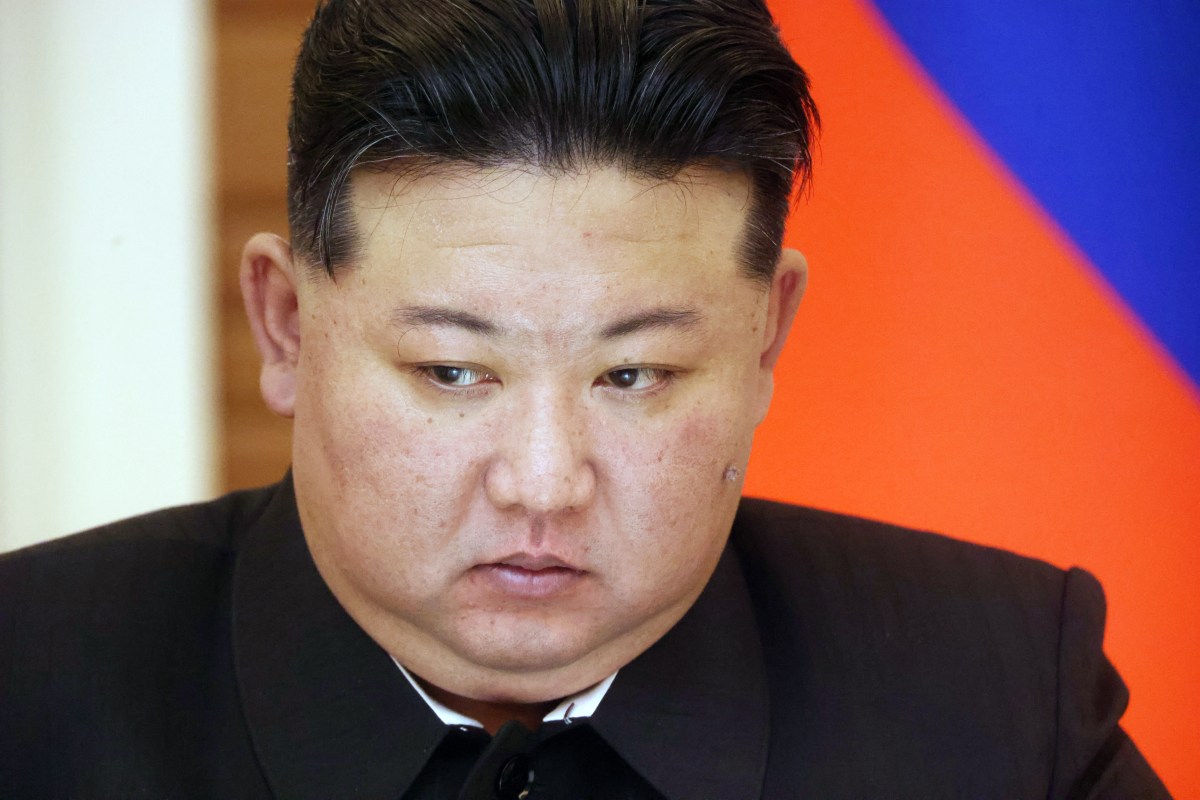
North Korea has revised its constitution to require a nuclear strike if leader Kim Jong Un is killed or incapacitated in an attack, according to a report in British newspaper The Telegraph.
South Korean intelligence officials disclosed the constitutional change during a recent parliamentary briefing, according to British newspaper The Telegraph, saying Pyongyang has now formalized procedures for a retaliatory nuclear response if its leadership comes under attack.
Pyongyang has been expanding its nuclear arsenal in recent years, and adopting a more openly confrontational posture toward both South Korea and the United States.
The revised Article 3 reportedly states that if North Korea’s nuclear command-and-control system is threatened by a hostile attack, “a nuclear strike shall be launched automatically and immediately.”
In a briefing to parliament, South Korea’s intelligence official said the revisions explicitly outline conditions for nuclear use, including scenarios involving a “decapitation strike” against the regime’s leadership. A decapitation strike is a military attack aimed at eliminating a country’s leadership or command structure to disable its ability to respond or govern.
The change was reportedly adopted during a session of North Korea’s Supreme People’s Assembly in March and later shared with South Korean intelligence officials.
 Why the Change Matters
The reported change comes amid heightened global tensions surrounding regime survival and targeted military operations against foreign leadership figures. By formally codifying an automatic nuclear response, North Korea appears to be signaling that any attempt to assassinate Kim or cripple the country’s command structure could trigger immediate escalation.
North Korea’s move comes suggests growing fears in Pyongyang that the United States is increasingly willing to directly remove hostile foreign leaders through military force.
In January, U.S. forces launched operations inside Venezuela that resulted in the capture and extraction of Venezuelan President Nicolás Maduro from Caracas after months of military and intelligence pressure on his regime. Meanwhile joint U.S.-Israeli strikes in Iran killed Supreme Leader Ali Khamenei in Tehran as part of a military campaign targeting the nation’s leadership.
What the New Provision Says
The reported nuclear provision comes alongside a broader overhaul of North Korea’s constitution that removes long-standing references to reunification with South Korea.
The revised document instead defines the two Koreas as separate states, marking what analysts describe as a major break from decades of policy centered on eventual reunification.
“In North Korea’s eyes, the two Koreas are now no longer part of the same ‘Korea’—and this perception is now permanent,” Edward Howell, a University of Oxford lecturer in international relations, previously told Newsweek.
North Korea’s constitution has historically asserted authority over the entire Korean Peninsula, mirroring South Korea’s own constitutional claims. According to Reuters, the latest revisions mark the first time Pyongyang has added a formal territorial clause to the document.
A new Article 2 defines North Korea’s territory as including its borders with China and Russia to the north and South Korea to the south, along with associated airspace and waters, while pledging to “never tolerate” any territorial infringement, but not specifying exact land or maritime boundaries.
A separate defense clause describes North Korea as a “responsible nuclear weapons state,” adding it will continue developing its nuclear arsenal to ensure national survival and development rights, deter war, and maintain regional and global peace and stability, according to Reuters.
North Korea has spent years expanding its nuclear weapons and missile programs, with U.S. and allied assessments indicating that it is capable of striking regional targets such as South Korea and Japan, and increasingly the United States.