

US President Donald Trump on Monday asserted that the Iranian regime was “going to fold” in talks with the US, as Prime Minister Benjamin Netanyahu convened his security cabinet and Iran lashed out at the US amid diplomatic deadlock.
Speaking to Fox News, Trump also said that he is considering renewing the operation to assist stuck ships out of the Iran-blocked Strait of Hormuz after he called it off last week about a day after it began.
Trump told the TV station that if he decides to renew Project Freedom, it would “only be a piece” of a larger military operation.
Asked if he’ll need to take out another layer of Iran’s leaders amid stalled diplomatic efforts, Trump responded: “I will deal with them until they make a deal.”
Meanwhile, Netanyahu on Monday convened a security consultation in his office in Jerusalem, as Israeli military officials have repeatedly asserted that Israel is ready to return to fighting at any point.
Get The Times of Israel’s Daily Edition
by email and never miss our top stories
By signing up, you agree to the terms
Further details on the prime minister’s discussion, reported to The Times of Israel by the office of one of the attendees, were not immediately available.
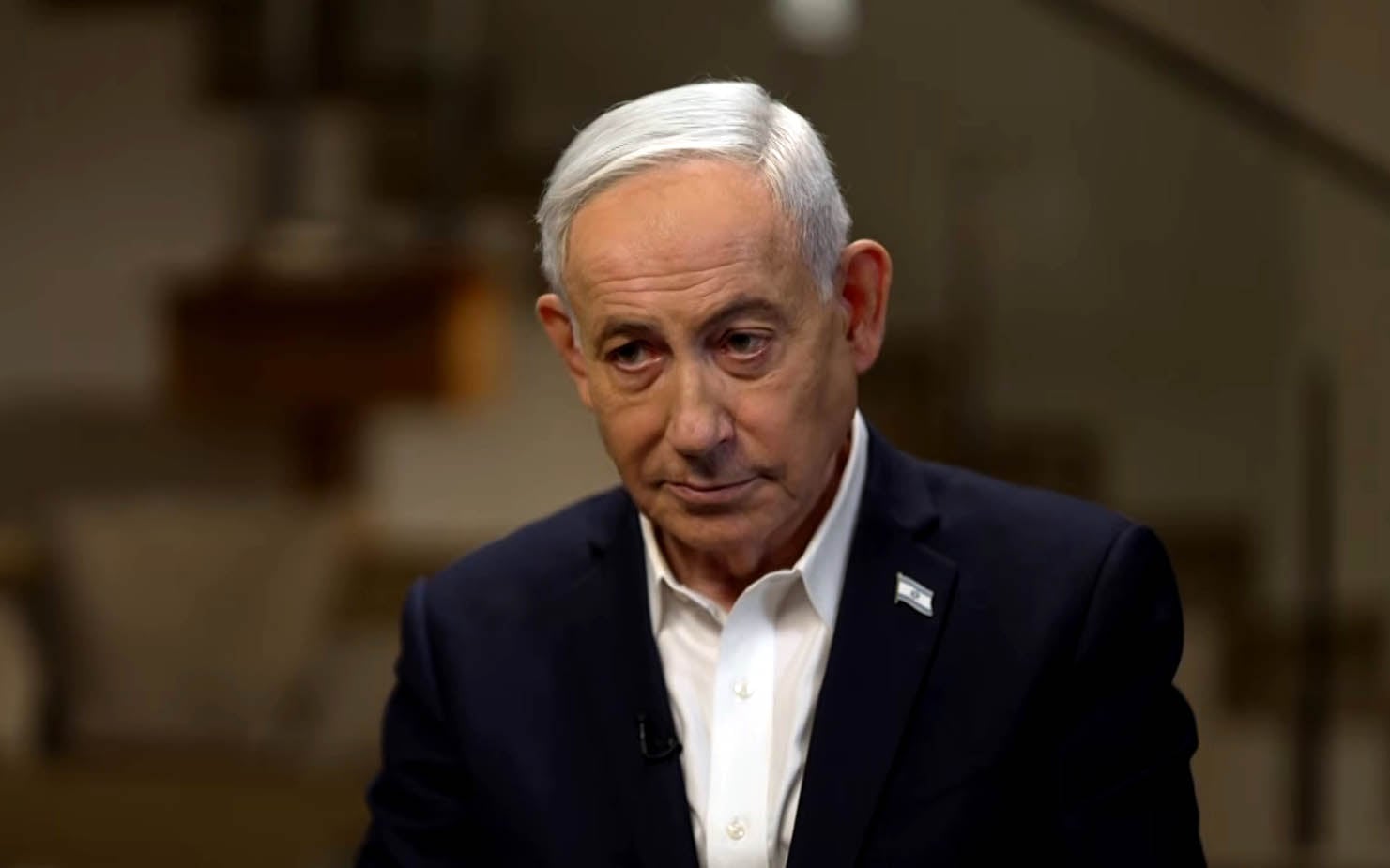
Prime Minister Benjamin Netanyahu speaks to CBS News’ ’60 Minutes’ in an intrerview aired May 10, 2026. (Screenshot/60 Minutes)
The meeting — for which Netanyahu’s testimony in his corruption trial was cut short — came the day after Trump deemed Iran’s response to an American ceasefire proposal “unacceptable,” and after the premier himself told “60 Minutes” that the war was “not over,” citing Iran’s remaining stockpile of highly enriched uranium.
It also came ahead of direct Israel-Lebanon talks in Washington later this week, and amid a continued US blockade on Iranian ports and Iran’s closure of the Strait of Hormuz.
Iran’s Foreign Ministry Spokesman Esmaeil Baghaei, in a press conference Monday, pronounced the US “the greatest threat to international peace and security.”
“The very presence of the United States in the region, the US military bases in the region,” said Baghaei, “are an example of creating a cycle of violence and bullying in the region.”
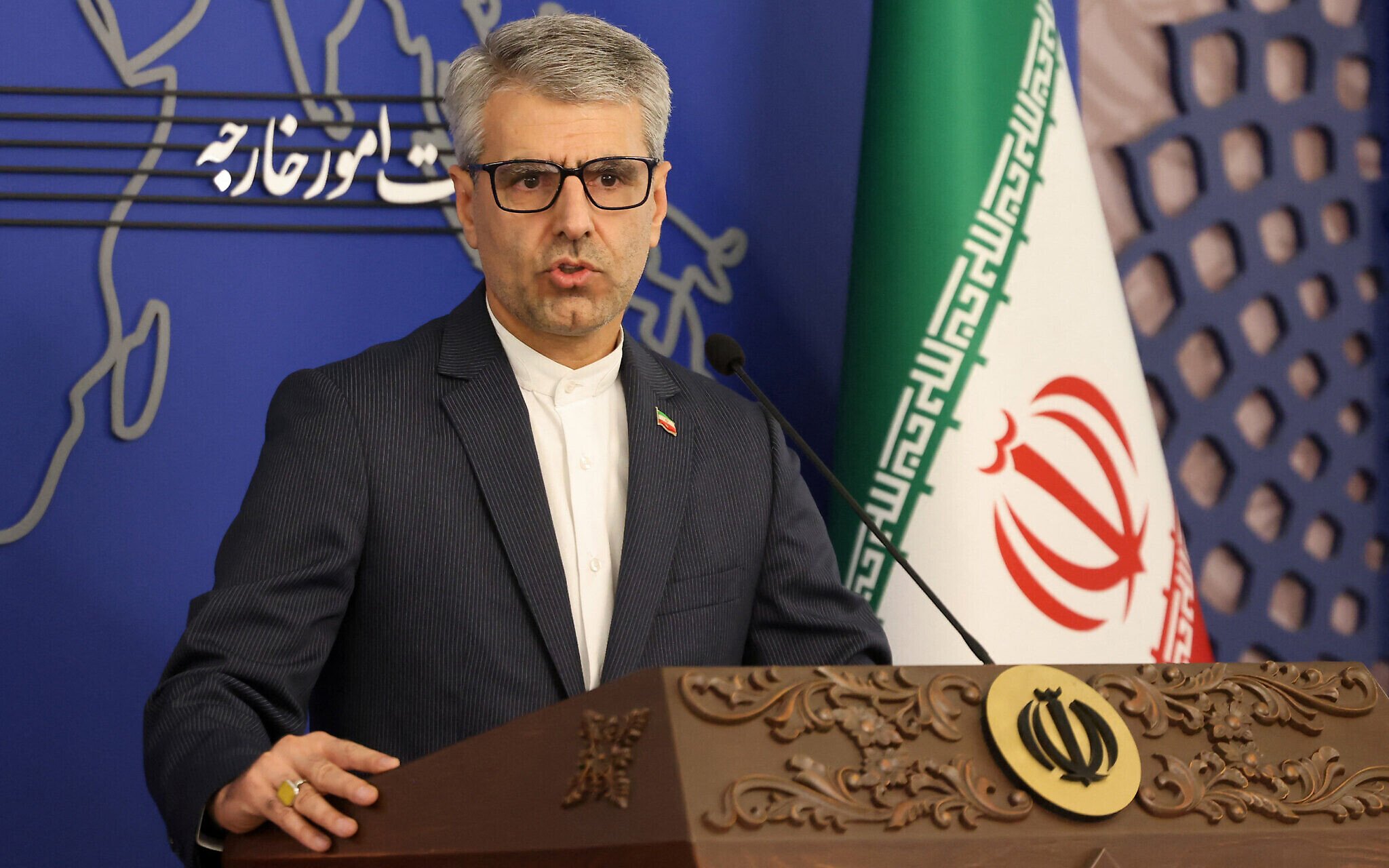
Iran’s foreign ministry spokesman Esmaeil Baghaei holds a weekly press conference in Tehran on October 28, 2024. (ATTA KENARE / AFP)
Contrasting what he called Iran’s “generous and responsible offer” to Washington’s “unreasonable demands,” Baghaei listed Tehran’s demands as “an end to the war, lifting the [US] blockade and piracy, and releasing Iranian assets that have been unjustly frozen in banks.”
The demands also included “safe passage through the Strait of Hormuz, and establishing security in the region and Lebanon.”
The US has been blockading Iran’s ports as Iran has blocked the Strait of Hormuz. Iran has demanded a ceasefire in Lebanon as part of the talks as well; while there is technically a truce in place there, it has largely unraveled.
“Iran has shown that it is a responsible power in the region, and at the same time, we are not bullying,” Baghaei said. “We are against bullying.”
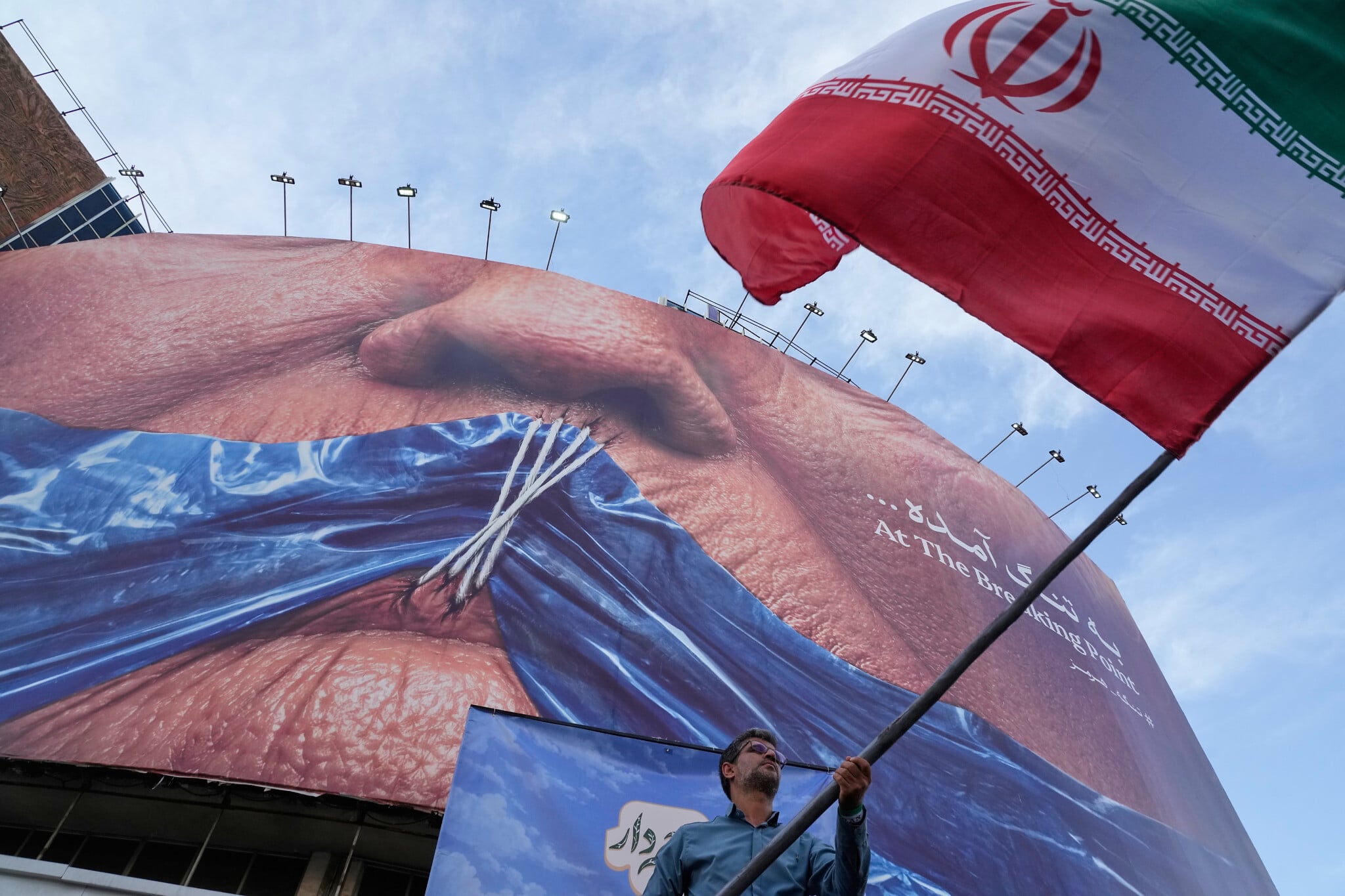
A man waves an Iranian flag for a pro-government campaign under a billboard with graphic showing Strait of Hormuz and sewn lips of US President Donald Trump in a square in downtown Tehran, Iran, on May 6, 2026. (AP Photo/Vahid Salemi)
Baghaei called on European countries not to send warships to the Strait of Hormuz, saying: “They should refrain from any move that would undermine their interests.”
“This war is not only unethical but also illegal. The US and Israel started their aggression against Iran. European countries shouldn’t be fooled,” he said.
Hours after Baghaei’s warning, however, the United Kingdom and France announced they will host a multinational meeting on Tuesday of more than 40 defense ministers, on military plans to restore trade flows through the strait.
France has already sent its nuclear-powered aircraft carrier, the Charles de Gaulle, to the region, and the UK on Saturday said it was sending a destroyer, HMS Dragon.
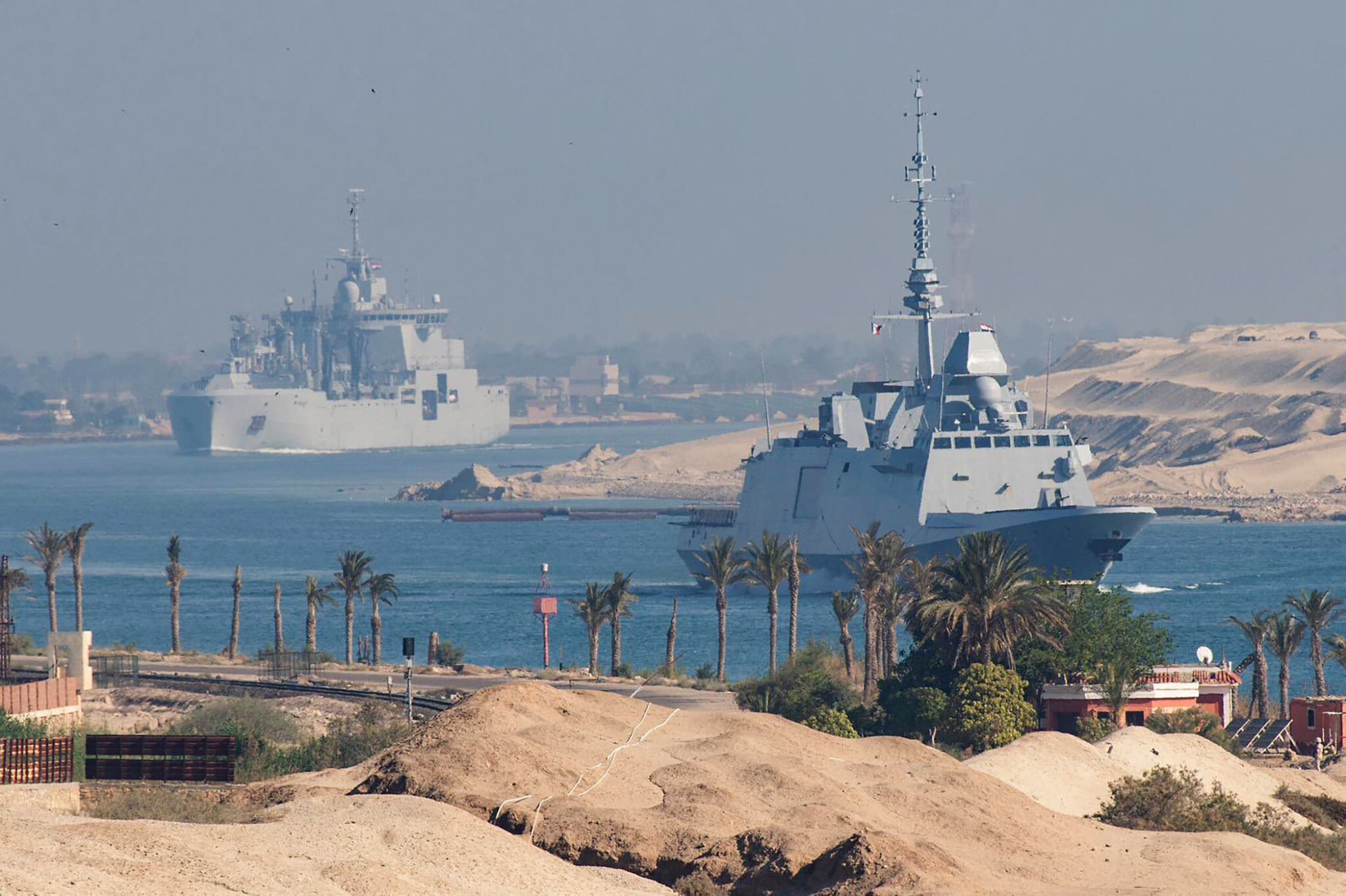
A handout picture released by the Marine Nationale (French Navy) on May 6, 2026 shows the French Navy’s Carrier Strike Group that includes the flagship aircraft carrier Charles de Gaulle (unseen) and its escort transiting the Suez Canal en route to the southern Red Sea to pre-position for a possible mission to restore navigation in the Strait of Hormuz. (Handout/Marine Nationale (French Navy)/AFP)
The virtual meeting follows a two-day gathering in London in April of military planners who thrashed out the practicalities of a multinational mission led by the UK and France to protect navigation in the key waterway following a sustainable ceasefire.
Before the US-Israel war on Iran started on February 28, about a fifth of the world’s oil was shipped through the strait.
But that has been throttled since the war as Iran largely closed the strait, throwing global markets into turmoil and driving up oil prices. The US later imposed its own blockade of Iranian ports in response.
Oil prices surged by $4 a barrel on Monday amid the deadlock, before slipping back slightly.
Large tanker crossed Strait of Hormuz – Iranian report
Iran’s Oil Minister Mohsen Paknejad acknowledged on state TV that the country’s oil industry has run into trouble as a result of the war and blockade, but said the country was taking countermeasures, without giving further details.
“During the 40 days of war, our production didn’t decrease and the export process was favorable,” Paknejad says. “Naturally, in the days following the (US) blockade, we have faced challenges but measures were taken and this process continues” adding that “the enemy is full of delusions.”
Agios Fanourios I, a Very Large Crude Carrier (VLCC) tanker loaded with Iraqi crude oil and bound to Vietnam, crossed the straight through Iran’s designated route on Sunday, Iran’s semi-official Tasnim news agency said, after it was reported that the ship crossed by switching off trackers to avoid Iranian attacks.
Agios Fanourios I, a VLCC tanker loaded with Iraqi crude and bound to Vietnam crossed the Strait of Hormuz through Iran’s designated route, Iran’s semi-official Tasnim news agency says, after it was reported it crossed by switching off trackers to avoid Iranian attacks.…
— Al Arabiya English (@AlArabiya_Eng) May 11, 2026
South Korea’s presidential Blue House, meanwhile, condemned an earlier attack against a cargo ship operated by a Korean shipper in the Strait, and said it plans to respond once the source of the attack is identified.
South Korean experts have conducted an initial forensics investigation of the damage to the left rear of the ship, a senior Blue House official told reporters. The attack had led to a fire in the vessel’s engine room.
Turkish FM to visit Qatar for talks on Iran war
Turkish Foreign Minister Hakan Fidan is expected to visit Qatar on Tuesday for talks on the Iran war, a Turkish diplomatic source told Reuters.
The discussions will focus on the war’s impact on the Gulf and efforts to ensure navigational safety in the Strait of Hormuz, according to the source.
Turkey, a NATO member bordering Iran, has been actively engaging the US, Iran, and mediator Pakistan since the war’s start, calling for an end to the fighting while condemning attacks on Iran as well as Iranian attacks on the Gulf.
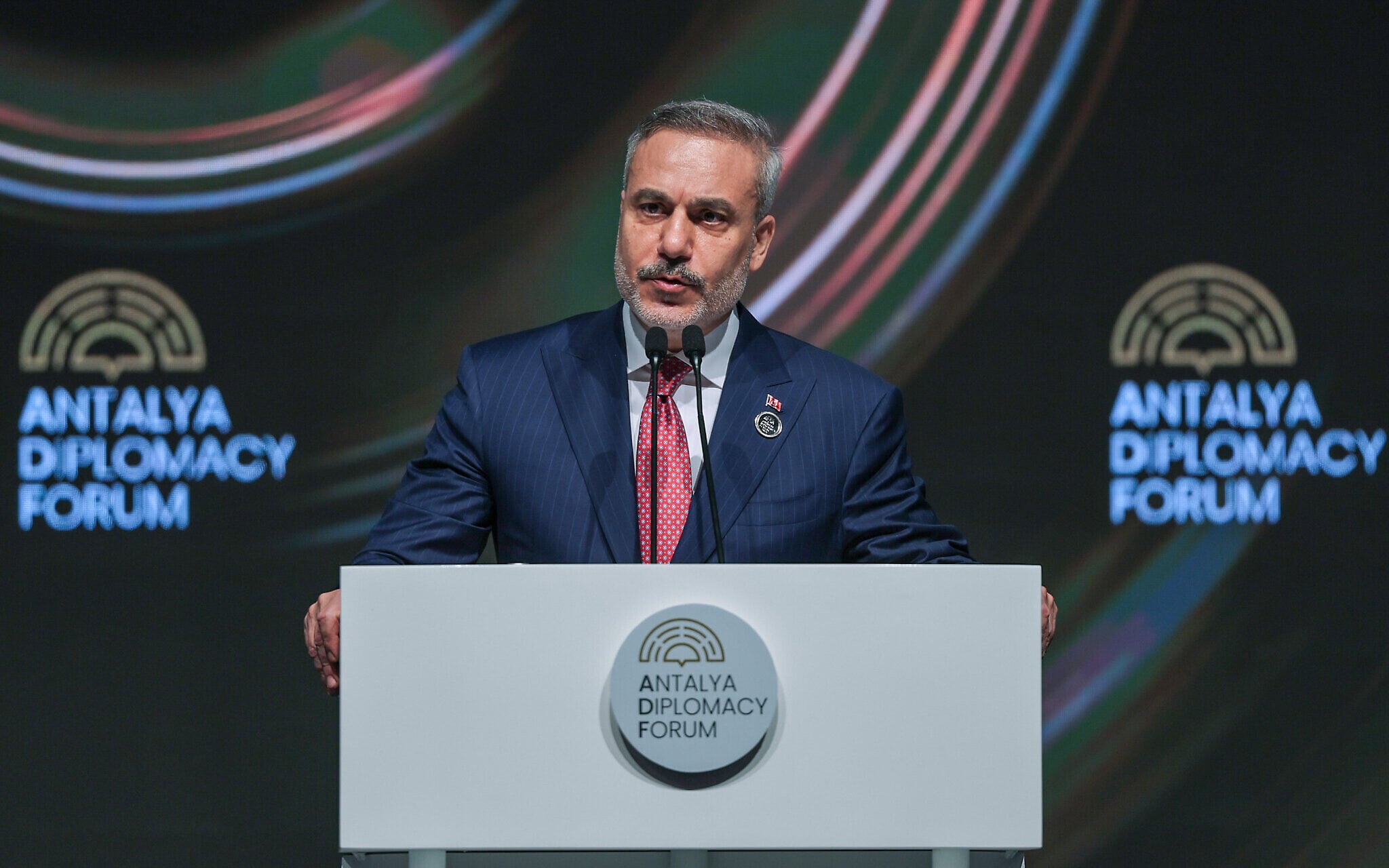
Turkey’s Foreign Minister Hakan Fidan speaks during the opening ceremony of the Antalya Diplomacy Forum, in Antalya, southern Turkey, April 17, 2026. (AP Photo/Riza Ozel)
The next diplomatic or military steps for the US remain unclear. Trump is expected to arrive in Beijing on Wednesday, where Iran is set to be among the topics discussed with Chinese President Xi Jinping.
Trump has been leaning on China to use its influence to push Tehran toward a deal with Washington.
Baghaei suggested China could instead use the visit to push back against US objectives in the Gulf. “Our Chinese friends know very well how to use these opportunities to warn about the consequences of the US’ illegal and bullying actions on regional peace and security,” he said.
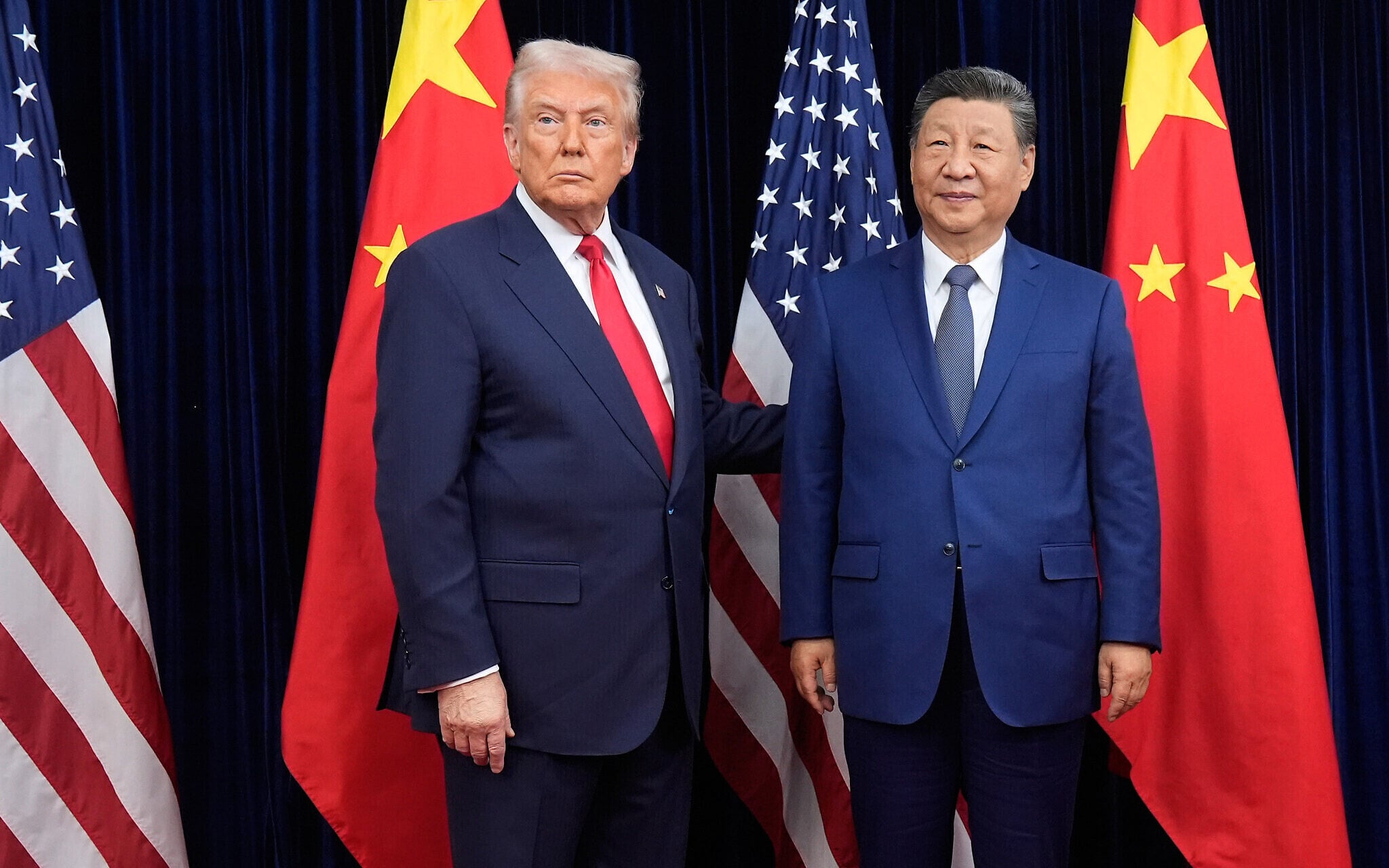
US President Donald Trump, left, and Chinese President Xi Jinping pose ahead of their summit talk at Gimhae International Airport in Busan, South Korea, October 30, 2025. (AP Photo/Mark Schiefelbein)
For its part, Beijing voiced strong opposition on Monday to US sanctions on three China-based companies that Washington has claimed enabled Iran’s military operations, with Beijing calling the curbs illegal and unilateral.
“We have always required Chinese enterprises to conduct business in accordance with laws and regulations, and will firmly safeguard the legitimate rights and interests of Chinese enterprises,” spokesperson Guo Jiakun told a regular press briefing.
“The pressing priority is to prevent by all means a relapse in fighting, rather than using the war to maliciously associate and smear other countries,” he said.
Times of Israel staff contributed to this report.