
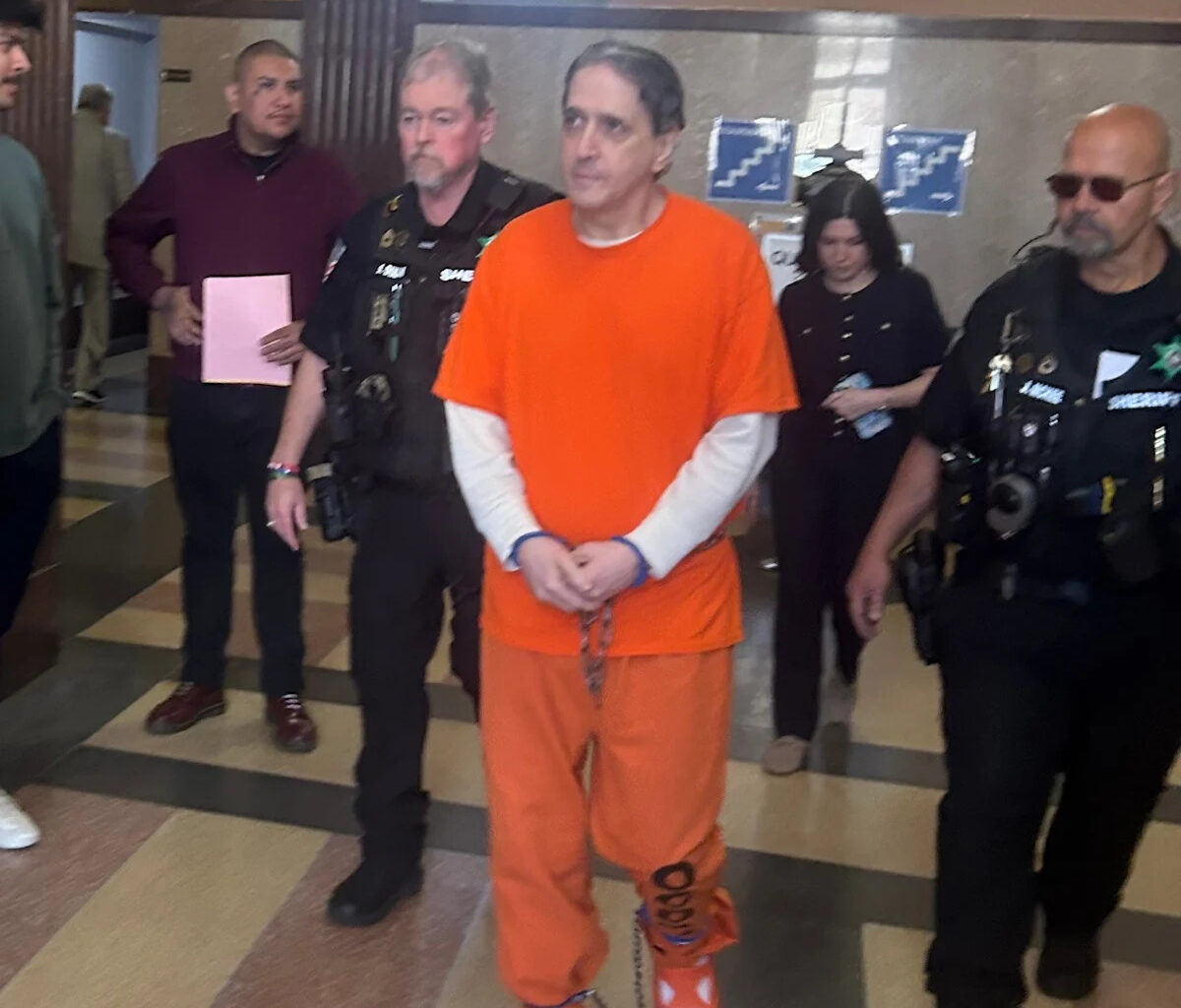
A judge has decided former death row inmate Richard Glossip can get out of jail on a $500,000 bond as he awaits his third trial in his 1997 murder-for-hire case.
Oklahoma County District Judge Natalie Mai set bail in a 13-page order filed Thursday, May 14.
“It is the bedrock principle of Oklahoma law that bail is not used as a form of punishment,” the judge wrote. “Rather, bail is simply the means to ensure that a defendant will appear to face the charges pending against him.”
Her decision was more than just a symbolic victory for Glossip who has come so close to execution that he’s had three last meals.
He is expected to be able to post bond because he has had support both nationally and internationally including from celebrities like Kim Kardashian. His financial status has not been disclosed but eight attorneys appeared on his behalf at a hearing in April.
Glossip has always maintained he is innocent of murder in the 1997 beating death of his boss at an Oklahoma City motel.
His lead attorney, Don Knight, said Glossip “now has the chance to taste freedom while his defense team continues to pursue justice on his behalf.”
The attorney said the judge in setting bail “rejected the State’s claim that there is a strong case for guilt.”
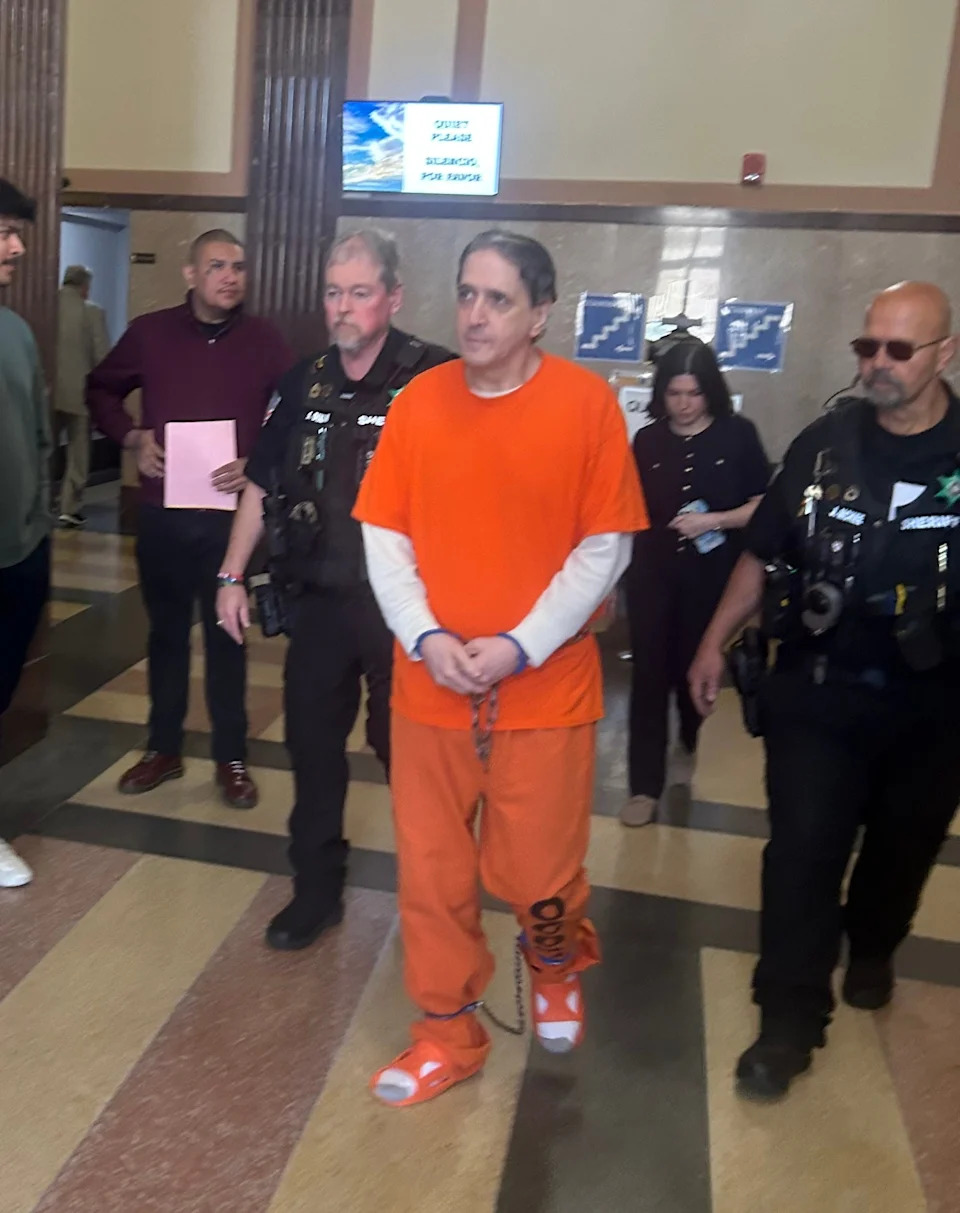
Murder defendant Richard Glossip is escorted from a hearing in Oklahoma County District Court on May 13. Behind him is his wife, Lea Glossip
If released, Glossip will be out of custody for the first time since January 1997. Much of his time locked up has been at the Oklahoma State Penitentiary in McAlester. He has been held in the Oklahoma County jail for more than a year.
It was unclear Tuesday how soon his bond could be posted.
His attorneys had asked for a fair bond and said he will live in Oklahoma County with his wife, Lea Glossip. Prosecutors with the attorney general’s office had asked the judge to deny bond.
Glossip and his wife wed on March 29, 2022, while he was confined at the Oklahoma State Penitentiary.
The judge ordered Glossip to reside only at the marital home, wear an ankle monitor, observe a nightly curfew and not travel outside the state.
She also ordered him to not to use any alcohol, illegal drugs or marijuana.
Historically, Oklahoma County judges almost never let a defendant out of jail while awaiting trial in a murder case.
Mai wrote that that in granting bail she was following a clear mandate in the Oklahoma Constitution and a 1998 Oklahoma Court of Criminal Appeals decision.
She wrote she could only deny Glossip bail if there was clear and convincing evidence that “proof of guilt is evident, or the presumption thereof is great.” She pointed in her order to issues with the key witness against Glossip.
Prosecutors said they remain focused on retrying the case.
“Ultimately, the question of the defendant’s guilt or innocence will be decided by a jury of Oklahoma citizens − not a judge,” the AG’s press secretary, Leslie Berger, said.
For years, Glossip was the state’s highest-profile death row inmate because of the celebrity support for his innocence claim, his close calls and a 2017 documentary about his case.
Last year, the U.S. Supreme Court reversed his 2004 murder conviction on prosecutorial misconduct grounds.
In an unusual move, Attorney General Gentner Drummond joined Glossip’s attorneys in asking the high court for that relief.
In June, Drummond said Glossip will be prosecuted again for murder. However, he said the death penalty will no longer be sought.
In July, his original judge for the third trial denied Glossip bond.
A month later, District Judge Heather Coyle stepped down from the case after defense attorneys raised concerns about her. Mai took over the case in December after five other Oklahoma County district judges also recused.
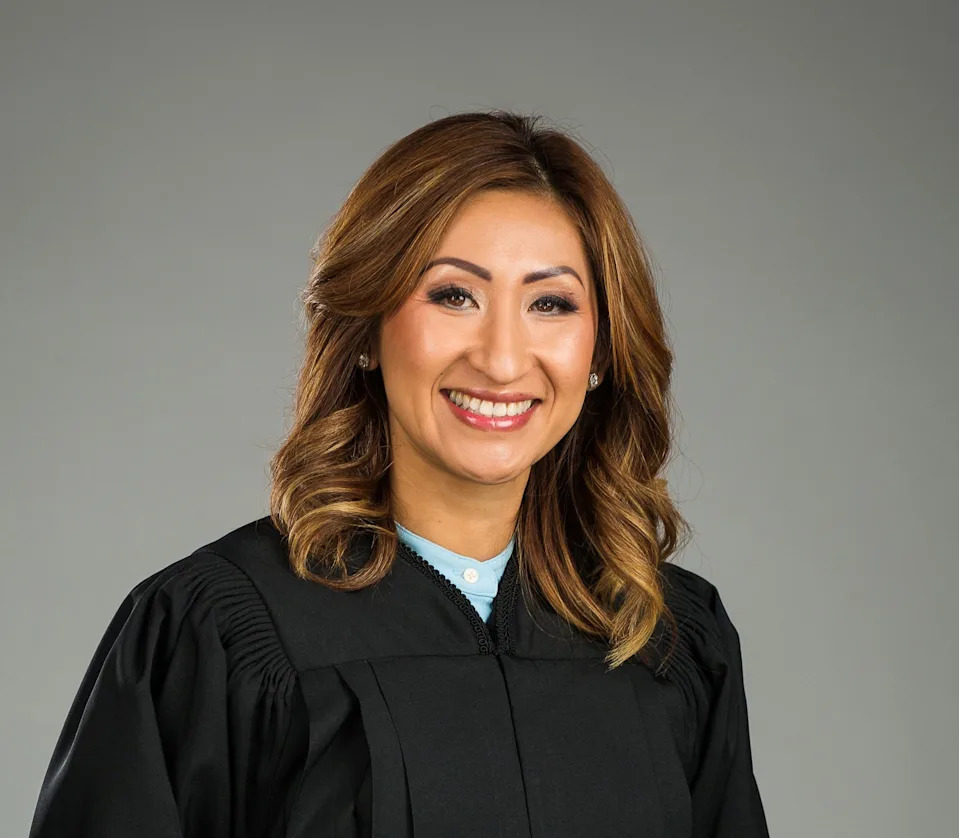
Oklahoma County District Judge Natalie Mai
In April, Mai rejected Glossip’s request to enforce a “plea deal” that might have resulted in his release.
Drrummond in 2023 had discussions with Knight about a deal. The AG claimed the deal was never finalized and is now off.
The judge agreed the deal was not complete, in part because the murder victim’s family had not been consulted about it.
Had the deal gone through, Glossip would have been sentenced to 45 years in prison after pleading guilty to accessory after the fact to first-degree murder. His attorneys believed he would have been released immediately under credits for time served.
The background of Richard Glossip’s case
Glossip is accused of having his boss, Barry Van Treese, an Oklahoma City motel owner, killed in 1997 to keep from being fired for embezzlement. Glossip was the motel manager.
Van Treese was found beaten to death in Room 102 of the Best Budget Inn on Jan. 7, 1997. The victim was 54 and lived in Lawton.
Justin Sneed, a motel maintenance man, confessed to killing Van Treese with a baseball bat in the motel room. He said Glossip pressured him into doing it and offered him $10,000 as payment. Sneed was the key witness against Glossip at the first two trials and is expected to testify again at the third trial.
Glossip’s attorneys claim Sneed actually killed the motel owner during a botched robbery for drug money. They claim he incriminated Glossip to avoid getting the death penalty himself and later considered recanting his testimony.
Glossip was convicted and sentenced to death the first time in 1998. The Oklahoma Court of Criminal Appeals threw out that conviction in 2001 because of issues with his defense attorney. He was convicted and sentenced to death the second time at a 2004 retrial.
Judge Mai noted in her order that the Court of Criminal Appeals in 2001 described the evidence at the first trial corroborating Sneed’s testimony as “extremely weak.”
She noted the Court of Criminal Appeals was closely divided about the corroborating evidence in a 2007 opinion upholding his second conviction.
She also noted that the U.S. Supreme Court determined last year that Sneed gave false testimony about why he was prescribed lithium after his arrest and that prosecutors did not correct it.
She wrote that the Supreme Court found that “had the prosecution corrected Sneed on the stand, his credibility plainly would have suffered.”
Finally, she pointed out that Drummond himself told the Oklahoma Pardon and Parole Board in a 2023 letter that “the record … does not support that he is guilty of first degree murder beyond a reasonable doubt.”
Glossip came the closest to being executed on Sept. 30, 2015. He was three hours away from execution when a doctor realized a pharmacist had supplied the wrong drug for the lethal injection. The execution ended up being called off.
The mistake contributed to a hiatus in executions in Oklahoma that lasted years.
Near the end of her order, Mai wrote, “The Court hopes that a new trial, free of error, will provide all interested parties, and the citizens of Oklahoma, the closure they deserve.”
This is a developing story.
This article originally appeared on Oklahoman: Judge sets $500K bond for Richard Glossip former OK death row inmate