
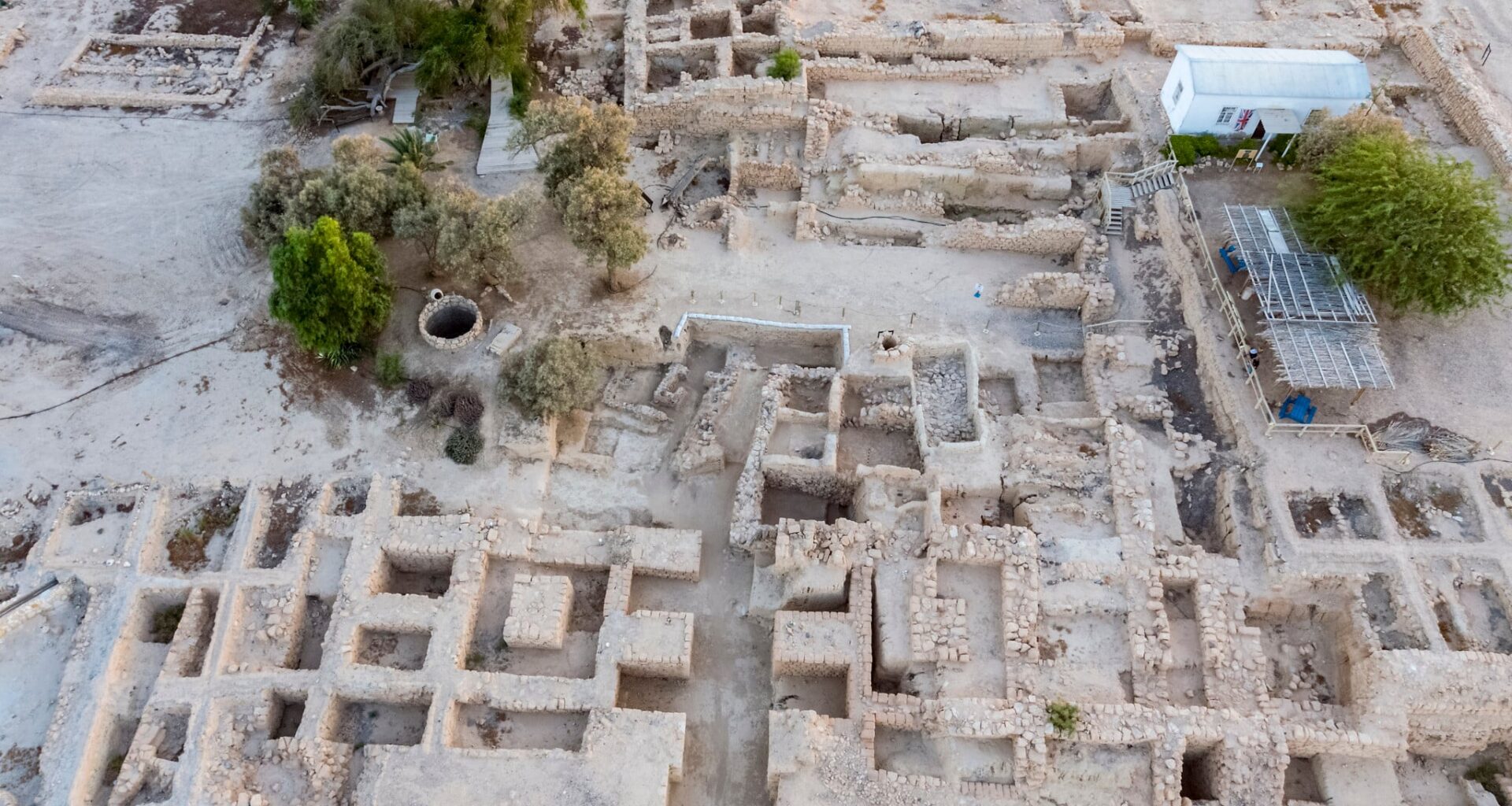
Biblical history is being rewritten thanks to recent radiocarbon dating of a few grains of cereal.
New research from the Israel Antiquities Authority (IAA) uses C14 dating of preserved organic samples taken from one of two ancient fortresses in the Arava in southern Israel. The findings suggest they were built by the biblical kingdom of Israel almost 2,800 years ago, and not by the Assyrian empire decades later.
The study, which was published in the peer-reviewed journal Levant last month, sheds new light on how Israel controlled international trade with Arabia and its hegemony over the region, as echoed in the biblical text, according to the lead author of the study, Dr. Doron Ben-Ami, a senior researcher at the IAA.
“This is the beauty of archaeology,” Ben-Ami told The Times of Israel in a phone interview. “For years, you are captivated by a certain hypothesis, even though you do not have the smoking gun, and you try to fit everything in, and then you actually find out you were proceeding in the dark, thanks to a bunch of cereal seeds.”
The study focuses on the fortresses at Ein Hatzeva, south of the Dead Sea, and at Tell el-Kheleifeh, in modern-day Jordan, just kilometers from the Israeli border and the city of Eilat.
Get The Times of Israel’s Daily Edition
by email and never miss our top stories
By signing up, you agree to the terms
They are both located on ancient routes associated with the very profitable trade between the Levant and Saudi Arabia. According to Ben-Ami, this kind of structure both played a symbolic role, showing who controlled trade, and served to protect merchants and travelers and provide services to them.
“[Hatzeva] is an enormous fortress, the largest in the southern Levant, but, for many years, it was neglected,” the scholar said.
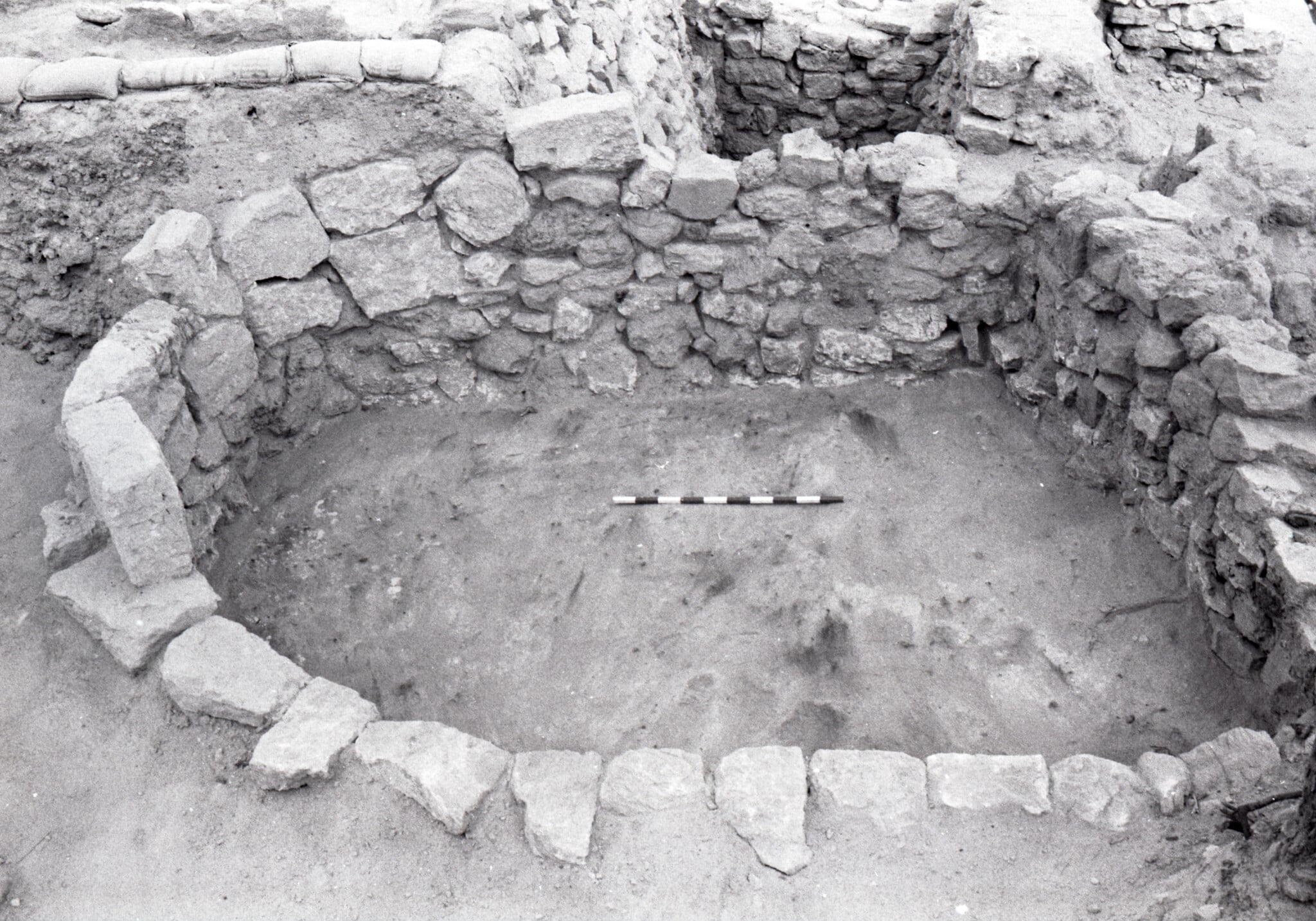
The granary in the fortress of Ein Hatzeva, south of the Dead Sea, in an undated picture. A new study based on seeds found in the granary published in the journal Levant on April 27, 2026, suggests that the ancient fortress was built by the biblical kingdom of Israel in the first half of the 8th century BCE. (Mandre Sandhu/Israel Antiquities Authority)
The site was excavated by IAA archaeologists in the 1990s, but the results were never published, and Ben-Ami has been working to do so for several years.
With no systematic data or information to rely upon, the consensus among scholars was that the fortress, built over a perfect square measuring 100 meters (328 feet) per side, was erected at some point in the late Iron Age, the scholar explained, referring to the period between 1200 and 586 BCE.
In light of the striking architectural similarities, experts have always believed there was a clear association between Hatzeva and Kheleifeh.

Dr. Doron Ben-Ami, senior researcher at the Israel Antiquities Authority. (Courtesy)
“All scholars dealing with these [fortresses], including myself, are of the opinion that there was one architect behind the two, and they were constructed at the same time,” Ben-Ami said.
According to the study, the similarities include the squared layout, corner towers with the four corners oriented towards the cardinal points, a wide open area inside the fortress, and a four-chambered gate.
Some of the architectural elements featured by the fortresses were strongly associated with the Assyrians.
“[The fortresses] were built on a massive foundation field that created a high artificial platform, and had retaining walls surrounding the fortifications,” Ben-Ami said. “These elements are considered an indicator of Assyrian architecture.”
According to the scholar, the information from Kheleifeh was also not published in the most comprehensive manner (the site was first excavated in the 1930s).
“The data from that was published did not allow for clear-cut chronological conclusions,” Ben-Ami explained. “Still, according to the well-accepted hypothesis, Kheleifeh was considered one of the fortresses established by the Assyrians.”
The Assyrians became the regional power after conquering and destroying the kingdom of Israel, beginning in 732 BCE.
Seeding information
During his work reviewing and publishing the results of the Hatzeva excavations, Ben-Ami sent some seeds from the fortress granary to the D-REAMS Radiocarbon Dating Laboratory at the Weizmann Institute of Science in Rehovot.

Elisabetta Boaretto, head of the Weizmann Institute of Science’s D-REAMS Radiocarbon Dating Laboratory. (courtesy)
Archaeologists use different methods to date sites, including stratigraphy, historical sources, and material culture, which entails elements such as architectural style and artifacts. Scientific methods, such as radiocarbon analysis, provide independent dating to compare with the more traditional methods.
When he received the C14 results, Ben-Ami was extremely surprised, as they showed that the fortress could not have been erected by the Assyrian empire.
“Just to be on the safer side, we sent more samples to the lab,” Ben-Ami said.
According to D-REAMS lab head Prof. Elisabetta Boaretto, a co-author of the study, analyzing the samples from the same area twice allowed for both a confirmation of the dating and for a more precise window of time (radiocarbon analysis does not pinpoint a specific year, but a window of time that can span a few years, decades, or even more than a century).
“In this case, [the dating] covers the years between 791 and 772 BCE,” Boaretto told The Times of Israel.
An Israelite story
Ben-Ami said that when the dating was confirmed, it was time to rethink how to interpret the site.
“If archeological remains could speak, they were now shouting that the establishment of the fortress had nothing to do with the Assyrians,” he noted. “We needed to find a different story.”
Ben-Ami explained that in the first half of the eighth century, there was only one viable entity that could have been responsible for erecting such a monumental building.
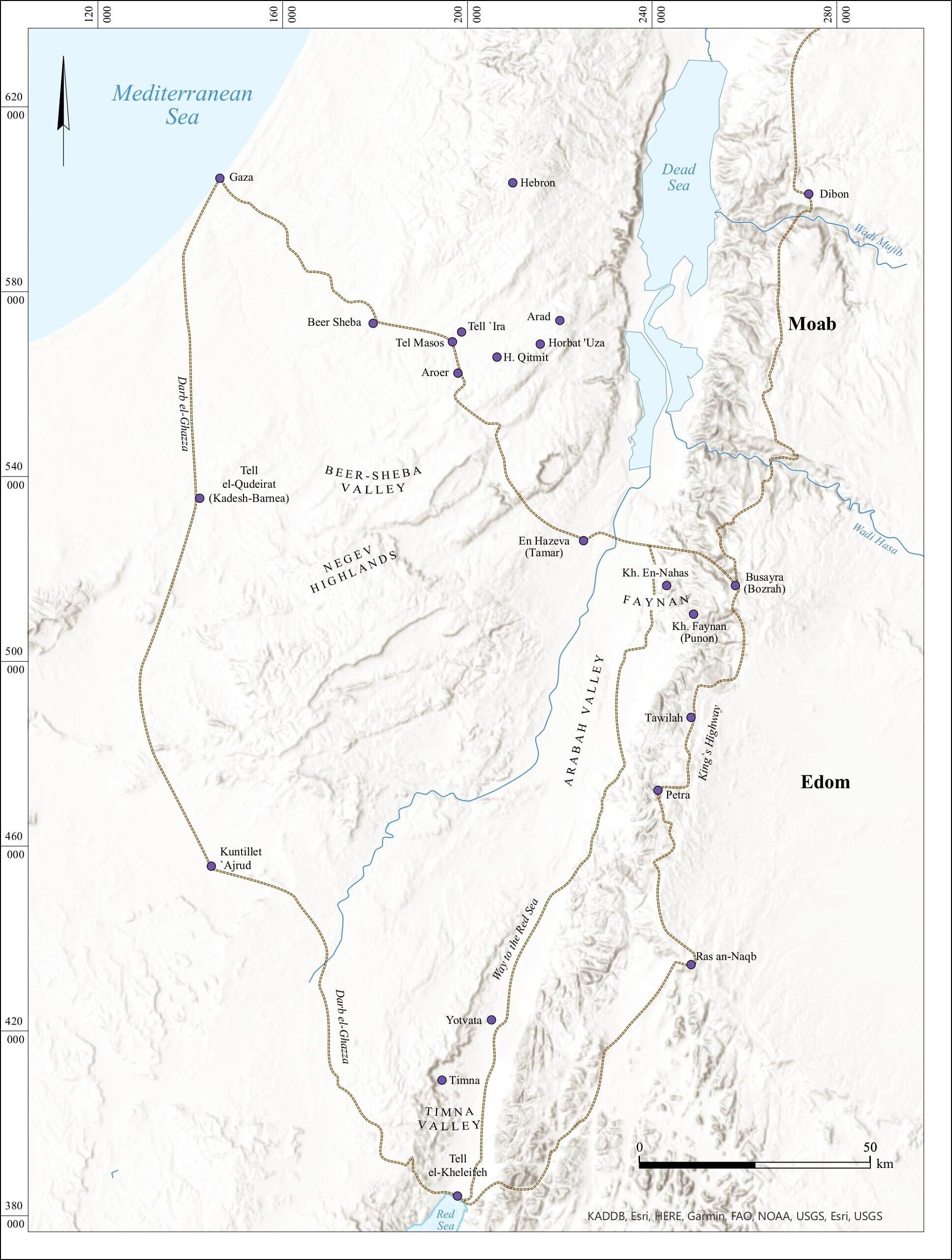
A map of the Arava Valley, showing the location of the Ein Hatzeva and Tell el-Kheleifeh archaeological sites. A new study published in the journal Levant on April 27, 2026, suggests that the ancient fortresses at the sites were built by the biblical kingdom of Israel in the first half of the 8th century BCE and not by the Assyrian Empire as previously thought. (E. Delerson/Courtesy of the Israel Antiquities Authority)
“The only candidate in terms of political strength during this time period was the Kingdom of Israel, even though it is located up north, considering the other two political entities in the southern part of the region, the Kingdoms of Judah and Edom,” he said.
“Why Israel? Because most scholars are of the opinion that during this time period, Israel regained hegemony over the region, as documented also in the biblical narrative and based on archaeological evidence,” he said.
Scholars were already familiar with Israel’s interest in South Arabian trade because of another site, known as Kuntillet Ajrud, located in the Sinai, which was clearly associated with the Israelites. At the same time, it was difficult to understand why the kingdom would have built a fortress in a place that appeared so isolated and disconnected from its territory.
“Our research fills in some of the void in the historical and geographical setting of this time period,” Ben-Ami said. “The Kingdom of Israel dominated the two [directions] out of the Arava Valley with these two fortresses, Hatzeva in the northern part and Kheleifeh in the southern part.”
The scholar explained that traders from Saudi Arabia had to stop at Kheleifeh and then could take one of two routes leading north: the eastern one, along the Jordan Valley, that reached Hatzeva, and the western one that went through Kuntillet.
After receiving the C14 dates, the authors of the paper re-evaluated the buildings’ architectural style, highlighting how many of the elements were compatible with the Israelite architecture of the period.
“When you dig deeper into the history of these elements, they were already well known in the Kingdom of Israel in the ninth century BCE under the Omride dynasty,” Ben-Ami said, adding that these features were not known in Judah or Edom.
“It is now crystal clear that the Kingdom of Israel was present and involved along the southern border of Judah, as it is echoed also in various biblical verses,” Ben-Ami said.
Shedding light on a biblical enigma
The second book of Kings hints that under Jeroboam II, Israel’s borders reached the Arava.
“King Jeroboam, son of Joash of Israel, became king in Samaria — for 41 years,” reads the passage (14:23, 25; translation by JPS). “It was he who restored the territory of Israel from Lebo-hamath to the sea of the Arabah.”
Ben-Ami stressed that the mission of archaeology is not to try to fit the biblical narrative, but, in this case, their new research can help shed light on a period (Jeroboam’s kingdom) that the Bible itself covers very briefly.
In previous decades, Judah had waged war and defeated the Edomites, but when a war broke out between Judah and Israel, then ruled by Jeroboam’s father, Joash, the former was defeated by the latter, becoming a sort of vassal kingdom, as recounted in II Chronicles 25.
“Everyone wanted to put their hands on the South Arabian trade,” Ben-Ami said. “Judah was winning, but eventually it was defeated. This is well known and accepted. However, for unknown reasons, the Bible says almost nothing about the relationship between Israel and Judah at the time of Jeroboam. This is exactly where our archeological research fits in in terms of chronology.”
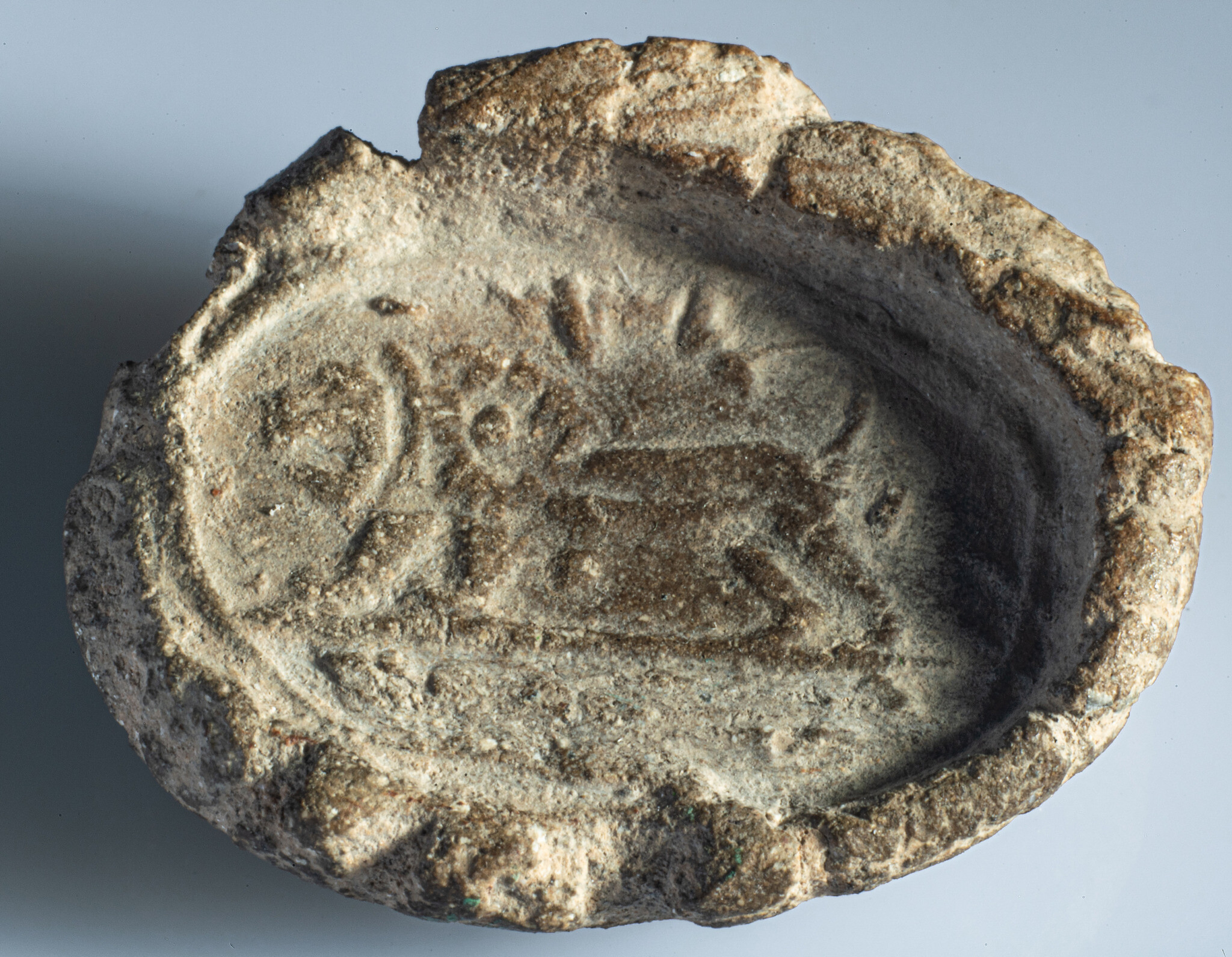
2,700-year-old clay sealing from a stamp from the Israelite King Jeroboam II in the 8th century BCE. (Dani Machlis/ Ben Gurion University)
Ben-Ami also stressed that while the new dating sheds light on when the fortresses were built, the structures continued to be used throughout the Iron Age.
“I would say that the material culture that is known to us from these fortresses belongs to their later days, under the dominion of the Assyrians, and they show clear traits of Edomite and sometimes also Judean material culture,” he said.
The interpretation of Ben-Ami and his colleagues was supported by Prof. Israel Finkelstein, who was not involved in the study but, in the past, conducted research on the fortresses, especially Kheleifeh. (His work is quoted in the newly published paper.)
“This is a very interesting study, which significantly advances the study of the south in particular and the history of ancient Israel (including biblical exegesis) in general,” Finkelstein, head of the School of Archaeology and Maritime Cultures at the University of Haifa, told The Times of Israel in an email.
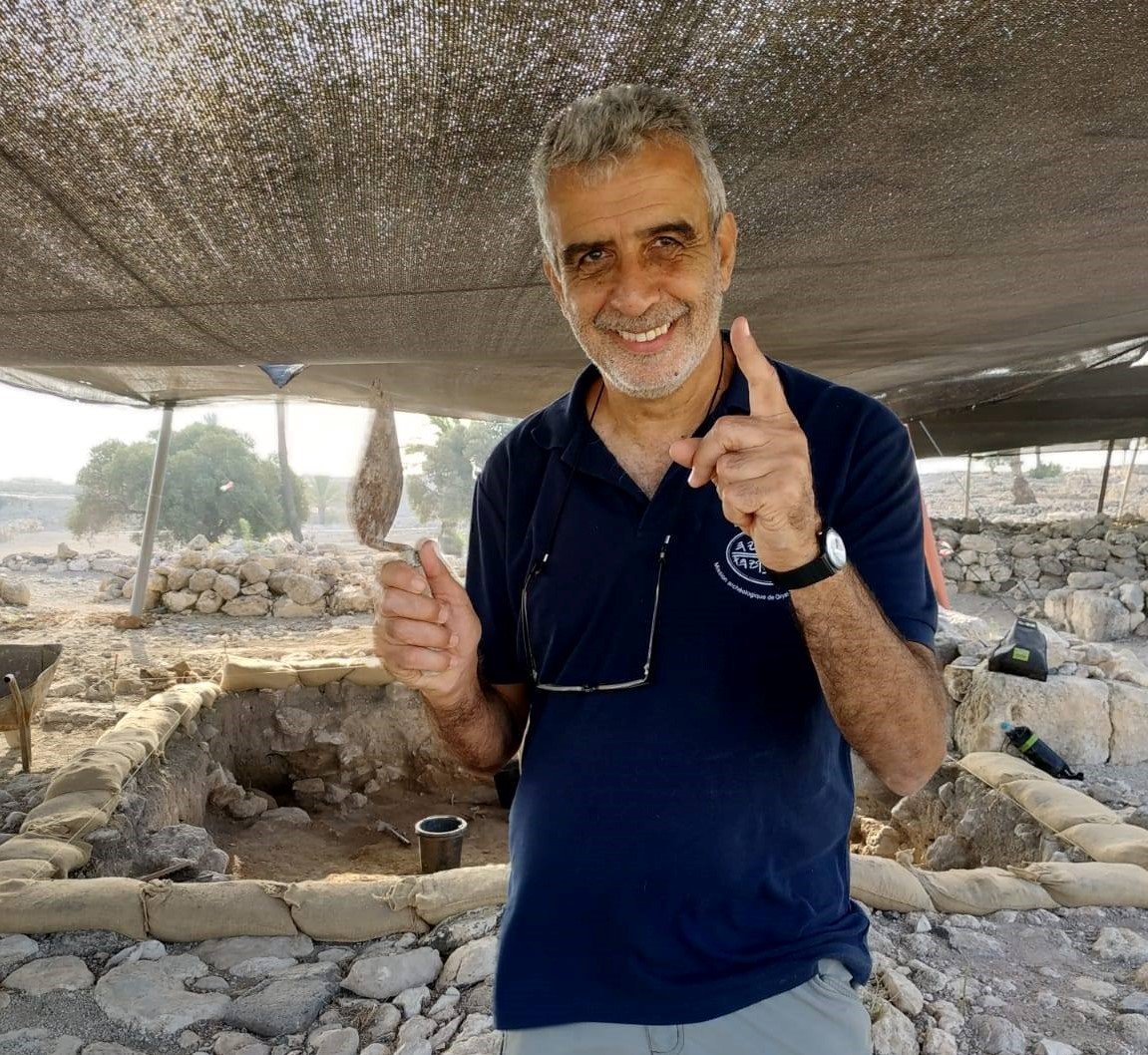
Prof. Israel Finkelstein, head of the School of Archaeology and Maritime Cultures at the University of Haifa and director of the Megiddo Expedition. (Courtesy: The Megiddo Expedition)
Finkelstein believes that two structures can be identified in Kheleifeh.
“Two stages can be observed at Tell el-Kheleifeh: an early casemate fort, which dates to the early eighth century BCE and should be associated with the Northern Kingdom in the days of Jeroboam II; and a later, larger fortress, which was built by Assyrians in the late eighth century,” he explained.
The only point of disagreement, according to Finkelstein, is that the paper’s authors believe the larger addition is also attributable to Israel. But he thinks that the general picture described in the study is accurate and fits his own interpretation.
“In the early eighth century, the Northern Kingdom dominated the trade routes in the south, possibly with the help of Judah as a vassal,” he said.