
 Close
Close
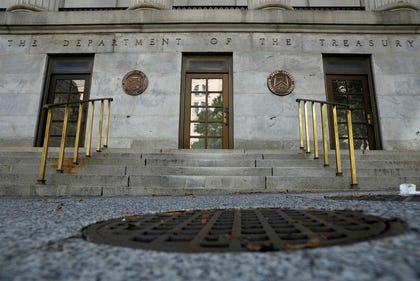
Signage is seen at the United States Department of the Treasury headquarters in Washington, D.C., U.S., 2020. Credit: Andrew Kelly/Reuters
Signage is seen at the United States Department of the Treasury headquarters in Washington, D.C., U.S., 2020. Credit: Andrew Kelly/Reuters
Sanctions on Russian oil are set to return after the United States allowed a waiver that eased restrictions on Russian oil to lapse, amid rising energy prices caused by the Iran war.
In April, the U.S. Treasury issued a waiver authorizing the delivery and sale of Russian-origin crude oil and petroleum products loaded onto vessels as of April 17. The waiver was set to expire on Saturday. As of late on Saturday, no amended orders appeared on the agency’s website.
Russia’s oil sector has been targeted by U.S. sanctions for years. With the April exemption, Washington sought to calm global energy markets. The U.S. had already granted such a waiver in mid-March, which expired on April 11.
Critics said the measure strengthened Russia financially. The Kremlin uses revenue from the oil industry to finance its war against Ukraine.
Democratic senators Jeanne Shaheen and Elizabeth Warren on Friday called on the Trump administration not to extend the waiver.
“Treasury must finally end its ill-conceived policy of helping Russia make even more money from President [Donald] Trump’s reckless war in Iran,” they said in a joint statement.
The senators also said there was no sign that the measure was reducing costs for US families, pointing to petrol prices in the country.
Petrol prices in the U.S. have risen significantly since the start of the Iran war. On Saturday, Americans paid an average of $4.52 per gallon (3.785 litres), according to a breakdown by the automobile association AAA.
At the start of the war launched by the U.S. and Israel in late February, the average price was $2.98 per gallon.