
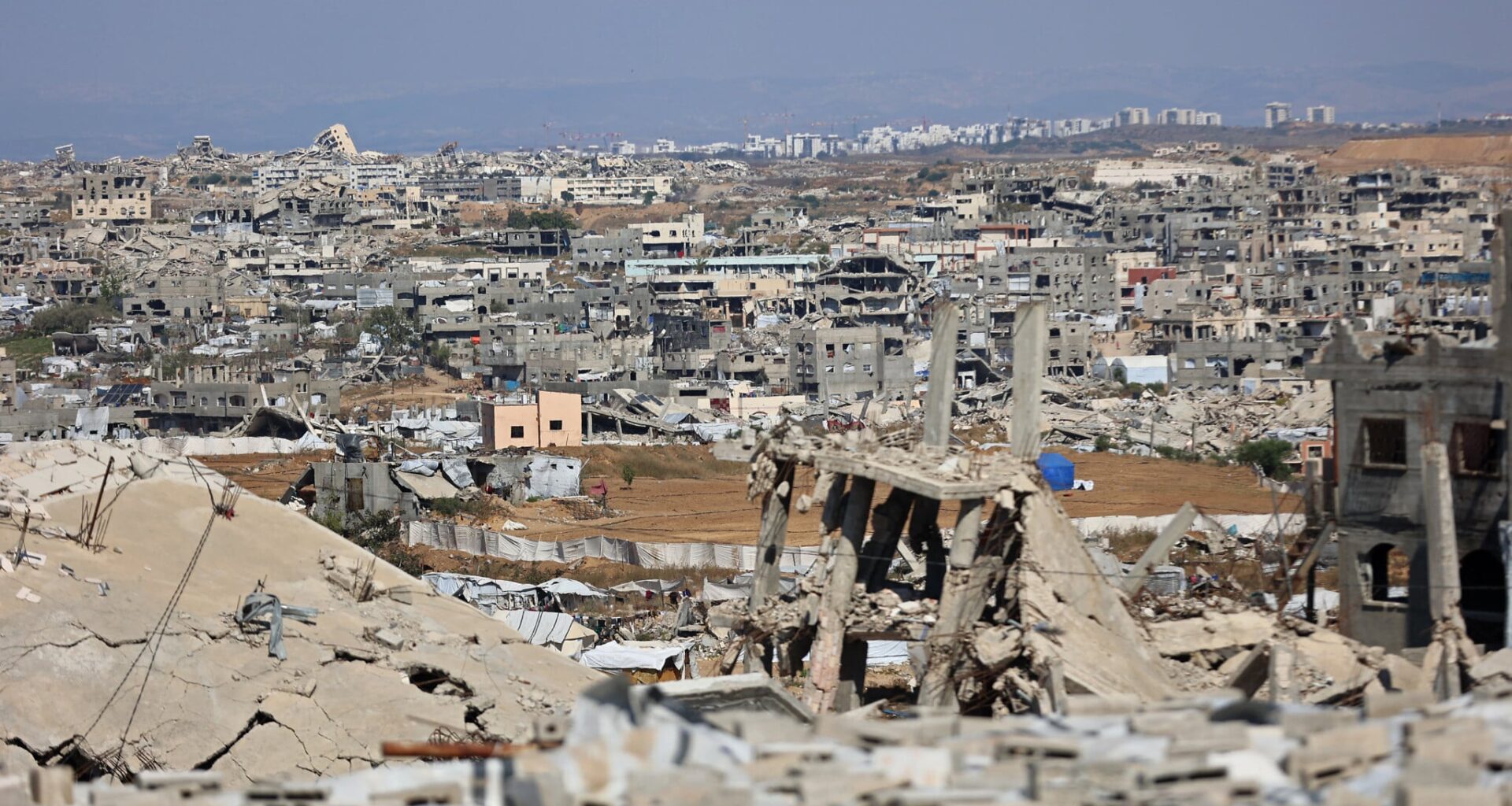
Israel has been expanding the territory it controls in the Gaza Strip during the ceasefire, Prime Minister Benjamin Netanyahu acknowledged Sunday, pushing past the lines that were agreed upon in the US-brokered ceasefire that took effect last October.
At the start of the truce, the Israel Defense Forces controlled around 53 percent of the war-torn Palestinian enclave, with Hamas controlling the other 47%, in which nearly all of the Strip’s two million residents live. The army established the “Yellow Line,” demarcating the part of Gaza occupied by Israeli troops, and has been regularly firing at those who approach the line and are deemed a threat.
“In Gaza now, we already control not 50%, but 60%,” Netanyahu said at the weekly cabinet meeting in Jerusalem, confirming reports that Israel has taken more territory despite the ceasefire still being in effect.
Maps issued quietly by Israel in March showed a new restricted area beyond the 53%. The area, marked on the maps with an orange line, makes up an estimated 11% of Gaza’s territory beyond the Yellow Line. The areas cordon off nearly two-thirds of Gaza’s territory in total.
The military sent the maps to aid groups in Gaza in mid-March, saying the area between the orange line and the yellow line is a restricted zone to enable aid delivery, and that aid groups must coordinate their movements with the military. It says civilians are not affected.
Get The Times of Israel’s Daily Edition
by email and never miss our top stories
By signing up, you agree to the terms
The expanded zone has stirred fears from displaced Palestinians living there that they could be deemed targets by Israel. It has also stoked concerns that Israel may plan to hold the area permanently.
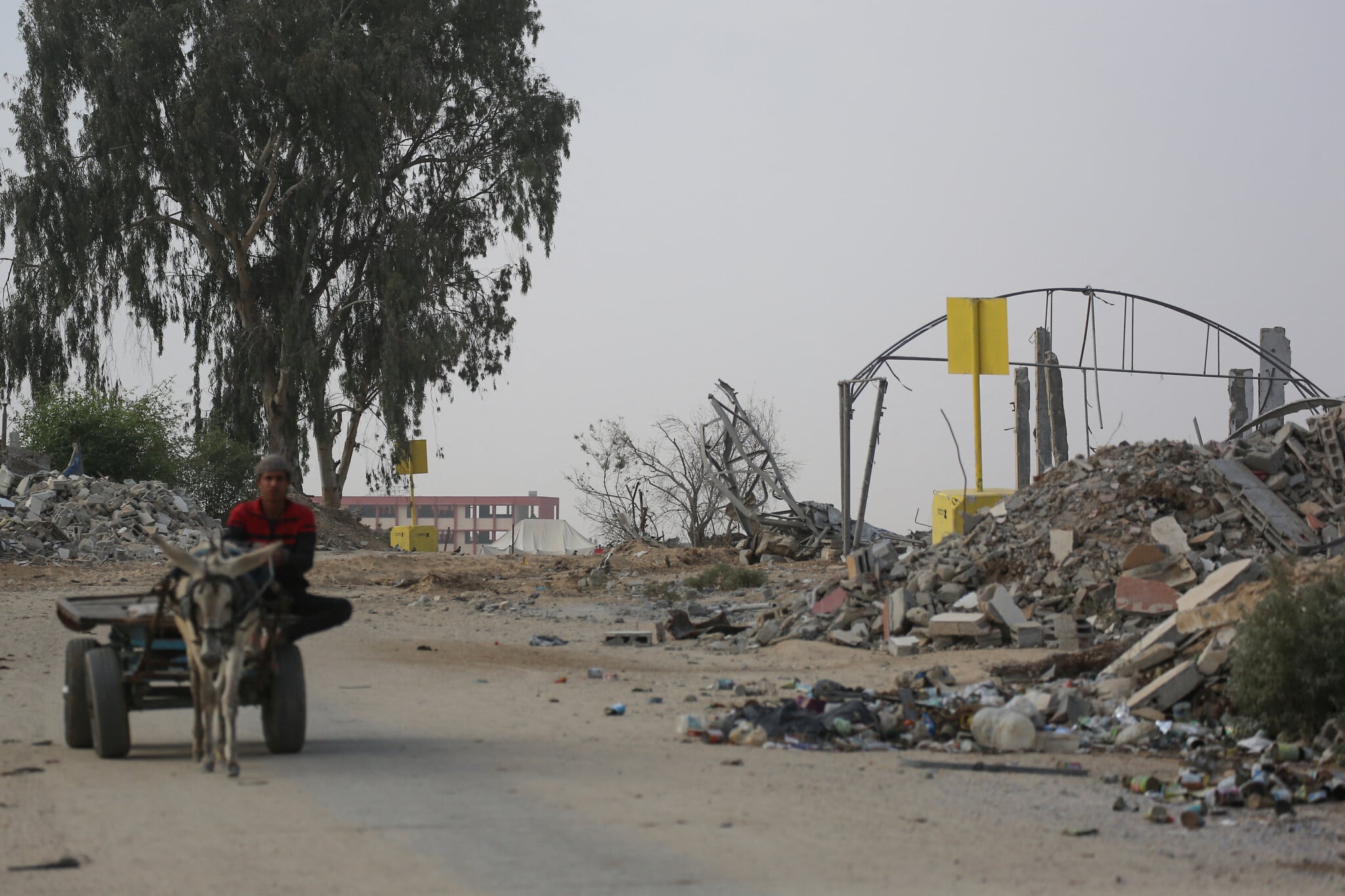
A Palestinian man rides on a cart pulled by a donkey near a concrete block marking the Yellow Line drawn by the Israeli military in Bureij, central Gaza Strip, on November 4, 2025. (Bashar Taleb / AFP)
“We are tightening our grip on Hamas,” Netanyahu said Sunday.
“We know exactly what our mission is, and our mission is one thing only — to ensure that Gaza will no longer pose a threat to Israel,” he said.
However, he did not pledge that Hamas will be destroyed as a military and governing organization, as he has many times since October 7, 2023.
Addressing the killing of the terror group’s military chief Izz al-Din al-Haddad on Friday, Netanyahu said that he promised “that all the architects of the massacre and all the architects of the kidnappings would be eliminated, every last one of them, and we are getting very close to completing that mission as well.”
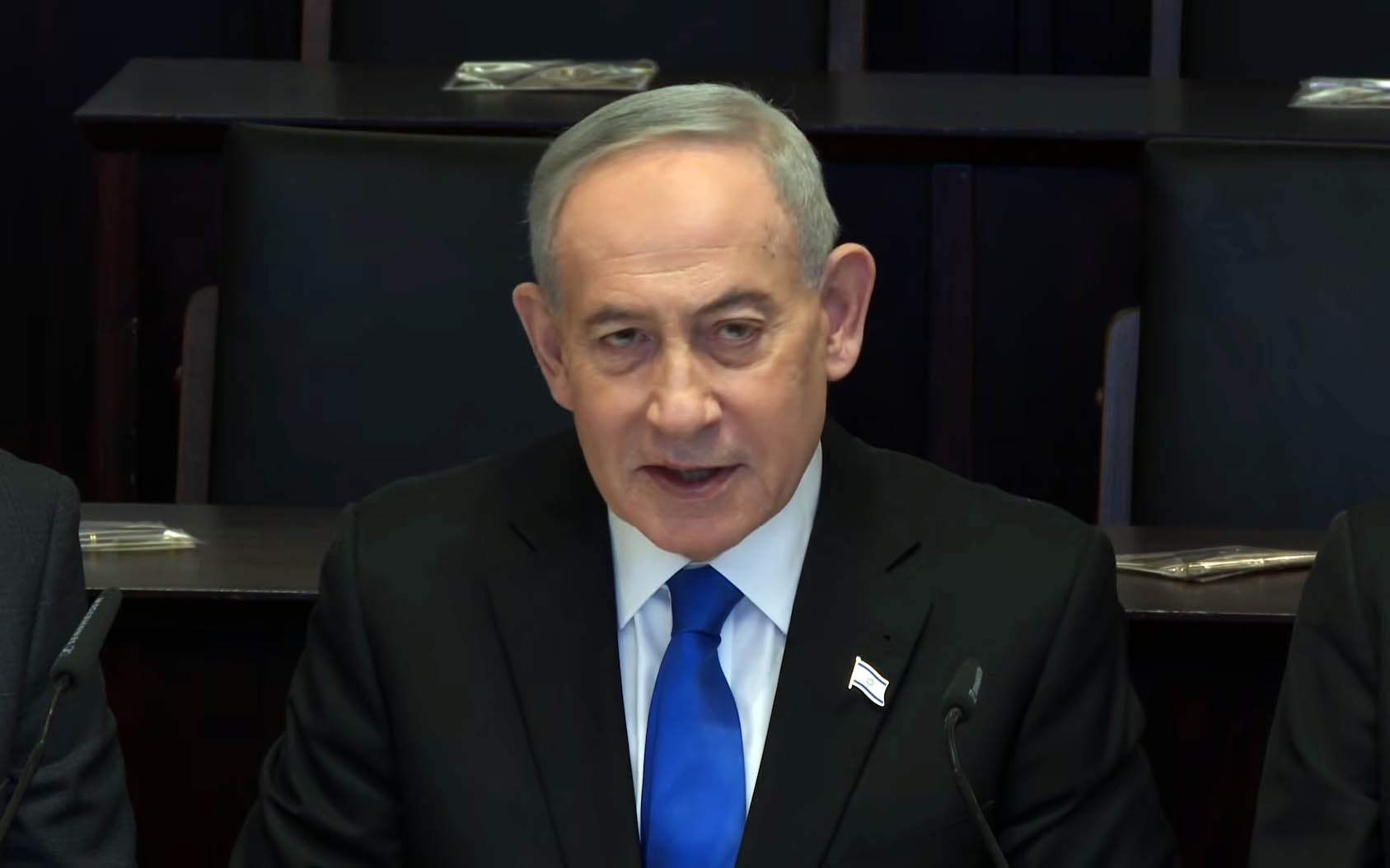
Prime Minister Benjamin Netanyahu leads the weekly cabinet meeting on May 17, 2026. (Screenshot/GPO)
Haddad helped plan the October 7, 2023, Hamas-led attack that killed 1,200 people, mostly civilians, and saw 251 abducted as hostages to Gaza, triggering the war. He took over as head of Hamas in Gaza after the May 2025 killing of Mohammed Sinwar, the brother and successor of Yahya Sinwar, who led the terror group in the 2023 onslaught.
Gaza strikes kill at least 4 Sunday; IDF says Hamas commander killed
Meanwhile, Israeli strikes killed at least four Palestinians in the Gaza Strip on Sunday, health officials said.
Medics said an Israeli strike killed one Palestinian near a Hamas police post in Khan Younis in the southern Gaza Strip. The military said it killed an operative who posed an immediate threat to forces operating in an area south of the enclave.
Separately, Gaza medics said another Israeli airstrike killed at least three people at a community kitchen near Al-Aqsa Hospital in Deir Al-Balah in the central Gaza area.
The IDF did not immediately comment on the incident.
شهداء ومصابون في غارة جوية إسرائيلية وسط مدينة خان يونس جنوبي قطاع غزة. pic.twitter.com/PVZLjJv8su
— وكالة سند للأنباء – Snd News Agency (@Snd_pal) May 17, 2026
Additionally, the IDF announced Sunday that a Hamas commander was killed in an airstrike in the Gaza Strip the day before.
The IDF said that Bahaa Baroud, who served in Hamas’s operations division, had advanced many attacks against troops and Israeli civilians “in the immediate timeframe.”
“Baroud posed an immediate threat to IDF troops and was struck and eliminated in a precise aerial strike,” the military said.
Some 870 Palestinians have been killed in Israeli strikes since the ceasefire began in October, according to Hamas health ministry figures that do not distinguish between combatants and civilians. Four Israeli soldiers have been killed in Gaza during the same period.
Reuters and Times of Israel staff contributed to this report.
Which gorgeous bird do you prefer?

THIS MONTH ONLY: Join our reader support group for as little as $6/month and receive an exclusive tote bag featuring one of Israel’s native birds.
Choose between the Duchifat (orange), Israel’s national bird, or the Shaldag (blue), a beloved symbol of the Israeli landscape.
As a member of the Times of Israel Community, you’ll also enjoy:
An ad-free experience of our site and podcasts.
Exclusive access to award-winning films via DocuNation.
Weekly letters from founding editor David Horovitz.
Join ToI Community & claim my bag
Already a member? Sign in to stop seeing this
You’re a dedicated reader

That’s why we started the Times of Israel – to provide discerning readers like you with must-read coverage of Israel and the Jewish world.
So now we have a request. Unlike other news outlets, we haven’t put up a paywall. But as the journalism we do is costly, we invite readers for whom The Times of Israel has become important to help support our work by joining The Times of Israel Community.
For as little as $6 a month you can help support our quality journalism while enjoying The Times of Israel AD-FREE, as well as accessing exclusive content available only to Times of Israel Community members.
Thank you,
David Horovitz, Founding Editor of The Times of Israel