
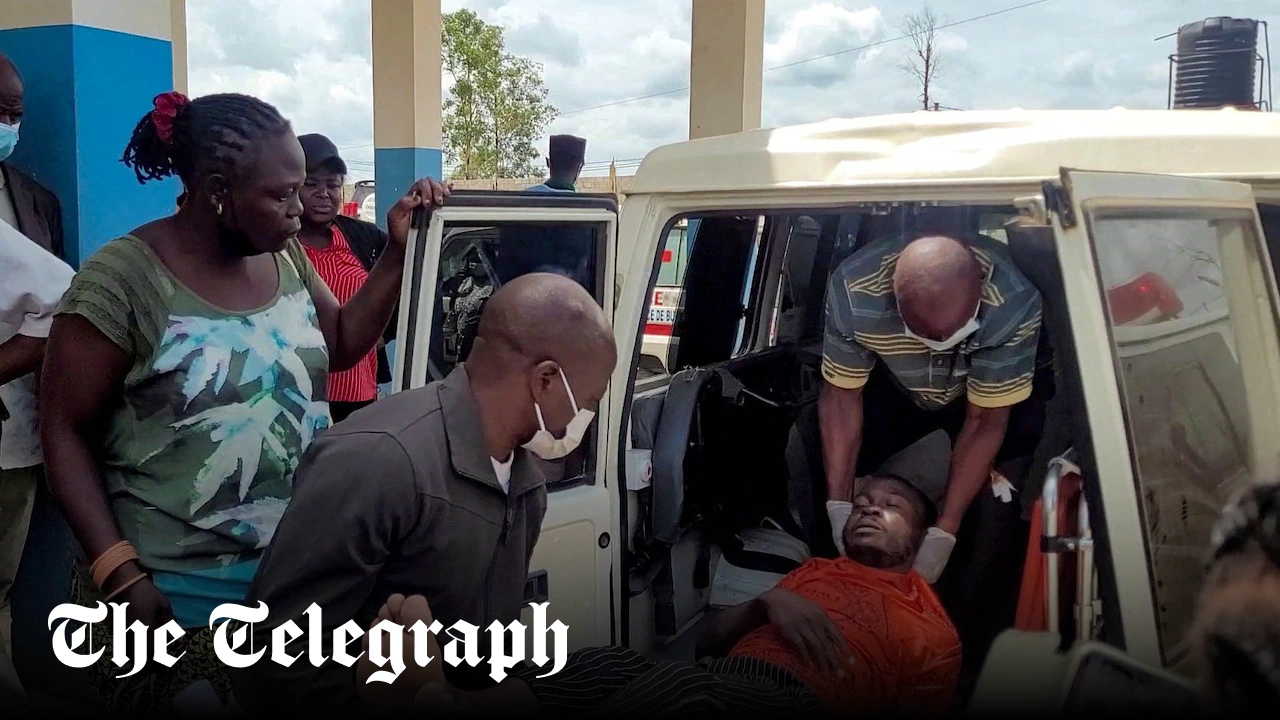
The CDC, America’s main public health agency, said it was working with US officials “who are actively coordinating the safe withdrawal of a small number of Americans who are directly affected by this outbreak”.
The US government is reportedly trying to arrange transport out of the country and find a safe location for quarantine, potentially by sending the Americans to a US military base in Germany rather than transporting them to the US.
That could be the US Army’s Landstuhl Regional Medical Centre (LRMC), which played a similar role in a previous Ebola outbreak.
Landstuhl built near Ramstein Air Base in southwest Germany is the largest US hospital outside America and serves as the main evacuation and treatment point for US military casualties in Africa, Europe and the Middle East.
The 65-bed hospital was also used to treat US personnel showing Ebola symptoms in the 2014 to 2015 West African outbreak, when America deployed 3,000 troops to help control the flare-up.
The cause of the current outbreak has been confirmed as the rare Bundibugyo strain, for which there is no approved vaccine or treatment. Ituri’s poverty and insecurity mean it has been home to several long-standing aid missions by groups such as the United Nations children’s body, Unicef, and the Norwegian Refugee Council.
The potential exposure of Americans has highlighted the issue of dealing with international aid workers who may have come into contact with the virus.
Late last week, the UK’s Health Security Agency activated its ‘Returning Workers Scheme’ for Ituri, “to support deploying organisations and returning workers, and to ensure that appropriate public health measures are maintained, including arranging medical support for symptomatic returnees when necessary”.
Under the scheme, UK aid workers, government staff, journalists and others going to affected areas need to register.