
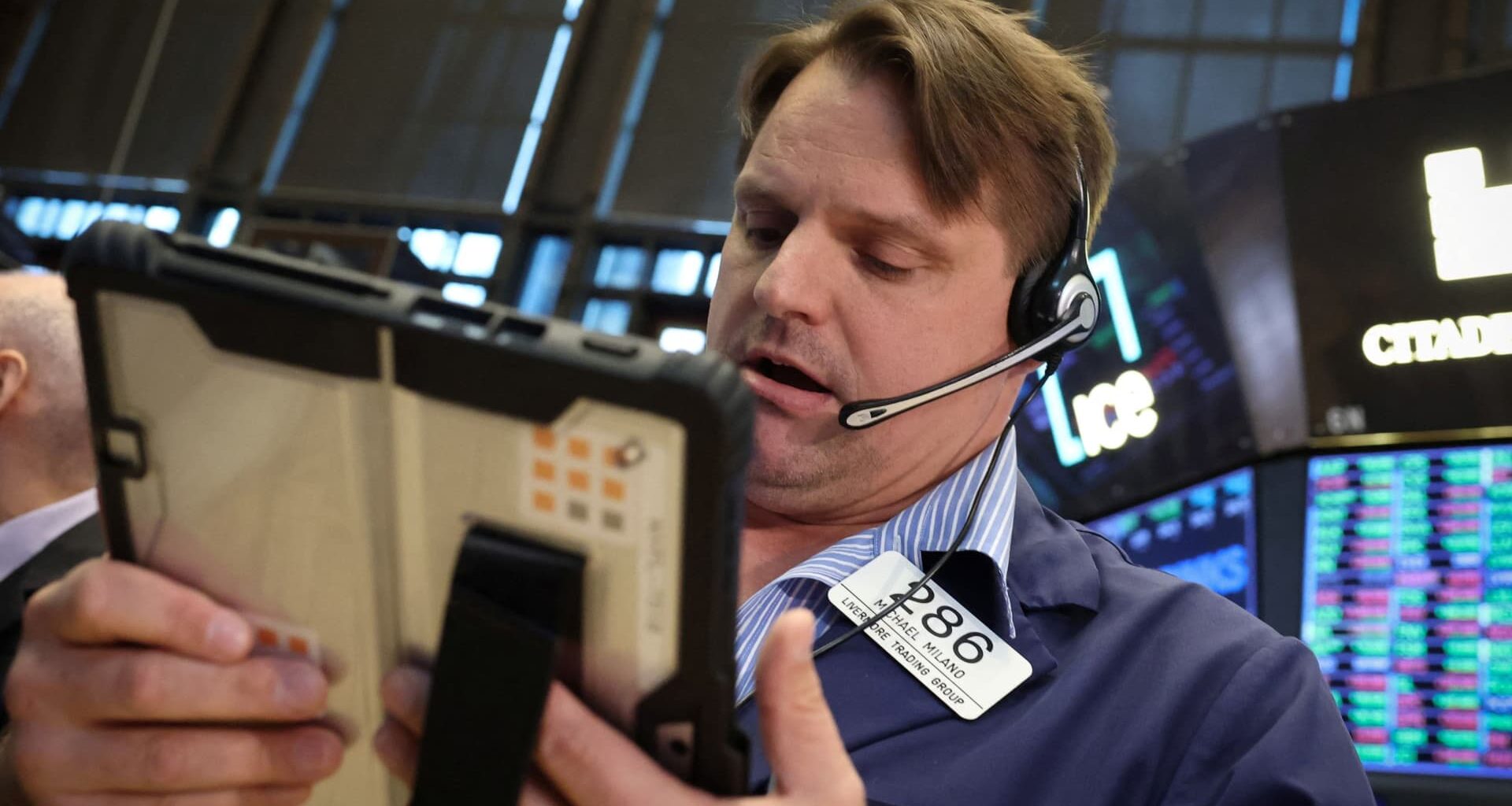
Traders work on the floor at the New York Stock Exchange (NYSE) in New York City, U.S., May 5, 2026.
Brendan McDermid | Reuters
Stocks fell Tuesday as a sell-off in chip names, which have led the A.I.-driven bull market, continued.
Traders also kept an eye on the oil market following President Donald Trump’s cancellation of planned attacks on Iran, as well as bond yields hovering near multi-year highs, which threatened to put more pressure on the U.S. consumer.
The S&P 500 slid 0.6%, while the Nasdaq Composite pulled back 0.7%. Both benchmarks were headed for their third losing session in a row. The Dow Jones Industrial Average shed 391 points, or 0.8%.
The Philadelphia Semiconductor Index fell 0.6% on Tuesday and is down more than 6% in two days as investors take profits on concern about valuation and the sustainability of sky-high data center spending. Nvidia, which will report its fiscal first-quarter earnings after the bell on Wednesday, headed for its third-straight decline, down slightly in early trading. Qualcomm slid more than 3%, and Broadcom pulled back 1.8%.
“This is a well deserved breather after an epic rally,” Jed Ellerbroek, portfolio manager at Argent Capital Management, told CNBC. It’s an “interesting time for the reversal, with it coming just a few trading days before the biggest chip stock in the world reports what will be outstanding earnings and guidance.”
Crude prices were down Tuesday after President Donald Trump announced late Monday that he was calling off a plan to attack Iran after the heads of three regional powers in the Middle East asked him to “hold off.” West Texas Intermediate futures shed 0.4% to $103.81 per barrel in early trading. Brent crude lost 1% to $110.96. Trump’s post also helped the S&P 500 and Nasdaq recover some losses late in the session Monday, though they still ended lower for a second day in a row.
Stocks had been on a tear before the past few sessions, with the S&P 500 and Nasdaq hitting fresh record highs last week, and the Dow briefly recapturing the 50,000 level. However, Kevin Gordon, head of macro research and strategy at the Schwab Center for Financial Research, believes that the market rally has already seen its best days.
“From a positioning standpoint and how stretched things have gotten, probably means that you don’t see as sharp of the rallies that we were seeing certainly off the throes of the low in March,” he said on CNBC’s “Closing Bell: Overtime” on Monday afternoon.
The bond market has added a new wrinkle to the bull market as well. The 30-year Treasury yield hit the highest level since October 2023 on Tuesday. The move in rates comes after a series of reports last week showing inflation was revving back up as the war in Iran lifted oil prices. Higher rates threaten to put additional pressure on the consumer and has caused investors to bet that the next action by the Federal Reserve this year could be a hike, rather than a much-sought-after decrease.