
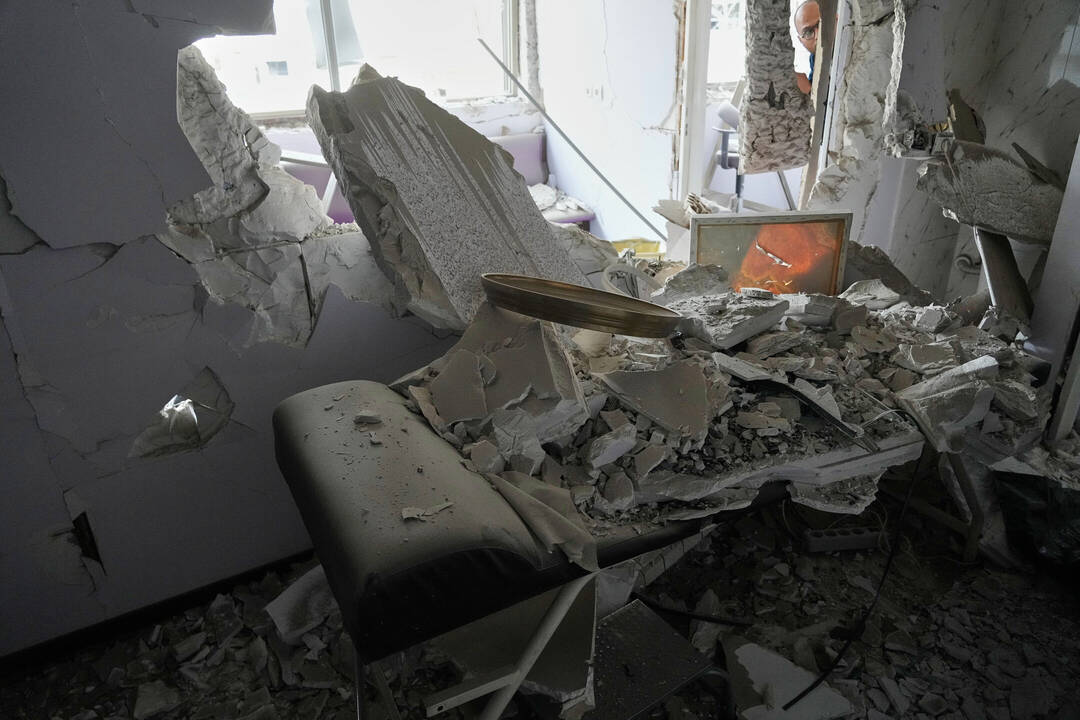
The Middle East conflict cast a long shadow over the World Health Assembly on Tuesday in Geneva as the politics of war seeped into its deliberations.
World Health Organization (WHO) member states gathered in Geneva for the annual assembly rejected an Iranian initiative on attacks against its health facilities conducted by the US and Israel this year, while overwhelmingly backing a parallel proposal on the impact of Israel’s war against Hezbollah on Lebanon’s healthcare infrastructure.
Iran’s initiative was defeated after Israel called for a vote, with 30 voting against and only 19 voting in favour. A further 59 – including France, Switzerland, Spain, Japan, Indonesia and the United Arab Emirates – abstained, citing concerns about the text’s selective framing, though not disputing the underlying principle of attacks against the health facilities being unlawful.
Iran’s own attacks against Gulf countries for hosting US military bases and its earlier crackdown on protests have left it diplomatically isolated.
Defending its initiative, an Iranian delegate told the assembly, “its population, including children and vulnerable civilians, as well as healthcare, research and medical facilities, have been subjected to attacks that raise serious humanitarian and public health concerns”.
The WHO has recorded more than 20 strikes on health facilities, resulting in deaths among medical staff, forced evacuations and severe disruption to services. The UN agency has also warned of the dangers posed by toxic substances released from strikes on Iranian oil depots, which have fallen back to Earth as “black rain”.
Though the text doesn’t explicitly name the US or Israel, it calls on WHO member states to uphold international humanitarian law, including the protection of health systems and personnel.
Rejecting Iran’s narrative, the United Kingdom said it had “demonstrated a wanton disregard for the safety and well-being of civilians across the Middle East”, pointing to the humanitarian fallout of the blockage of the Strait of Hormuz.
On its part, Israel accused Iran of using the WHO as a platform for “politically motivated purposes” and arming groups like Hamas and Hezbollah in the region that use health facilities for military activity. Iran returned the claims, saying it was “utterly disqualified from lecturing others on international law” given its own record of abuses in the region.
Singapore, which was among those to rally behind Iran, also called for the WHO to be “preserved from politics”.
Lebanon proposal gets greenlight
Lebanon’s proposal, tabled alongside Jordan, Qatar and Turkey, fared considerably better. Backed by dozens of co-sponsors, it passed with 95 votes and just two against – Israel and Honduras – with 18 abstentions.
The text, more measured in tone than Iran’s, expresses alarm by “the impact of the ongoing war on the Lebanese health systems, including attacks on health facilities and health workers, and the closure of dozens of primary healthcare centres and hospitals”. It asks the WHO to “scale up” support through medications and supplies and monitor disruptions.
The discussion was cut short due to time constraints and will resume on Wednesday morning, when Gulf states are expected to raise a further item, focusing this time on how Iran’s airstrikes have damaged civilian infrastructure and its blockage of the Strait of Hormuz has disrupted supply chains, including the delivery of medical stocks and energy supplies.