
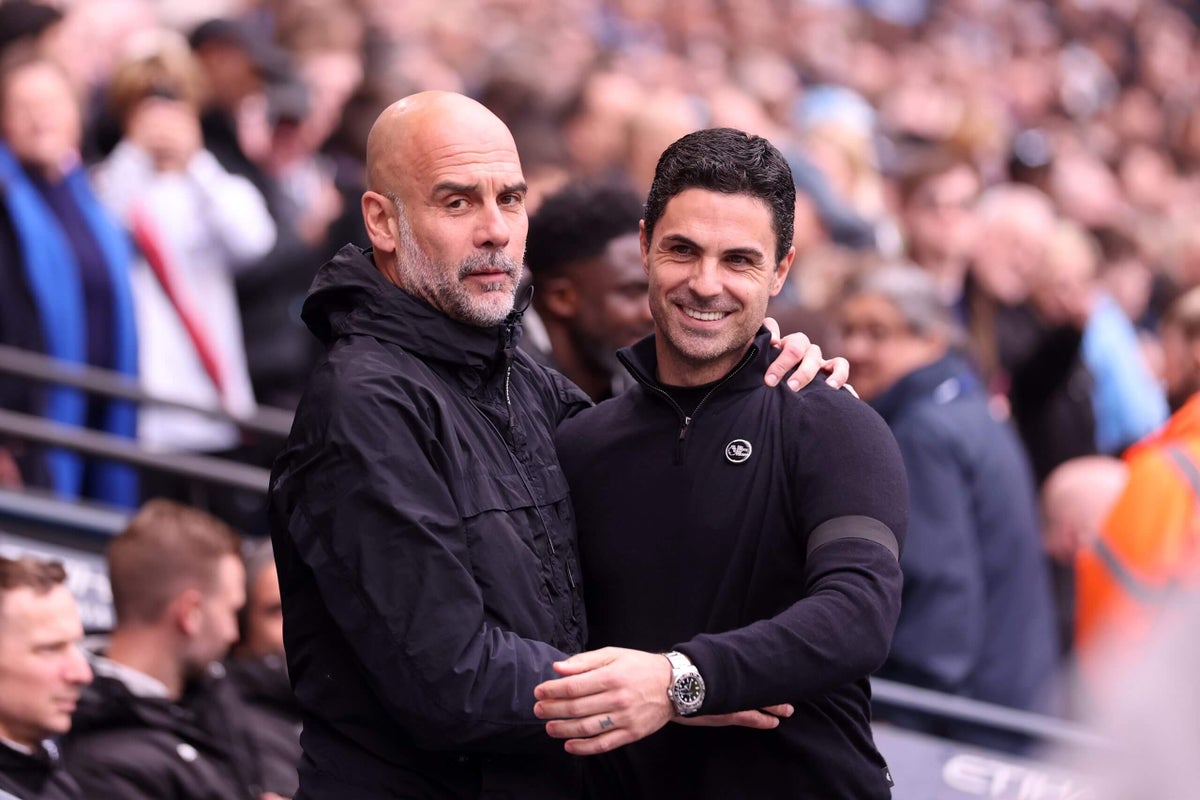
Mikel Arteta could have waited. For three-and-a-half years, he worked under Pep Guardiola at Manchester City, learning so much, the ultimate football coaching apprenticeship. He called the experience “incredible”.
Back then, Guardiola felt Arteta might be the ideal successor when the time came, perhaps as early as the summer of 2021. City’s power-brokers held Guardiola’s ambitious young assistant in the same high regard. Arteta was less sure. Rather than wait for years in Manchester, he felt ready, by late 2019, to lead a team of his own — and one in particular.
So yes, Arteta could have waited, as Guardiola’s heir apparent. But he chose a different path. By the time his former mentor was finally ready to move on from City, in May 2026, Arteta had built an empire of his own.
The Arsenal he walked into back then were a mess: a club trying to rediscover their identity after years of drift, a fractured fanbase, a dysfunctional squad. His first two years were spent battling to overcome mediocrity, a meek dressing-room culture and corrosive situations involving his two star players, Mesut Ozil and Pierre-Emerick Aubameyang.
There were no quick fixes, no easy wins.
Now look at Arsenal six-and-a-half years later.
On the evening that Guardiola’s intentions finally became clear, Arteta’s team took another significant step towards the Premier League title. A 1-0 win against Burnley left them five points clear with one game to play. They will be champions for the first time since 2004 should they beat Crystal Palace on Sunday — or even sooner if Bournemouth do them a favour by taking points off City tonight (Tuesday).
Then, a week on Saturday, comes the Champions League final against Paris Saint-Germain in Budapest, Hungary.
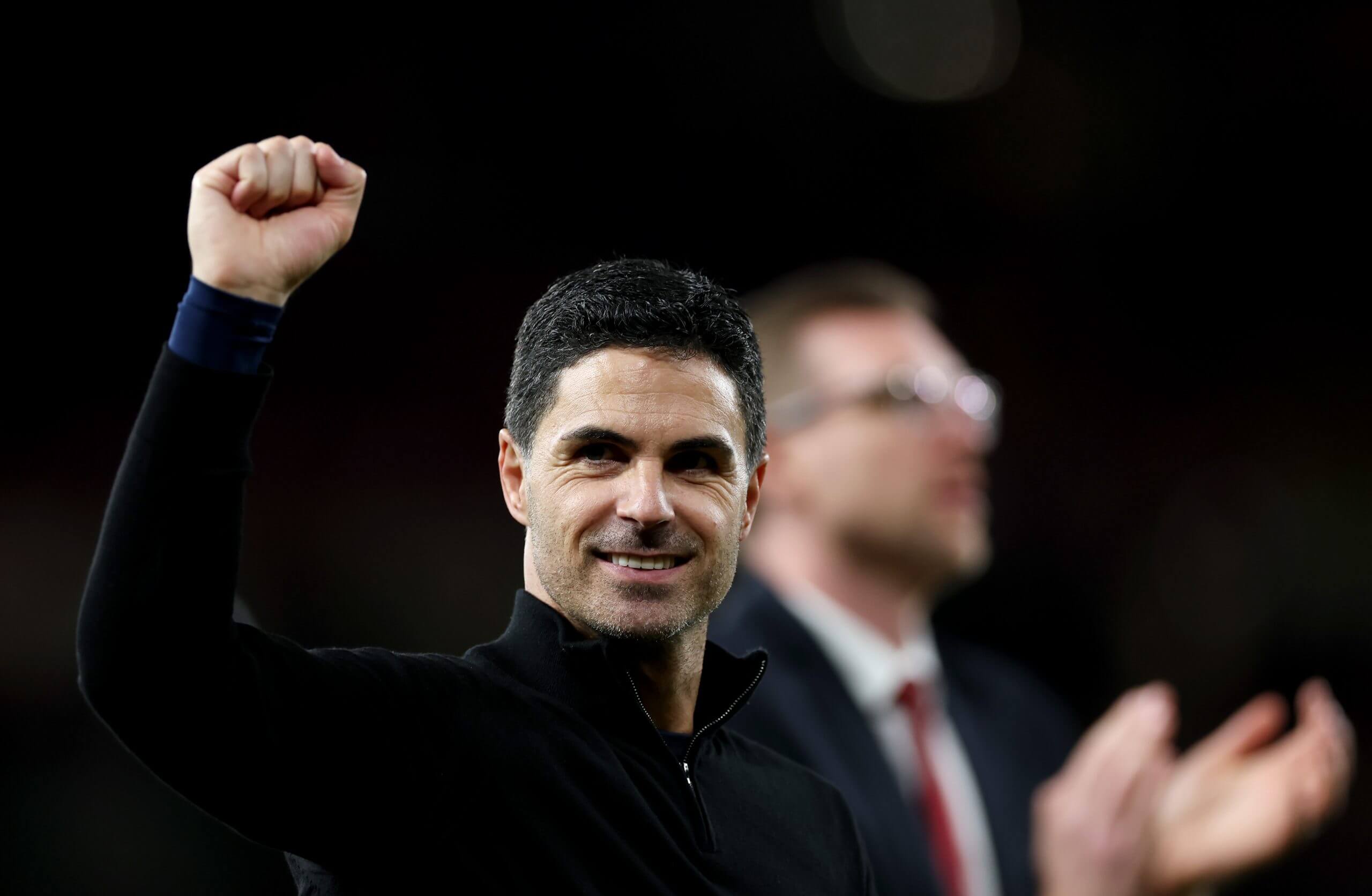
Arteta salutes the Arsenal crowd after his side’s win against Burnley (Justin Setterfield/Getty Images)
At the end last night, after their final home game of the season, Arteta and his players congregated on the pitch before the traditional lap of appreciation.
When the microphone was passed to him, he stood there, hand in pocket, looking uncharacteristically content as the supporters sang his name. His voice faltering, he called it “an absolute joy to witness the transformation” of the Emirates Stadium “into the most beautiful place to play our football”.
And it is true: whatever happens next, the change in mood here, since the unhappy final years of Arsene Wenger’s tenure and the brief Unai Emery period, really has been remarkable.
“Beautiful” was an interesting choice of word; if this Arsenal side are to be champions, they will not receive the same plaudits for artistic merit that Wenger’s great teams did. They will be, by some distance, the lowest-scoring Premier League winners since Leicester City in 2015-16.
Their only goal against Burnley came, like so many others this season, from a set piece, Kai Havertz rising highest to head home a Bukayo Saka corner. They were the dominant team, particularly in the first half, but it was one of only three attempts they had on target all game against already-relegated opponents. Stylistically, Arteta’s Arsenal have more in common with Jose Mourinho’s great Chelsea teams of the mid-2000s than the free-flowing style of Guardiola’s City or indeed Wenger’s Arsenal.
The beauty lies in the tale of their rebirth. Sure, it is no Leicester-style underdog story, but the revival of a failing institution has been painstaking. Arteta will point not just to the squad turnover and evolution in playing style but to the way he and his staff have transformed the culture of the team. So many coaches at big clubs lose their way after a promising start. With Arteta at Arsenal, like Jurgen Klopp at Liverpool, an upward trajectory has been maintained year after year.
There was a point, early in his tenure, at which Arteta’s name started to crop up again in relation to any future vacancy back at City. Had Guardiola departed in the summer of 2021, which at one stage appeared probable, Arteta’s candidacy would have been welcomed at the very least; he would have been an unlikely choice in the eyes of many, but then again, similar could be said of former Chelsea coach Enzo Maresca, another former Guardiola assistant, today.
The difference is not only that Arteta was so emotionally invested in the Arsenal project, but that, unlike Maresca at Chelsea, he has built a team whose ambitions have grown with his own. Perhaps there would also have been a question of compatibility — Arteta’s philosophy has evolved into something far more pragmatic over the last two years — but, from an early stage, long before his team started battling City for Premier League titles, he has been “all-in” at Arsenal.
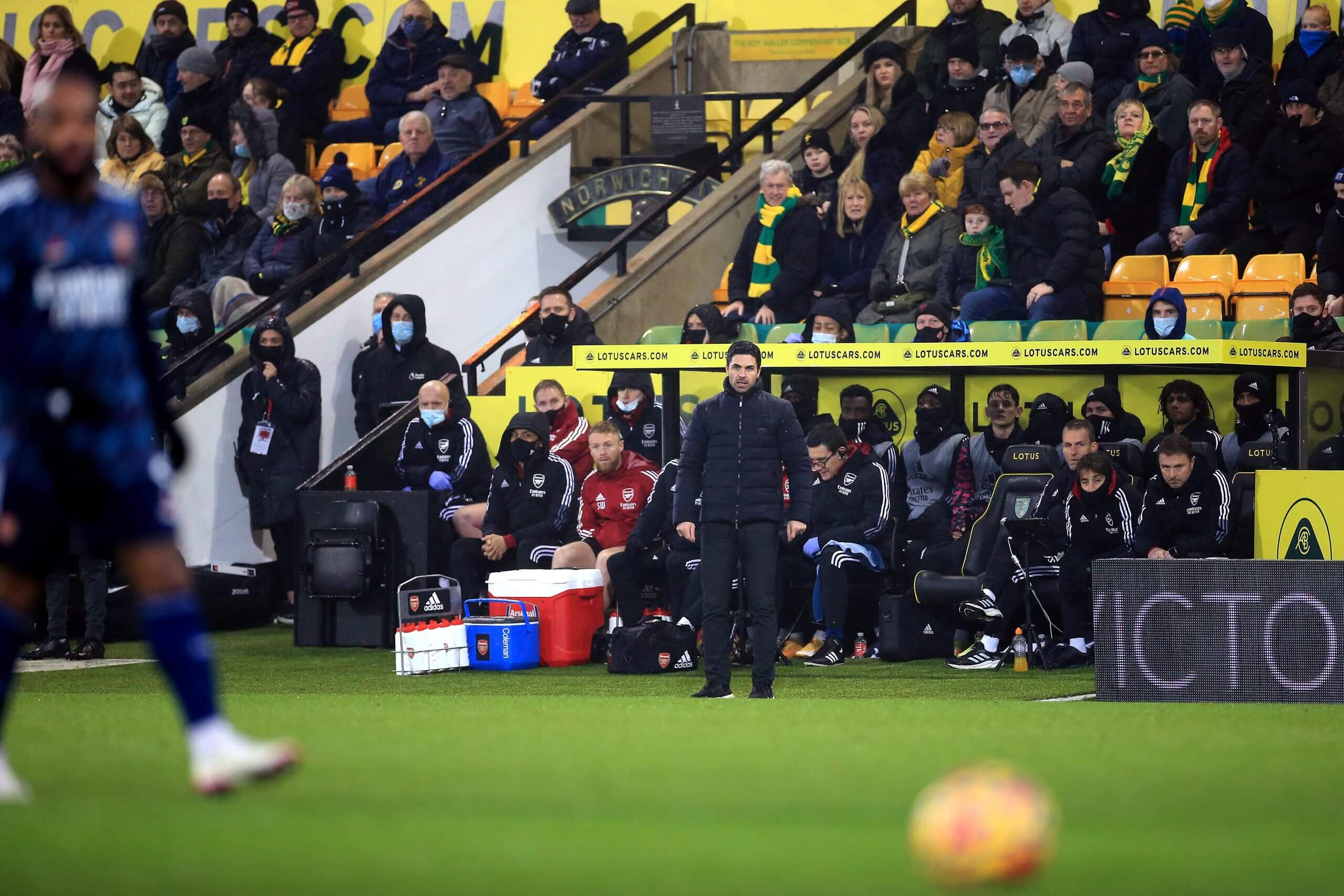
Arteta has shown patience and dedication to turn Arsenal’s fortunes around (Stephen Pond/Getty Images)
There has always been an intrigue to the Guardiola-Arteta narrative arc, that whole sorcerer vs apprentice thing. After a victory in the 2019-20 FA Cup semi-finals, Arteta and company lost their next eight meetings with City in all competitions, conceding 21 goals in the process, and a certain characterisation of Arsenal — flimsy, fragile, weak — took an even tighter hold.
Then came a turnaround, three wins and three draws in the clubs’ next six matches, and it began to feel as if Arteta had his old mentor’s number, to the point that the two recent City wins, in the Carabao Cup final in March and the subsequent Premier League clash, felt like an unexpected turn in the tide.
After victory over an impressively stubborn Burnley, Arteta was asked for his response to the news that Guardiola is preparing to leave Manchester. “I cannot comment on that,” he told reporters. “I think the day that he makes his decision to stay or leave, then we can comment.”
But to the rest of us — and perhaps not least to Arsenal’s supporters — the news of Guardiola’s expected departure adds to a sense of opportunity among City’s rivals. And whereas other clubs are in varying states of transition, Arsenal appear well-positioned to keep thriving in a post-Guardiola Premier League landscape.
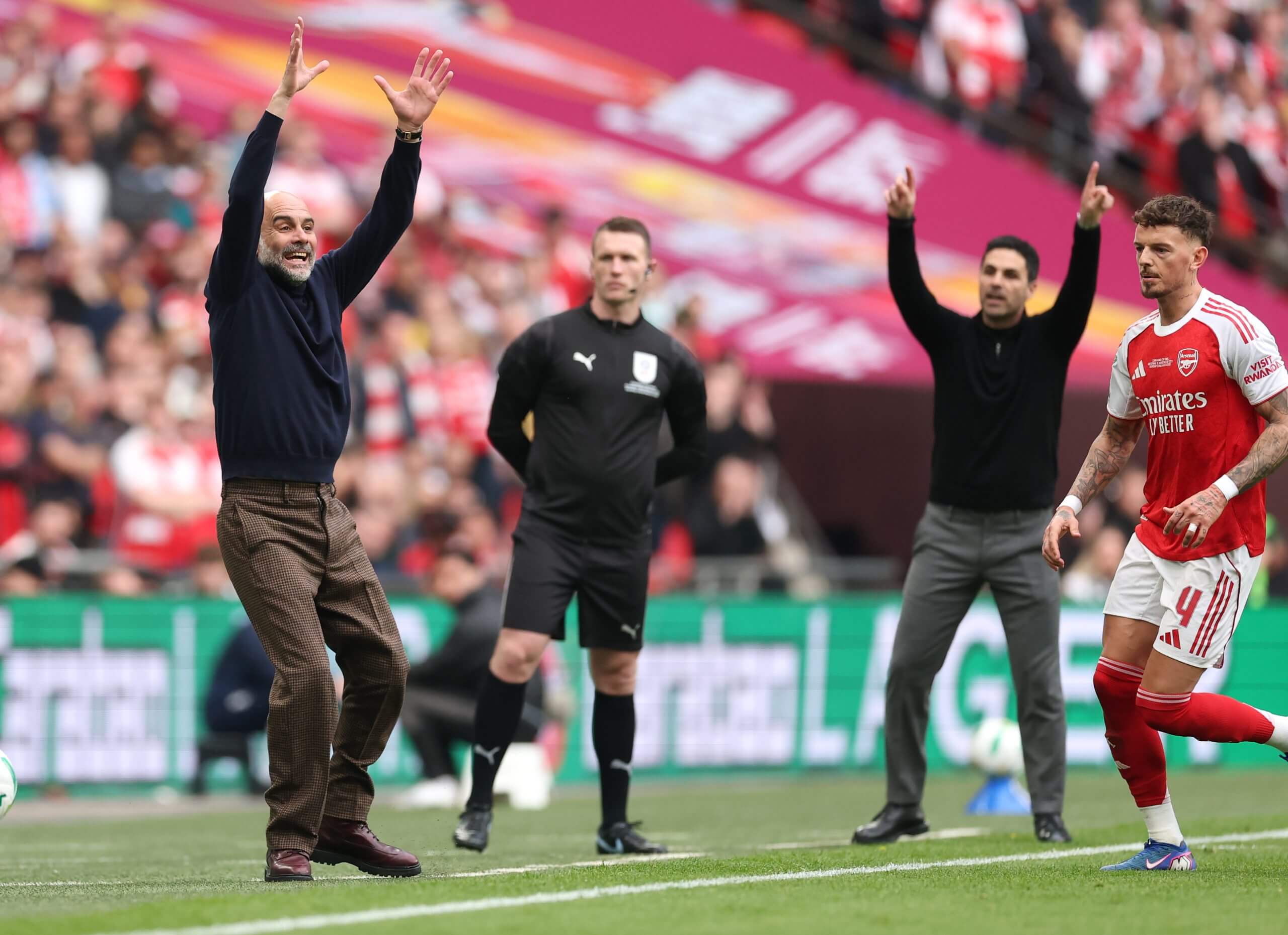
Arsenal appear well-positioned to keep thriving in a post-Guardiola Premier League (Julian Finney/Getty Images)
That might sound premature when, under Arteta, they are yet to add any other trophies to the FA Cup he won in that first year in the job. But finally, after a series of near-misses, Arsenal are one game from being champions of England, one game from being champions of Europe. The latter still looks a tall order, given they will face the might and majesty of PSG, but that long-awaited Premier League title is now so close they can almost touch it.
When Arteta was asked post-match whether he planned to watch City’s game at Bournemouth, he said he would, but he was unsure how long he would be able to sit through it, knowing what was at stake.
Would he be a Bournemouth supporter for the night? “The biggest ever,” he said with a smile. “For Andoni (Iraola, their head coach, a countryman and a childhood friend) and the players, and all the people who are supporters of Bournemouth, I think we all are. We know that means tomorrow they get our support.”
But for all the focus on teams wanting or needing a favour from elsewhere at this stage of the campaign, at either end of the table, the reality is that every club need to look after their own business. That is where Arsenal have excelled this season. It has rarely been pretty, but their consistency, week after week, has taken them to the brink.
They have played 61 games in all competitions, losing just seven of them. That four of those defeats came in a trying four-week spell between mid-March and mid-April raised familiar questions about their mentality and their resilience. But their response has been perfect; in six games in all competitions since being beaten 2-1 at City’s Etihad Stadium, they have won five and drawn one, conceding just one goal — an Atletico Madrid penalty — in the process.
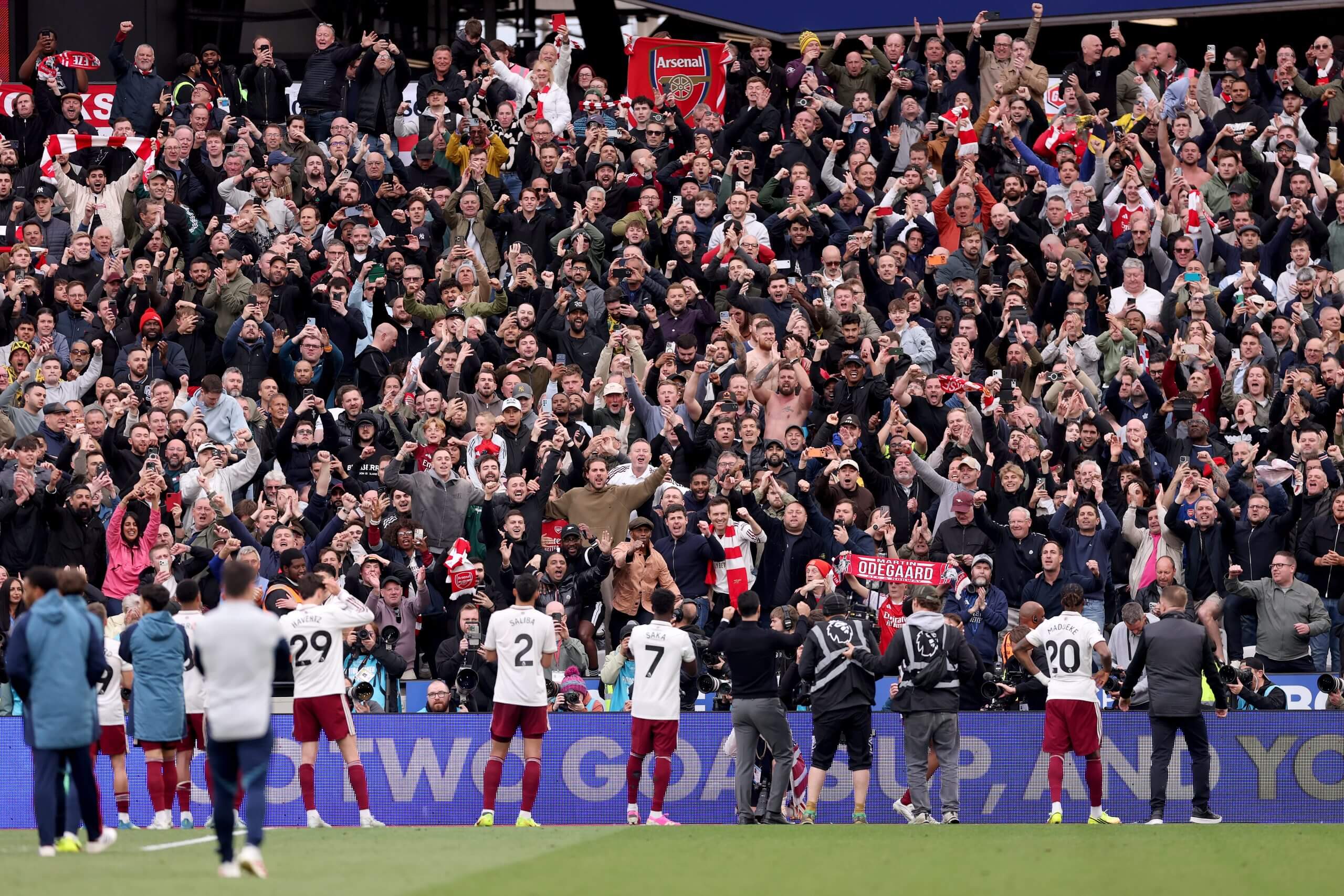
Arteta celebrates with the Arsenal fans after their narrow win at West Ham (Alex Pantling/Getty Images)
In that respect — 1-0, 1-1, 3-0, 1-0, 1-0, 1-0 — it has been the embodiment of the new Arsenal, which, in some ways, is so evocative of George Graham’s Arsenal in the late 1980s and early 1990s.
Graham was at the Emirates to witness Monday’s victory. Like everyone else of an Arsenal persuasion, he must have fretted in the second half but relished the result when the final whistle came. Now it is over to City, to see whether, three days after winning the FA Cup, they have enough left in the tank to end Bournemouth’s four-month unbeaten run and to take this race to the wire.
Arteta and Arsenal are braced for that likelihood — and the prospect of another nerve-shredding occasion away to Crystal Palace on Sunday.
But after 22 years, what’s another few days? Some things are worth waiting for.