
This Editor’s Note was sent out earlier Wednesday in ToI’s weekly update email to members of the Times of Israel Community. To receive these Editor’s Notes as they’re released, join the ToI Community here.
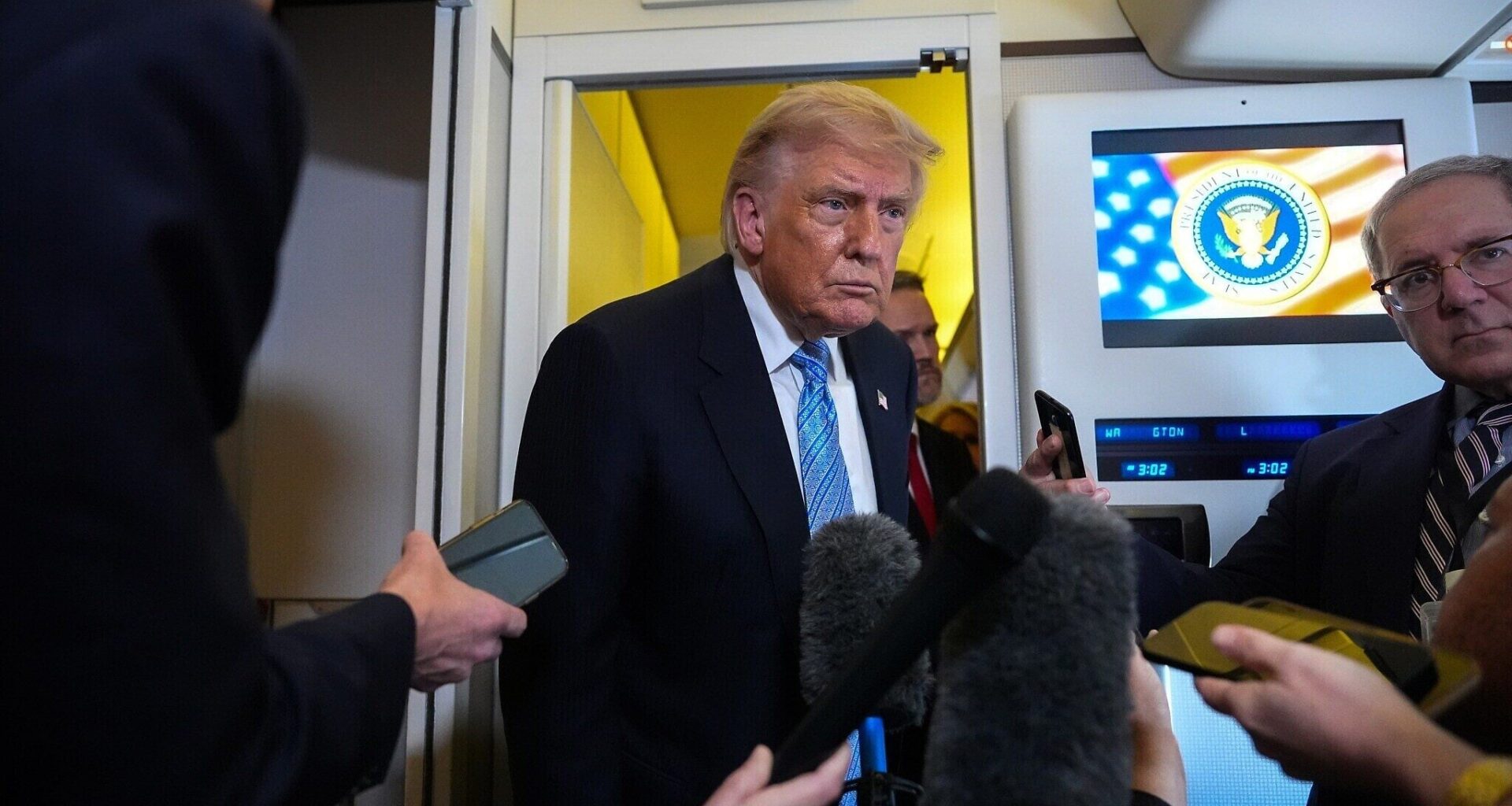
President Donald Trump has repeatedly contradicted himself regarding the progress of the Iran war.
He has said that the war is won, just not won enough.
He has said that the Iranian regime has changed, replaced by a leadership that is less radical and very reasonable, but also that the current leadership, if it attains nuclear weapons, would blow up Israel and the region and create a “nuclear holocaust.”
He has insisted that Iran must be prevented from attaining nuclear weapons, and criticized his vice president for offering a deal under which Iran would be prevented from enriching uranium for only 20 years, and subsequently said that a 20-year limitation on enrichment would be sufficient.
Get The Times of Israel’s Daily Edition
by email and never miss our top stories
By signing up, you agree to the terms
He has set repeated deadlines for Iran’s surrender, or for its acceptance of US terms, or for its submission of more reasonable terms, and warned with multiple linguistic flourishes that otherwise the fighting will resume and Iran will be destroyed. “A whole civilization will die tonight, never to be brought back again,” he vowed last month, in the most far-reaching such threat. He has then repeatedly canceled those deadlines.
In such a confused and contradictory context, there is simply no knowing how, or whether, the war will continue. By his own account(s) on Tuesday, Trump was both an hour away from taking the decision to resume airstrikes on Monday, and/or had already taken the decision, but decided to hold off.
As far as most of the international community is concerned — and that includes much of the American public — the world would have been a far better place had the US and Israel not attacked Iran on February 28, because the regime has been able to leverage its control over the Strait of Hormuz to play havoc with global energy supplies. Any remotely competent strategic planning would have recognized this danger before the first airstrikes were launched and planned accordingly.
As far as most of the international community is concerned, by extension, the key imperative now is to reach some kind of accommodation with the regime that enables the stable reopening of the strait. But, of course, so long as the regime is in power, there can and will be no credible guarantees of stability.
Far worse, the essential goal with which the US and Israel went to war — ensuring that this regime has no path to nuclear weapons — has not been achieved. To the contrary.
Iran retains its stockpile of some 440 kilograms of uranium enriched to near-weapons grade 60%. As Trump acknowledged on Friday, it has refused to have that stockpile — which represents its clearest path to a nuclear arsenal — dug out of its bomb-battered underground nuclear facilities and shipped out.
Moreover, it is not even being seriously pressed to relinquish its 10 tons of uranium enriched to lower levels, some of which would take only weeks to raise to weapons-grade.
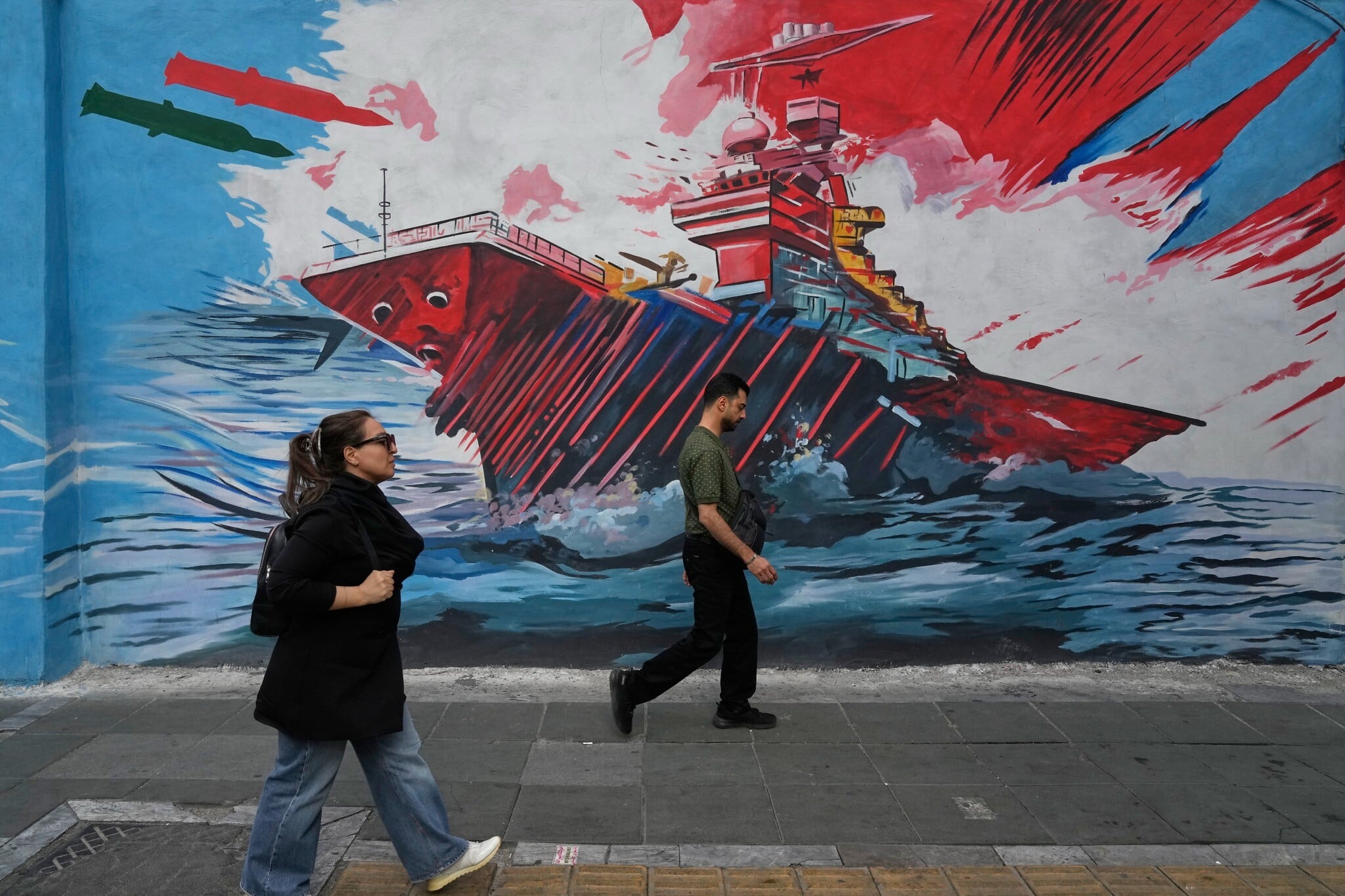
People walk past a mural depicting a US aircraft carrier under missile attack in downtown Tehran, Iran, May 17, 2026. (AP Photo/Vahid Salemi)
Far from having all of its enrichment facilities obliterated, to use a favorite Trump term, the IAEA, the UN’s nuclear weapons watchdog, warned in March that Iran has a new enrichment facility in its Isfahan nuclear complex whose precise location and status are unknown. Israel’s Institute for National Security Studies this week spotlighted Iran’s progress in reviving its enrichment capabilities via the “rehabilitation of the Fordow site” and the “accelerated construction of ‘Pickaxe Mountain,’” south of Natanz.
As things stand, the regime is publicly deriding Trump, reveling in its capacity to face down the US and Israeli militaries, and threatening to broaden its targets if attacked again, all while outflanking the president in negotiations amid its awareness that he is under mounting domestic pressure to cut a deal that reopens Hormuz. But Tehran is not resting on its laurels. It is also rehabilitating its missile capabilities and learning everything it can from its vulnerability to American and Israeli air superiority, the better to counter future strikes.
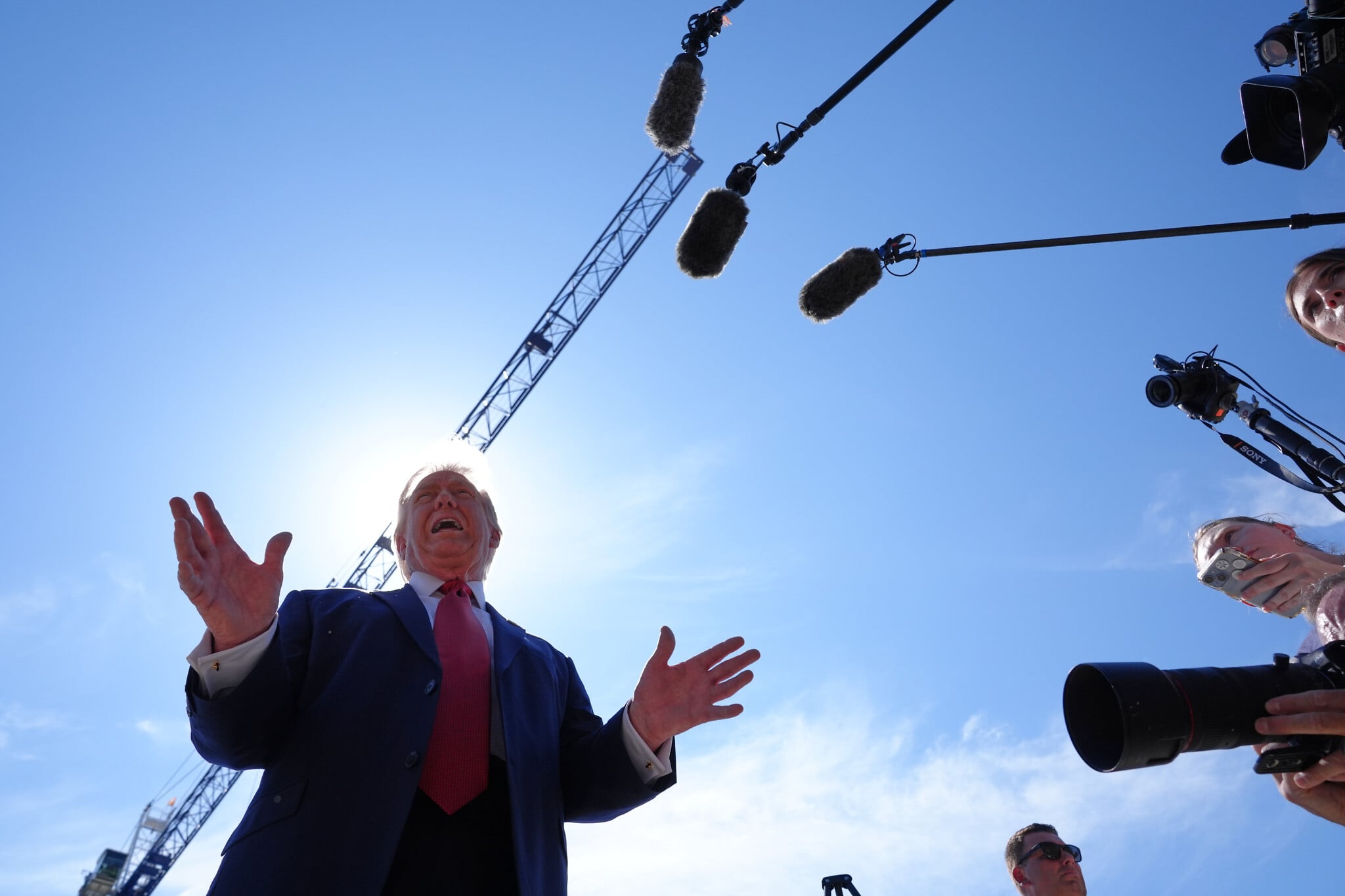
President Donald Trump speaks to reporters amid construction work around the outside of the White House, May 19, 2026, in Washington. (AP Photo/Jacquelyn Martin)
Whatever Trump might want to believe, the regime is, if anything, more radical than it was under Ali Khamenei, and it is certainly more motivated to advance its nuclear weapons program — the ultimate weapon, and the ultimate deterrent.
Eli Levite, a former deputy head of Israel’s Atomic Energy Commission, suggested in a Channel 12 interview this week that the least bad way ahead right now would be for the US to push for an interim deal with the regime that would reopen Hormuz and prevent Iran from carrying out any further nuclear development, backed by a far more efficient inspection mechanism.
That sounds like a pretty bad least-bad option, and underlines how poorly this essential resort to force against a would-be genocidal regime was prepared. The bottom line is and was that the ayatollahs’ regime must be removed — for the sake of the Iranian people, Israel, the region, and the rest of the free world. The mounting concern is that a rare opportunity to do so has been, and is being, botched.
Deadlock and division
It would appear that Israel was shocked by Trump’s latest eleventh-hour decision to cancel a planned renewal of airstrikes. It would also appear, as of this writing, that Israel believes the US president could yet reverse that reversal and resume the war.
In the interim, Prime Minister Benjamin Netanyahu appears to be working to stave off potential elections sought by ultra-Orthodox parties in September, to the latest possible date on October 27, apparently in the hope, among his other goals, that a maximal term could enable greater success in the battles against Iran, the revived and deadly Hezbollah, and the reinvigorated Hamas.
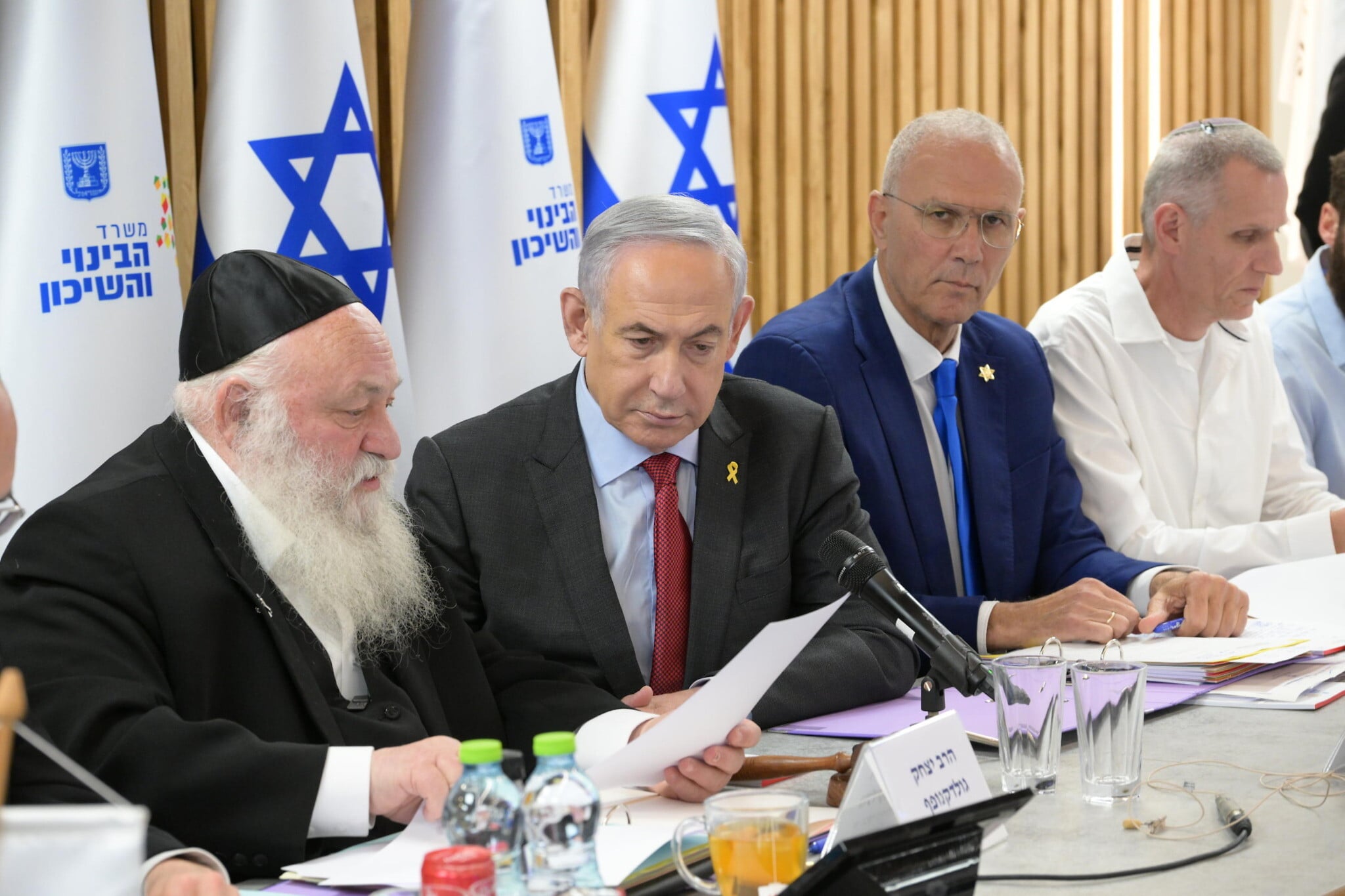
Head of the UTJ party Yitzhak Goldknopf (left) in a meeting with Prime Minister Benjamin Netanyahu, March 20, 2026. (Amos Ben Gershom/GPO)
To try to placate the ultra-Orthodox parties, however, the prime minister continues to try to advance a law enshrining the unconscionable ongoing Haredi exemption from military service, alongside legislation that would, outrageously, extend other Israelis’ mandatory service from 32 months to 36 months.
Racing against the election clock, the coalition is also fast-tracking all manner of anti-democratic and discriminatory laws — seeking to criminalize non-Orthodox religious activities at the Western Wall, to impose controls on independent media, to strip the role of attorney general of its independence and authority, to hobble the opening of criminal investigations into the prime minister and other senior officials… The list goes appallingly on.
Meanwhile, the opposition, which has proved unable, even since October 7, to focus effectively on Netanyahu’s untenable encouragement of ultra-Orthodox non-service, remains ineffectual and disunited. It is failing to effectively highlight the government’s indulgence of rising Jewish terrorism in the West Bank, explicitly encouraged in years past by the despicable Itamar Ben Gvir, who daily harms and shames our nation as the minister of national security.
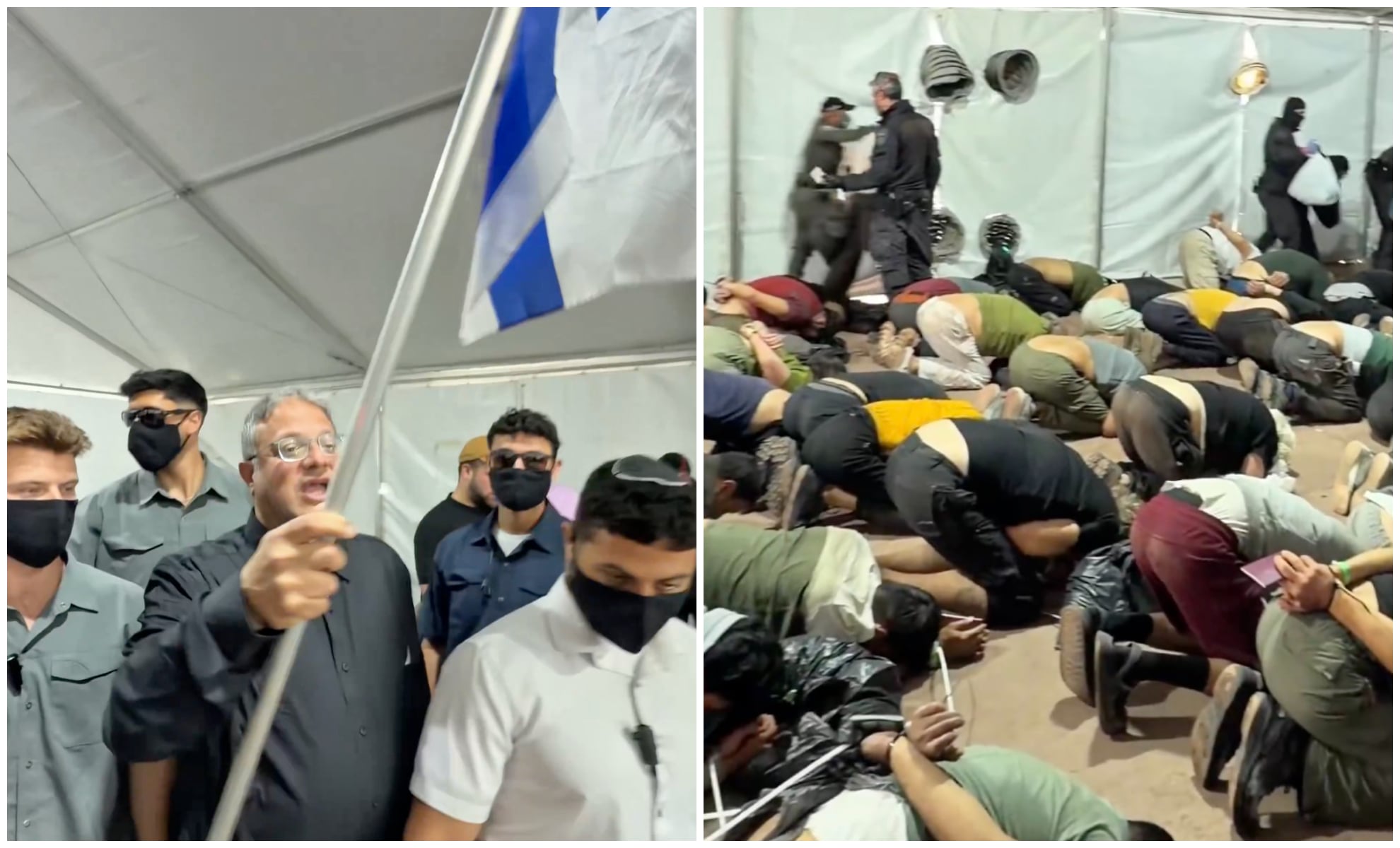
National Security Minister Itamar Ben Gvir taunts detained flotilla activists at Ashdod Port on May 20, 2026. (Screen grab/Ben Gvir’s X account)
It has been unable to capitalize on public outrage at Netanyahu’s refusal to allow the necessary independent investigation of the catastrophic failures surrounding the October 7, 2023, Hamas invasion and massacre. It has even been cowed by Netanyahu into preemptively excluding the mainly Arab Ra’am party as a potential coalition partner — a partner whom Netanyahu himself sought to recruit in the past.
The resort to force against the regime in Iran was more than legitimate; it was vital. The failure to plan strategically — underestimating the ultra-cunning regime over Hormuz; betting on the Kurds, or on the Holocaust-denying, Israel-hating Mahmoud Ahmadinejad?!? — was inexcusable.
Netanyahu working to avoid turning deadlock into outright failure in the weeks and months ahead is essential. Further weakening Israel from within before we finally go to the polls, debilitating our democracy and deepening the inequalities and divisions, is unforgivable.