
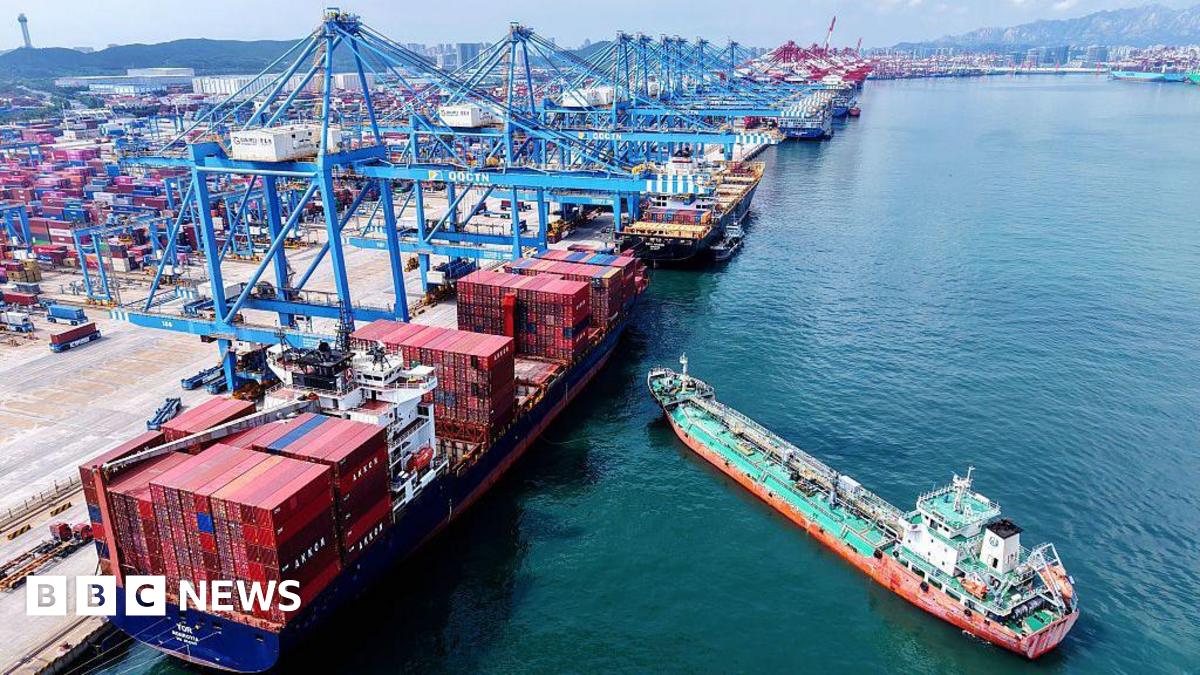
A return of higher duties would have risked further trade turmoil and uncertainty amid worries about the effect of tariffs on prices and the economy.
Trade tensions between the US and China reached fever pitch in April, after Trump unveiled sweeping new tariffs on goods from countries around the world, with China facing some of the highest levies.
Beijing retaliated with tariffs of its own, sparking a tit-for-tat fight that saw tariffs soar into the triple digits and nearly shut down trade between the two countries.
The two sides had agreed to set aside some of those measures in May.
That agreement left Chinese goods entering the US facing an additional 30% tariff compared with the start of the year, with US goods facing a new 10% tariff in China.
The two sides remain in discussions about issues including access to China’s rare earths, its purchases of Russian oil, and US curbs on sales of advanced technology, including chips to China.
Trump recently relaxed some of those export restrictions, allowing firms such as AMD and Nvidia to resume sales of certain chips to firms in China in exchange for sharing 15% of their revenues with the US government.
The US is also pushing for the spin-off of TikTok from its Chinese owner ByteDance, a move that has been opposed by Beijing.
Earlier on Monday in remarks to reporters, Trump did not commit to extending the truce but said dealings had been going “nicely”. A day earlier he called on Beijing to increase its purchases of US soybeans.
Even with the truce, trade flows between the countries have been hit this year, with US government figures, external showing US imports of Chinese goods in June cut nearly in half compared with June 2024.
In the first six months of the year, the US imported $165bn (£130bn) worth of goods from China, down by about 15% from the same time last year. American exports to China fell roughly 20% year-on-year for the same period.