
Oil prices rose on Thursday after Iranian Supreme Leader Mojtaba Khamenei said the regime’s stores of enriched uranium shouldn’t be sent abroad, throwing a wrench into dealmaking between the US and the Islamic Republic.
Futures on Brent crude (BZ=F), the international benchmark, rose by as much as 3.5% to trade over $108.50 per barrel before paring gains, while those on US benchmark WTI crude (CL=F) gained as much as 4% to cross over $102 before pulling back slightly.
The gains came after oil prices fell by the widest margin in more than a month on Wednesday following comments from President Trump that the US is in the “final stages” of reaching a deal with Iran and news that several oil tankers had transited the Strait of Hormuz.
Prices spiked Thursday morning after Reuters reported that the supreme leader had issued an edict saying the regime’s stores of uranium enriched to near-weapons-grade levels should not be sent outside Iran. The development complicates negotiations between Iran and the US, where the White House has said the removal of Iran’s enriched uranium supply is a key red line for any deal.
Trump has repeatedly stated his belief that Iran can’t develop nuclear weaponry and that the US must dismantle the country’s enrichment program for any deal to go through. He has reportedly personally assured Israeli leaders that any deal must include the removal of the uranium stores, per Reuters.
The directive from Tehran throws into question Trump’s comments on the US getting close to a deal with Iran. The regime is reportedly working on a response to the latest US proposal that “narrowed the gaps to some extent,” according to Iran’s ISNA news agency.
Read more: $100 oil could send airfare soaring this summer. These tips could save you.
Mediators see few signs of progress toward agreement between Washington and Tehran, the Wall Street Journal reported Tuesday. Iran has remained steadfast in its demands for war reparations, sanctions relief, and control over the Strait of Hormuz, while the regime continues to deny US goals for dismantling the country’s nuclear program.
“Meanwhile, the Strait of Hormuz remains shut, another 14 million barrels of oil has failed to make it to market, and the first two months on the Brent curve are trading over $100,” Mizuho director of energy futures Robert Yawger said Thursday morning.
Trump said Wednesday that he is prepared to direct military action against Iran if the US doesn’t receive “complete 100% good answers” from the Iranian regime, telling reporters, “It’s right on the borderline, believe me.” He added, when asked how long he would be willing to wait for a response from Tehran, that a decision to strike “could go very quickly.”
Tehran said the same day that any US military action would be met with “crushing blows in places you do not expect” throughout the Middle East, per the state-owned Tasnim news agency, and that “the regional war that had been promised will this time extend beyond the region.”
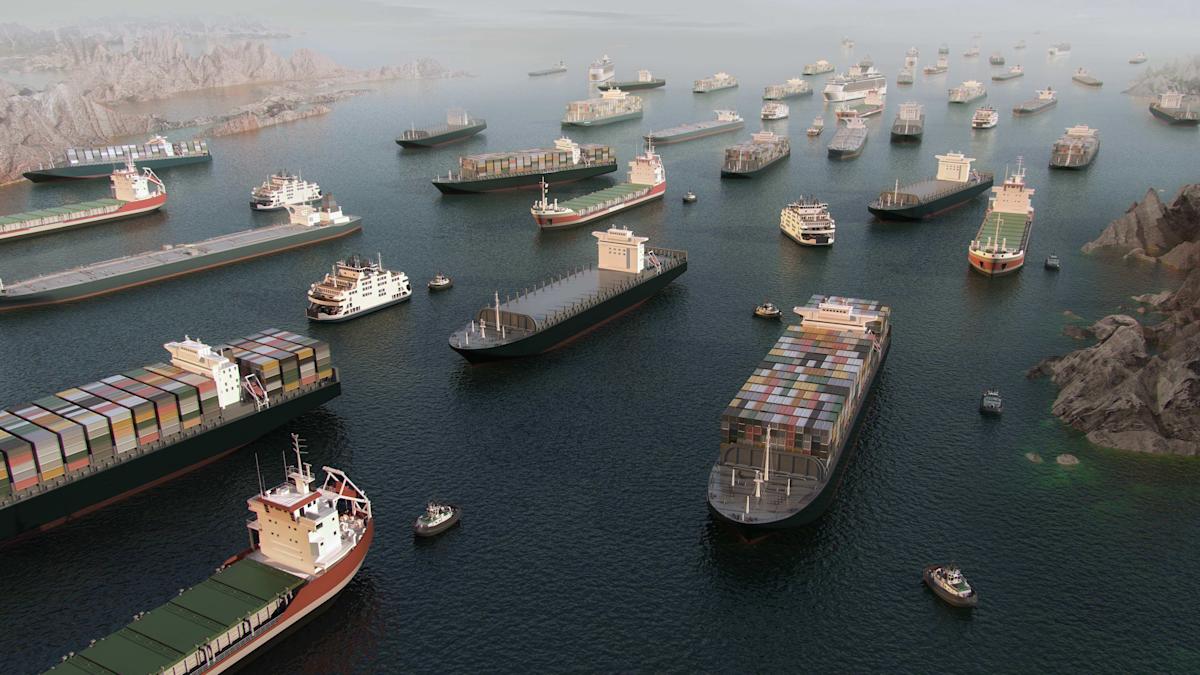
Oil’s slide on Wednesday came after reports that a South Korean supertanker and two Chinese supertankers, all laden with crude, were successfully transiting the strait. However, the ships appeared to follow a route designated by Iran, according to ship-tracking data, and the Iranian government claimed South Korean and Chinese leaders had directly coordinated the passage of three ships with the IRGC.
Reports have increasingly documented Iran’s strengthening control over safe passage — directing routes, charging fees, and negotiating directly with governments looking to see their ships exit the waterway safely. The Iranian ambassador to France said Wednesday that Iran and Oman, which is on the opposite side of the Strait of Hormuz, are working toward a joint management system for the waterway that would include a permanent tolling regime.
“Iran and Oman must mobilize all their resources both to provide security services and to manage navigation in the most appropriate manner,” Iranian ambassador to France Mohammad Amin-Nejad said to Bloomberg on Wednesday.
“This will entail costs, and it goes without saying that those who wish to benefit from this traffic must also pay their share,” he said.
Jake Conley is a breaking news reporter covering US equities for Yahoo Finance. Follow him on X at @byjakeconley or email him at jake.conley@yahooinc.com.
Click here for in-depth analysis of the latest stock market news and events moving stock prices
Read the latest financial and business news from Yahoo Finance