
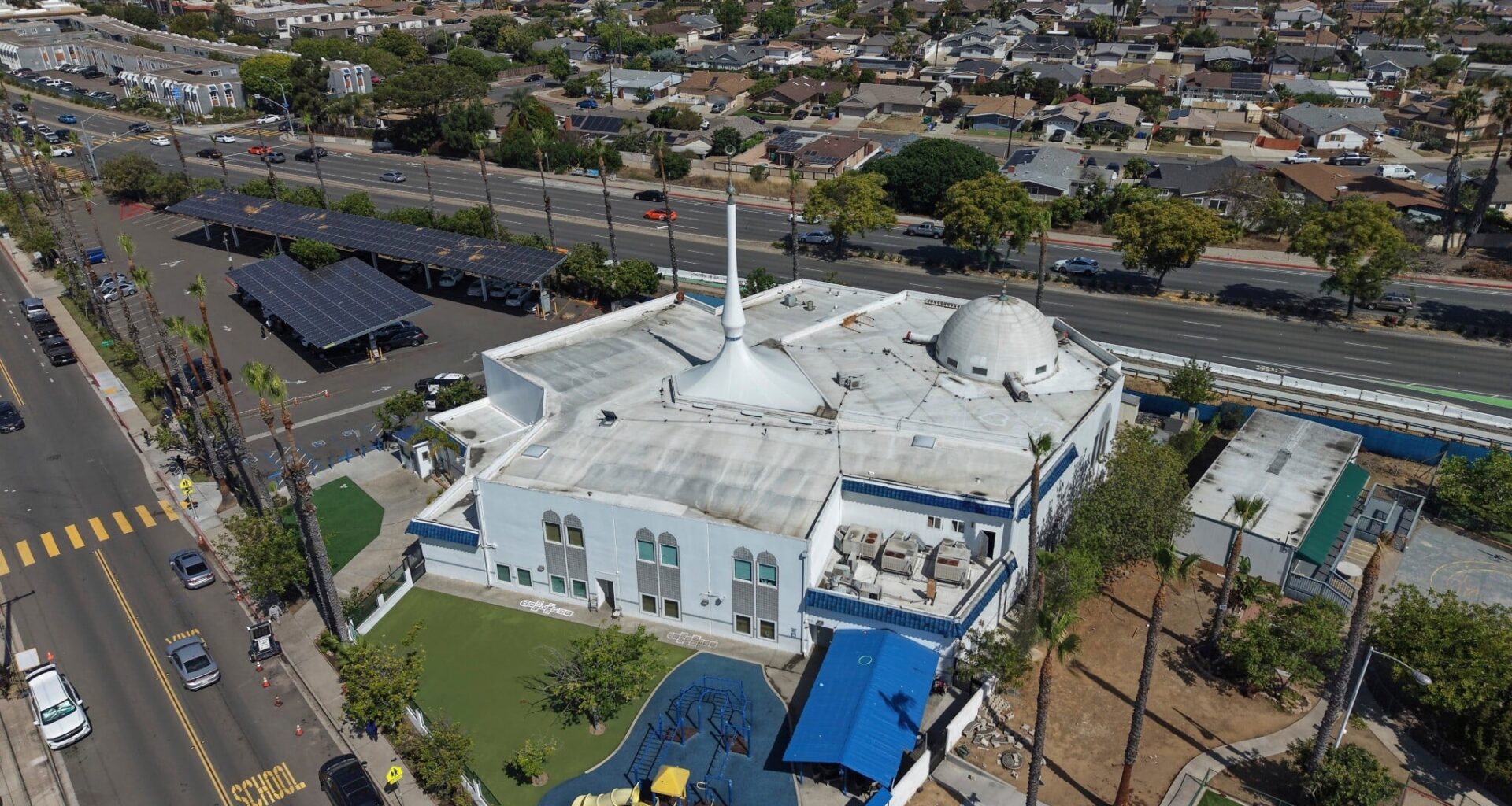
The two US teenagers who shot and killed three people in an attack on a California mosque were radicalized online, where they first met and shared white supremacist views, including antisemitism, according to authorities and writings they authored.
The pair “didn’t discriminate on who they hated,” Mark Remily, the lead FBI agent in San Diego, said Tuesday.
The writings, some of which were circulating online in the days after the attack, glorified other terrorists and included hateful rhetoric toward Jews, Muslims, LGBT people, African-Americans, and both the political left and right.
They were also vitriolically sexist, asserting that “after the Jew the most evil creature in this world is the woman.” At least one of the shooters identified as an “incel,” a term used by men online to refer to their failure to have sex with women.
In a lengthy manifesto, which police said they believed to be authentic, the shooter declared Jews “the universal enemy,” responsible for war, famine, child abuse and various social ills, and wrote that the only solution is “to just kill them all.”
Get The Times of Israel’s Daily Edition
by email and never miss our top stories
By signing up, you agree to the terms
The document heaped praise on Adolf Hitler, yet denied the Holocaust.
It also bore the trademarks of more recent antisemitic conspiracy theories, claiming that Jeffrey Epstein’s sex crimes were religiously motivated, and fixating on supposed Jewish hatred for “goyim,” or non-Jews.
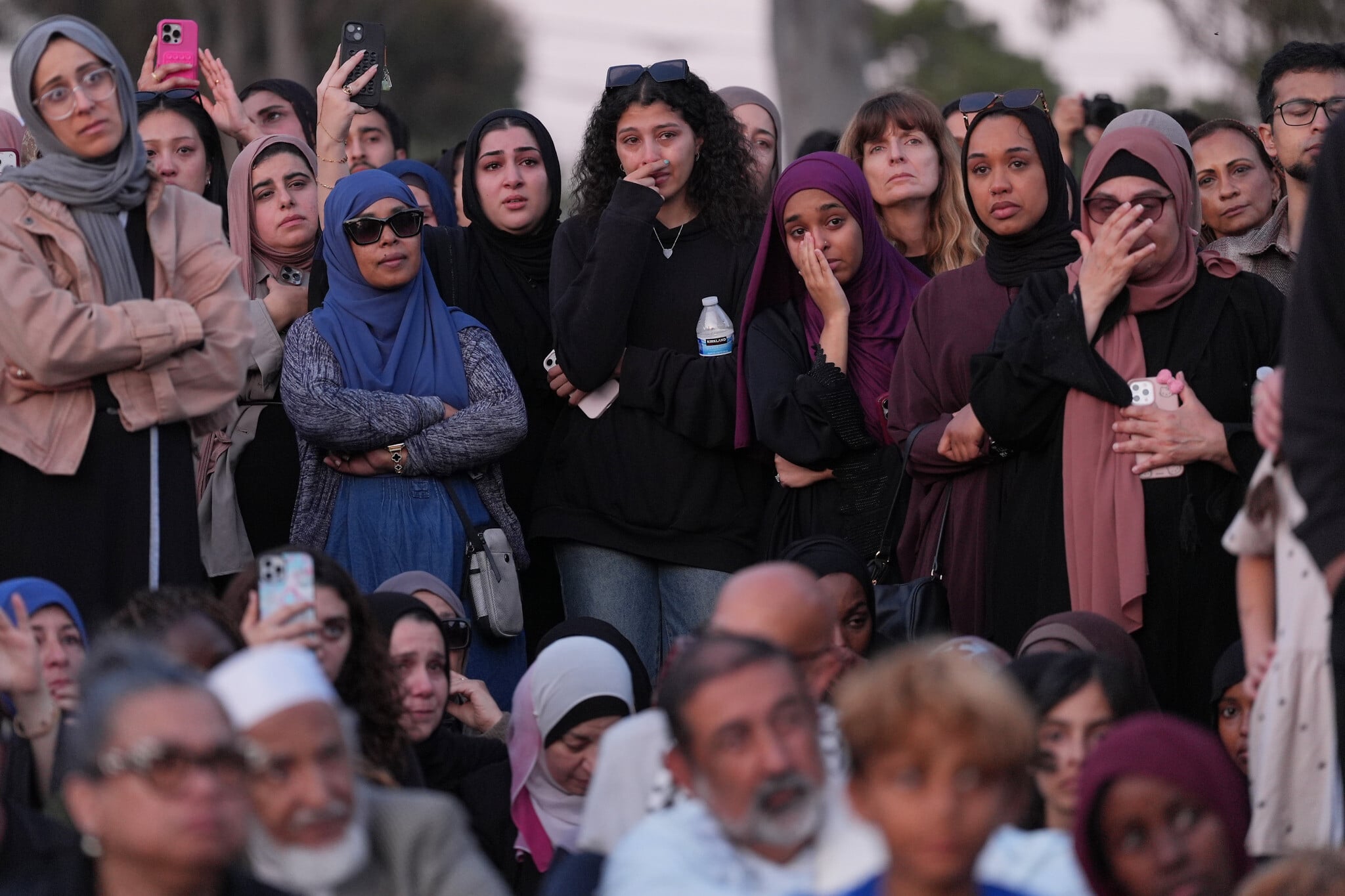
Attendees react as they listen to a speech during a vigil, the day after a shooting, outside of the Islamic Center of San Diego, on May 19, 2026, in San Diego. (AP Photo/Jae C. Hong)
The latter rhetoric, long used by white supremacists, has also started to take root on the American left in recent years, amid openly hateful language ostensibly directed at Israelis.
The shooters expressed beliefs that white people are being eliminated, explicitly citing the “Great Replacement” theory that Jews are facilitating mass migration to the West in order to wipe out white people.
Muslims were described as one such “invading” force, who must be “exterminated.”
The two suspects met online before discovering they both lived in the San Diego area, the FBI said. “In terms of how the radicalization occurred, we’re still digging into that,” Remily said.
Investigators found at least 30 guns, ammunition and a crossbow at two residences after Monday’s attack in San Diego and were trying to uncover whether the shooters had broader plans, Remily said.
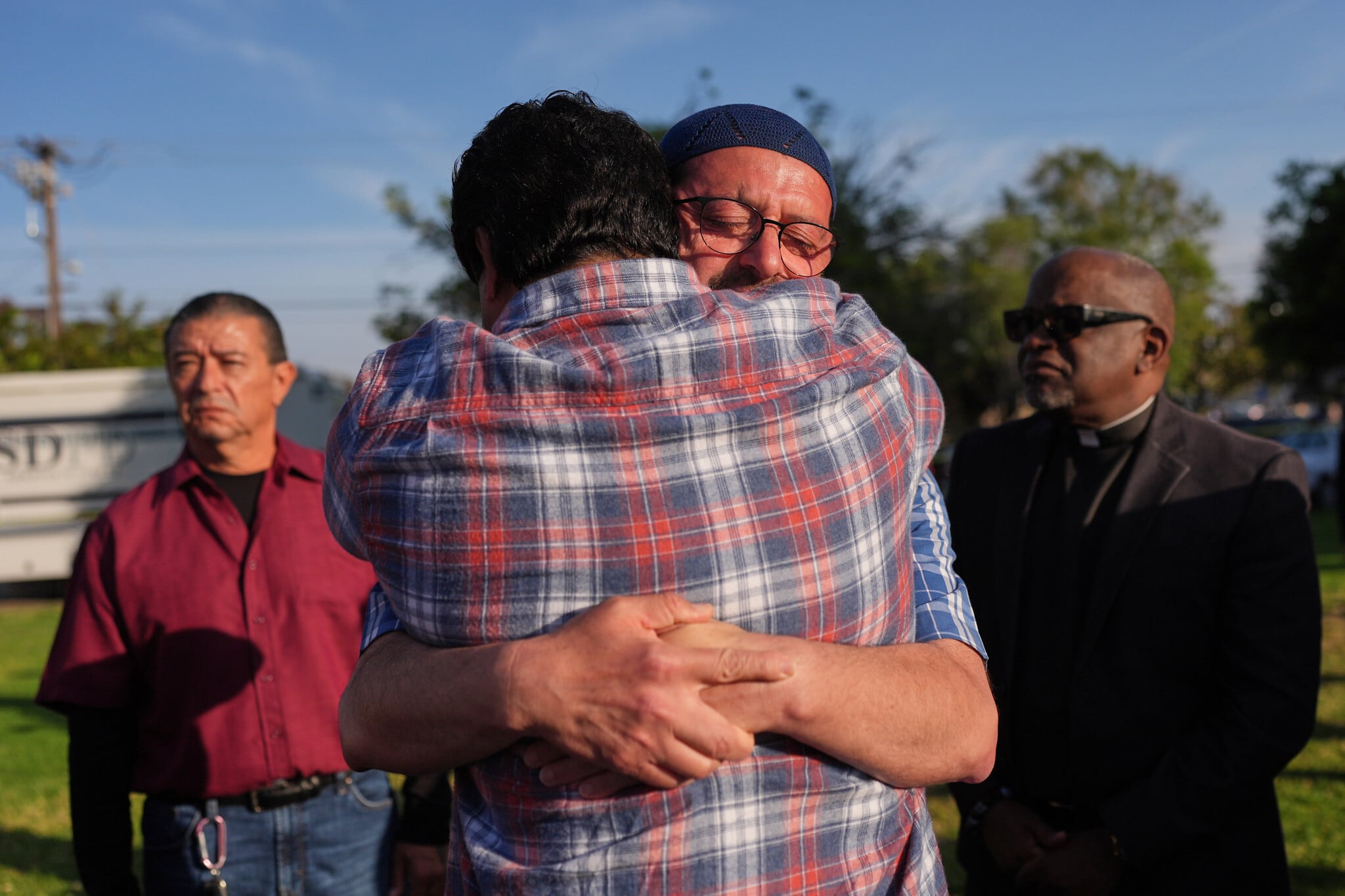
Imam Taha Hassane embraces another person as they attend a vigil, the day after a shooting, outside of the Islamic Center of San Diego, on May 19, 2026, in San Diego. (AP Photo/Jae C. Hong)
The shooters, Cain Clark, 17, and Caleb Vazquez, 18, killed themselves, according to police.
The teenagers had written of an intention to livestream the attack, using GoPro-type cameras to document the atrocity.
Footage online that purported to be such documentation could not be immediately verified.
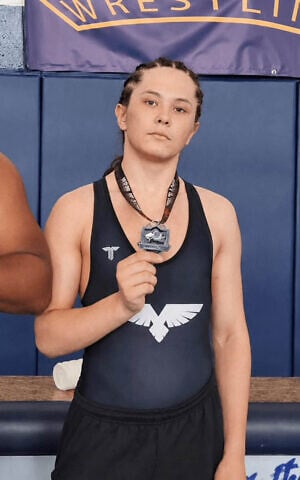
Cain Clark, 17. He and Caleb Vazquez, 18, shot and killed three people, as well as themselves, according to police, in an attack on a San Diego mosque on May 18, 2026. (Social media, used in accordance with Clause 27a of the Copyright Law)
James Canning, a spokesman for the San Diego Unified School District, said Clark had been attending school online since 2021 and was set to graduate next month.
In 2024, he was a member of the wrestling team at Madison High School. Canning said Clark had no record of disciplinary issues in high school.
Neighbors Marne and Ted Celaya said they last saw Clark a few hours before the shooting and that he waved as he got into a car alone and drove away. They described the family as good neighbors and recalled watching Cain grow up.
“It’s unbelievable,” Marne Celaya said of the shooting. “He’s helped me bring in my groceries.”
The families of the two teens could not immediately be reached for comment.
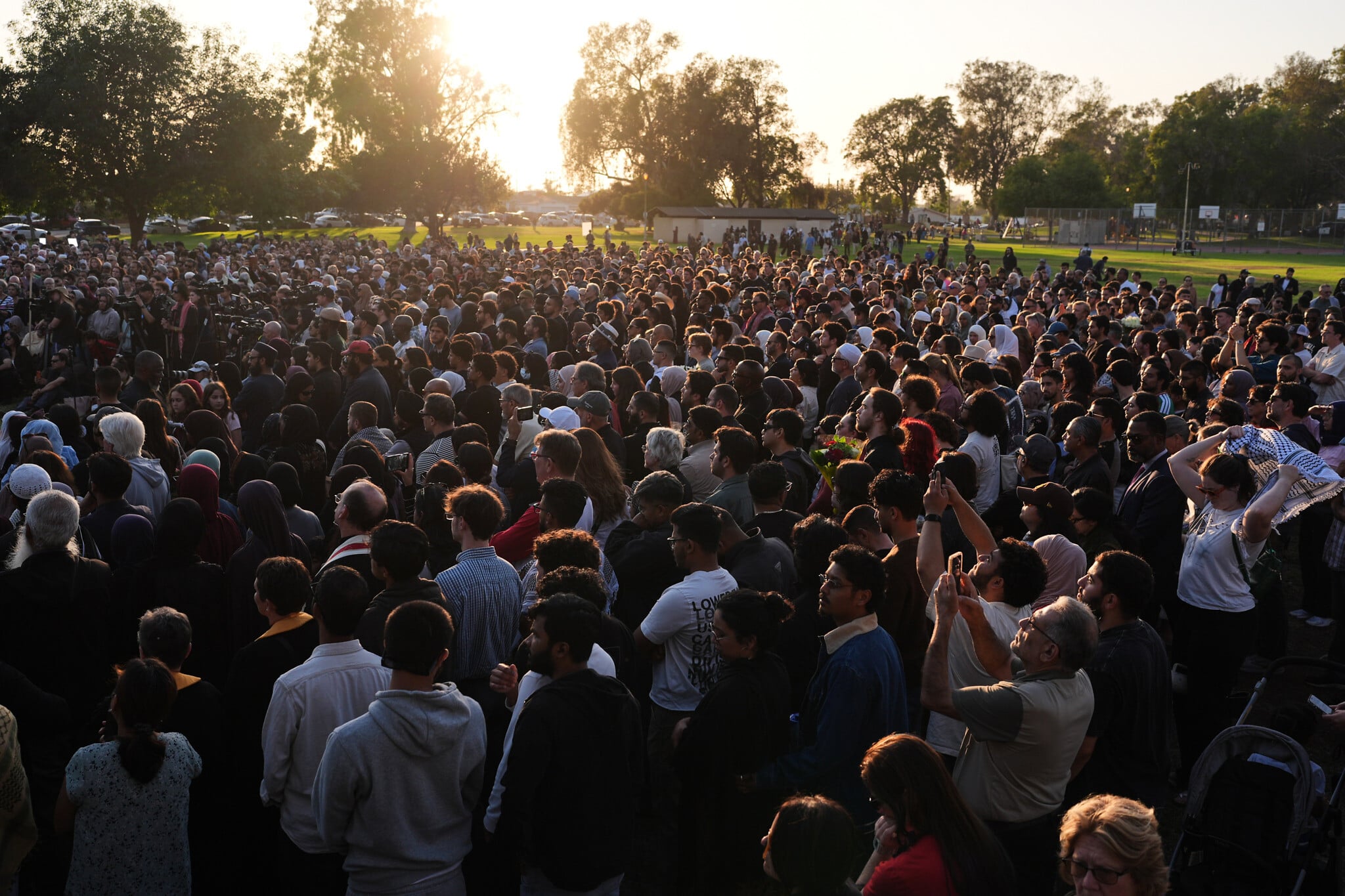
People attend a vigil, the day after a shooting, outside of the Islamic Center of San Diego, May 19, 2026, in San Diego. (AP Photo/Jae C. Hong)
Authorities praised the three men killed in the attack — including Amin Abdullah, a beloved security guard — for slowing the attackers at the Islamic Center of San Diego and preventing them from reaching 140 schoolchildren just steps away.
Imam Taha Hassane said Abdullah engaged the suspects in a gun battle and called for a lockdown on his radio. He “sacrificed his life to stop them from getting inside the classrooms.”
Victims were pillars of the community
Police said the security guard opened fire when the shooters arrived at the Islamic Center and tried to barge inside.
As the shooters made their way into the lobby, they wounded the guard, who kept firing at them, forcing them back outside, where the attackers fatally shot him, Police Chief Scott Wahl said.
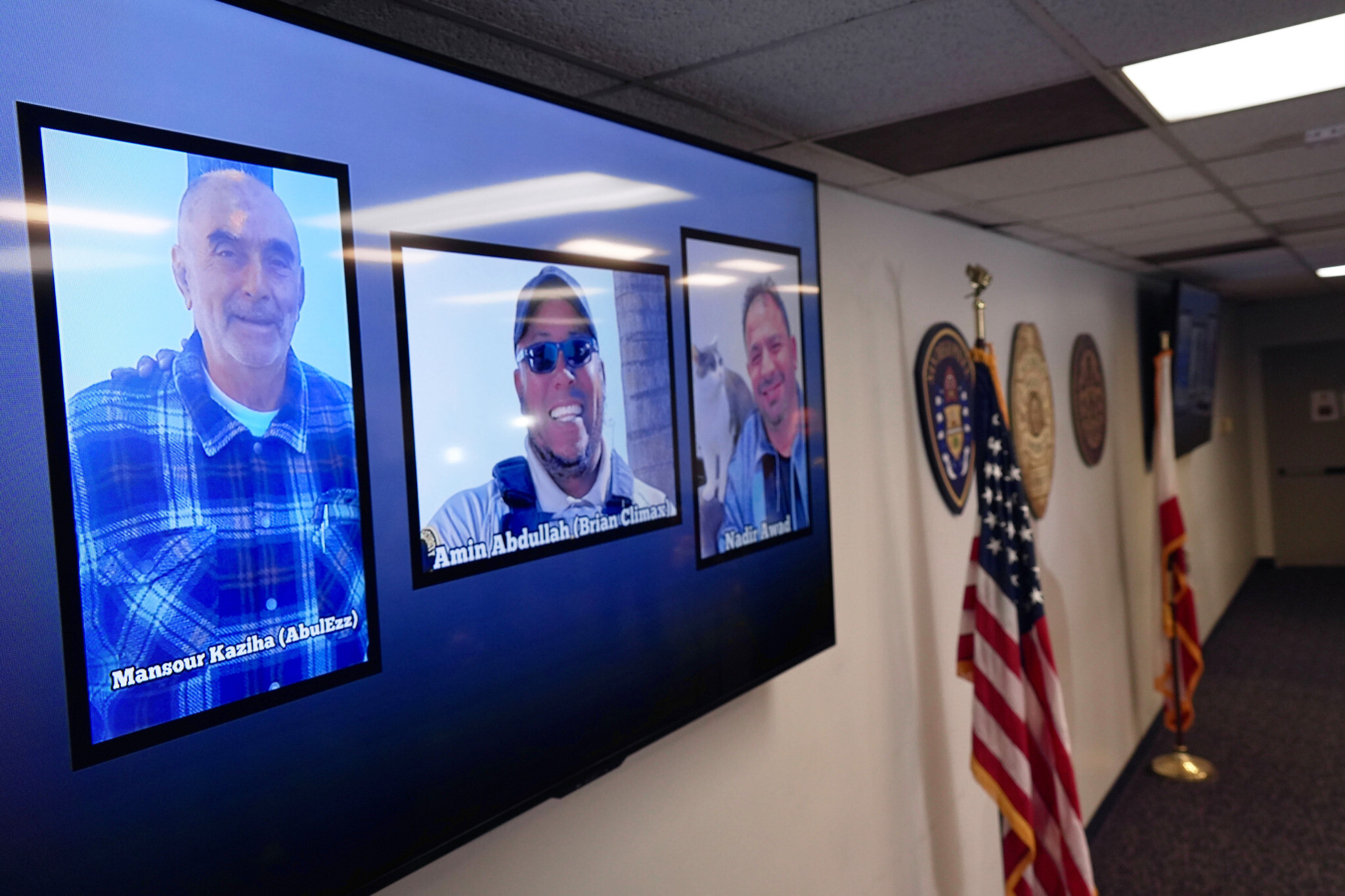
Photos of the three victims at the Islamic Center of San Diego are displayed after a news conference in San Diego, California on May 19, 2026. (AP Photo/Ty ONeil)
The pair went back inside and searched through rooms that were emptied during the lockdown, Wahl said. They exited into the parking lot, where they fatally shot Mansour Kaziha and Nadir Awad, according to police. The men drew the attackers farther away from the building, Wahl said.
Kaziha, known as Abu Ezz, “was everything” to the Islamic Center, Hassane said. “He was the handyman. He was the cook. He was the caretaker,” Hassane said.
Abdullah had worked at the mosque for more than a decade.
“He wanted to defend the innocent so he decided to become a security guard,” said family friend Shaykh Uthman Ibn Farooq.
Amin Abdullah. Mansour Kaziha. Nadir Awad.
These are the names and faces of the three heroic men who were killed at the Islamic Center of San Diego on Monday afternoon. Say their names, not the shooters. #NoNotoriety#EndGunViolence #HonorWithAction #SandyHookPromise pic.twitter.com/hwyrsYqFNM
— Sandy Hook Promise (@sandyhook) May 19, 2026
Hassane cried as leaders of different faiths embraced him at a vigil Tuesday evening to honor the victims. He told the hundreds who had gathered at a park next to the center that they were there to celebrate the community’s unity.
“We are here to celebrate the patience, the resilience of the Muslim community,” he said. “We are here to honor our heroes, our martyrs.”
Mosque leaders were used to hate mail
The Islamic Center sits in a neighborhood with Middle Eastern restaurants and markets. It includes Al Rashid School, which offers courses in Arabic language, Islamic studies and the Quran for students ages 5 and up, its website says.
Josie-Ana Edenshaw, who has been going to the mosque for three years, said it was especially welcoming to new Muslims.
“They’ve always opened their doors, even to people who aren’t Muslim, they invite people to Ramadan dinners,” Edenshaw said. “Every person at that masjid will smile at you,” using the Arabic word for mosque.
The center’s imam said Tuesday that the mosque and its community weren’t immune to threats over the years.
“We have never ever expected such things to happen at the Islamic Center of San Diego,” Hassane said. “I mean we are used to receiving hate mails, hate messages, people driving by and cursing and all that stuff. But such a horrible crime, we have never expected this.”