
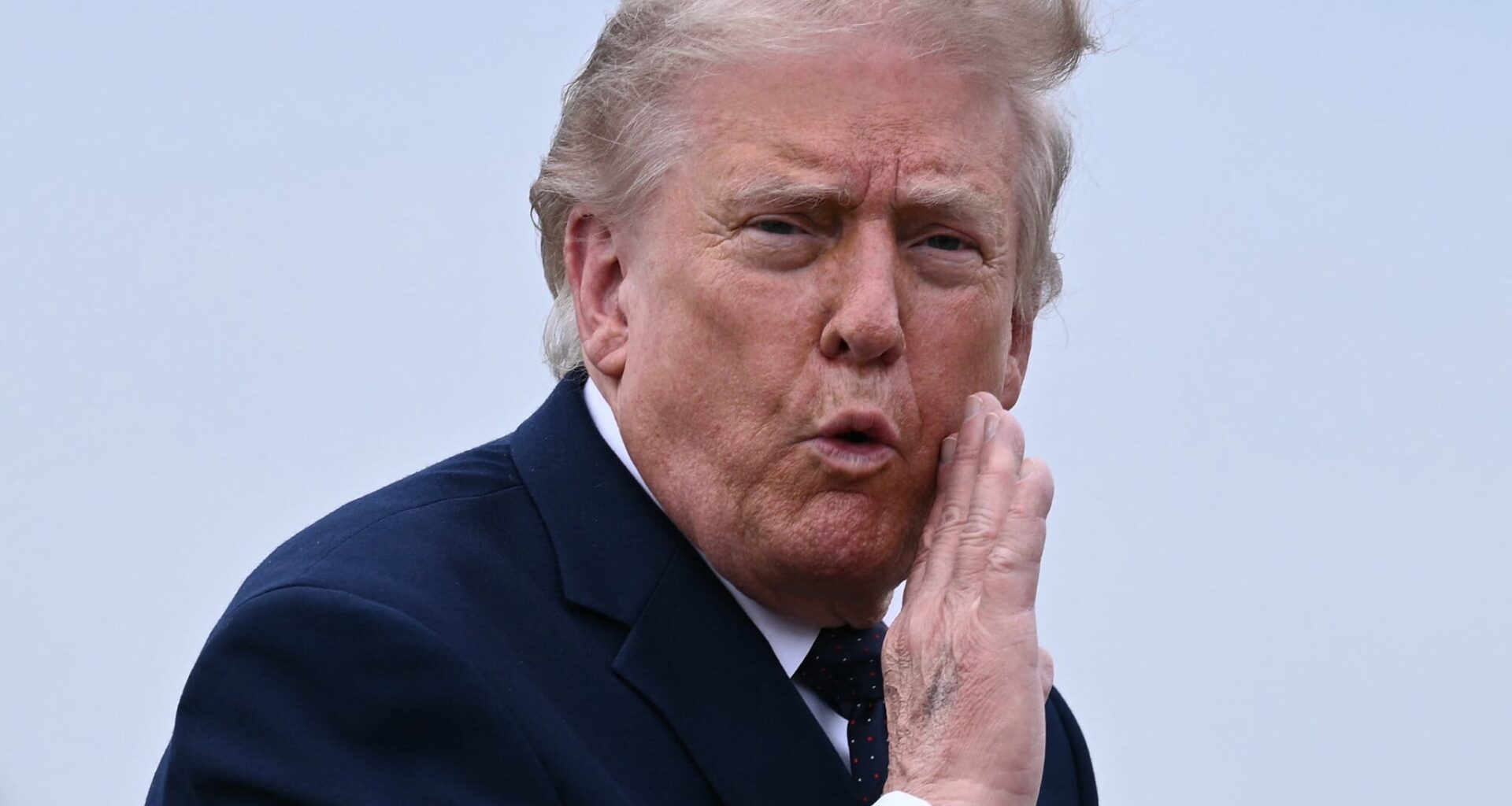
US President Donald Trump declared on Saturday that the US and Iran were finalizing a deal to end the war launched jointly by the US and Israel against the Islamic Republic on February 28. He said that the Memorandum of Understanding “has been largely negotiated” and would be announced shortly.
Iranian officials also indicated that they were nearing an agreement on an MoU to end the war and set the stage for further talks.
Trump specified that the agreement would include the opening of the Strait of Hormuz, the key pathway for the global oil supply that Tehran has largely blocked since the beginning of the war.
Iran’s Fars news agency, a semi-state outlet close to Iran’s Islamic Revolutionary Guard Corps, reported two hours later that the Strait of Hormuz would remain under Iran’s management, and dismissed Trump’s announcement as “incomplete and inconsistent with reality.”
But three senior Iranian officials told the New York Times that Tehran had agreed to “a memorandum of understanding that would stop the fighting and reopen the Strait of Hormuz… including lifting the US naval blockade against Iran and allowing free commercial traffic without Iran charging any tolls.”
Get The Times of Israel’s Daily Edition
by email and never miss our top stories
By signing up, you agree to the terms
The deal would release $25 billion in Iranian assets frozen overseas, the officials were quoted as saying. They added that the agreement “would halt fighting on all fronts, including in Lebanon.”
The US president did not mention Iran’s nuclear program, having repeatedly stressed during the war that Iran will not be allowed to attain nuclear weapons, or the regime’s stockpile of 60%-enriched uranium, which he has insisted Iran must relinquish. Iran said Saturday that nuclear issues were not part of the current negotiations.
Amid the fast-moving developments, Prime Minister Benjamin Netanyahu was convening coalition party leaders and security chiefs for a discussion on the emerging deal, according to Hebrew media reports. Israel has been reportedly left out of the talks, and was not invited to a Saturday conference call Trump held with mediators and regional leaders, and is instead relying on regional and intelligence sources to keep up with the negotiations.
Trump, who said earlier Saturday that Netanyahu was “torn” about a potential deal, spoke with the premier Saturday night. The call “went very well,” according to the US president. There was no immediate statement from Netanyahu’s office.
However, unnamed Israeli officials were quoted as characterizing the reported agreement as very bad for Israel. If the reported terms of the deal are accurate, the deal would be “a very big problem for Israel” and would “greatly contradict things that Netanyahu has said publicly, and, more than this, things that Trump said publicly just a few hours ago,” a Channel 12 report said.
Specifically, Channel 12 elaborated, the terms provide for Iran’s reopening of the Strait of Hormuz in return for financial benefits, while Iran’s rogue nuclear program and the extraction of its stockpile of enriched uranium would only be discussed later on. Iran’s ballistic missile program was not even on the table, it added. “The US is paying cash, while Iran will be paying by credit, if at all,” the TV report summarized.
The US president said his conference call with Middle Eastern leaders also went well. “I am in the Oval Office at the White House where we just had a very good call” with the leaders of countries across the region, on “all things related to a Memorandum of Understanding pertaining to PEACE,” Trump posted on Truth Social.
He added, “An Agreement has been largely negotiated, subject to finalization between the United States of America, the Islamic Republic of Iran, and the various other Countries, as listed.”
“Separately, I had a call with Prime Minister Bibi Netanyahu, of Israel, which, likewise, went very well,” Trump continued. “Final aspects and details of the Deal are currently being discussed, and will be announced shortly. In addition to many other elements of the Agreement, the Strait of Hormuz will be opened.”
BREAKING: President Trump says an agreement with Iran has been “largely negotiated” and will be announced shortly.
Trump says the Strait of Hormuz will be reopened under the agreement. pic.twitter.com/LL9xYsWMKg
— The Kobeissi Letter (@KobeissiLetter) May 23, 2026
An interim deal, followed by talks
Trump’s post came after two Pakistani sources familiar with the negotiations said Iran and Pakistan submitted a revised proposal to the US earlier Saturday, with the US response expected on Sunday. One official described the nearing deal as “fairly comprehensive.”
The sources told Reuters the proposed framework would unfold in three stages: formally ending the war, resolving the crisis in the Strait of Hormuz, and launching a 30-day window for negotiations on a broader agreement, which can be extended. A Pakistani source said there was no guarantee the US would accept the Memorandum of Understanding, but if it did, this would trigger the further talks next week.
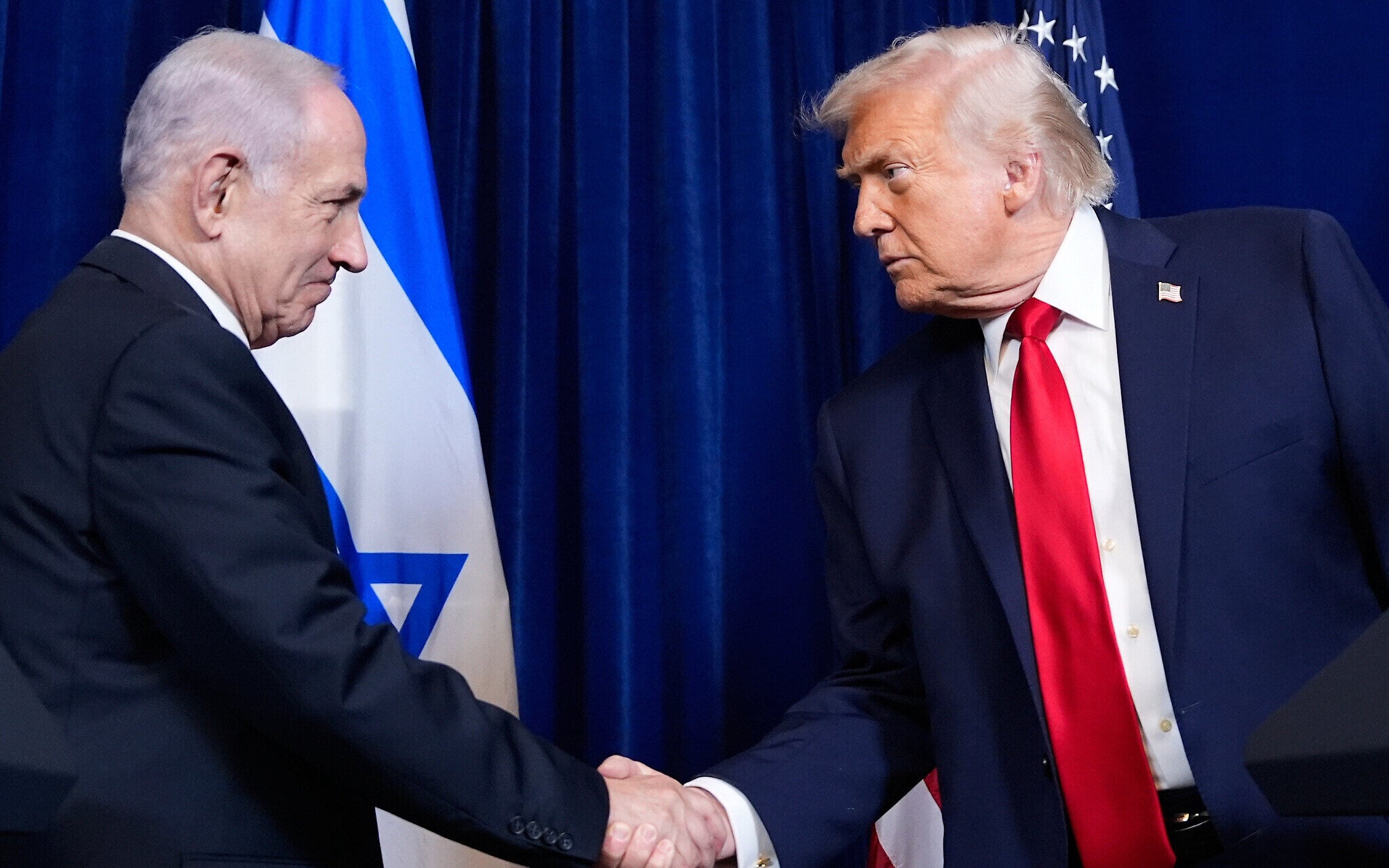
US President Donald Trump, right, shakes hands with Prime Minister Benjamin Netanyahu during a news conference at Mar-a-Lago, in Palm Beach, Florida, December 29, 2025. (Alex Brandon/AP)
No official text of the MoU has been published, although Saudi site Al-Arabiya on Friday published what it said was the “final draft,” which also noted that the deal would be an interim agreement with “outstanding issues” to be negotiated after it comes into force
The reported draft agreement did not explicitly mention key US demands, including the dismantling of Iran’s nuclear program and export of its stockpile of 60-percent-enriched uranium, limiting its ballistic missiles and ending its support for terrorist proxies.
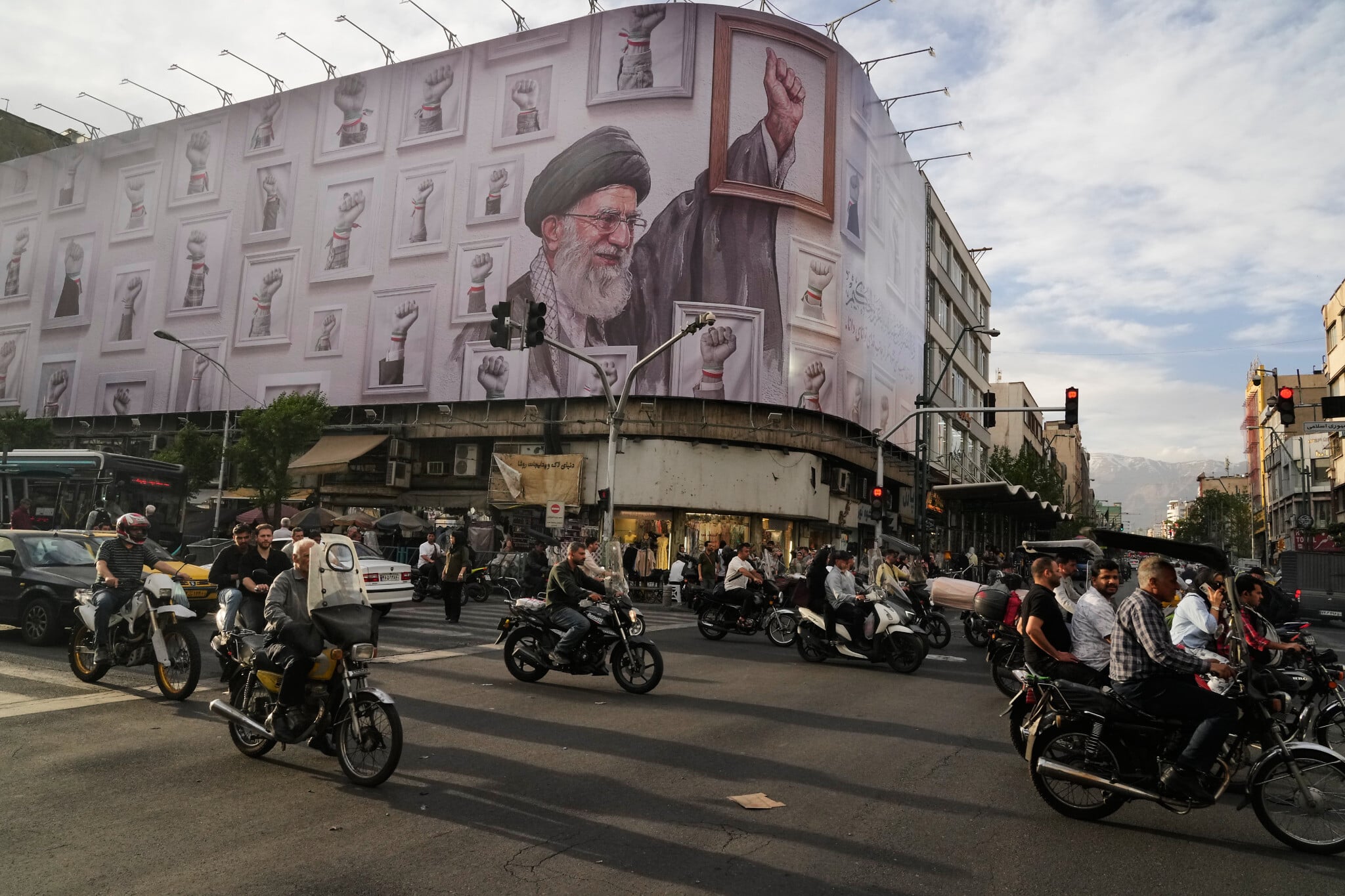
Motorbikes drive past a billboard showing the late Iranian Supreme Leader Ayatollah Ali Khamenei, who was killed in the US and Israeli strikes on Feb. 28, in downtown Tehran, Iran, May 6, 2026. (AP Photo/Vahid Salemi)
In a phone interview on Saturday with CBS prior to his Truth Social post, Trump said the sides were “getting a lot closer” to an agreement, but also warned that if the US and Iran do not come to a deal, “we’re going to have a situation where no country will ever be hit as hard as they’re about to be hit.”
The US president struck a less upbeat tone in a Saturday telephone interview with Barak Ravid of the news website Axios, telling Ravid that there was a “solid 50/50” split on whether he would be able to make a “good” deal or else “blow them to kingdom come.”
Trump said he would only accept a deal that covers issues like uranium enrichment and the fate of Iran’s existing stockpile, the report said, noting that those issues were unlikely to be resolved in the memorandum of understanding being discussed, which would end the war and set the stage for more detailed negotiations.
The US president added that he was set to meet with his top aides, envoys Steve Witkoff and Jared Kushner, as well as Vice President JD Vance later Saturday to discuss the talks.
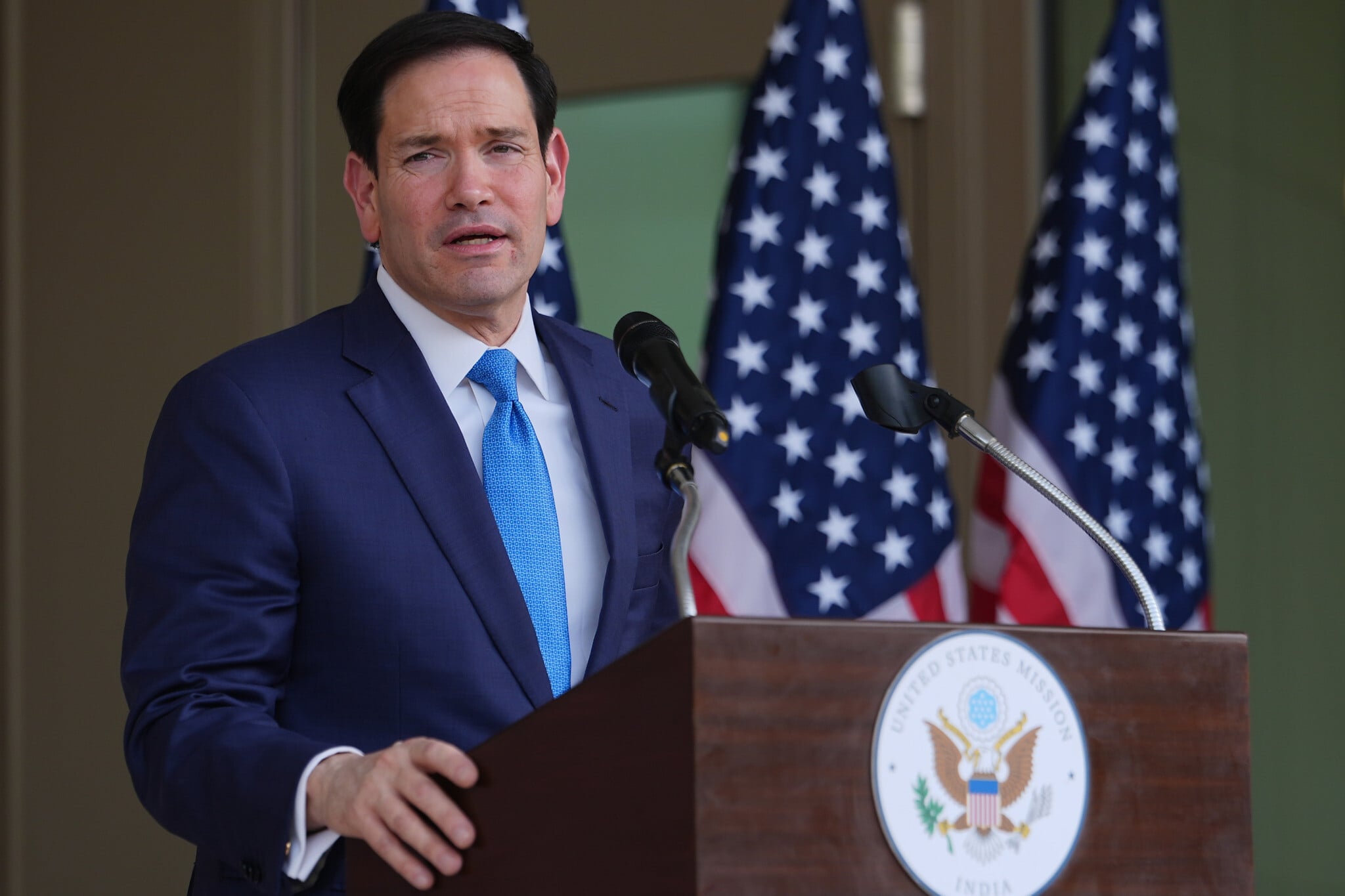
United States Secretary of State Marco Rubio at the US Embassy in New Delhi, India, May 23, 2026. (AP Photo/Julia Demaree Nikhinson, Pool)
On a visit to India, US Secretary of State Marco Rubio said earlier in the day, “There is a chance that, whether it’s later today, tomorrow, in a couple of days, we may have something to say,” adding he hoped for “good news.”
“There’s been some progress done, some progress made. Even as I speak to you now, there’s some work being done.”
Rubio also repeated Trump’s demands: “Iran can never have a nuclear weapon. The straits need to be open without tolls. They need to turn over their enriched uranium.”
Iran says nuclear file ‘subject to separate discussions’
Iran said Saturday that it was finalizing a 14-point “framework agreement” for a deal with the US, but signaled that major gaps still remain, after senior Iranian officials met with visiting Pakistani military chief Asim Munir.
Iran’s foreign ministry spokesperson Esmail Baghaei said nuclear issues are not part of the current negotiations, as Tehran first seeks to end the war.
“Our focus at this stage is on ending the war on all fronts, including Lebanon,” Baghaei said, adding that lifting sanctions on Tehran “has explicitly been included in the text and remains our fixed position.”
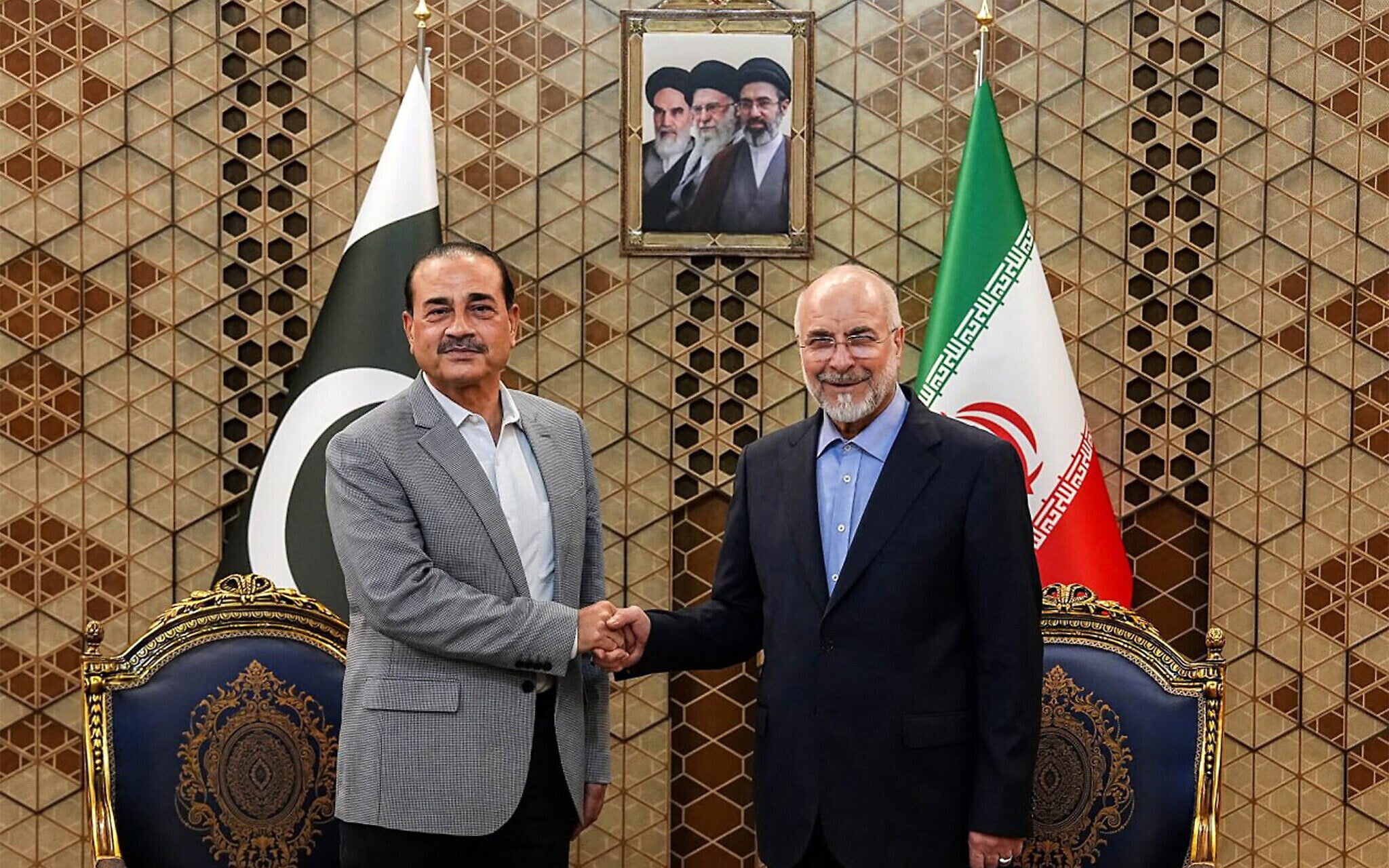
In this handout picture provided by the Islamic Consultative Assembly News Agency (ICANA), Iran’s Parliament Speaker Mohammad Bagher Ghalibaf (R) meets with Pakistan’s Army Chief Syed Asim Munir in Tehran on May 23, 2026. (ICANA NEWS AGENCY / AFP)
He added that the nuclear file will be “subject to separate discussions” at a later stage, and said the deal’s terms provide for a subsequent 30-60 day period of negotiations on a detailed agreement.
The Pakistani army similarly said the negotiations resulted in “encouraging” progress toward a final understanding. “A memorandum of understanding is being fine-tuned,” said a Pakistani security official who was briefed on Munir’s visit.
A pair of regional officials and a diplomat expressed hope that a final decision on the Pakistan-prepared draft could come within 48 hours as both sides review it.
They said Vance, as well as Witkoff and Kushner, played significant roles in helping bridge remaining gaps, and that Qatar played a key role by sending a senior official to Tehran to support Pakistan’s mediation efforts.
Netanyahu meets coalition leaders, speaks with Trump amid emerging ‘very big problem for Israel’
As the talks appeared to progress quickly, Netanyahu on Saturday night met with coalition party leaders and Israeli security chiefs for a discussion on the emerging situation, according to Channel 12, which characterized the reported terms as very bad for Israel.
The network quoted an unnamed Israeli official asserting that Witkoff was pushing hardest for Trump to accept the deal. Israel sees Witkoff as the main player “who wants a deal at almost any price, and is placing immense pressure on Trump not to resume the war,” the official was quoted as saying.
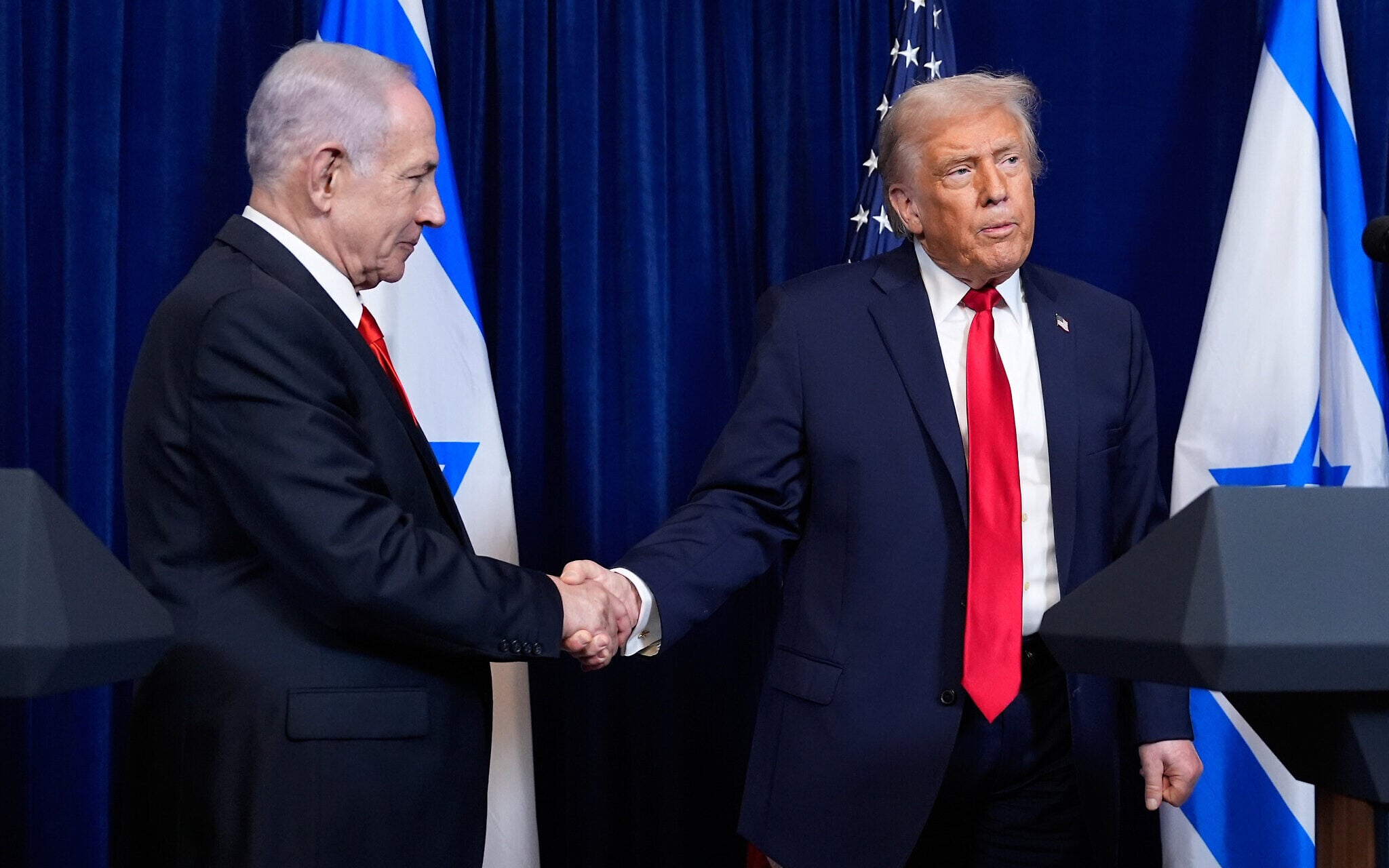
US President Donald Trump (R) shakes hands with Prime Minister Benjamin Netanyahu at the end of a news conference at Mar-a-Lago, December 29, 2025, in Palm Beach, Florida. (AP/Alex Brandon)
Nonetheless, there is “close coordination between Netanyahu and Trump, with ‘no daylight’ between them, the TV report said — a claim that is at odds with a New York Times report earlier Saturday that said Netanyahu has been “cut almost entirely out of the [negotiating] loop.”
Trump earlier Saturday told Axios that “some people would much rather have a deal and others would rather resume the war,” and that Netanyahu was “torn,” but rejected the idea that Netanyahu was “worried” that he might agree to a bad deal.
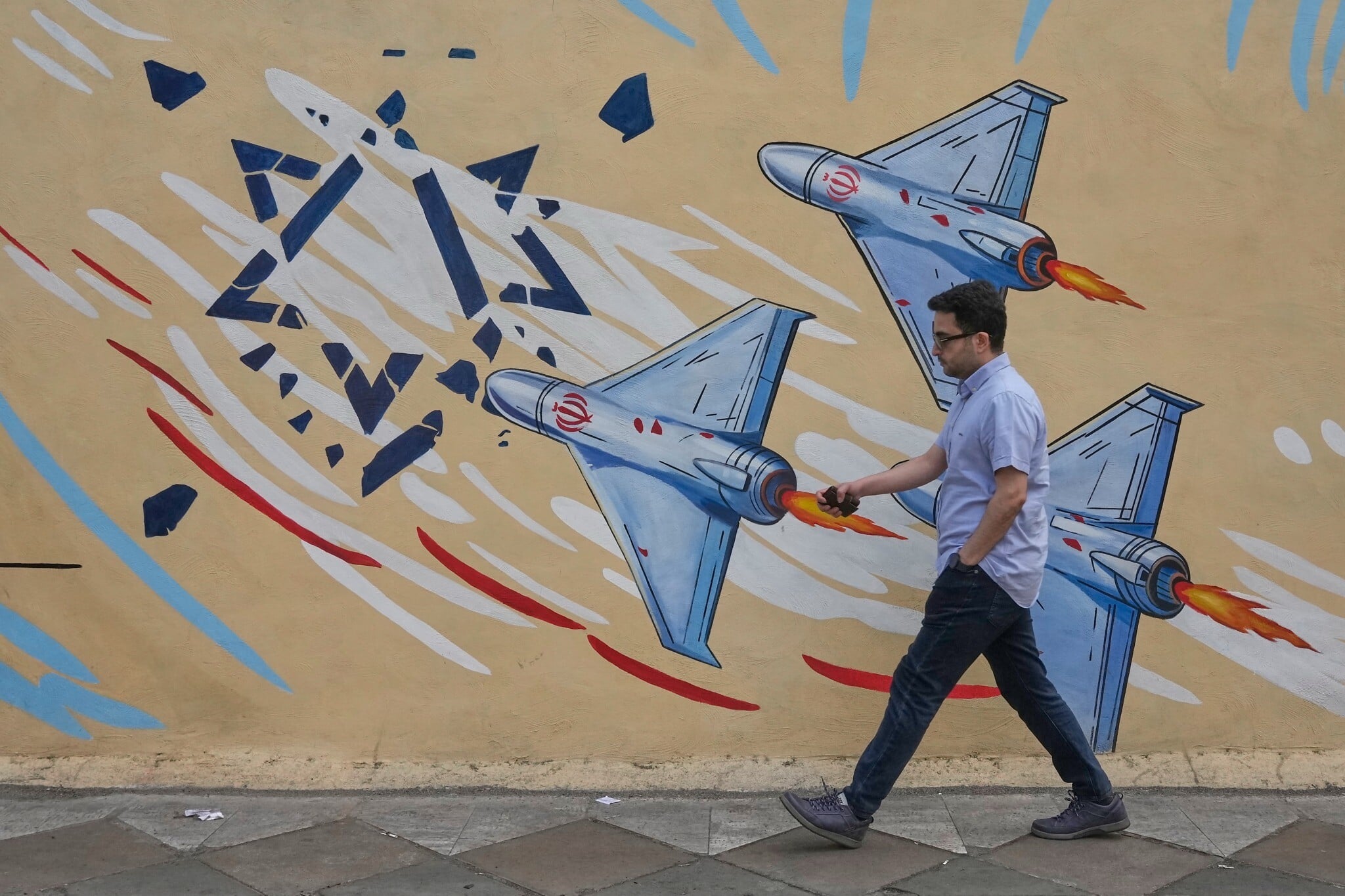
A man walks past an anti-Israel mural in downtown Tehran, Iran, Sunday, May 17, 2026. (AP Photo/Vahid Salemi)
The Axios report cited Israeli officials saying that Netanyahu was, in fact, highly concerned about the potential deal and had urged Trump to launch a fresh round of strikes.
Axios’s Ravid, who also reports for Channel 12, told the Israeli TV station that Trump assured him he wouldn’t do a deal if it wasn’t “good for Israel.”
The US and Israel launched the war on Iran on February 28 in a bid to destabilize its regime, prevent it from attaining nuclear weapons, tackle its ballistic missile programs, and end its support for proxy terror groups including Hezbollah and Hamas.
Iran responded with missile and drone strikes across the region and by blockading the Strait of Hormuz, leading to a global spike in energy prices.
With Pakistan’s mediation, the fighting entered a truce on April 8. The US launched its own blockade on Iran-linked shipping on April 13.
Tehran has enriched uranium to a level that is a short technical step from weapons-grade and that the UN atomic agency says has no civilian use. The regime openly seeks Israel’s destruction, but claims its nuclear program is peaceful.