
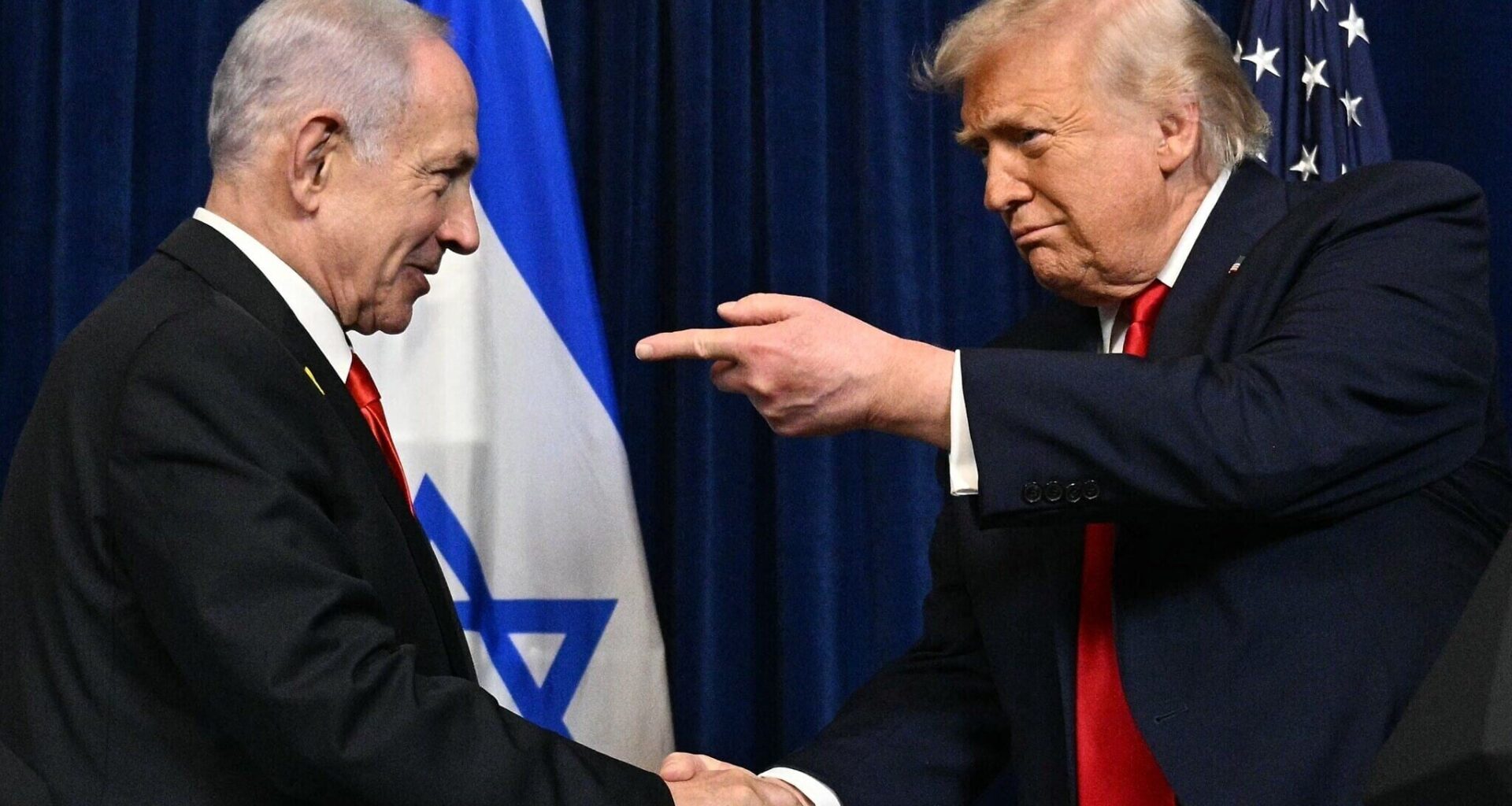
Prime Minister Benjamin Netanyahu has told confidants in private conversations that Israel has little ability to influence US President Donald Trump’s decision-making on Iran as the president negotiates a deal in the nearly three-month-old war, according to two sources speaking to Reuters on Monday.
Netanyahu’s comments, described by two Israeli officials with knowledge of the conversations, come as Israel has largely been left out of talks to reach an initial deal to halt a war that began with joint US-Israeli strikes on February 28.
Since Trump said on Saturday that the deal would be announced “shortly,” both the US and Iran have played down hopes for an imminent breakthrough in talks, and they remain at odds over Iran’s nuclear weapons ambitions, Tehran’s demands for the lifting of sanctions, and Israel’s war against Hezbollah in Lebanon.
Netanyahu is demanding the right to continue operations against threats on multiple fronts, including attacks by the Iranian-backed Hezbollah terror group in Lebanon, a caveat that could derail a deal if Iran insists on a complete halt to Israeli military operations in southern Lebanon.
One of the Israeli officials, involved in Netanyahu’s private conversations, said the premier had expressed concerns about the memorandum of understanding currently being negotiated. Both of the sources spoke on condition of anonymity to discuss private conversations.
Get The Times of Israel’s Daily Edition
by email and never miss our top stories
By signing up, you agree to the terms
Netanyahu’s office did not immediately respond to a request for comment on the report.
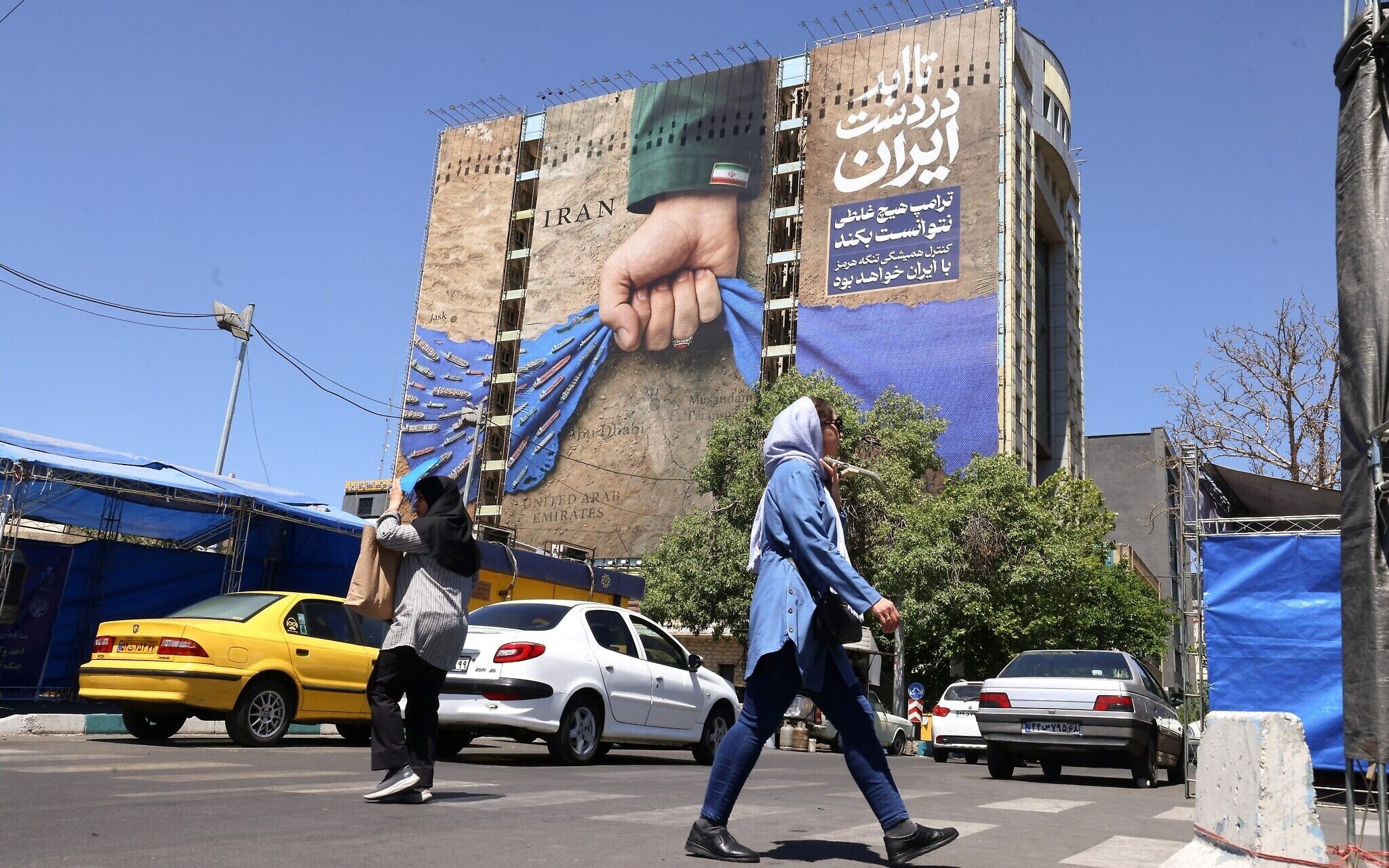
A billboard on the facade of a building depicting the Strait of Hormuz with a caption in Persian reading ‘Forever in Iran’s Hand,’ at Vanak Square in Tehran on May 25, 2026. (ATTA KENARE / AFP)
The agreement would see Iran open the Strait of Hormuz in exchange for the US lifting its naval blockade, a senior Trump administration official said, followed by 60 days of further negotiations on nuclear and other issues. The US and Iran have been holding indirect talks mediated by Pakistan.
Iranian sources have told Reuters that in future stages, “feasible formulas” could be found to resolve the dispute over its highly enriched uranium stockpile, including diluting the material under the supervision of the US nuclear watchdog.
Despite the agreement not immediately addressing Israel’s concerns over Iran’s nuclear program and stockpile, Netanyahu acknowledges that Israel “has no maneuver to influence the president right now,” the Israeli official said.
Trump and Netanyahu have spoken by phone at least three times in the last week, a period during which Israeli officials said the country had made preparations for a return to joint airstrikes with the US on Iran, targeting energy infrastructure.
After the first of their three conversations, on Tuesday night, Trump was asked by reporters what he told Netanyahu.
“He’s a very good man, he’ll do whatever I want him to do,” Trump said.
The two men spoke again on Friday night. On Saturday, after Trump held a joint call with leaders from the Gulf, Turkey and Pakistan to update them on the status of the Iran negotiations, Trump and Netanyahu spoke for a third time.
After that call, Netanyahu, who had yet to publicly comment on any emerging interim deal with Iran, said in a statement that he and Trump discussed the “memorandum of understanding to reopen the Strait of Hormuz and the upcoming negotiations toward a final agreement on Iran’s nuclear program.”
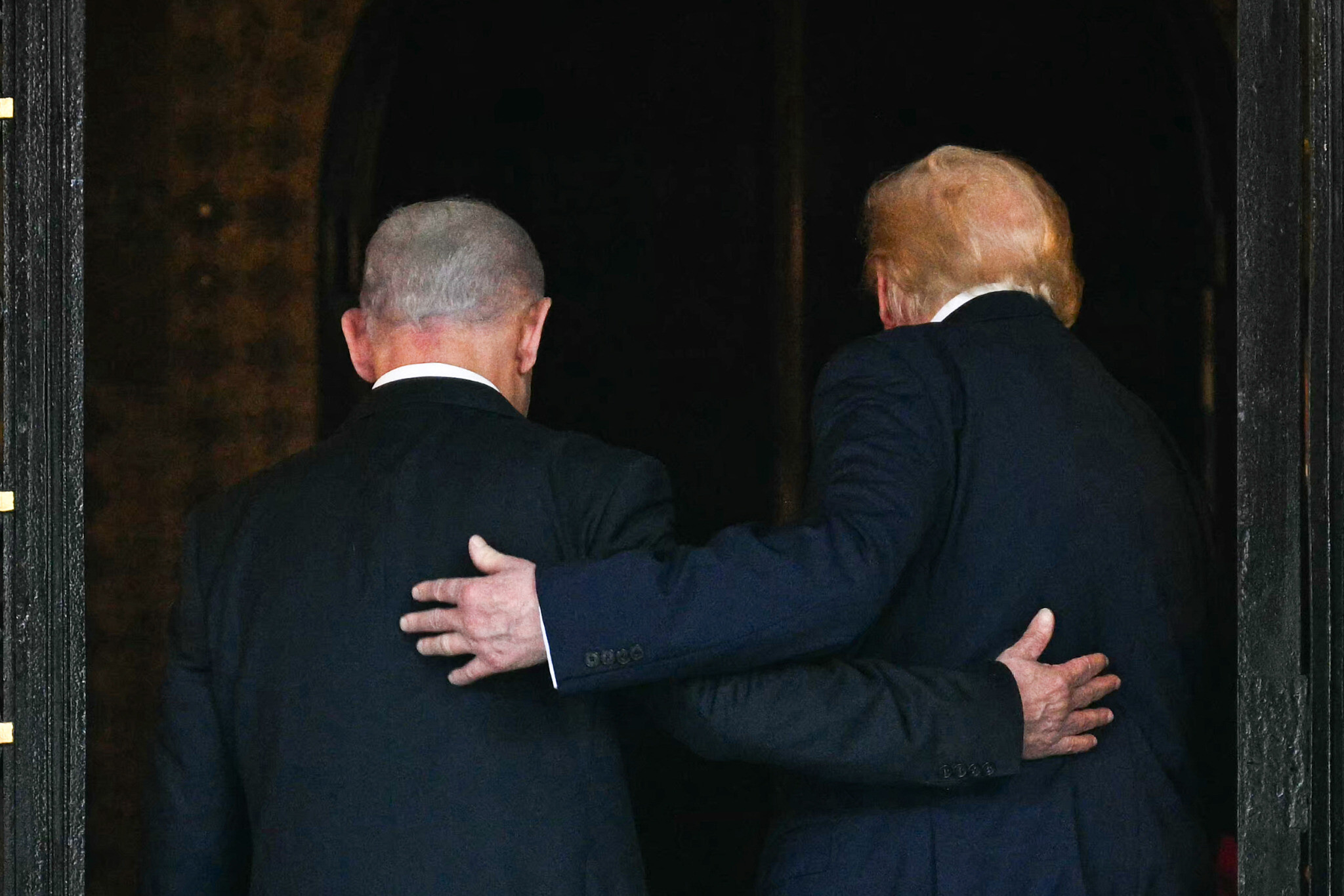
US President Donald Trump (R) and Prime Minister Benjamin Netanyahu walk inside Trump’s Mar-a-Lago residence in Palm Beach, Florida, on December 29, 2025. (Jim WATSON / AFP)
Netanyahu said he and Trump “agreed that any final agreement… means dismantling Iran’s nuclear enrichment sites and removing its enriched nuclear material from its territory.”
He also said Trump “reaffirmed Israel’s right to defend itself against threats on every front, including Lebanon.”
Iran has long denied US and Israeli accusations that it is pursuing nuclear weapons and says it has a right to enrich uranium for civilian purposes, although the purity it has achieved far exceeds that needed for any civilian use. Iran, which is avowed to destroy Israel, has a stockpile of more than 400 kilograms of highly enriched uranium in its possession, which Israeli officials have said is sufficient for 11 nuclear bombs if enriched further.
The deal’s emergence comes at a sensitive time for Netanyahu ahead of this year’s general election, which is projected to be a tough race for the longtime leader. His opponents have criticized him for having failed to achieve his stated objectives in the war.
At the start of the US-Israeli attacks on Iran on February 28, Netanyahu said Israel aimed to create the conditions to topple Iran’s clerical government, eliminate its nuclear and ballistic missile capabilities, and cripple its ability to project power across the region.
Trump gave a final order to launch the Iran operation after Netanyahu argued in a conversation with the US president for their forces’ joint killing of Supreme Leader Ali Khamenei. Khamenei was killed in the first strikes.
Israeli and US war objectives have diverged since then, with the US focused on reopening the Strait of Hormuz, which before the war had carried a fifth of global shipments of oil and liquefied natural gas.
In an interview with “60 Minutes” on CBS this month, Netanyahu stressed that more needed to be done to ensure enriched uranium exits Iran, that it ends its support for regional proxies, and that it stops producing ballistic missiles.
“… there’s work to be done,” Netanyahu said.
Which gorgeous bird do you prefer?

THIS MONTH ONLY: Join our reader support group for as little as $6/month and receive an exclusive tote bag featuring one of Israel’s native birds.
Choose between the Duchifat (orange), Israel’s national bird, or the Shaldag (blue), a beloved symbol of the Israeli landscape.
As a member of the Times of Israel Community, you’ll also enjoy:
An ad-free experience of our site and podcasts.
Exclusive access to award-winning films via DocuNation.
Weekly letters from founding editor David Horovitz.
Join ToI Community & claim my bag
Already a member? Sign in to stop seeing this
You’re a dedicated reader

That’s why we started the Times of Israel – to provide discerning readers like you with must-read coverage of Israel and the Jewish world.
So now we have a request. Unlike other news outlets, we haven’t put up a paywall. But as the journalism we do is costly, we invite readers for whom The Times of Israel has become important to help support our work by joining The Times of Israel Community.
For as little as $6 a month you can help support our quality journalism while enjoying The Times of Israel AD-FREE, as well as accessing exclusive content available only to Times of Israel Community members.
Thank you,
David Horovitz, Founding Editor of The Times of Israel